Hook: When most people hear the phrase wildlife trafficking, they picture ivory tusks, rhino horns, exotic birds, or big cats hidden in cramped cages. Very few imagine a tiny ant worth more than a day’s wages in many parts of the world. Yet that is exactly why this story matters. The illegal trade in rare ants is exposing a new and unsettling frontier in global wildlife crime—one that is small in size, but large in consequence.
What makes this trend so disturbing is not only the money involved. It is the mindset behind it. Collectors and traders are turning living ecosystems into luxury inventory, reducing complex species to commodities for display, hobby breeding, and online status. In Kenya, where biodiversity is both a natural treasure and a pillar of ecological stability, the surprise rise of ant trafficking signals a broader shift in how smugglers operate. They are becoming more creative, harder to detect, and increasingly willing to profit from species that once escaped mainstream attention.
I find this development particularly revealing because it shows how modern wildlife crime adapts faster than public awareness. By the time authorities, policymakers, and ordinary citizens begin paying attention, a niche market may already be international, profitable, and difficult to shut down. The illegal ant trade is not a quirky side story. It is a warning sign.
The Rise of Ant Trafficking in Kenya
Kenya has long been central to conversations about biodiversity and conservation. Its landscapes support iconic mammals, vibrant birdlife, reptiles, insects, and countless lesser-known species that quietly sustain local habitats. For years, public concern focused on high-profile poaching. But ant trafficking in Kenya reveals a subtler form of exploitation, one driven by the global appetite for rare and unusual pets.
Some ant species are prized by collectors for their size, color, rarity, colony behavior, or association with specific regions. Enthusiasts may buy queens to establish colonies in artificial habitats, turning ant-keeping into a specialized hobby. In legal and well-regulated settings, insect collecting and study can support education and scientific interest. The problem begins when demand outruns ethics and legality. Once collectors are willing to pay premium prices for hard-to-find species, smugglers move in.
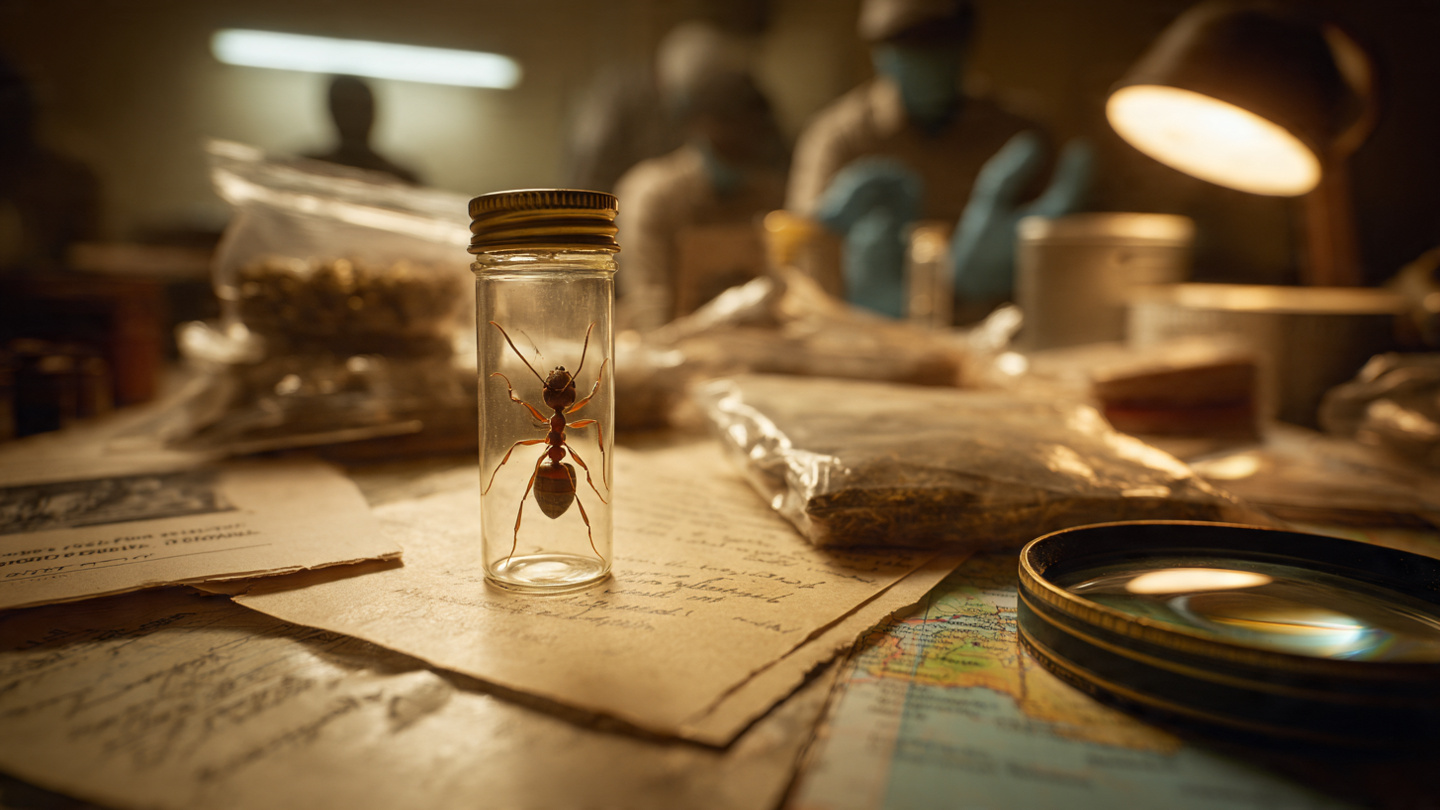
That is where Kenya becomes vulnerable. Its rich ecosystems contain species attractive to overseas buyers, while enforcement systems—already stretched by broader conservation pressures—must now monitor a trade that is physically easy to conceal. Unlike a tusk or a live parrot, ants can be hidden in tubes, syringes, vials, modified containers, or parcels that look ordinary at first glance. Their size gives smugglers an operational advantage.
Why ants are suddenly valuable
The economics are straightforward. Scarcity drives fascination, fascination drives online discussion, and online discussion drives prices. Rare queen ants are especially valuable because they can start entire colonies, making them far more desirable than worker ants. Once a collector obtains a queen, the purchase is not just a specimen—it is a breeding opportunity, a status symbol, and, in some cases, a small-scale business asset.
- Rarity increases value: Species from limited habitats or isolated ecosystems attract higher prices.
- Collectors seek queens: A single fertile queen can establish a colony and multiply commercial value.
- Shipping is easier: Insects are easier to conceal than larger trafficked wildlife.
- Online communities fuel demand: Social media, hobby forums, and private groups make niche trade more visible.
- Low awareness helps smugglers: Many people do not yet see insects as targets of serious wildlife crime.
Why the Illegal Ant Trade Matters More Than It Seems
It is tempting to dismiss the issue because ants are small and common in everyday life. That would be a serious mistake. Ants are among the most important ecological engineers on Earth. They aerate soil, disperse seeds, recycle nutrients, prey on pests, and form critical links in food webs. Remove enough individuals from the wild—especially reproductive queens from sensitive populations—and the effects can ripple outward in ways that are hard to measure immediately but costly over time.
Wildlife conservation too often suffers from a charisma bias. Large mammals receive attention because they are emotionally compelling and visually powerful. Insects rarely inspire the same public urgency, despite their foundational ecological role. That imbalance creates a dangerous blind spot. If traffickers learn that lesser-known species offer high returns with lower risk, they may increasingly shift toward insects, arachnids, reptiles, amphibians, and other overlooked wildlife.
In this sense, the illegal ant trade is not merely about ants. It is about the expansion of criminal opportunism into corners of biodiversity that law enforcement and public debate have historically neglected.
Ecological consequences of removing rare ants
Not every ant species plays the same ecological role, and not every instance of collection causes measurable harm. But the logic of wildlife trafficking is cumulative. When extraction becomes systematic and profit-driven, local populations can weaken quickly. Some species may be especially vulnerable if they reproduce slowly, occupy narrow habitats, or depend on specific environmental conditions.
The consequences can include:
- Disruption of local ecosystems: Ant colonies affect soil turnover, decomposition, and predator-prey dynamics.
- Loss of reproductive potential: Removing queens damages the long-term survival of local populations.
- Habitat stress: Collectors often target fragile areas already pressured by land use change and climate shifts.
- Scientific loss: Species can disappear from the wild before researchers fully understand their ecological value.
- Biosecurity risks: Illegally moved ants may become invasive if introduced into new environments.
The final point deserves special emphasis. An ant taken illegally from one region does not only threaten the source ecosystem. If transported abroad and released, escaped, or mismanaged, it can establish itself in a new environment and become invasive. That can trigger costly agricultural damage, biodiversity loss, and long-term control efforts.
The Business Model Behind Exotic Pet Smuggling
To understand exotic pet trafficking, it helps to think like a market analyst rather than a traditional conservation observer. Smugglers respond to incentives. If a product is high value, easy to transport, lightly regulated, and desired by a dedicated buyer base, it becomes attractive. Rare ants fit that model surprisingly well.
The trade often follows a familiar arc. First, a species gains visibility among collectors. Then prices rise as availability remains limited. Middlemen begin sourcing specimens from local areas, sometimes using people who may not fully understand the legal implications. Listings or discreet offers appear in private channels. Buyers rationalize the transaction as harmless, scientific, or hobbyist. By the time the trade is noticed by authorities, networks may already be transnational.
In my view, this is one of the most important lessons from the ant trade: wildlife crime increasingly resembles a digital-era supply chain. Demand can be shaped in real time by niche communities, while logistics are fragmented across borders, courier systems, and anonymous payment methods. That makes enforcement more complex than simply intercepting a smuggler at an airport.
How smugglers reduce risk
Smugglers favor products with low visibility and high margins. Ants offer both. A few hidden queens can represent significant value. The legal consequences may also be poorly understood by offenders, leading them to assume enforcement will be light. In addition, customs officers are often trained to spot more conventional wildlife contraband, not tiny invertebrates concealed in everyday packaging.
- Small size lowers detection risk
- High unit value increases profit per shipment
- Niche demand creates loyal buyers
- Limited public scrutiny reduces pressure
- Cross-border e-commerce expands reach
Kenya's Conservation Challenge

Kenya now faces a delicate challenge: it must respond firmly without treating this as a minor curiosity or an isolated oddity. The country has built global recognition for conservation leadership, but the evolution of wildlife crime requires constant adaptation. That means stronger intelligence, updated customs training, better species identification support, and tighter coordination between wildlife authorities, police, border agents, and international partners.
It also means improving legal clarity. Insect trafficking often falls into a gray area in the public imagination. People may not immediately understand that removing, possessing, exporting, or selling certain species can be illegal and ecologically harmful. Clear penalties, public communication, and visible enforcement all matter because they reshape perceived risk in the market.
At the same time, community awareness is essential. Local residents living near biodiverse habitats are often the first to notice unusual activity, unfamiliar collectors, or suspicious harvesting patterns. If they are informed, respected, and included in conservation efforts, they can become a powerful line of defense.
What authorities and conservation groups can do
Stopping wildlife trafficking in Kenya requires more than reactive seizures. It demands a strategy that recognizes how small-species trafficking works.
- Expand monitoring: Track online marketplaces, collector groups, and suspicious export patterns.
- Train frontline officers: Customs and airport teams need tools to recognize insect smuggling methods.
- Strengthen data systems: Better species records make it easier to identify unusual collection pressure.
- Support research: Scientists can help determine which species are most vulnerable to overcollection.
- Engage local communities: Conservation works best when nearby residents are active stakeholders.
- Improve international cooperation: Demand often exists abroad, so enforcement cannot stop at the border.
The Role of Collectors and Consumers
One uncomfortable truth about the illegal ant trade is that it exists because buyers exist. Demand is not an abstract force; it is the sum of individual decisions. Every person who purchases a trafficked queen or colony helps normalize the idea that rare wildlife can be privately owned for novelty, prestige, or entertainment.
That does not mean every hobbyist is acting maliciously. Some may be genuinely interested in entomology and unaware of the harm caused by unverified sourcing. But ignorance does not erase impact. Ethical collecting begins with traceability, legal compliance, and a willingness to walk away from suspicious offers. If a species is rare, unusually expensive, poorly documented, or shipped through secretive channels, buyers should assume there is a serious risk of illegality.
I believe consumers have more power here than they realize. Markets collapse when desire becomes socially embarrassing, legally risky, or ethically indefensible. If collector communities choose to value documentation over novelty and conservation over status, the incentive structure changes quickly.
Questions responsible buyers should ask
- Is the species legally sourced and documented?
- Does the seller provide clear origin information?
- Are permits available where required?
- Could this purchase contribute to habitat depletion?
- Would I still buy this specimen if its full collection story were public?
A Broader Warning for Global Wildlife Protection

The story of ant trafficking is ultimately a story about adaptation—by criminals, by markets, and, hopefully, by conservation systems. As enforcement intensifies around famous trafficked species, illegal traders do not simply disappear. They diversify. They look for overlooked organisms, under-regulated pathways, and buyer communities willing to spend heavily for rarity.
That pattern should concern everyone involved in biodiversity protection. Today it may be ants. Tomorrow it could be beetles, spiders, reptiles, amphibians, orchids, fungi, or other species with devoted collector demand. The line between niche hobby and illegal wildlife exploitation can become dangerously thin when profit enters the picture.
For journalists, scientists, and policymakers, the lesson is clear: conservation cannot rely only on public emotion. It must also rely on foresight. Species do not have to be famous to be valuable. They do not have to be large to be threatened. And they do not have to dominate headlines before their loss becomes significant.
Conclusion: Small Creatures, Big Stakes
A single trafficked ant may seem insignificant, but the system behind that sale is anything but small. It reflects a global trade willing to monetize even the most overlooked forms of life. It exposes how digital demand, weak oversight, and ecological ignorance can combine into a profitable and damaging industry. And it reminds us that conservation is not only about protecting the animals that inspire awe from a distance. It is also about defending the tiny architects of ecosystems that keep the natural world functioning.
Kenya’s experience should be taken seriously—not as an oddity, but as an early signal of where wildlife crime is heading next. If authorities, consumers, and conservation advocates respond decisively, this emerging trade can still be contained. If they underestimate it, the market will mature, spread, and become far more difficult to dismantle.
Call to action: Support organizations working in wildlife conservation, question the origins of exotic pets, report suspicious wildlife sales, and push for stronger protections for overlooked species. The future of biodiversity will not be secured only by saving the most visible animals. It will also depend on whether we choose to protect the smallest ones before profit erases them from the wild.