The idea of humans returning to the Moon stirs something powerful. For some, it brings back the daring spirit of the Apollo era. For others, it raises a sharper question: why go back at all? In my view, that question misses the bigger picture. The Moon is no longer just a destination. It is a proving ground, a science lab, a geopolitical frontier, and perhaps the most practical stepping stone humanity has toward Mars.
NASA’s Moon mission matters because it is about much more than planting flags or replaying history. It is about building the systems, partnerships, and knowledge needed for a sustained human presence beyond Earth. It is about understanding lunar resources, testing new spacecraft, reducing the risks of deep-space travel, and preparing for missions that could one day place astronauts on the Red Planet.
In other words, the road to Mars does not begin on Mars. It begins with the Moon.
Why the Moon matters again
For decades, the Moon looked like unfinished business. After the Apollo missions, human spaceflight priorities shifted toward low Earth orbit, space stations, and robotic exploration. But the strategic logic of returning to the Moon has become impossible to ignore. It offers the closest environment where space agencies can learn how to live and work on another world without venturing millions of miles into the unknown.
The Moon sits roughly three days from Earth, which makes it both distant and reachable. That balance is crucial. If equipment fails, if life-support systems need redesigning, or if mission architecture must be adjusted, engineers can respond far more quickly than they could during a journey to Mars. This makes lunar missions the ideal testbed for the technologies that deeper exploration will require.
NASA’s Artemis program is built around that logic. Rather than repeating Apollo’s short visits, the goal is to create a more sustainable and repeatable presence. That means new launch systems, new crew vehicles, lunar landers, surface operations, orbital infrastructure, and international cooperation on a scale that reflects the future of space exploration.
From Apollo to Artemis: what has changed
Apollo proved that humans could reach the Moon. Artemis is designed to prove that humans can return, stay longer, work more effectively, and do so as part of a broader long-term architecture. That difference is enormous.
Today’s lunar ambitions are not driven by prestige alone. They are shaped by practical needs and emerging realities:
- Technology has advanced, enabling smarter navigation, more capable robotics, and improved materials for deep-space missions.
- International competition has intensified, especially as China expands its lunar and space station capabilities.
- Commercial space companies now play a central role, lowering costs and speeding up innovation.
- Scientific interest in the Moon has grown, particularly around water ice, geology, and the history of the solar system.
- Mars planning has become more serious, making the Moon a practical training ground rather than a side quest.
That shift matters because it changes the meaning of a Moon landing. A modern mission is not simply a spectacle. It is infrastructure in the making.
The race is not just against distance, but against time
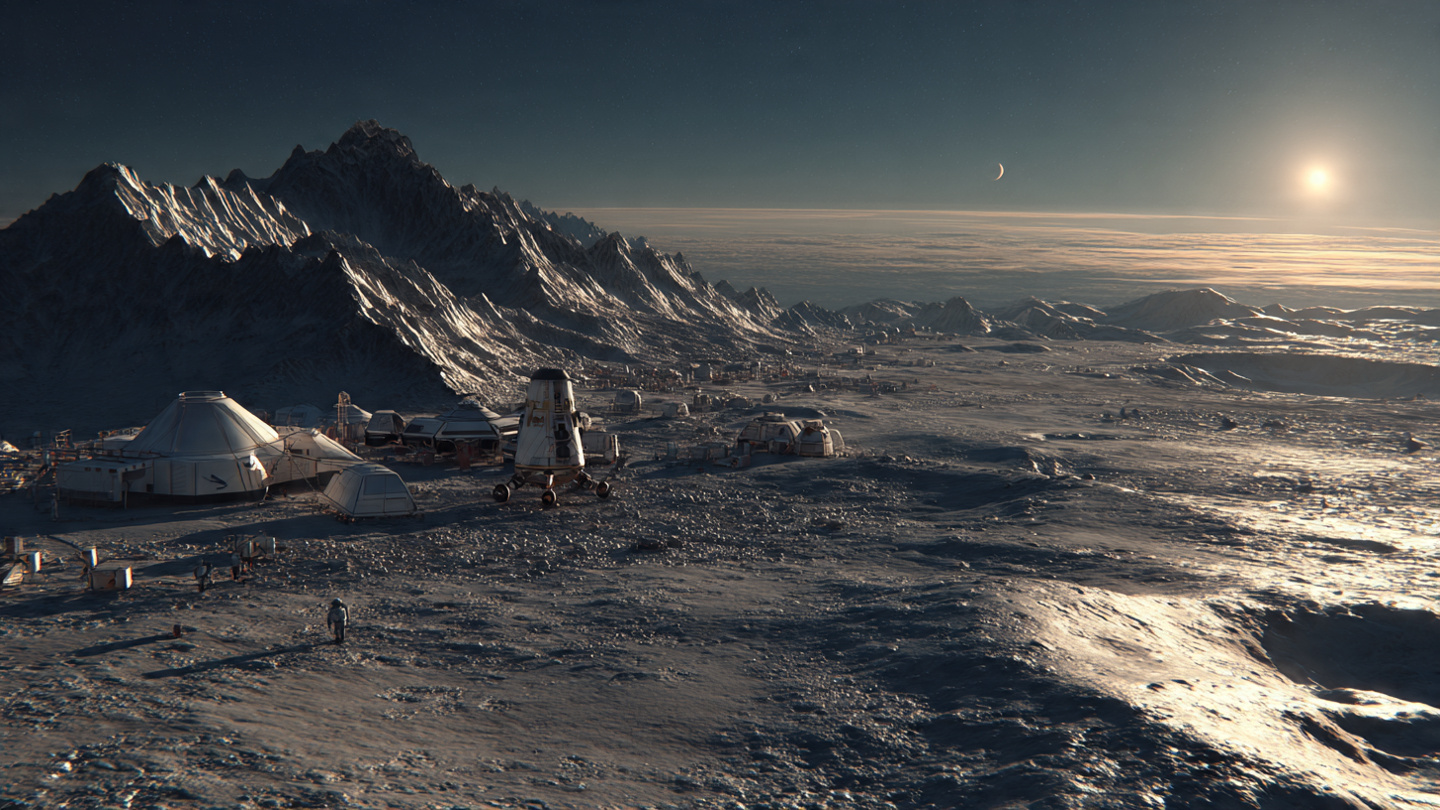
Space exploration has always mixed science with strategy. The original Moon race was inseparable from Cold War politics. Today’s environment is different, but competition still matters. China’s progress in lunar exploration has pushed the United States and its partners to move with greater urgency. No major spacefaring nation wants to be absent from the next defining phase of exploration.
This does not necessarily mean a dramatic one-to-one repeat of the US-Soviet rivalry. The modern race is more complex. It includes state agencies, private launch providers, international alliances, and competing visions for how lunar access and resources will be managed. Yet the stakes are unmistakable. The country or coalition that establishes a durable presence on and around the Moon may shape the legal, technological, and economic rules of cislunar space for decades.
That is one reason NASA’s Moon mission matters so much. It is not just about being first to return. It is about being ready to lead the next phase of human activity beyond Earth.
Lunar leadership has real-world consequences
Leadership in space can influence everything from advanced manufacturing to communications, robotics, defense-adjacent technologies, and educational pipelines. History shows that major space programs tend to generate spillover benefits far beyond their original goals. The same could happen again as lunar exploration accelerates investment in aerospace engineering, energy systems, habitat design, and autonomous machines.
From a personal perspective, this is one of the most compelling reasons to pay attention. Space missions can feel abstract until you trace how they affect life on Earth. But behind every ambitious launch is a wave of research, industrial collaboration, and talent development that often reshapes entire sectors.
The scientific case for going back
If the Moon were just a dusty rock, the case for returning would be weaker. It is not. The Moon is a scientific archive that preserves clues about the early solar system, the formation of Earth, and the effects of billions of years of cosmic bombardment. Because the Moon lacks the weather, oceans, and plate tectonics that constantly reshape Earth, its surface holds a more intact record of ancient events.
One of the most exciting discoveries in recent years is the strong evidence for water ice in permanently shadowed craters near the lunar poles. That matters scientifically and operationally. Scientifically, it can reveal how water arrived in the inner solar system. Operationally, it could support future missions by providing a local source of drinking water, breathable oxygen, and even rocket fuel through chemical processing.
Lunar water ice may prove to be one of the most important resources ever identified beyond Earth. If it can be accessed efficiently, it could reduce the need to launch every critical supply from our planet, dramatically changing the economics of space travel.
What scientists hope to learn
- The Moon’s origin and what it reveals about the giant impact theory.
- The history of solar radiation preserved in lunar soil and rock.
- The distribution of ice and volatile compounds near the poles.
- The geology of the far side, which differs from the near side in important ways.
- The feasibility of long-term human habitation in a harsh, airless environment.
Every robotic lander, orbiter, and crewed mission adds another layer to that picture. The Moon is not just close. It is scientifically rich.
Why the Moon is the training ground for Mars
Mars is the headline dream, but dreams require logistics. A crewed mission to Mars would involve months of travel, communication delays, exposure to radiation, constrained medical support, and no realistic quick-return option. That is why NASA needs somewhere to test systems under real off-world conditions before committing astronauts to that journey.
The Moon offers that opportunity. Operations there can help validate the exact capabilities a Mars mission will depend on: surface mobility, habitat construction, power generation, resource extraction, dust mitigation, autonomous support systems, and human psychological performance in isolated environments.
Consider a practical example. If astronauts are going to spend months on Mars, they will need systems that can recycle air and water with extraordinary reliability. Testing those systems in low Earth orbit is useful, but testing them on the lunar surface adds complexity closer to what Mars will demand. The same goes for spacesuits, regolith handling, excavation tools, and emergency procedures.
The Moon is not Mars, of course. Its gravity, atmosphere, and environmental conditions are very different. But it is close enough to support iterative learning and hostile enough to expose design weaknesses before those weaknesses become mission-ending problems on a far longer expedition.
Key Mars-related lessons the Moon can teach
- How to build resilient habitats that withstand extreme temperature swings and radiation exposure.
- How crews perform over extended missions with limited support from Earth.
- How to use local materials for construction, shielding, or resource extraction.
- How to coordinate human and robotic teams across challenging terrain.
- How to sustain deep-space logistics across multiple launches and long timelines.
Put simply, if humanity cannot develop sustainable lunar operations, a safe and repeatable mission to Mars becomes much harder to imagine.
The commercial space factor
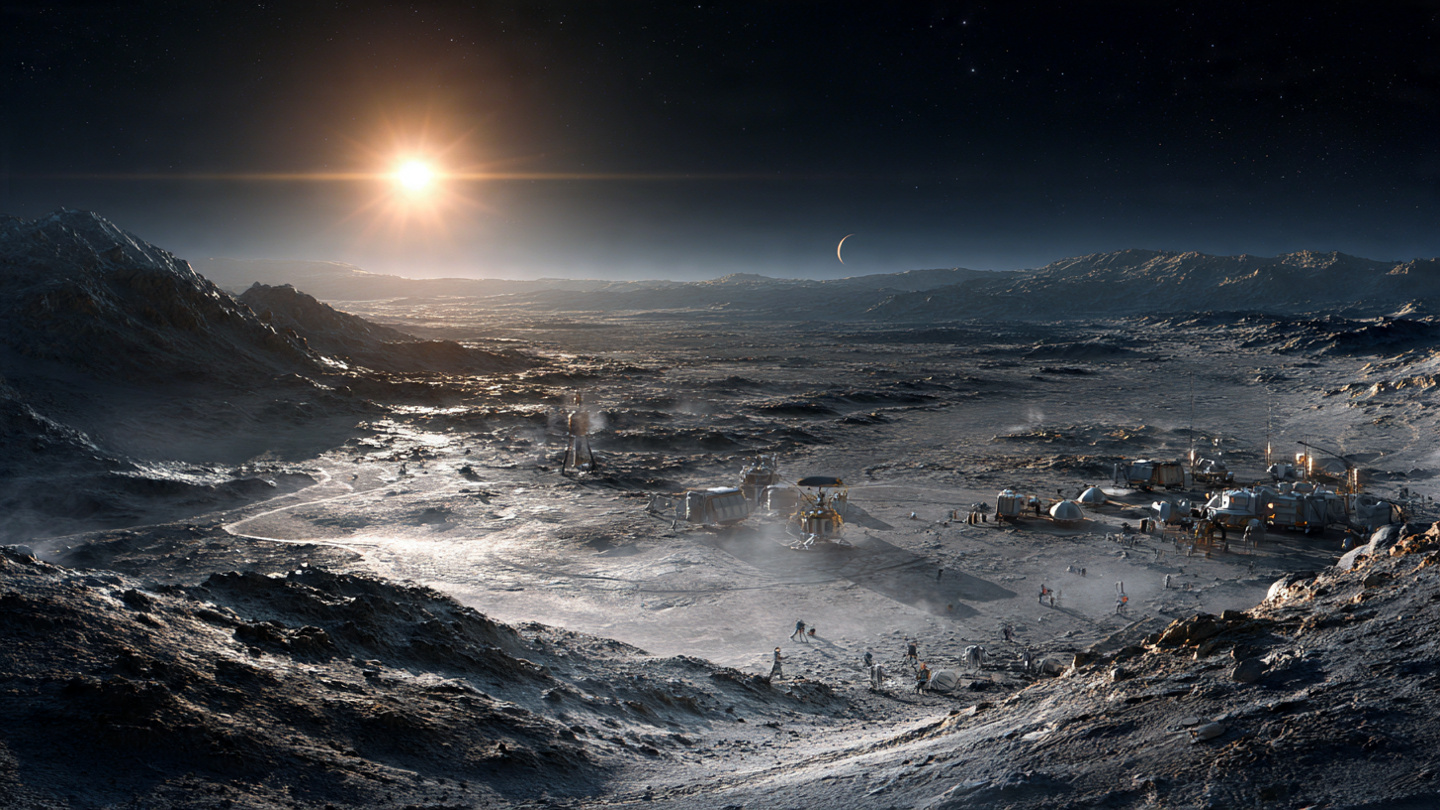
Another reason NASA’s Moon mission matters is that it reflects a new model of exploration. Government agencies are no longer acting alone. Commercial companies now help design landers, launch rockets, transport cargo, and develop technologies that can support future lunar and Martian missions.
This public-private approach could speed progress and spread risk. Instead of relying on a single giant government system for every task, NASA can work with multiple partners that bring different capabilities and competitive pressure. That can lead to faster development cycles and a more flexible space economy.
There is also a bigger implication here. A sustained lunar presence may create demand for communications networks, navigation services, cargo delivery, construction systems, and scientific instruments. Over time, cislunar space could evolve from a series of isolated missions into a functioning ecosystem.
That does not guarantee profitability or smooth execution. Space remains difficult, expensive, and unforgiving. But the commercial element changes the scale of what is possible. It also means the return to the Moon is not just a national project. It is increasingly an industrial one.
The challenges no one should ignore
Enthusiasm should not erase reality. Lunar exploration is hard. Missions can be delayed by engineering setbacks, budget pressures, political changes, supply chain issues, and safety concerns. The farther ambitions extend, the more vulnerable they become to shifts in funding and leadership.
There are also hard questions about sustainability. Can governments maintain long-term commitment when election cycles reward short-term wins? Can international partnerships stay aligned when geopolitical tensions rise? Can commercial providers deliver at the pace required without sacrificing reliability?
Then there is the human challenge. Deep-space missions place extraordinary demands on crews. Radiation exposure, isolation, operational stress, and medical risk all become more serious as mission durations grow. The Moon can help NASA learn how to manage those pressures, but it cannot eliminate them.
These challenges do not weaken the case for returning. They strengthen it. If anything, they underscore why the Moon is the right place to confront these difficulties before aiming farther out.
Why this moment feels different
There have been many grand space plans over the years, and not all of them survived contact with political or budgetary reality. So what makes this moment stand out? In my view, it is the convergence of multiple forces at once: scientific opportunity, strategic urgency, private-sector capability, international participation, and a clearer long-term destination in Mars.
That combination gives the current push more momentum than a symbolic one-off mission. The Moon is now tied to a wider framework of exploration that includes orbiting infrastructure, robotic precursors, surface systems, and eventual human deep-space operations. It feels less like a stunt and more like a foundation.
And foundations matter because they shape what comes next. If NASA and its partners can establish reliable lunar operations, they will not just be revisiting old ground. They will be opening a pathway that future missions can actually use.
What success would really look like
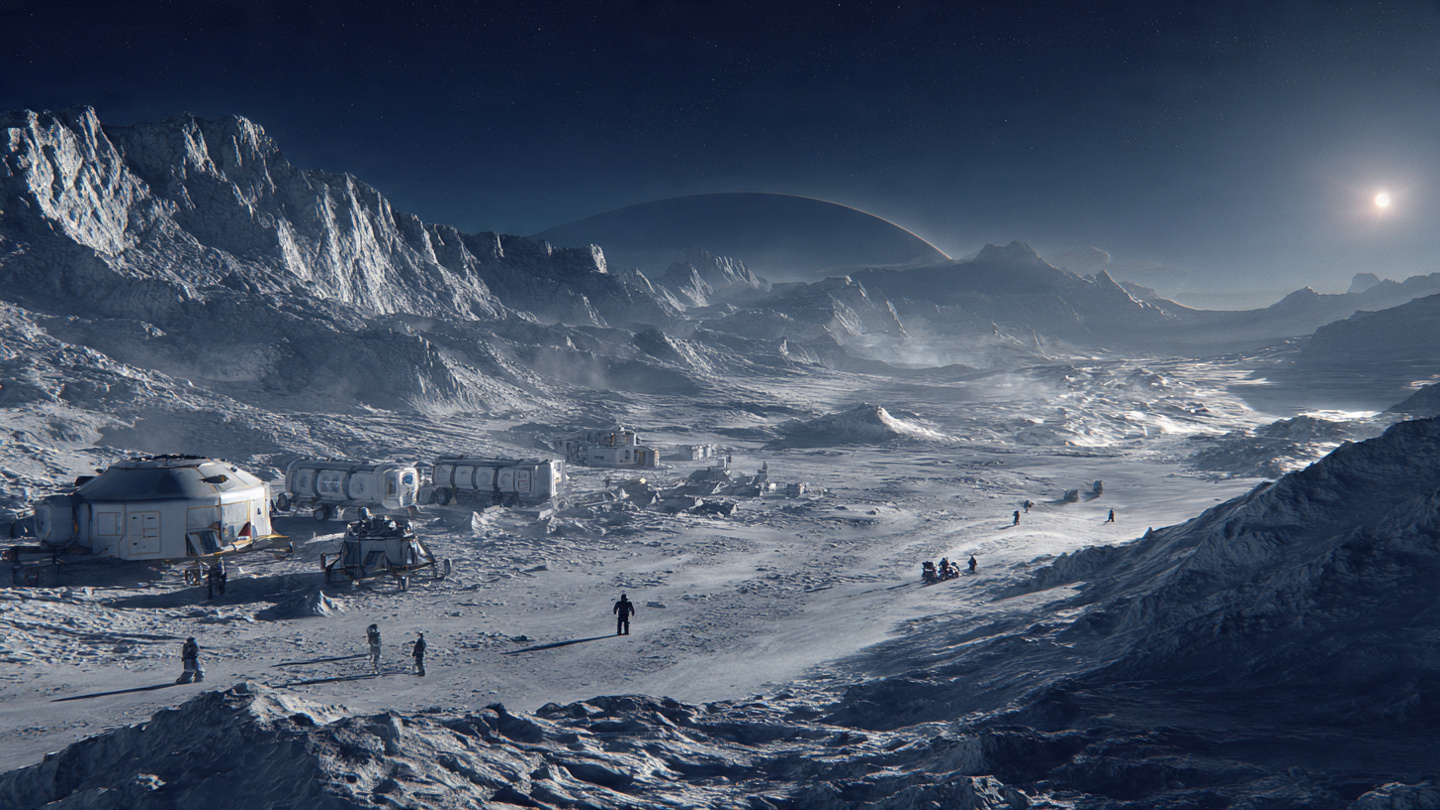
Success is not just a safe landing. It is a sequence of capabilities that build on one another. It is astronauts operating effectively on the lunar surface, missions returning meaningful science, hardware surviving harsh conditions, and systems proving they can support repeated use. It is also about who gets included: international partners, commercial innovators, and a new generation inspired to enter science and engineering.
Ultimately, the Moon mission matters because it reframes humanity’s ambitions in space. Instead of asking whether we can touch another world, it asks whether we can work there, learn there, and prepare from there.
That is a far more consequential question.
Conclusion
NASA’s return to the Moon is not a detour on the way to Mars. It is the essential first stage of the journey. The Moon offers scientific discovery, strategic relevance, technological testing, and the chance to build systems that make deeper exploration realistic rather than rhetorical. It gives humanity a nearby world on which to practice the future.
If this effort succeeds, it will do more than revive the romance of space travel. It will help determine whether the next giant leap is possible at all. The most important lesson of this era may be simple: to reach Mars, we first have to learn how to live beyond Earth, and the Moon is where that education begins.
If you care about the future of space exploration, now is the time to pay attention. Follow the missions, watch the science, and keep asking the big question that drives every great leap forward: not just where humanity can go next, but how wisely we can prepare for it.