Flip a light switch, charge a phone, run a refrigerator, and it is easy to imagine electricity as something abstract that simply appears at the wall. But when you follow the chain of energy back to its source, a striking truth emerges: most electricity on Earth ultimately comes from solar power. Sometimes the connection is direct, as with rooftop panels. More often, it is indirect, woven through wind, rain, rivers, forests, and even the ancient organic matter that became coal, oil, and natural gas.
That idea changes how we think about the energy system. It turns electricity from a confusing patchwork of fuels and technologies into a more unified story about sunlight, time, and conversion. In practical terms, it also helps explain why the global shift toward renewable energy is not a leap into the unknown. In many ways, modern civilization has always been living on stored or redistributed sunshine. We are simply getting better at tapping it more efficiently.
I find this perspective oddly reassuring. It makes the energy debate less about inventing a completely new world and more about understanding the one we already inhabit. The sun is not a niche player in the energy economy. It is the main engine behind the climate, the water cycle, plant growth, and the conditions that make many forms of electricity possible.
The Big Idea: Electricity Has a Family Tree
When people hear the phrase solar power, they usually think of photovoltaic panels on rooftops or utility-scale solar farms in the desert. That is only one branch of the story. A broader scientific view asks a different question: where did the energy originally come from before it was transformed into electricity?
Under that definition, many major electricity sources trace back to the sun:
- Solar panels convert sunlight directly into electricity.
- Wind power exists because the sun heats Earth unevenly, creating pressure differences and moving air.
- Hydropower depends on the water cycle, which is driven by solar heating and evaporation.
- Biomass energy comes from plants that store sunlight through photosynthesis.
- Fossil fuels are ancient biomass, meaning sunlight captured millions of years ago and preserved underground.
There are important exceptions. Nuclear power does not come from the sun in this sense; it comes from energy stored in atomic nuclei. Geothermal energy mainly comes from heat inside Earth, much of it left over from planetary formation and radioactive decay. Tidal power is driven largely by the gravitational interaction of the Moon and Sun. Even so, if you look at the global electricity mix, a large share still depends on solar energy either directly or indirectly.
Direct Solar Electricity: The Most Obvious Connection
The clearest example is solar electricity generated by photovoltaic cells. These systems convert incoming sunlight into electrical current with no combustion and no moving fuel supply. What once seemed futuristic is now routine. Homes, warehouses, schools, and power utilities increasingly rely on photovoltaic systems because costs have fallen dramatically while performance has improved.
Direct solar power has several advantages that make it central to the future of electricity:
- It uses a resource that arrives daily and abundantly in most regions.
- It can scale from a small roof installation to a vast solar farm.
- It produces electricity close to where people use it, reducing some transmission losses.
- It pairs well with batteries, smart inverters, and modern grid management.
Yet the deeper insight is that direct solar generation is just the simplest way of accessing the same energy source that has been shaping the energy economy all along. In that sense, solar panels are less a radical break from history and more a shortcut. Instead of waiting for sunlight to become wind, rainfall, forests, or fossil carbon, we capture it almost immediately.
Wind Power: Solar Energy in Motion
Wind energy may not look solar at first glance, but its origin is rooted in sunlight. The sun heats Earth’s surface unevenly. Land warms faster than oceans. Equatorial regions receive more intense solar radiation than polar regions. Day and night cycles, seasons, terrain, and cloud cover all add complexity. These temperature differences create pressure gradients in the atmosphere, and air flows in response. That moving air becomes wind.
Wind turbines then convert the kinetic energy of that moving air into electricity. So although the turbine itself is not absorbing sunlight the way a solar panel does, the atmospheric engine that keeps the wind blowing is fundamentally solar-driven.
This matters because it helps explain why wind and solar often complement each other. They are both expressions of the same planetary energy input, but they appear in different forms and at different times. A windy evening after a sunny afternoon is not a coincidence in the broad physical sense. It is part of the climate system redistributing solar heat.
For households and policymakers, the practical takeaway is simple: adding wind to the grid is not a separate story from the rise of solar power. It is another way of harvesting sunlight after the atmosphere has processed it.
Hydropower: Electricity From Sunlight, Water, and Gravity
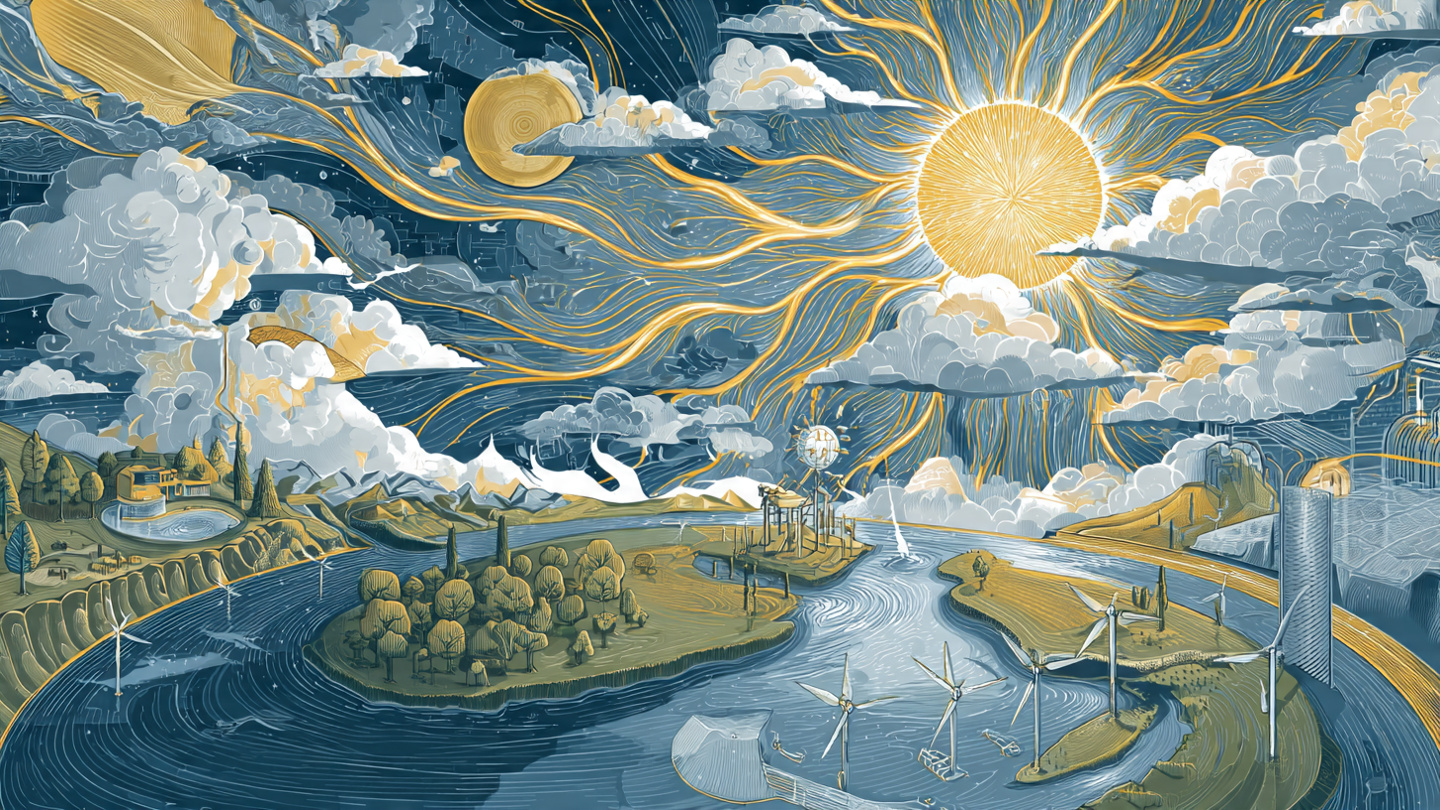
Hydroelectric power is one of the oldest and most established renewable energy sources. Dams and river systems generate electricity by channeling moving water through turbines. But why is that water moving in the first place?
The answer begins with solar heating. The sun warms oceans, lakes, and land surfaces, causing water to evaporate. That vapor rises, cools, condenses into clouds, and falls as rain or snow. Some of that water lands at higher elevations. Gravity then pulls it downhill through streams and rivers. Hydropower stations capture part of that descent.
In other words, hydropower is stored solar energy mediated through the water cycle. The sun lifts water into the atmosphere; gravity does the rest.
This is one of my favorite examples because it makes the system feel tangible. A mountain reservoir powering a city may seem worlds away from a bright summer sky, but the connection is intimate. Without solar-driven evaporation, many river systems would not maintain the flow patterns that make large-scale hydropower possible.
Why This Perspective Matters for Hydropower
Understanding hydropower as indirect solar power also highlights its vulnerability. Changes in climate, rainfall patterns, snowpack, and drought can affect electricity generation. That means the future of hydro is tied not only to dams and turbines, but also to the broader solar-powered climate system that governs precipitation.
Fossil Fuels: Ancient Sunlight Stored Underground
This is where the argument becomes especially surprising. Even coal-fired power plants and natural gas electricity are, in a real sense, forms of solar power delayed by geological time.
Millions of years ago, plants captured sunlight through photosynthesis. Some of that organic material accumulated in sediments and, under heat and pressure over immense periods, transformed into coal, oil, and gas. When we burn those fuels in a power station, we release chemical energy that originally entered the biosphere as sunlight.
That does not make fossil fuels clean, sustainable, or equivalent to modern renewables. The difference is crucial. Fossil fuels represent ancient solar energy concentrated over vast spans of time, and when burned rapidly, they release carbon that disrupts Earth’s climate balance. But from an energy-origin standpoint, the lineage is still solar.
This framing can sharpen, rather than soften, the case for renewable energy. If fossil electricity is basically old sunshine with heavy environmental costs, then modern solar, wind, and hydro are cleaner ways to use the same broader source without digging up prehistoric carbon reserves.
The Key Distinction: Flow Versus Stock
One useful way to think about this is to separate energy into two categories:
- Flow energy: sunlight, wind, and moving water that arrive continuously.
- Stock energy: stored reserves such as coal, oil, and gas accumulated over geological ages.
Modern energy strategy increasingly favors flows over stocks. That shift reduces emissions, improves long-term resilience, and aligns electricity production with energy sources that renew naturally rather than deplete.
Biomass and Bioenergy: Recent Sunlight on Demand
Biomass occupies a middle ground between direct renewables and fossil fuels. Wood, crop residues, and other organic materials store solar energy captured recently through photosynthesis. When biomass is used to generate electricity, it is essentially converting recent biological solar storage into usable power.
Supporters value biomass because it can provide dispatchable power, meaning electricity can be generated when needed rather than only when the sun shines or the wind blows. Critics note that sustainability depends heavily on sourcing, land use, air quality impacts, and carbon accounting. Those debates matter. Still, the underlying energy origin remains the same: sunlight transformed into plant matter.
For rural economies and agricultural regions, biomass can be a practical example of how energy systems connect with local landscapes. Crop waste, forestry residues, or organic byproducts can become part of a broader electricity mix, though only when managed responsibly.
What Does Not Mainly Come From the Sun?
To understand the full picture, it helps to note the major exceptions. Not all electricity comes from solar power, and pretending otherwise would weaken the argument.
- Nuclear energy comes from fission, releasing energy stored in atomic nuclei.
- Geothermal power taps heat from within Earth.
- Tidal energy is driven primarily by gravitational forces involving the Moon and Sun.
These sources are important because they diversify the grid and can provide reliable low-carbon electricity. In some countries, nuclear power is a major contributor to decarbonization. Geothermal can offer stable baseload generation where geology allows. Tidal systems remain smaller in scale but technologically interesting.
The central point is not that every electron owes its existence to sunlight. It is that most of the world’s major electricity pathways are directly or indirectly solar-driven. That reality often goes underappreciated.
Why This Matters for the Energy Transition
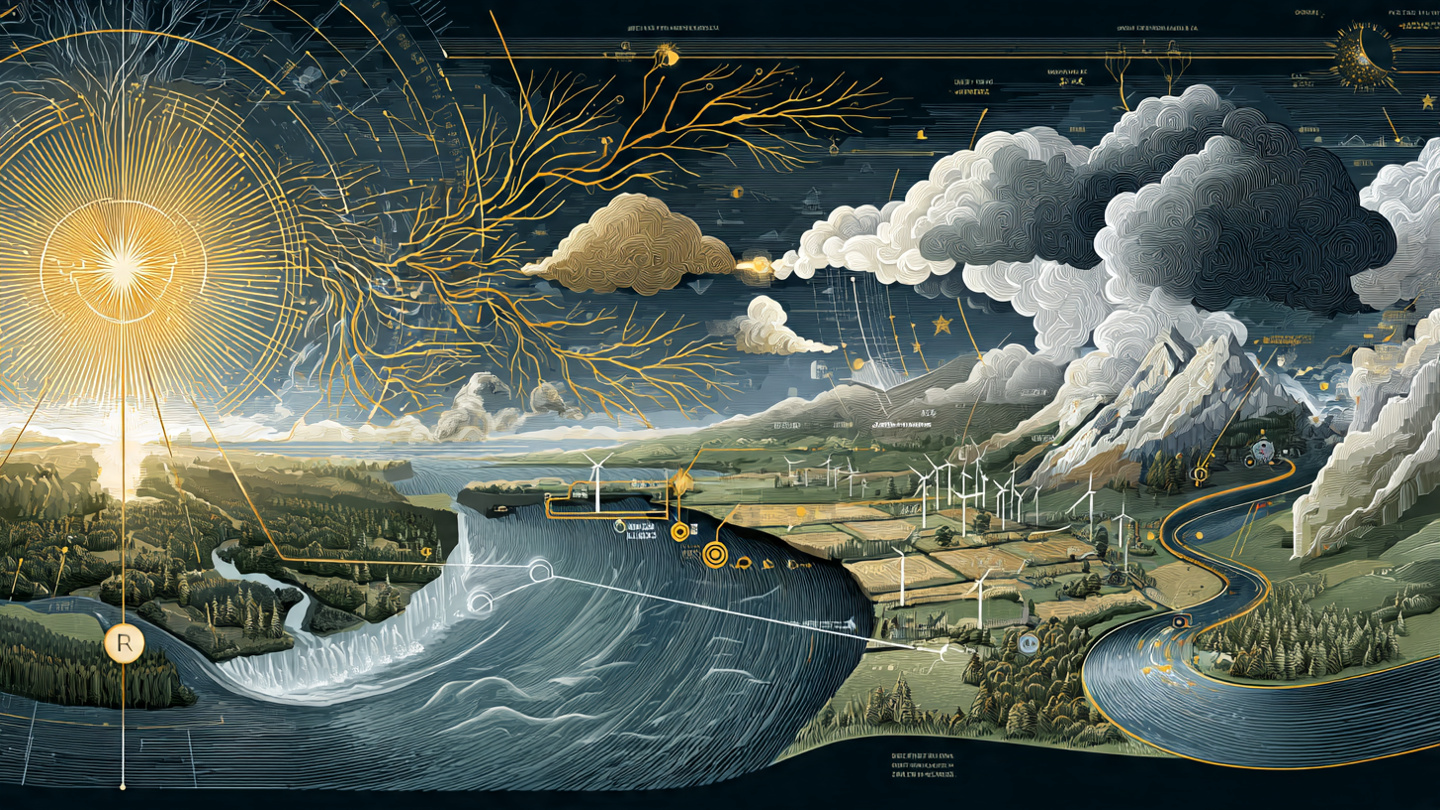
Seeing electricity through this lens changes how we think about the transition away from high-emission energy systems. It reveals continuity where people often assume disruption. Human civilization is not moving from one unrelated energy universe to another. It is moving from inefficient, polluting, delayed forms of solar dependence toward cleaner, faster, more controllable ones.
That shift has several implications:
- Solar and wind are not fringe resources; they are modern expressions of Earth’s dominant external energy input.
- Grid modernization matters because solar-derived resources vary by time, weather, and location.
- Energy storage matters because direct solar access is abundant but intermittent.
- Efficiency matters because the cheapest electricity is often the electricity you never need to generate.
If you have ever watched a home battery store midday solar production for evening use, you have seen a miniature version of the broader transition. We are learning to manage solar abundance rather than rely on combustion by default.
Everyday Examples That Make the Concept Click
Sometimes the easiest way to understand this big idea is through ordinary life.
Your Electric Fan on a Windy Grid
If your local utility gets power from wind farms, your fan may literally be running on air currents created by uneven solar heating. The breeze outside and the airflow inside your room are part of the same chain.
Your Coffee Maker on Hydropower
If your city uses hydroelectricity, your morning coffee may depend on sunlight that evaporated ocean water, built clouds, and sent rain or snow into a watershed months earlier.
Your Lights on Fossil Fuel Power
Even if your electricity comes from gas or coal, the energy being released likely began as sunlight captured by ancient plants. The problem is not the solar origin. The problem is the carbon-intensive route.
These examples are useful because they take a huge planetary system and bring it back to daily routines. The grid can feel impersonal, but it is deeply physical. Light, heat, wind, water, pressure, chemistry, and time all meet there.
The Long Forecast: Sunshine for Billions of Years
One reason the idea of solar-derived electricity is so powerful is that the sun is not a temporary fuel deposit. Barring unimaginable disruptions, the sun will continue shining for roughly another five billion years. From a human planning perspective, that is effectively the ultimate long-term energy backdrop.
Of course, the engineering challenge is not whether sunlight will exist. It is whether we can capture, convert, store, and distribute solar-driven energy systems intelligently enough to support modern life. That means building better transmission lines, improving battery technology, expanding demand flexibility, and designing electricity markets that reward reliability as well as low emissions.
Still, it is hard not to be impressed by the scale of the opportunity. Every day, Earth receives far more solar energy than civilization currently uses. The issue is not scarcity at the source. It is infrastructure, policy, economics, and coordination.
A More Useful Way to Think About Electricity
For years, public discussions about energy have framed sources as competitors in a crowded menu: coal versus gas, wind versus solar, hydro versus nuclear. There is some truth in that. Different technologies have different strengths, constraints, and costs. But the broader scientific story is more elegant. Many of these options are branches of one solar family tree.
That perspective encourages better questions. Instead of asking only which fuel dominates now, we can ask which conversion path is most efficient, least polluting, most resilient, and most affordable over time. Once you do that, the logic of modern renewable electricity becomes easier to see.
Direct solar power avoids the long detour through biology and geology. Wind power captures atmospheric motion before it dissipates. Hydropower harvests the gravitational consequence of a solar-driven water cycle. Each route is different, but each reflects the same planetary input arriving in a different form.
Conclusion
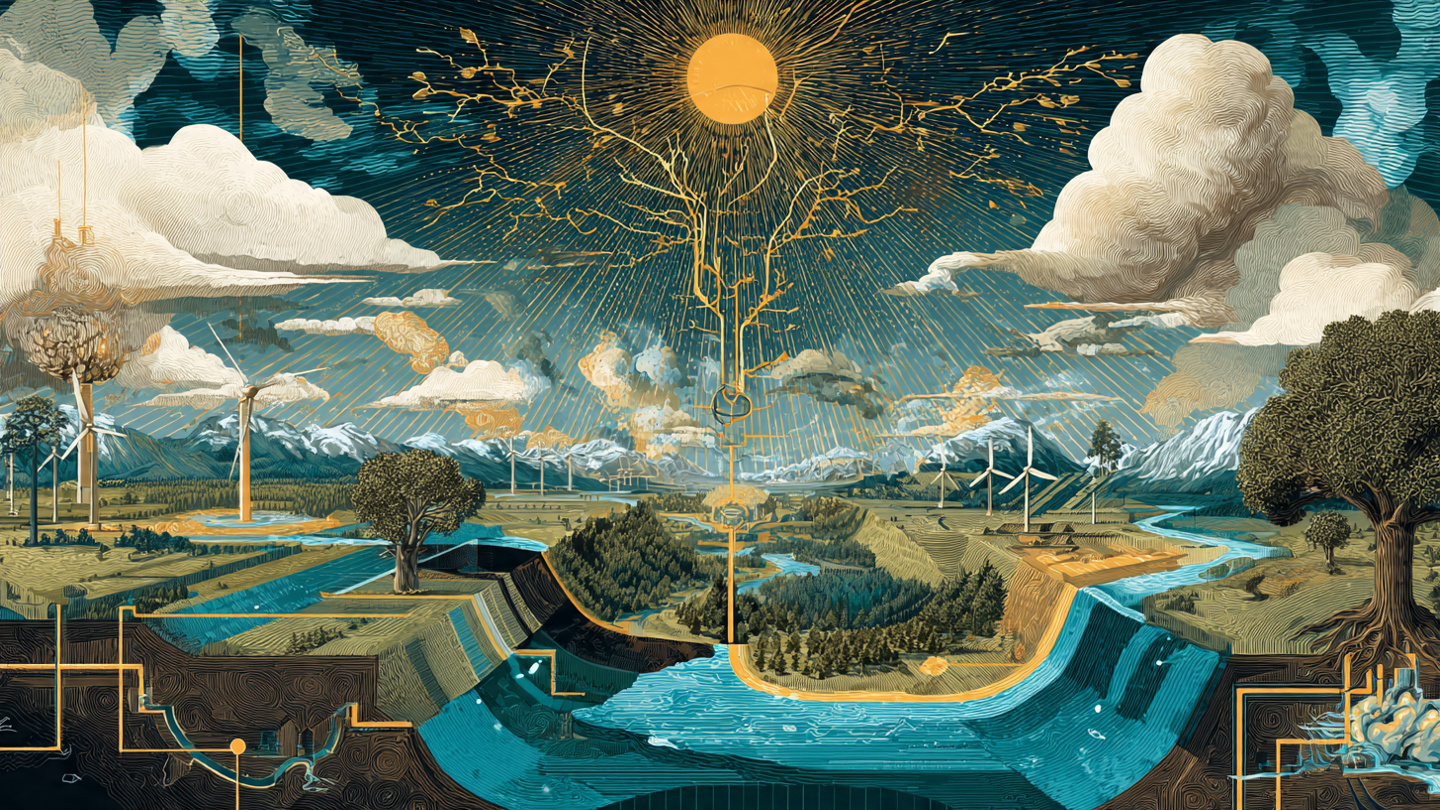
Most electricity does not begin where we think it does. It may emerge from a panel, a turbine, a dam, or a smokestack, but in many cases its deeper origin is sunlight. The sun drives weather, rainfall, photosynthesis, and the ancient biological processes that gave rise to fossil fuels. That makes solar power far more than one technology among many. It is the hidden foundation of much of the energy system itself.
Recognizing that truth does not solve every energy challenge, but it does bring clarity. It reminds us that the future of electricity is not about chasing a mysterious new force. It is about using the most abundant energy source in our environment with greater intelligence and fewer consequences.
If you want to make better sense of clean energy, climate strategy, and the electric grid, start with this question: how many steps removed is your power from the sun? The answer reveals more than most people realize, and it is one of the best ways to understand where energy is headed next.
Want to stay ahead of the energy transition? Follow the science, watch how your local grid is changing, and look for the solar connections hiding in plain sight across the technologies that power everyday life.