Teleportation has one of the strongest grips on the human imagination because it promises something almost everyone wants: instant travel without the distance in between. No airports, no traffic, no rocket fuel, no waiting. Just step in, disappear, and arrive somewhere else. It is elegant, dramatic, and deeply seductive. It is also one of the most misunderstood ideas in modern science.
When people talk about teleportation, they often blend together several very different concepts: science-fiction transporters, quantum teleportation, mind uploading, and futuristic matter transmission. That confusion matters because the real science is already extraordinary without the need to oversell it. In fact, once you understand what physicists mean by teleportation, the subject becomes even more interesting. The truth is not that teleportation is impossible in every sense. The truth is that what is possible is much narrower, much stranger, and much less cinematic than most headlines and movie scenes suggest.
I have always found teleportation to be a perfect example of how popular culture can teach the right vocabulary while creating the wrong mental picture. We hear the word often enough to feel familiar with it, yet most people are picturing something physics does not currently allow. If you have ever wondered whether teleportation could work like it does in Star Trek, or whether quantum teleportation means humans might soon beam across the planet, this is where the misconceptions start to fall away.
The Core Mistake: Confusing Information With Matter
The biggest misunderstanding about teleportation is simple: moving information is not the same as moving a physical object. In everyday conversation, teleportation usually means taking a person or object in one place and causing that same person or object to appear somewhere else instantly. In real physics, the most established use of the term refers to something much more specific: the transfer of a quantum state from one system to another.
That may sound abstract, but the distinction is everything. Quantum teleportation does not mean a particle physically flies through empty space with magical speed. It means the exact quantum information describing one particle’s state can be recreated in another particle at a distant location, under very strict conditions. The original state is destroyed in the process. Nothing about that resembles the effortless human transport seen in science fiction.
So when a headline says scientists achieved teleportation, the safe interpretation is usually this: they transferred quantum information between particles, not that they teleported matter, furniture, or people.
- Science fiction teleportation imagines whole bodies or objects disappearing and reappearing elsewhere.
- Quantum teleportation transfers a quantum state using entanglement and classical communication.
- Matter transmission would require describing and reconstructing an object at unimaginable precision.
- Mind-transfer versions raise separate questions about identity, consciousness, and continuity.
What Quantum Teleportation Actually Does
It Transfers a State, Not a Body
Quantum teleportation relies on quantum entanglement, one of the most counterintuitive ideas in physics. Two particles can be prepared in a linked condition such that measuring one affects how we describe the other, even when they are far apart. Using that entanglement, scientists can transfer the quantum state of one particle onto another distant particle.
That sounds futuristic because it is. But the process has limits that are often left out of popular summaries. The distant particle does not automatically become useful the moment entanglement exists. The protocol also requires a classical communication channel, which means ordinary information still has to be sent from one place to another. And classical information cannot travel faster than light. So despite the mysterious reputation of entanglement, quantum teleportation does not allow faster-than-light messaging.
It Is Real, But It Is Not Human Teleportation
Experiments have demonstrated quantum teleportation across laboratory setups, fiber networks, and even space-based systems. These achievements matter enormously for quantum computing and quantum communication. They are not trivial tricks. They are serious milestones in modern physics and engineering.
Still, turning that into human teleportation is like saying a successful text message proves we are close to faxing entire mountains across the ocean. The scale difference is not just large. It is almost beyond comprehension.
- Quantum teleportation has been demonstrated with photons, atoms, and other small-scale quantum systems.
- It supports progress in quantum networks and potentially ultra-secure communication.
- It does not mean people can be teleported with current science.
- It does not bypass the speed of light.
Why Human Teleportation Is So Much Harder

The Information Problem Is Absurdly Large
A human body contains roughly 37 trillion cells, and each cell contains staggering molecular complexity. To teleport a person in the science-fiction sense, you would need a complete physical description of their body at an extraordinary level of detail. Not just where the organs are, but where every relevant molecule sits, what state it is in, and potentially what quantum properties matter.
Even if you set aside the deepest quantum complications, the amount of information required would be almost unimaginable. Then there is the engineering challenge of transmitting that information, receiving it, and assembling matter into the right arrangement with flawless accuracy. A tiny error in a digital photo gives you a visual artifact. A tiny error in reconstructing a brain could change memory, personality, or viability.
This is where teleportation fantasies usually glide over the hard part. The hard part is not building a flashy chamber with lights. The hard part is that a human being is not a simple object but a massively dynamic physical process.
The Heisenberg Problem
There is another obstacle often ignored in casual discussions: in quantum mechanics, you cannot measure every property of a system with arbitrary precision at the same time. The very act of measurement affects the system. This means the dream of scanning a person completely and perfectly may collide with basic physical limits before you even start rebuilding them elsewhere.
That is why many physicists are cautious when teleportation gets discussed too casually. The issue is not a lack of imagination. The issue is that nature appears to place rules on what can be known, copied, and transmitted.
Would a Teleported Person Still Be You?
Even if the technical barriers disappeared, teleportation would still leave us with a philosophical problem that science fiction often treats as a side note: identity. Suppose a machine scans your body, destroys it, and reconstructs an exact copy somewhere else. Did you travel, or did you die while a duplicate appeared at the destination?
This question is not just academic. It strikes at the heart of what people think teleportation is for. Most people do not merely want a copy of themselves on another planet. They want their own conscious experience to continue there. And we do not have a clear scientific theory that proves this kind of continuity would survive destruction-and-reassembly.
Personally, this is the point where teleportation stops sounding convenient and starts sounding unsettling. If a teleporter created a perfect duplicate of me while the original remained standing in the departure booth, it would be hard to argue that both are somehow one uninterrupted person. Once you see that problem clearly, the transporter fantasy becomes much less comfortable.
The Star Trek Transporter Problem
This is also why the old debate over Star Trek transporters refuses to die. The fictional device is usually treated as transportation, but depending on how you interpret it, it may function more like disassembly plus reconstruction. If so, the transporter is not just moving Captain Kirk. It may be ending one physical instance and creating another with matching memories and structure. That may be dramatically efficient for storytelling, but it opens major questions about whether the person who arrives is numerically the same individual who left.
Fans love to debate whether the transporter kills you every time. The reason that debate persists is that it touches a genuine issue in philosophy of mind. The science-fiction framing makes it entertaining, but the underlying question is real: is continuity of pattern enough, or does continuity of the original physical process matter?
What People Get Wrong About “Impossible”
Another common mistake is swinging too far in the other direction and declaring that teleportation is completely impossible, full stop. That is too blunt. Some forms of teleportation are already part of established experimental physics. Others may remain forever out of reach. The word itself covers too much territory to support a simple yes-or-no answer.
A better way to think about it is to separate the possibilities.
- Quantum state teleportation: real, experimentally demonstrated, scientifically important.
- Human body teleportation: far beyond current capability and possibly blocked by fundamental constraints.
- Consciousness-preserving teleportation: scientifically unresolved and philosophically controversial.
- Instant teleportation faster than light: inconsistent with our current understanding of physics.
That nuance matters for good science communication. If we say teleportation is impossible, we erase legitimate breakthroughs in quantum information science. If we say teleportation is around the corner, we mislead people about what those breakthroughs actually mean.
Why Headlines Keep Distorting Teleportation

It Sounds Better Than “Quantum State Transfer”
Part of the confusion is linguistic. “Teleportation” is a powerful word. It carries emotional charge. It promises wonder. “Quantum state transfer via entanglement-assisted protocol” may be more accurate, but it does not sell many clicks. Media coverage therefore tends to compress the meaning until the public hears something far grander than what happened.
That does not mean the science is boring. Quite the opposite. The ability to preserve and transfer delicate quantum information is one of the most exciting frontiers in modern research. But the public discussion improves the moment we stop pretending this is equivalent to beaming a person from New York to Tokyo.
Science Fiction Gives Us the Wrong Baseline
Fiction also shapes expectations in a subtle way. We absorb the visual language of teleportation long before we learn any physics. A glowing platform, a shimmer, a clean disappearance, and instant arrival all feel intuitive because stories train us to expect them. Then when we hear about a real teleportation experiment, we unconsciously map that fictional picture onto the science.
The result is disappointment on one side and hype on the other. People either assume physicists are basically building transporters already, or they dismiss the whole field as wordplay. Both reactions miss the real achievement.
What Teleportation Is Actually Good For
The most promising applications of quantum teleportation are not commuter travel. They are in quantum computing, quantum cryptography, and the future quantum internet. In these areas, teleportation helps move quantum information without directly sending the original physical carrier in the usual way.
That matters because quantum information is fragile. Preserving it across distance is difficult, and teleportation protocols may become essential tools for building reliable quantum networks. In practical terms, this means teleportation research may shape secure communications, distributed quantum processing, and precision scientific systems long before it ever touches the fantasy of moving people.
- It may help connect quantum processors across networks.
- It may support new forms of secure communication.
- It may improve long-distance handling of fragile quantum states.
- It expands what is possible in information science even without moving matter.
That future is less cinematic than stepping onto a transporter pad, but it is arguably more important. Civilization changes when information infrastructure changes. The internet reshaped the world without teleporting a single atom of your body. Quantum networks could do something similarly transformative at another level.
The More Honest Way to Talk About Teleportation
If we want clearer public understanding, we should use more precise language and more disciplined imagination. Teleportation should not be treated as one giant category where all versions are equally plausible. Instead, we should ask better questions.
- Are we talking about information or matter?
- Are we talking about particles, objects, or people?
- Are we asking about engineering difficulty or fundamental physical limits?
- Are we discussing transport or copying?
- Are we interested in practical technology or philosophical identity?
Those distinctions prevent the conversation from collapsing into fantasy or cynicism. They also make room for the most exciting truth of all: reality is already strange enough. Entanglement, quantum states, and non-classical information transfer are not lesser substitutes for imaginary transporters. They are profound discoveries about how the universe works.
Conclusion: The Real Story Is Stranger Than the Myth
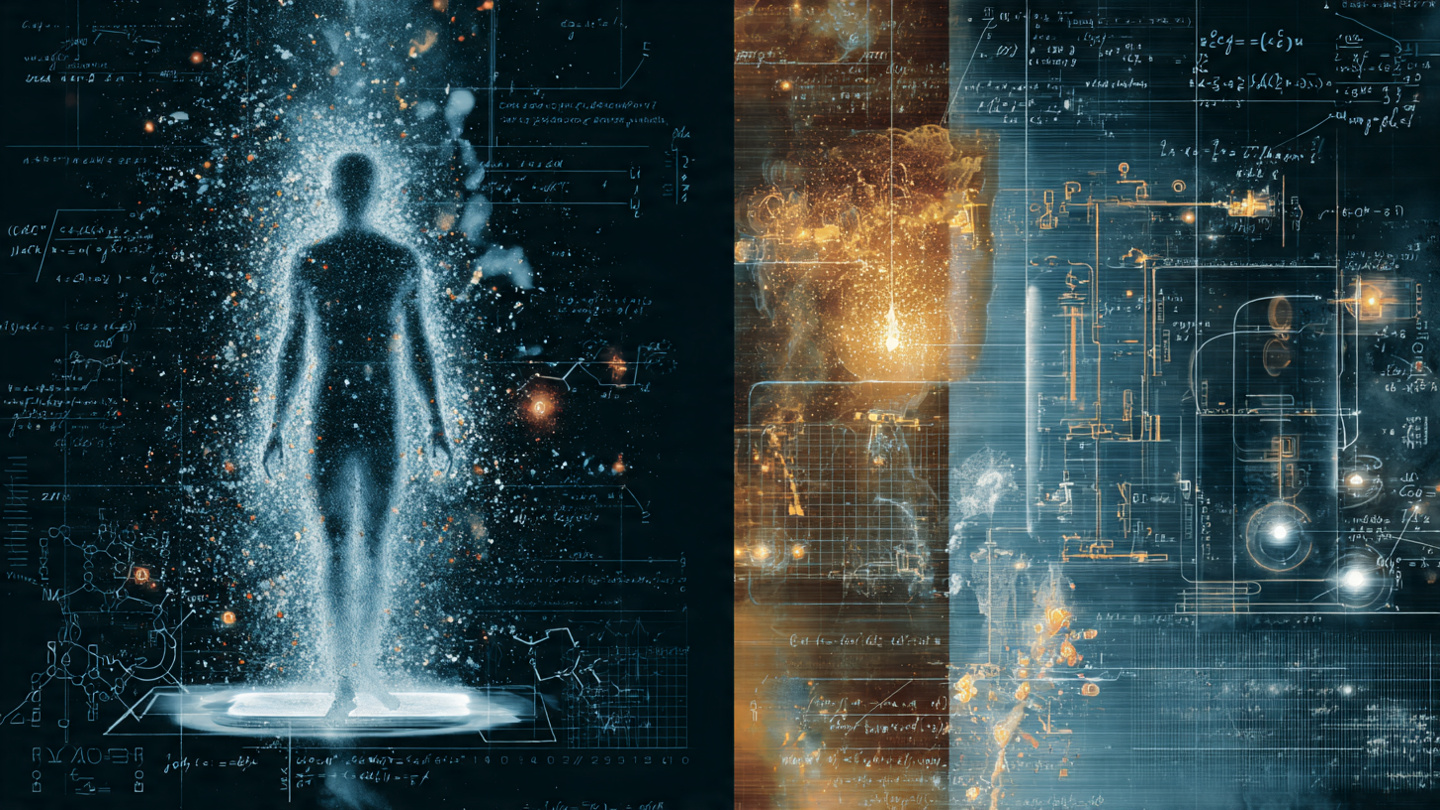
What people are getting wrong about teleportation is not just one detail. It is the whole frame. Teleportation in the popular sense suggests effortless instant travel of bodies through space. Teleportation in physics usually means something far more specific: the transfer of quantum information under tightly constrained rules. That real version is not a disappointment. It is a reminder that science becomes more powerful when we let it be precise.
Human teleportation, especially the kind imagined in science fiction and on Star Trek, remains tangled in immense technical barriers and deep questions about consciousness, identity, and the limits of measurement. Quantum teleportation, by contrast, is real and already changing how researchers think about communication and computation. The mistake is assuming these are the same thing.
If you care about the future of teleportation, the smartest move is to stop asking when humans will be beamed across the galaxy and start asking what quantum information science is making possible right now. That is where the real breakthroughs are happening. And if you want more clear, myth-busting explanations of ambitious scientific ideas, keep following the science closely, question the headlines, and look for the distinction between what sounds futuristic and what physics actually allows.
Explore more physics explained articles and keep the curiosity alive.