The road back to the Moon does not begin with rockets alone. It begins in laboratories where engineers obsess over seams, pressure seals, helmet visibility, glove mobility, and the brutal reality that in space, even a tiny failure can become a life-threatening event. That is what makes NASA's moon spacesuit lab so fascinating ahead of Artemis II. While most people picture astronauts bounding across lunar dust, the truth is more immediate and more intense: before astronauts can explore deep space, they need a suit that can keep them alive during launch, landing, and the kind of emergencies nobody ever wants to face.
What strikes me most about the Artemis program is how much of spaceflight success depends on the systems the public rarely notices. Rockets get the headlines. Capsules get the glamour. Yet the Artemis II spacesuits represent a deeply human layer of engineering, one that sits directly between an astronaut and the unforgiving conditions of spaceflight. These suits are not simply uniforms. They are personal spacecraft, designed to protect, support, and buy precious time when everything else becomes uncertain.
Why the Artemis II Spacesuits Matter So Much
Artemis II is expected to send astronauts around the Moon and back, marking a major step in NASA's plan to establish a sustained human presence beyond low Earth orbit. But unlike future lunar surface missions, Artemis II is focused on transportation and crew safety during flight. That means the spacesuits used for this mission are tailored for a different job than the Moonwalking suits many people imagine.
The primary purpose of the Artemis II spacesuits is to protect astronauts during some of the most dangerous phases of the mission:
- Launch, when intense acceleration and vibration can stress both crew and equipment.
- Re-entry and landing, when temperatures, forces, and timing all have to align perfectly.
- Potential cabin emergencies, including depressurization or onboard anomalies.
- Post-landing survival, especially if astronauts must wait for recovery after splashdown.
In practical terms, that means NASA's moon spacesuit lab is not just building gear for dramatic space imagery. It is preparing a carefully integrated safety system that must perform under extreme conditions, often without room for improvisation.
These Are Not Ordinary Flight Suits
It is easy to assume every NASA spacesuit is built for the same purpose. That is not the case. The suits for Artemis II are known as crew survival systems. They are designed to function inside the Orion spacecraft rather than support long-duration walking on the lunar surface. Their role is closer to a high-performance protective shell that supports life if the cabin environment is compromised.
Think of it this way: a pilot's helmet, fire-resistant racing suit, deep-sea emergency gear, and aerospace pressure system all meet in one package. The result must be flexible enough to let astronauts move and work, but robust enough to protect them if the spacecraft loses pressure or conditions deteriorate unexpectedly.
Inside NASA's Moon Spacesuit Lab
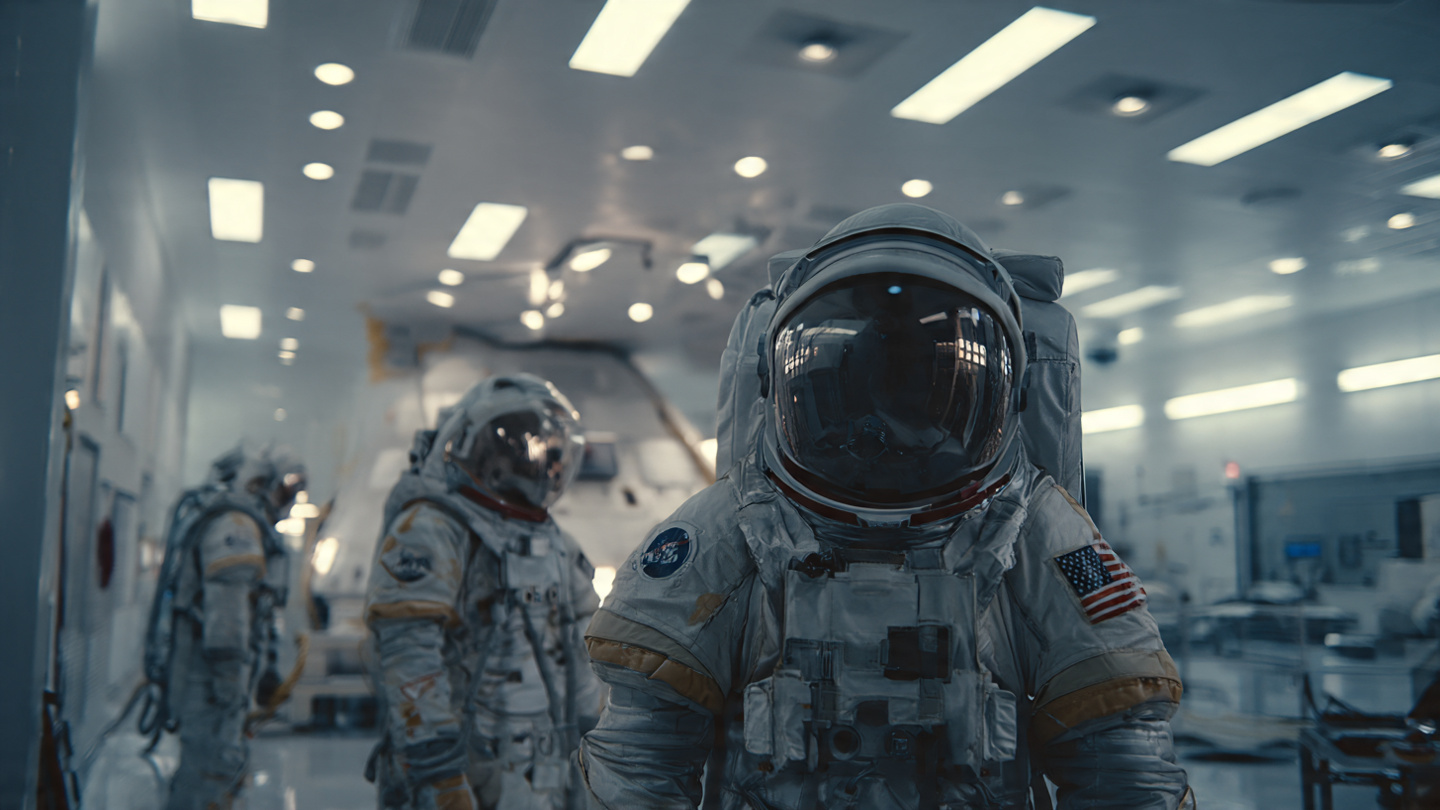
Step into a NASA spacesuit development environment, and the atmosphere feels less like science fiction and more like a precision workshop for survival. Engineers test fabric behavior, seal integrity, thermal performance, communications hardware, and the countless interfaces where a suit connects to a human body and a spacecraft at the same time.
Every component matters. A glove cannot merely fit; it must let astronauts manipulate controls under stress. A visor cannot simply look good; it must preserve visibility while integrating with lighting, communication, and head protection systems. Even the way a zipper closes or a connector locks can affect emergency readiness.
What Engineers Are Testing
NASA's moon spacesuit lab focuses on a series of high-stakes questions. Can the suit maintain pressure if cabin conditions change suddenly? Can astronauts communicate clearly while wearing helmets for extended periods? Can they sit strapped into Orion seats, move their arms efficiently, and still reach critical controls? Can recovery crews assist them quickly after splashdown?
That means testing spans far more than appearance or comfort. Typical focus areas include:
- Pressure retention to help keep astronauts safe in off-nominal scenarios.
- Mobility so crew members can operate switches, tablets, restraints, and emergency gear.
- Thermal performance to manage temperature during long mission phases.
- Communications integration for clear crew-to-crew and crew-to-ground contact.
- Water recovery readiness after splashdown in the ocean.
- Durability against repeated handling, mission rehearsals, and operational wear.
What I find especially compelling is that these tests are not theoretical exercises. They are grounded in the realities of human fatigue, stress, limited visibility, and time pressure. Engineers have to ask not just whether the suit works in a controlled setting, but whether it still works when a tired astronaut is strapped in for hours and reacting to a fast-moving checklist.
Why the Lab Environment Matters
In spaceflight, surprises are expensive and dangerous. A lab allows NASA to simulate scenarios before the mission ever leaves Earth. This is where design becomes operational confidence. Problems that look small on paper can become major issues in real life. A glove seam that causes hand fatigue, a helmet fit that slightly narrows peripheral vision, or a connector that takes too long to secure can all ripple into larger mission risks.
That is why the testing culture around the NASA moon spacesuit is so disciplined. The lab is where astronauts, technicians, biomedical experts, and suit engineers turn assumptions into verified performance.
How the Artemis II Spacesuits Protect Astronauts
The phrase Artemis II spacesuits may sound simple, but the suits themselves are sophisticated systems built around layered protection. Their design balances survivability with usability, which is a constant challenge in aerospace engineering. Protection means little if a crew member cannot move, communicate, or complete mission tasks efficiently.
Pressure Protection and Emergency Survival
One of the most important roles of the suit is to serve as a backup barrier between the astronaut and the space environment. In the event of cabin depressurization, the suit must help maintain the conditions needed for survival until the crew can respond.
This is where the engineering gets especially demanding. A pressure suit must contain the body safely, but pressurization can naturally make movement more difficult. Designers therefore work to minimize stiffness while keeping the suit strong enough to perform when needed. It is a delicate compromise between flexibility and resilience.
A practical example helps here. Imagine needing to reach a switch over your shoulder or secure a restraint across your torso while wearing a fully pressurized suit. If the joints are too restrictive, response time slows. If materials are too soft, safety margins shrink. The lab exists to refine that balance repeatedly.
Visibility, Communication, and Human Performance
Another crucial element is keeping astronauts effective, not just alive. Helmet visibility influences everything from reading displays to coordinating with crewmates. Integrated audio systems must function clearly in noisy, high-stress environments. Fit matters too, because a suit that creates pressure points or fatigue can reduce concentration during critical phases of flight.
This human-performance angle often gets overlooked. Yet mission safety is shaped by how well astronauts can think, talk, and act while wearing the suit. The best spacesuit is not just strong. It is intuitively usable.
Water Landing and Recovery Considerations
Because Orion is designed for splashdown, the Artemis II crew survival system also has to support astronauts after landing. Recovery operations may sound routine, but they create another set of design requirements. Suits must remain functional in a maritime environment, allow the crew to stay secure while awaiting pickup, and support safe extraction by recovery teams.
That means NASA's moon spacesuit lab is not only thinking about launch pad conditions or deep-space contingencies. It is also thinking about waves, saltwater exposure, flotation interfaces, and the physical demands of recovery after a long mission.
From Apollo to Artemis: What Has Changed
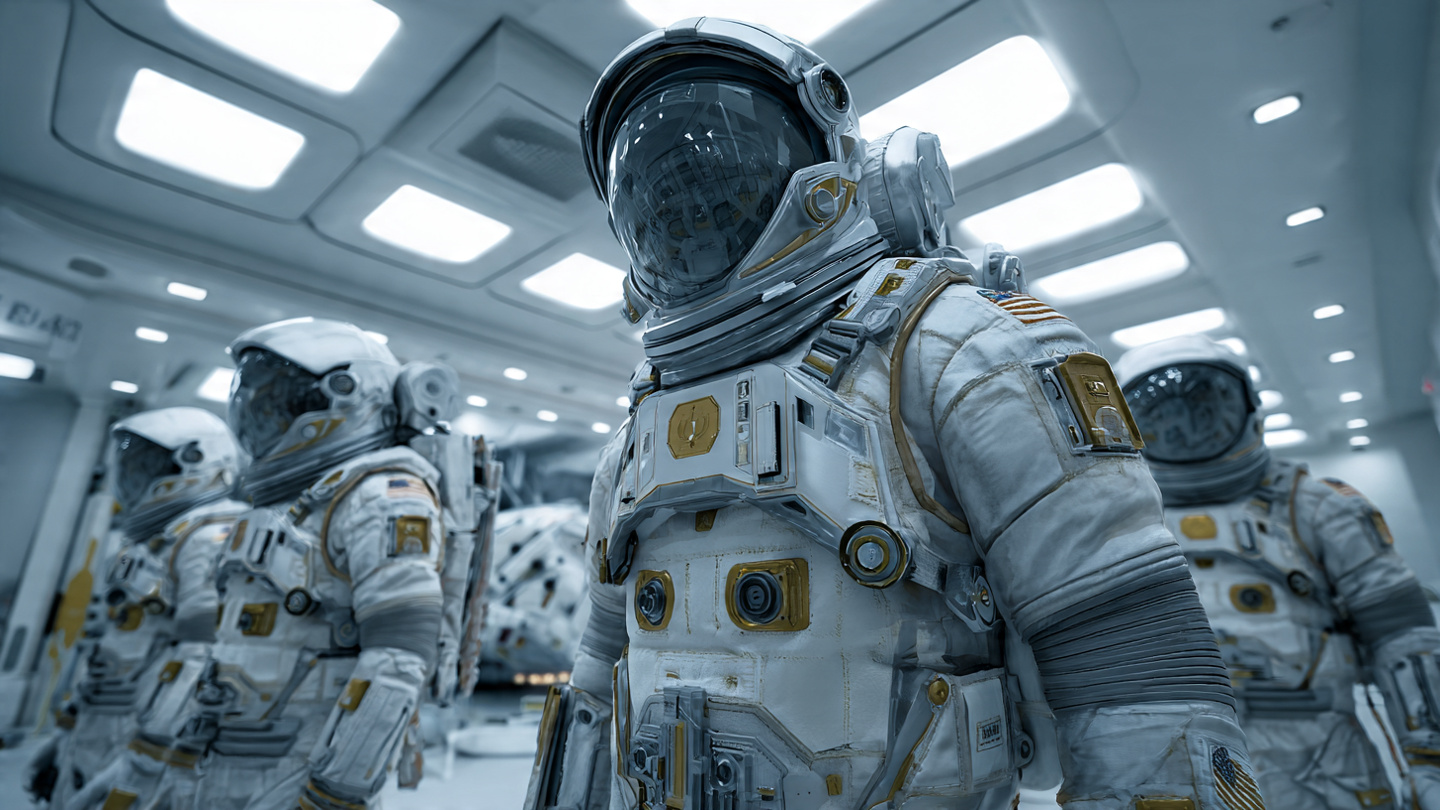
No discussion of lunar mission gear is complete without comparing Artemis to Apollo. The Apollo program set the standard for human Moon exploration, but today NASA operates in a very different technological environment. Materials science has advanced. Digital systems are far more capable. Human factors engineering is more sophisticated. Mission planning is also broader, with long-term lunar operations now a strategic goal rather than a one-time achievement.
Lessons Carried Forward
Apollo proved that spacesuits are mission-critical systems, not accessories. It also exposed the tradeoffs between mobility, durability, thermal control, and life support. Artemis benefits from those lessons. Engineers today can build on decades of knowledge from Apollo, the space shuttle era, the International Space Station, and modern testing methods.
Some core principles remain unchanged:
- Redundancy saves lives when unexpected failures occur.
- Mobility matters because astronauts must perform real work under pressure.
- Fit and comfort affect safety over long mission timelines.
- Testing is everything because no suit is trustworthy until it proves itself repeatedly.
Still, Artemis represents more than an update. It reflects a broader philosophy of sustainable exploration. NASA is no longer preparing for isolated lunar headlines. It is building an architecture for repeated deep-space missions.
The Difference Between Artemis II and Future Moonwalk Suits
One important distinction is that the Artemis II spacesuits are not the same as the advanced lunar surface suits planned for future missions such as Artemis III. Surface exploration demands different mobility, dust resistance, life support, and operational endurance. Artemis II is about safely transporting humans through deep space and back. The spacesuits used here are optimized for that transportation mission.
This matters because it shows how specialized modern space systems have become. NASA is not chasing one mythical do-everything suit. It is matching suit design to mission reality, which is exactly what serious exploration requires.
Why Spacesuit Design Shapes Mission Success
It is tempting to think of suit development as a supporting detail compared with launch systems, spacecraft propulsion, or mission trajectories. In truth, spacesuits sit at the center of mission reliability because they connect the astronaut directly to every phase of the journey.
If a suit causes fatigue, communication friction, or delayed emergency response, the effect is operational, not cosmetic. If it performs perfectly, astronauts gain something invaluable: focus. They can devote more mental energy to navigation, procedures, science objectives, and teamwork instead of managing discomfort or uncertainty.
Confidence Is a Real Engineering Outcome
One point that deserves more attention is psychological confidence. Astronauts train for years, but confidence in life-support equipment still matters enormously. When crew members know their gear has been tested relentlessly, they can operate with greater calm and precision. That is not a soft benefit. In high-risk environments, confidence improves execution.
From my perspective, this is one of the most underrated reasons NASA's moon spacesuit lab matters. The work happening there does not just produce equipment. It produces trust between astronaut and machine.
A Small Detail Can Protect an Entire Mission
Consider a seemingly minor design choice such as glove dexterity. Better dexterity can reduce hand strain, improve speed on checklists, and make emergency actions smoother. That single improvement can compound across hours of mission time. Aerospace progress often works exactly like that: tiny refinements stacking into major reliability gains.
What the Artemis II Suits Mean for the Future of Lunar Exploration
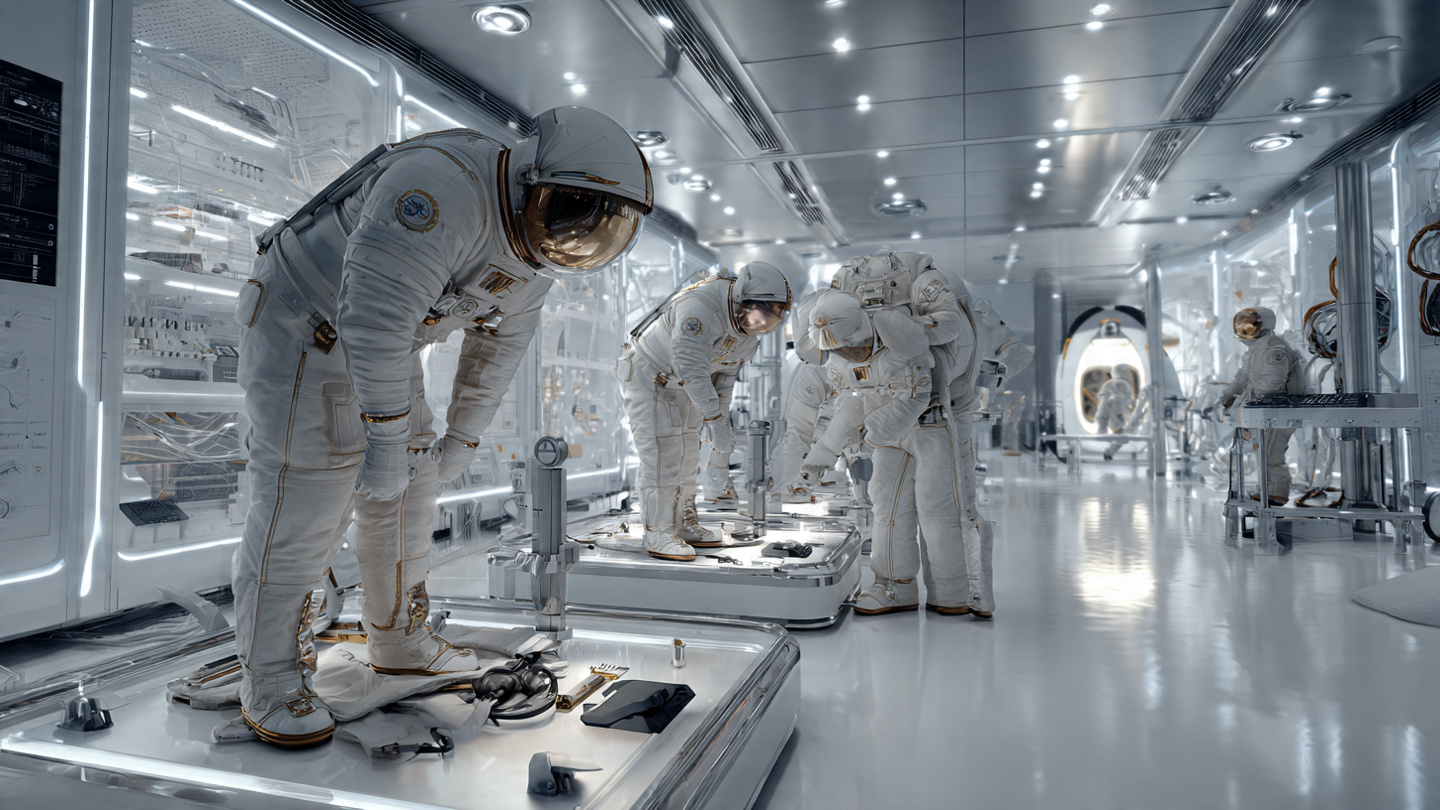
The significance of Artemis II goes beyond one mission. Each successful test, fitting, and validation step strengthens the foundation for later missions that aim to return astronauts to the lunar surface. In that sense, the crew survival suits are part of a larger learning cycle. NASA refines procedures, hardware integration, crew workflows, and recovery operations now so future lunar missions can move forward with stronger margins.
This is also where public interest should deepen. The Moon is not just a destination. It is a proving ground for the systems, habits, and technologies that may one day support missions to Mars. If NASA can develop reliable, mission-specific spacesuits for Artemis, it brings the entire future of human exploration closer to practical reality.
Key Takeaways at a Glance
- Artemis II spacesuits are built primarily for launch, landing, and emergency protection, not lunar walking.
- NASA's moon spacesuit lab tests pressure integrity, mobility, visibility, communications, and recovery readiness.
- Human factors engineering is central because astronauts must think and act efficiently while suited.
- Apollo's legacy informs modern design, but Artemis reflects newer materials, testing methods, and long-term goals.
- Successful suit development strengthens the path toward future Moon missions and eventually deeper space exploration.
Conclusion
Inside NASA's moon spacesuit lab, the future of human exploration looks less like fantasy and more like disciplined craftsmanship. The Artemis II spacesuits are not built to impress from a distance. They are built to perform when conditions are harsh, time is short, and astronaut safety depends on engineering that cannot fail. Every stitch, connector, visor, and pressure layer reflects a simple but profound reality: deep-space missions are only possible when the human body is protected with extraordinary care.
As Artemis II approaches, these suits remind us that space exploration is ultimately a human story. It is about taking fragile people into extreme environments and giving them the tools to survive, work, and return home. If you care about where the next era of exploration is headed, keep an eye on the hardware that sits closest to the astronaut. That is where the future becomes real. For readers following the return to the Moon, now is the perfect time to watch how NASA spacesuit technology evolves, because the lessons learned here will shape every mission that follows.