For years, Washington treated oil shipments to Cuba as more than a matter of commerce. Fuel deliveries were a pressure point, a foreign-policy lever, and a way to squeeze Havana at one of its most vulnerable seams. So when a Russian oil tanker was allowed to pass through the broader framework of U.S. pressure and arrive with badly needed fuel, the move stood out immediately. It raised a bigger question than whether one ship could dock: why did the United States permit it now?
The answer sits at the intersection of Cuba sanctions, humanitarian realities, energy insecurity, regional diplomacy, and the limits of coercion. In practical terms, Cuba needs fuel to keep lights on, buses moving, factories operating, and hospitals functioning. In strategic terms, the United States must decide how far it wants to push pressure on the Cuban government when the result may be deeper instability, migration stress, and stronger ties between Havana and U.S. rivals such as Russia.
My view is simple: this was not a sudden act of generosity, nor was it a total reversal of policy. It was a calculated adjustment. Washington appears to be acknowledging that total energy strangulation can create outcomes that are harder to manage than the government it is trying to pressure. One tanker does not end the embargo, but it does suggest a more selective and pragmatic approach.
Why This Shipment Matters So Much
Cuba has been dealing with severe economic strain for years, but fuel scarcity has turned that strain into a daily crisis. Blackouts, transportation disruptions, food distribution problems, and industrial slowdowns all become worse when energy imports dry up. Because Cuba relies heavily on imported fuel, any interruption in tanker traffic has immediate social and political consequences.
That is why the arrival of a Russian oil tanker matters beyond headlines. The cargo represents short-term relief for a country facing chronic shortages. It also carries symbolic weight. If U.S. enforcement had been aggressively focused on blocking or deterring such deliveries, then allowing one through sends a message: the policy is not as rigid as it once appeared.
- Fuel imports are essential to Cuba’s electricity generation and transportation systems.
- Oil shortages intensify public frustration through blackouts, inflation, and supply chain disruptions.
- Shipping decisions are political signals as much as logistical events.
- U.S. enforcement choices shape market behavior for shipowners, insurers, and cargo suppliers.
In other words, the tanker was not just carrying oil. It was carrying policy implications.
The Sanctions Backdrop: Pressure Through Energy

To understand the significance of the shipment, it helps to look at the broader strategy behind U.S. policy toward Cuba. Over time, Washington has used sanctions not only to limit direct economic activity with the island but also to make third-country support more difficult. Oil shipments became a particularly sensitive area because fuel is central to state functioning. Restrict enough fuel, and you increase the cost of governance for Havana.
During periods of harder-line policy, the United States signaled that entities helping supply Cuba with oil could face penalties or secondary consequences. That kind of pressure does not always require a dramatic naval confrontation. Often, it works through compliance fear. Shipping firms, insurers, traders, and financiers become cautious. Even when a shipment is technically possible, the commercial risk can become too high.
This is one of the least discussed realities in sanctions policy: enforcement is often psychological as much as legal. A company does not have to be physically stopped if it already believes the trip is not worth the exposure. That chilling effect has been part of the pressure campaign around Cuba.
What makes the Russian tanker episode notable is that it suggests some restraint in applying maximum pressure. Whether by design or by selective prioritization, the United States did not convert this shipment into a high-profile showdown.
Why the U.S. May Have Chosen Not to Block the Tanker
1. Preventing a Worse Humanitarian and Economic Breakdown
One plausible reason is the most immediate one: Cuba’s fuel crisis had become too severe to ignore. When energy shortages escalate, the consequences ripple fast. Electricity cuts affect water systems, refrigeration, schools, medical services, and basic commerce. Public frustration grows. Economic production falls. Social order becomes harder to maintain.
From Washington’s perspective, there is a limit to how useful this pressure can be. If the Cuban population bears the brunt while the government adapts politically, then the policy may create suffering without producing the intended reform. Worse, a sharper breakdown in living conditions can fuel migration. That matters greatly to the United States, especially given the history of migration surges from Cuba during periods of acute domestic crisis.
Allowing one shipment through may have been a practical way to ease immediate pressure without abandoning broader leverage.
2. Avoiding Regional Instability Close to U.S. Shores
Cuba is not a distant theater for the United States. Instability on the island quickly becomes a regional concern. Energy shortages can intensify protests, strain public institutions, and create knock-on effects across the Caribbean and Florida migration corridor. A completely immobilized Cuban economy is not necessarily in Washington’s interest.
There is a recurring lesson in foreign policy: maximum pressure can produce maximum unpredictability. If the objective is stability with leverage, then total disruption may be self-defeating. A carefully tolerated oil delivery can serve as a pressure-release valve.
3. Recognizing the Limits of Sanctions as a Standalone Tool
Sanctions are powerful, but they are not magic. They can isolate, constrain, and signal disapproval. They can also encourage target states to diversify partnerships, harden politically, and blame external pressure for internal failures. Cuba has long experience surviving sanctions environments. Russia, despite its own international isolation in many areas, still has incentives to cultivate symbolic and strategic ties with Havana.
If Washington assessed that blocking every oil cargo was not realistically sustainable or strategically effective, then allowing selected shipments may reflect a more mature understanding of limits. Put differently, the United States may still support pressure on the Cuban government while recognizing that complete fuel denial is not a workable long-term strategy.
4. Managing the Russia Factor Without Escalating It
Any Russian tanker headed to Cuba carries geopolitical resonance. But symbolism does not always justify escalation. The United States may have calculated that turning a fuel shipment into a larger confrontation with Russia would hand Moscow an easy propaganda victory while doing little to improve U.S. strategic positioning.
Sometimes restraint is the more effective form of control. By not overreacting, Washington avoids dramatizing the shipment and limits the ability of Russia or Cuba to portray the episode as heroic resistance against U.S. coercion.
5. Signaling a Tactical Shift, Not a Policy Surrender
Another important possibility is that this move was meant to communicate nuance. The United States can still maintain sanctions architecture and political pressure while quietly showing that it will not pursue every case with the same intensity. That distinction matters. Foreign policy is rarely binary. Governments often seek room to calibrate pressure depending on humanitarian risk, diplomatic objectives, and domestic political context.
In that sense, the tanker’s arrival may reflect a selective enforcement posture rather than a broad policy reversal.
What This Means for Cuba
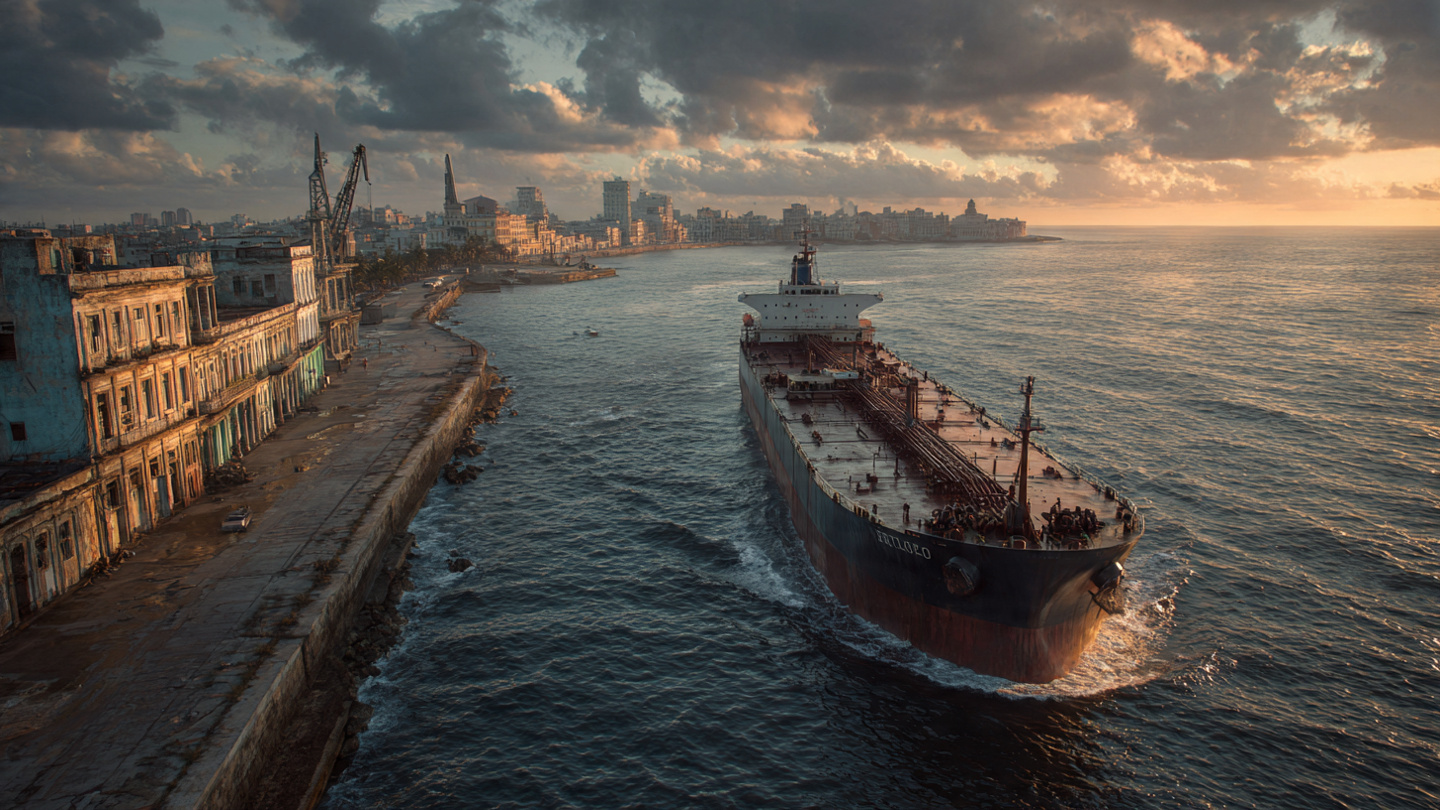
For Cuba, the immediate benefit is straightforward: more fuel means temporary breathing space. It may reduce blackout frequency, improve transportation continuity, and help the government stabilize essential services. But one shipment is not a structural solution. Cuba’s deeper energy and economic problems remain unresolved.
The country still faces a difficult combination of aging infrastructure, limited foreign exchange, weak productivity, and external financing constraints. Imported oil can relieve the pressure, but it does not remove dependency. Nor does it answer the political question of how the government plans to build resilience in the face of repeated shortages.
Still, even temporary relief matters. In highly stressed economies, short-term stabilization can prevent a downward spiral. Anyone who has watched how quickly fuel shortages affect daily life knows this is not abstract. A bus that does not run means a worker cannot reach a job. A blackout means food spoils. A generator without diesel means a clinic must improvise. These are human consequences, not just policy metrics.
- Short-term gain: more fuel for power generation and transport.
- Medium-term challenge: continued dependence on politically exposed external suppliers.
- Long-term issue: no durable fix without broader economic and energy reform.
What This Means for U.S. Policy
The more important story may be what this says about Washington. The decision to permit or not aggressively obstruct the shipment points to a subtle recalibration in how U.S. policymakers are balancing pressure and pragmatism.
For years, the core assumption behind tougher Cuba sanctions was that economic pain would increase political leverage. But there is always a counter-question: leverage toward what, and at what cost? If hardship produces migration pressure, humanitarian criticism, and diplomatic friction across Latin America while failing to produce meaningful political opening, the policy begins to look strategically inefficient.
That does not mean the United States is abandoning sanctions. It means policymakers may be sorting among priorities more carefully. They may still want to constrain the Cuban government while avoiding measures that deepen desperation among civilians or create instability that spills into U.S. interests.
In practical terms, this episode suggests a few things:
- Enforcement may become more selective rather than uniformly maximalist.
- Humanitarian and migration concerns may carry more weight than before.
- Energy shipments could be treated differently from other categories of economic pressure.
- Diplomacy and signaling may be taking priority over headline-making confrontation.
That kind of approach can frustrate both sides of the debate. Hardliners may see it as weakness. Advocates of normalization may see it as too little. But from a policy-management perspective, selective flexibility is often how governments move when they are caught between principle and practical consequence.
The Bigger Geopolitical Picture

This is not just a Cuba story. It is also part of a broader contest over influence in the Western Hemisphere. Russia benefits when it can show it still has reach near U.S. shores. Cuba benefits when it demonstrates that it is not fully isolated. The United States, meanwhile, wants to preserve strategic influence in the region without appearing indifferent to suffering or destabilization.
That three-way tension explains why a single tanker can attract so much attention. It touches energy security, sanctions enforcement, great-power signaling, and regional order all at once. It also highlights an uncomfortable truth: even when sanctions are intended to punish governments, their most immediate effects often land on ordinary people.
I think this is where public understanding often falls short. Many observers treat sanctions as a clean tool, either morally justified or morally unacceptable. In reality, they are messy instruments. Their outcomes are uneven, politically contested, and highly dependent on timing. The Russian tanker’s arrival underscores that messiness. Policy did not fail exactly, but it also did not remain absolute. It bent under real-world pressures.
Could This Mark a Broader Shift?
It is too early to call this a full turning point, but it may be an indicator. If more fuel shipments are quietly tolerated, or if enforcement rhetoric softens while core sanctions remain intact, then analysts will have stronger evidence that Washington is moving toward a more calibrated Cuba strategy.
Key signs to watch include the pace of future deliveries, whether shipping intermediaries appear less fearful of secondary risk, and whether U.S. officials frame Cuba policy more in terms of stability and humanitarian outcomes than pure punishment. Another important signal would be whether this flexibility extends beyond oil into remittances, financial channels, or limited commercial activity.
At the same time, any shift could remain narrow and reversible. U.S. policy toward Cuba is often shaped by domestic politics, electoral calculations, and changing regional events. One tanker can hint at a new direction without guaranteeing one.
Conclusion: A Small Shipment With Big Meaning
The decision to allow a Russian oil tanker to reach Cuba was about more than a cargo manifest. It reflected the growing recognition that energy pressure has limits, especially when it risks worsening humanitarian conditions, triggering migration stress, and undermining regional stability. The United States appears to be testing a more pragmatic balance: maintain leverage over Havana, but avoid pushing a fragile situation into something more dangerous.
For Cuba, the shipment offers relief, not rescue. For Washington, it offers flexibility, not surrender. And for anyone watching the region, it offers a revealing lesson in how sanctions actually work: not as rigid walls, but as tools that governments constantly recalibrate against reality.
If you follow Cuba sanctions, Russian oil tanker movements, and U.S.-Cuba relations, this moment is worth watching closely. Today it is one vessel. Tomorrow it may be the outline of a new policy doctrine.
Want more sharp analysis on sanctions, energy security, and geopolitical strategy? Keep reading, share this article with others tracking U.S.-Cuba relations, and join the conversation about what pragmatic foreign policy should really look like.


