Power in Myanmar has rarely changed hands in a simple or transparent way, and that is exactly why the latest political shift deserves close attention. When Senior Gen. Min Aung Hlaing moved away from his role as commander in chief and closer to the presidency, it was not merely a routine leadership transition. It signaled a carefully managed transfer of authority designed to preserve military influence while presenting the image of constitutional order.
For casual observers, this may look like a formal step from one office to another. For anyone who has followed Myanmar politics, however, it appears far more significant. The country’s military, known as the Tatmadaw, has long exercised enormous power over state institutions, electoral outcomes, and national security. A shift that places its most powerful figure in the highest civilian office raises serious questions about whether Myanmar is moving toward reform or simply changing uniforms at the top.
In moments like this, labels matter less than structures. A leader can leave a military post, take a civilian title, and still govern through the same networks of loyalty, pressure, and control. That is why the anticipated elevation of Min Aung Hlaing to the presidency is being watched so closely by diplomats, analysts, investors, activists, and ordinary citizens alike.
What happens next could define the next chapter of Myanmar military rule, democratic legitimacy, and regional stability.
Why This Political Transition Matters
The presidency in Myanmar is not just ceremonial. It carries symbolic authority, domestic legitimacy, and international importance. Even in a political system shaped by military power, the office of president helps frame how the country is seen by its people and by the world.
Min Aung Hlaing’s move toward that office matters because it blurs the boundary between military command and civilian leadership even further. Rather than stepping aside from power, he appears to be repositioning himself within a structure that can extend and formalize that power. In practical terms, this means the change may alter appearances without fundamentally altering control.
From a governance perspective, this kind of transition can have several immediate effects:
- Institutional continuity: The military’s core influence remains embedded in state decision-making.
- Political messaging: The move can be presented as lawful, orderly, and constitutional.
- International signaling: Foreign governments may be pressured to engage with a civilian title even if the power structure remains militarized.
- Domestic consolidation: Supporters can frame the leadership shift as stability rather than disruption.
In my view, this is where the real story lies. The issue is not simply whether Min Aung Hlaing changes jobs. The deeper issue is whether Myanmar’s political system allows genuine civilian accountability or merely repackages military command in a more diplomatic form.
Min Aung Hlaing and the Architecture of Power
From commander to civilian leader in name
Min Aung Hlaing has been one of the most consequential figures in modern Myanmar. As military chief, he stood at the center of a powerful institution with deep economic ties, broad constitutional privileges, and decisive influence over national politics. His rise toward the presidency reflects the long-standing strategy of Myanmar’s elite: maintain control through institutions that appear formal and legal.
In many political systems, moving from military leadership to civilian office would suggest retirement from command. In Myanmar, that assumption is far less convincing. Networks built over years do not disappear overnight. Senior officers, parliamentary allies, security institutions, and administrative structures often continue to operate in alignment with the same center of power.
That continuity is why many critics see this development as less of a transition and more of a strategic rebranding. The title changes, but the hierarchy may remain much the same.
The role of Parliament
The expectation that Myanmar’s Parliament would install Min Aung Hlaing as president also deserves scrutiny. A legislature that functions as a rubber-stamp Parliament does not provide the same democratic safeguard found in competitive political systems. Instead of serving as a meaningful check on executive power, it can be used to legitimize decisions already made elsewhere.
This matters for both domestic trust and foreign perception. A parliamentary vote may create procedural legitimacy, but if the process lacks independence, it does little to reassure citizens who want transparency, representation, and real political choice.
Myanmar’s Fragile Democratic Narrative
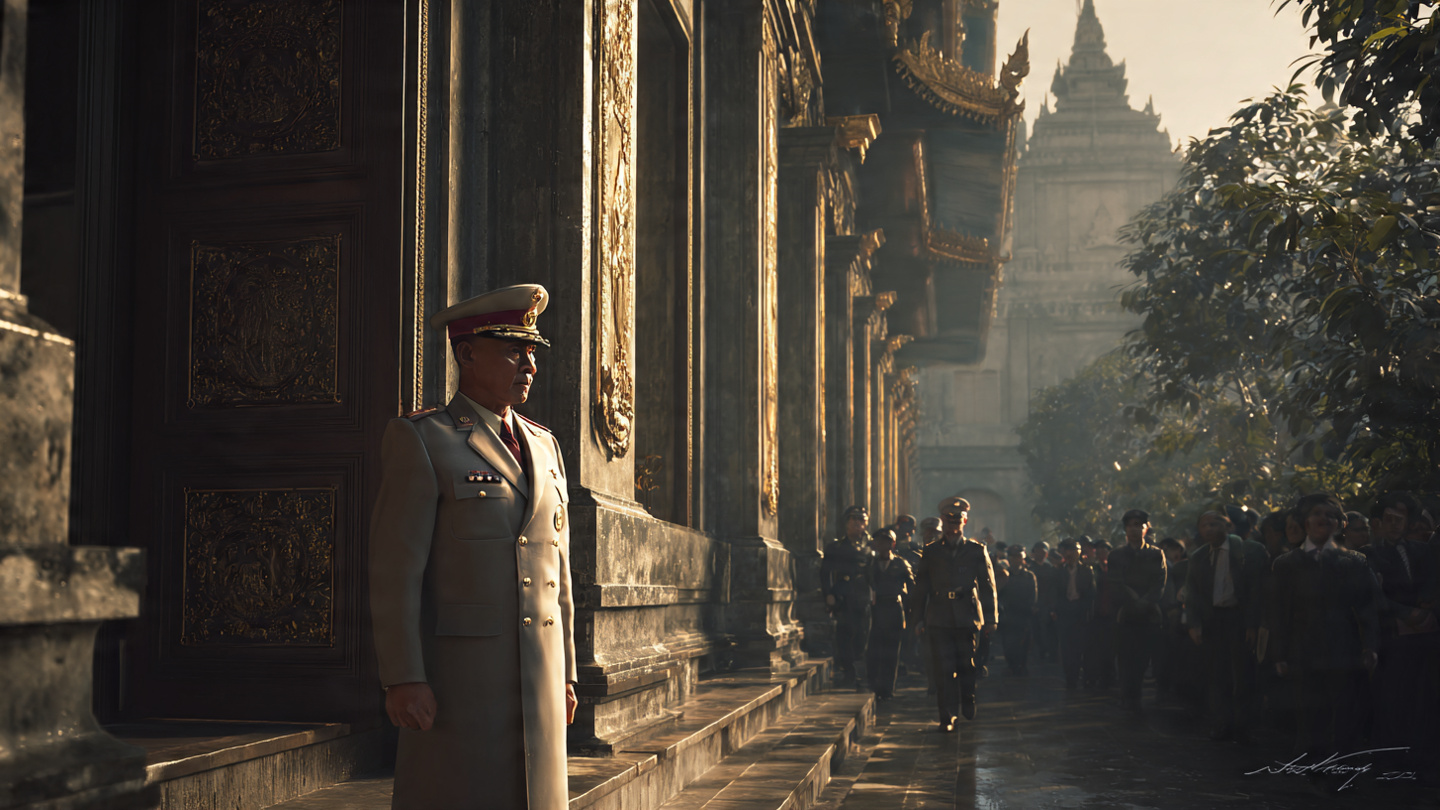
Myanmar’s modern political history has been marked by repeated tension between democratic aspiration and military dominance. That tension helps explain why every institutional shift is interpreted not only for what it says on paper, but for what it means in practice.
For years, many citizens hoped that elections, constitutional reform, and civilian leadership would gradually reduce military control. Yet moments like this remind the world that political systems can preserve old power structures even while adopting the language of reform.
One practical way to understand this is to think about a business that changes its brand but not its management culture. The logo may look new, the messaging may soften, and the public narrative may shift, but the core decisions are still made by the same people using the same assumptions. In politics, the consequences are far greater, because those decisions affect rights, freedoms, security, and economic opportunity.
Myanmar democracy cannot be measured simply by office titles or constitutional formalities. It has to be measured by whether citizens can influence leadership, whether institutions can act independently, and whether power can change hands without coercion.
What This Means for Myanmar’s People
For ordinary people inside Myanmar, elite political shifts often produce a mix of fatigue, anxiety, and resignation. Many citizens have lived through repeated cycles of promises, control, and uncertainty. A move that elevates the military’s top figure into a civilian role may reinforce the belief that political outcomes are determined by power networks rather than public will.
The impact is not abstract. It affects daily life in several ways:
- Public confidence: People may lose faith in elections, institutions, and legal processes.
- Economic decisions: Businesses and households often delay investment when political risk rises.
- Civil liberties: Journalists, activists, and opposition voices may face greater pressure.
- Social cohesion: Communities can become more polarized when politics feels closed and unaccountable.
I think this is one of the most overlooked parts of the story. When outside observers discuss constitutions, parliaments, or leadership succession, they sometimes miss the human cost of prolonged political uncertainty. Families worry about jobs, education, safety, inflation, and whether the future will offer more freedom than the past. When leadership change seems tightly controlled from above, that uncertainty deepens.
Regional and Global Repercussions
How neighbors may respond
Myanmar does not operate in isolation. Its political direction matters to Southeast Asia, especially to governments trying to balance regional stability with international pressure over governance and rights. A presidency under Min Aung Hlaing would likely force neighboring countries to decide whether to treat the move as a constitutional transition or as an extension of military rule in Myanmar.
Some governments may prioritize stability, border security, and trade. Others may take a more cautious line, especially if the leadership shift is seen as undermining democratic norms. Regional organizations often prefer engagement over confrontation, but that approach can be tested when political legitimacy is openly contested.
How the wider world may interpret the move
For global powers and international institutions, the central question is credibility. Does a civilian title reflect a meaningful change in governance, or is it designed mainly to improve diplomatic optics? That question could affect sanctions, investment, humanitarian coordination, and formal recognition.
Foreign businesses tend to look for predictability, legal clarity, and reputational safety. Political transitions dominated by military structures create the opposite environment. Investors may worry about abrupt policy changes, legal uncertainty, and growing international scrutiny.
Human rights organizations, meanwhile, are likely to judge the shift by outcomes rather than ceremony. If repression continues, if institutions remain constrained, or if public participation remains limited, then a presidential title will not meaningfully change how the leadership is understood abroad.
The Constitutional Question Behind the Headlines

One of the most important features of this story is the role of constitutional design. In many countries, constitutions are supposed to distribute power, limit abuse, and protect public accountability. In Myanmar, constitutional arrangements have historically provided the military with substantial leverage.
That creates a political environment in which the appearance of legality can coexist with limited pluralism. A move from army chief to president may technically follow institutional procedure, but that does not automatically make it democratic in substance.
This distinction is critical for readers trying to understand the news beyond the headline. A legal process is not always a legitimate one in the democratic sense. If the system itself is structured to entrench a narrow ruling elite, then formal compliance may simply reinforce the imbalance.
That is why discussions about Myanmar political transition should always ask three core questions:
- Who truly controls the institutions that make the decision?
- Can opposing voices compete fairly and safely?
- Will the leadership remain accountable after taking office?
If the answer to those questions is unclear or negative, then the transition may be more cosmetic than transformative.
Practical Lessons for Anyone Following Political Change
There is a broader lesson here that extends beyond Myanmar. Around the world, political systems sometimes use procedure, titles, and institutional choreography to make concentrated power look more inclusive than it really is. For readers trying to interpret similar events, it helps to look beyond the ceremony.
Here are practical signs to watch whenever a powerful military or security figure moves into a civilian leadership role:
- Personnel continuity: Are the same allies and power brokers still in place?
- Institutional independence: Can courts, legislatures, and media operate freely?
- Public participation: Do citizens have real influence over political outcomes?
- Policy direction: Does governance actually change after the title change?
- International posture: Is the new role aimed at legitimacy abroad more than reform at home?
These are not abstract academic concerns. They are practical tools for understanding whether a transition reflects reform, consolidation, or both at once.
Could This Move Reshape Myanmar’s Future?
Possibly, but not in the simple way official narratives may suggest. A Min Aung Hlaing presidency could strengthen centralized authority in the short term by giving military-backed rule a civilian face. That may help the leadership project continuity and reduce uncertainty within its own support base.
At the same time, it could also intensify skepticism among citizens and international observers who see the move as proof that meaningful civilian governance remains elusive. If trust erodes further, the presidency may deliver formal control without broad legitimacy.
That tension between control and legitimacy is often where political systems become most vulnerable. Governments can command institutions, but sustaining confidence is harder. And without confidence, even orderly transitions can deepen instability over time.
In personal terms, I would argue that the world should resist simplistic interpretations. This is neither just a routine appointment nor an automatic turning point. It is a test of how power is organized in Myanmar and how willing the system is to accept accountability beyond military hierarchy.
Conclusion

Senior Gen. Min Aung Hlaing’s move closer to the presidency is one of the most revealing developments in contemporary Myanmar politics. It highlights the enduring strength of military influence, the limitations of formal institutions, and the unresolved struggle between authority and democratic legitimacy.
While the transition may be framed as constitutional and orderly, the deeper question is whether it changes anything fundamental about how Myanmar is governed. If the same power networks remain in place, then the presidency may serve less as a democratic milestone and more as a new vessel for old control.
For citizens, regional leaders, and the wider international community, this is a moment to pay attention not just to titles, but to structures, incentives, and outcomes. The future of Myanmar will not be shaped by ceremony alone. It will be shaped by whether real accountability, institutional independence, and public representation are allowed to take root.
If you follow global affairs, now is the time to look more closely at Myanmar. Watch the institutions. Watch the response from Parliament. Watch the public reaction. And most of all, watch whether this transition redistributes power or merely renames it.
For continued insight into major political shifts, democratic transitions, and geopolitical risk, stay engaged, ask sharper questions, and keep following the forces behind the headlines.


