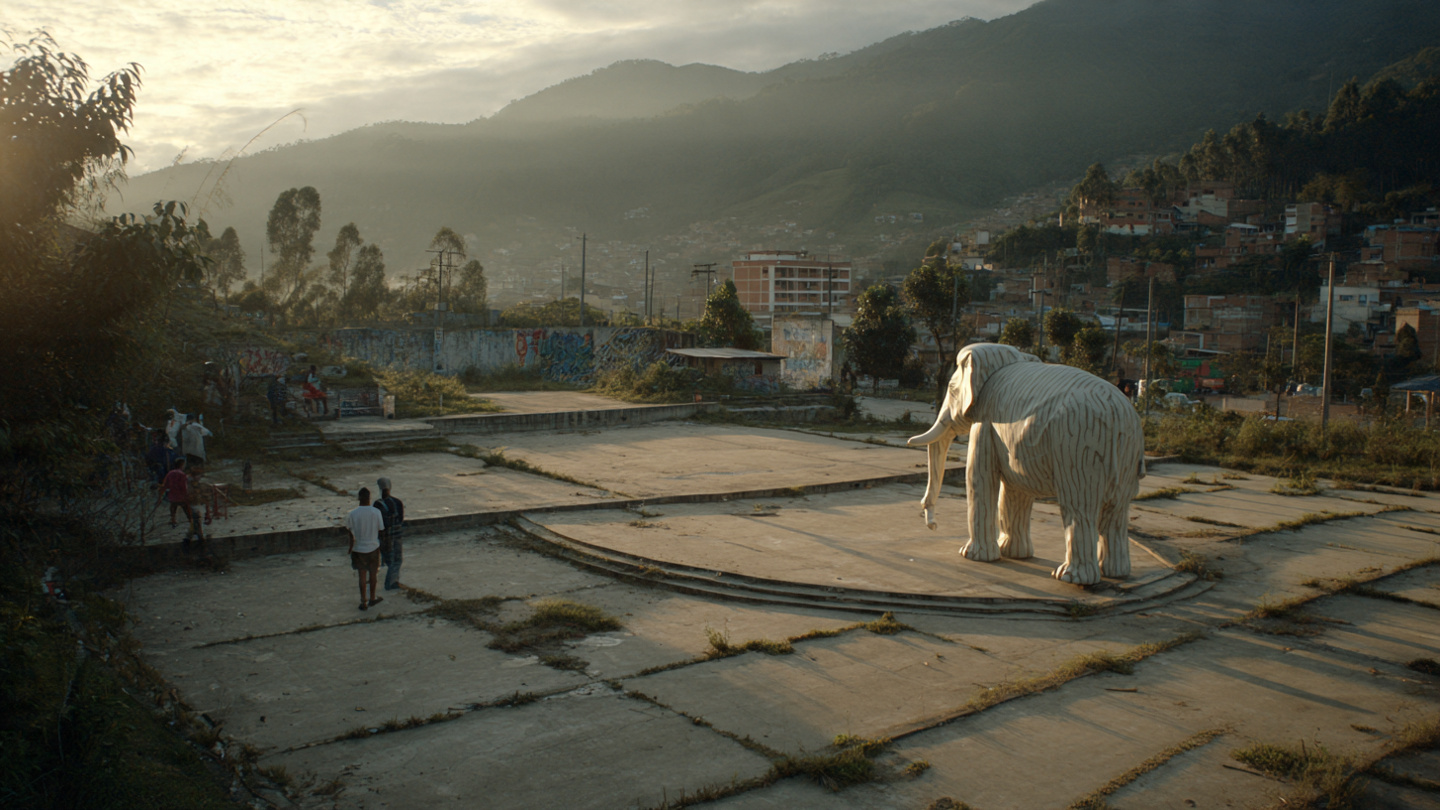
What does resistance look like when people stop listening? Sometimes it looks like a man in an elephant costume standing beside a half-built road, an abandoned school, or a crumbling sports complex that was supposed to serve a community years ago. In Colombia, that image became far more than political theater. It became a symbol of public frustration, civic memory, and an unusually powerful form of accountability.
Luis Carlos Rúa built a reputation by documenting unfinished public works projects and exposing how corruption damages ordinary life. Before many Colombians knew his face, they knew the message: public money had vanished, promises had been broken, and entire communities had been forced to live with the consequences. His eventual rise from anonymous activist to senator is more than a compelling personal story. It reveals how anti-corruption activism, when rooted in persistence and public trust, can cross the difficult line between protest and institutional power.
There is something deeply effective about a campaign that does not begin with speeches in marble halls, but with muddy roads, fenced-off construction sites, and the quiet anger of citizens who have heard too many excuses. Rúa understood that corruption is not abstract. It is not only a scandal on paper or a statistic in a report. It is the clinic that never opens, the bridge that never connects, the school that never educates, and the public budget that never reaches the people it was meant to help.
The Elephant Costume That Changed the Conversation
The elephant costume was not a gimmick for its own sake. It was a carefully chosen symbol. In many political cultures, an “elephant” in the room refers to the huge, obvious truth everyone sees but few are willing to address. In Colombia, where corruption cases have repeatedly shaken public confidence, the costume transformed that metaphor into a visible, memorable act of protest.
By appearing at abandoned public works sites dressed as an elephant, Rúa turned neglected infrastructure into a national conversation. He made bureaucracy impossible to ignore. A faceless construction failure became a viral image. A forgotten budget line became a civic accusation. In communication terms, it was brilliant. In democratic terms, it was even more important: it gave citizens a language to describe their own exhaustion.
What made the strategy effective was its emotional clarity. People do not always read procurement documents, audit findings, or budget reports. But they understand an unfinished hospital. They understand a deserted building with a project sign still hanging outside. They understand the insult of seeing tax money spent with no usable result.
- Visual symbolism: the elephant made corruption easy to recognize and difficult to dismiss.
- Public memory: each site became a living archive of broken promises.
- Viral storytelling: simple, striking imagery helped local outrage reach national audiences.
- Civic translation: complex issues of procurement and mismanagement were converted into everyday language.
That is one of the great lessons of modern anti-corruption advocacy: facts matter, but framing matters too. People engage when the truth is not only available, but visible.
Why Abandoned Public Works Matter So Much
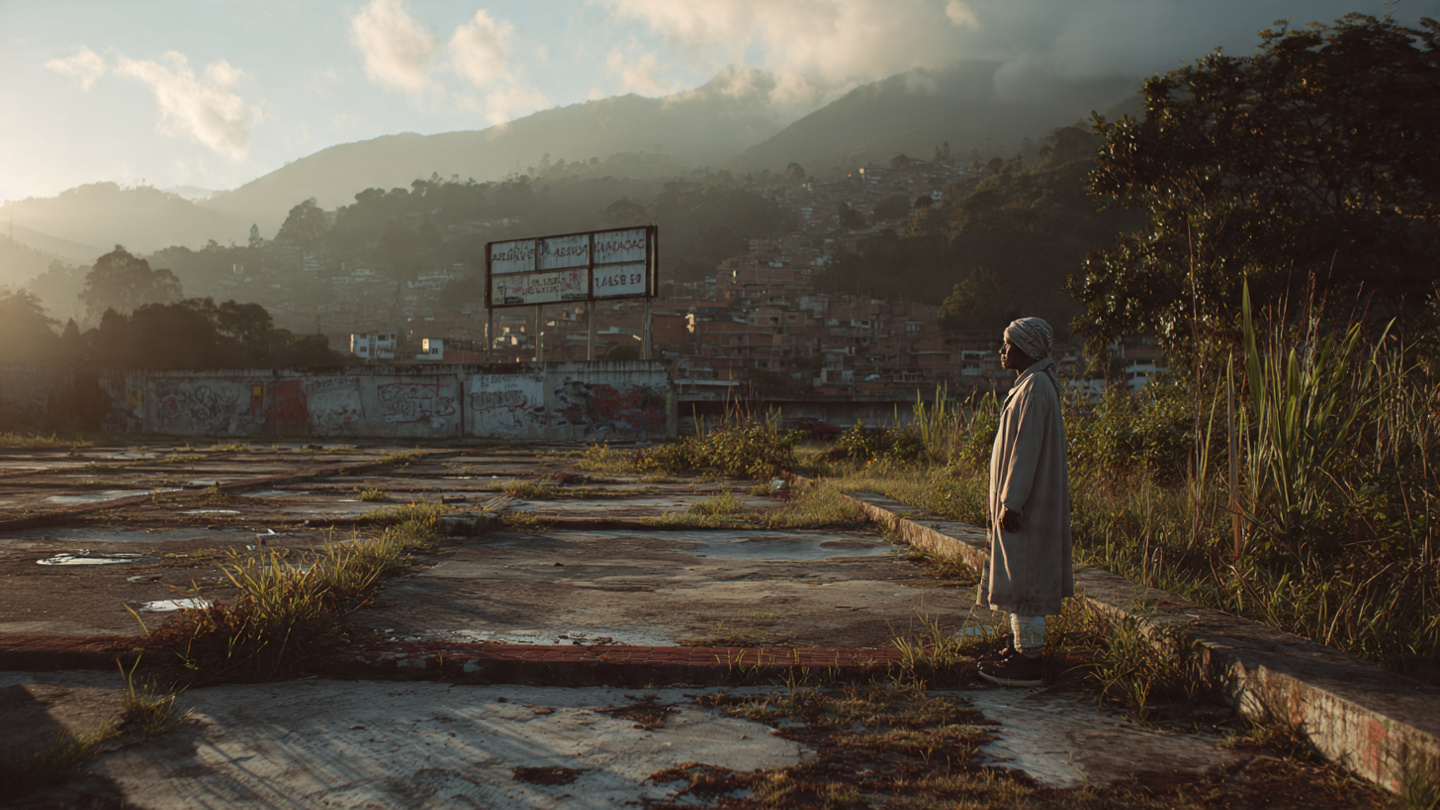
To understand why Rúa’s activism resonated so widely, it is essential to understand the political and social weight of unfinished public projects. These are not minor administrative errors. They are often physical proof of how corruption and poor governance tear at the basic contract between the state and the citizen.
When a public works project is abandoned, the loss multiplies. The money is gone. The service is absent. The community is left behind. Trust erodes. In regions already marked by inequality, these failures reinforce a damaging message: public institutions can make promises, collect resources, launch ceremonies, and still walk away without consequences.
In practical terms, abandoned infrastructure can affect every dimension of daily life:
- Education: schools remain incomplete, overcrowding persists, and children lose safe learning spaces.
- Health: clinics and hospitals fail to open, extending travel times and limiting care.
- Mobility: roads and bridges remain unusable, isolating families and slowing local commerce.
- Recreation and safety: unfinished sports and community centers leave neighborhoods without shared public spaces.
- Economic development: local businesses lose expected traffic, jobs disappear, and investment confidence weakens.
This is why anti-corruption work tied to infrastructure can be so potent. It shows citizens exactly where governance failed. Rather than speaking only in slogans, it points to a wall, a field, a building, a blocked route, and says: this is where your future was interrupted.
From Anonymous Watchdog to Public Figure
For years, anonymity gave Rúa a kind of strategic freedom. It kept the focus on the evidence and the message rather than the personality behind it. In a polarized political climate, that matters. Many activists lose influence once they are immediately sorted into partisan boxes. By remaining unknown for so long, he let the work speak first.
That choice also carried risk and tension. Anonymous activism can generate intrigue, but it can also create questions. Who is this person? What does he want? Can outrage be converted into governance? Those questions only intensified when he revealed himself shortly before his election. The timing turned a symbolic figure into a human one, and that transition mattered.
People were no longer reacting only to the elephant. They were evaluating a candidate. That is an entirely different standard. Protest can expose a problem; elected office demands the ability to navigate institutions, negotiate alliances, write legislation, and sustain scrutiny.
Still, there was a powerful logic to the reveal. Rúa had already established credibility through visible action. He had shown consistency. He had documented realities many citizens recognized. He had not emerged from nowhere asking for trust. He had spent years earning attention where public neglect was easiest to see.
From a broader civic perspective, his story speaks to a growing appetite for leaders who do not appear manufactured by political machinery. Voters across many democracies are drawn to figures who begin outside elite power circles and build legitimacy through action rather than branding. That does not guarantee success in office, but it explains why such candidacies often generate intense interest.
How Anti-Corruption Messaging Became a Political Movement

One reason Luis Carlos Rúa’s rise matters is that it captures a wider transformation in public life: citizens increasingly expect activism to produce tangible results. Outrage alone is no longer enough. People want to know whether someone who exposes wrongdoing can also help redesign the system that allows it.
That transition from denunciation to representation is extremely difficult. Many activists struggle when they enter formal politics because the skills are different. Investigating failures is not the same as legislating solutions. Yet the move can be powerful when it is grounded in concrete experience.
Rúa’s credibility came from repeated contact with the consequences of corruption. He was not discussing institutional decay in abstract ideological terms. He was documenting where it lived. That kind of evidence-based activism can create a stronger bridge into public office because it starts with observable harm and measurable failure.
What made his message politically effective?
- Specificity: he focused on real projects, places, and communities rather than vague claims.
- Consistency: repeated documentation built trust over time.
- Moral clarity: the message stayed close to fairness, accountability, and public interest.
- Accessibility: ordinary citizens could instantly understand the issue.
- Symbolic discipline: the elephant remained a recognizable anti-corruption identity.
In my view, this is where the story becomes especially relevant beyond Colombia. Democracies everywhere are saturated with information, but not all information changes minds. What breaks through is evidence with emotional weight. A report may explain corruption, but an unfinished school next to a protesting citizen makes it unforgettable.
The Colombia Corruption Debate and Public Fatigue
Any discussion of Luis Carlos Rúa must also be placed within the wider context of Colombia corruption and institutional distrust. Corruption is not a new issue in the country, and public frustration did not begin with one activist or one election. For years, scandals involving contracts, local administrations, public procurement, and misused funds have fed a widespread sense that accountability often arrives late, if at all.
What Rúa tapped into was not only anger, but fatigue. Citizens can become exhausted by endless revelations that lead nowhere. When scandal becomes routine, people stop expecting change. That is a dangerous moment for democracy because resignation is one of corruption’s greatest allies. If people begin to believe nothing can improve, oversight weakens and political apathy spreads.
His work challenged that resignation by insisting that public memory matters. An abandoned project is often politically convenient to forget. Construction signs fade. Governments change. Responsibility blurs. Communities adapt because they have no choice. By revisiting those sites, recording them, and making them visible again, he interrupted the cycle of forgetting.
This is one of the strongest dimensions of anti-corruption activism: it restores time to politics. It reminds citizens that promises do not expire simply because administrations do. Public money has a history, and communities have a right to demand answers long after ribbon-cutting ceremonies disappear from headlines.
What His Election Means for Governance
Being elected senator changes everything. The outsider becomes part of the institution. The critic of the system must now operate inside it. For supporters, this creates hope: perhaps someone shaped by direct accountability work can push for stronger oversight, better procurement rules, and greater transparency. For skeptics, it raises a fair question: can a symbol of protest remain effective once absorbed into formal politics?
The answer will depend on what follows. Symbolism opens the door, but governance requires durable action. If Rúa is to convert moral authority into legislative influence, several areas are likely to define his credibility:
- Transparency reforms: improving public access to contract data, timelines, and spending records.
- Monitoring unfinished projects: establishing clearer consequences for abandonment and stronger completion oversight.
- Citizen reporting channels: enabling communities to flag stalled infrastructure more quickly.
- Institutional accountability: coordinating with oversight bodies to reduce impunity in public works failures.
- Regional equity: ensuring neglected areas are not repeatedly excluded from functional infrastructure delivery.
If these goals sound technical, that is exactly the point. The true test of an anti-corruption politician is whether they can turn public anger into administrative reform. The best activism identifies pain. The best governance reduces the chance of repeat harm.
There is also a deeper democratic lesson here. Citizens often complain that politics feels remote and self-protective. Figures like Rúa gain momentum because they reverse that distance. They begin where the damage is visible. They talk about roads, schools, clinics, and public budgets in ways that reconnect politics to everyday life. Whether one agrees with every position he may take, that reconnection itself is significant.
Lessons for Citizens, Journalists, and Reformers
The story carries practical lessons for anyone interested in public accountability, whether in Colombia or elsewhere. It shows that anti-corruption efforts become stronger when they are local, visual, and persistent. It also shows that civic influence does not always start in traditional institutions.
Key takeaways from the rise of Luis Carlos Rúa
- Local evidence matters: documenting a specific failure can be more persuasive than repeating a general accusation.
- Symbols can mobilize: a strong visual identity helps a cause travel farther and faster.
- Persistence beats spectacle: repeated follow-up builds trust more than one-time outrage.
- Citizens respond to relevance: people engage when corruption is linked to concrete effects on daily life.
- Politics is not the only starting point: meaningful public leadership can emerge from watchdog work and civic action.
For journalists, the lesson is equally clear: unfinished public works are not just local oddities. They are powerful entry points into larger stories about procurement, state capacity, inequality, and democratic credibility. For reformers, the implication is that public oversight must be designed not only for experts, but for ordinary citizens who need clear ways to see where money goes and what it produces.
Personally, what stands out most is the discipline behind the symbolism. Many people can create a viral moment. Fewer can sustain one long enough for it to become a public ethic. Rúa’s trajectory suggests that the most effective political storytelling is not decorative. It is rooted in evidence, repeated with purpose, and aligned with a clear moral argument.
Conclusion: When Visibility Becomes Power
Luis Carlos Rúa’s journey from anonymous protester in an elephant costume to senator captures something essential about modern democracy: visibility can become power when it is anchored in truth. By exposing abandoned public works, he did more than embarrass authorities. He gave citizens a sharper way to see corruption, not as distant misconduct, but as a direct theft from community life.
His election does not solve Colombia’s corruption challenges on its own, and no serious observer should pretend otherwise. Systems are harder to change than slogans, and institutions often resist the very pressure they publicly welcome. But his rise proves that citizens are hungry for leaders who begin with evidence, speak in plain moral terms, and understand the human cost of broken governance.
The deeper question now is not whether his protest was effective. It clearly was. The real question is whether that energy can be turned into lasting reform that protects public funds, completes public works, and restores trust where neglect has done the most damage. If that happens, the elephant will represent more than protest. It will represent a rare democratic achievement: the moment a symbol of public frustration helped force the system to answer back.
Call to action: if stories like this matter to you, pay closer attention to the infrastructure around your own community. Ask who funded it, who manages it, and whether it was delivered as promised. Accountability rarely begins at the top. More often, it begins when ordinary citizens decide that what has been hidden in plain sight will no longer be ignored.


