There is a certain political appeal to the idea of removing a hostile foreign leader. It sounds clean, decisive, and morally satisfying: identify the problem, isolate the person at the top, and make the obstacle disappear. In speeches and television appearances, this logic can feel almost irresistible. If a ruler is corrupt, brutal, anti-American, or destabilizing, why not help push that person aside and let a better future begin?
Yet history offers a harder lesson. Regime change foreign policy rarely ends with a simple transfer of power. More often, it triggers a chain reaction that outsiders underestimate and local populations are forced to endure. Institutions collapse before replacements exist. Old rivalries erupt. Militias, foreign proxies, and opportunists step into the vacuum. The leader may be gone, but the deeper structures that sustained repression, fragmentation, or extremism remain untouched.
In my view, this is one of the most persistent mistakes in modern statecraft: confusing the removal of a person with the repair of a political system. Leaders matter, of course. But states are not machines with a single broken part. They are webs of institutions, loyalties, security forces, economic interests, sectarian identities, and regional pressures. Pulling out one piece without understanding the whole can make a bad situation dramatically worse.
This is the central danger when great powers adopt a strategy centered on getting rid of unfriendly leaders. It may promise quick gains, but it often creates long-term instability, weakens credibility, and leaves behind a far messier world than the one it aimed to fix.
The Seduction of Removing an Unfriendly Leader
For any administration, the temptation is easy to understand. A foreign leader who threatens neighbors, denounces Washington, represses civilians, or blocks strategic goals becomes a symbol of everything that seems wrong in a region. Once that leader is personalized as the problem, leadership removal begins to look like a shortcut to order.
There are several reasons this approach can appear attractive:
- It offers a simple narrative: one villain, one solution.
- It creates the impression of strength and resolve at home.
- It can satisfy humanitarian rhetoric without requiring long-term planning.
- It suggests that democracy or moderation will naturally emerge afterward.
- It allows policymakers to promise rapid results in a very complex environment.
But foreign policy is not a campaign ad, and real societies do not reorganize themselves neatly after an external shock. Removing a leader is often the easiest part. What comes after is where strategies collapse.
Why Regime Change Goes Wrong
States Are More Than Their Leaders
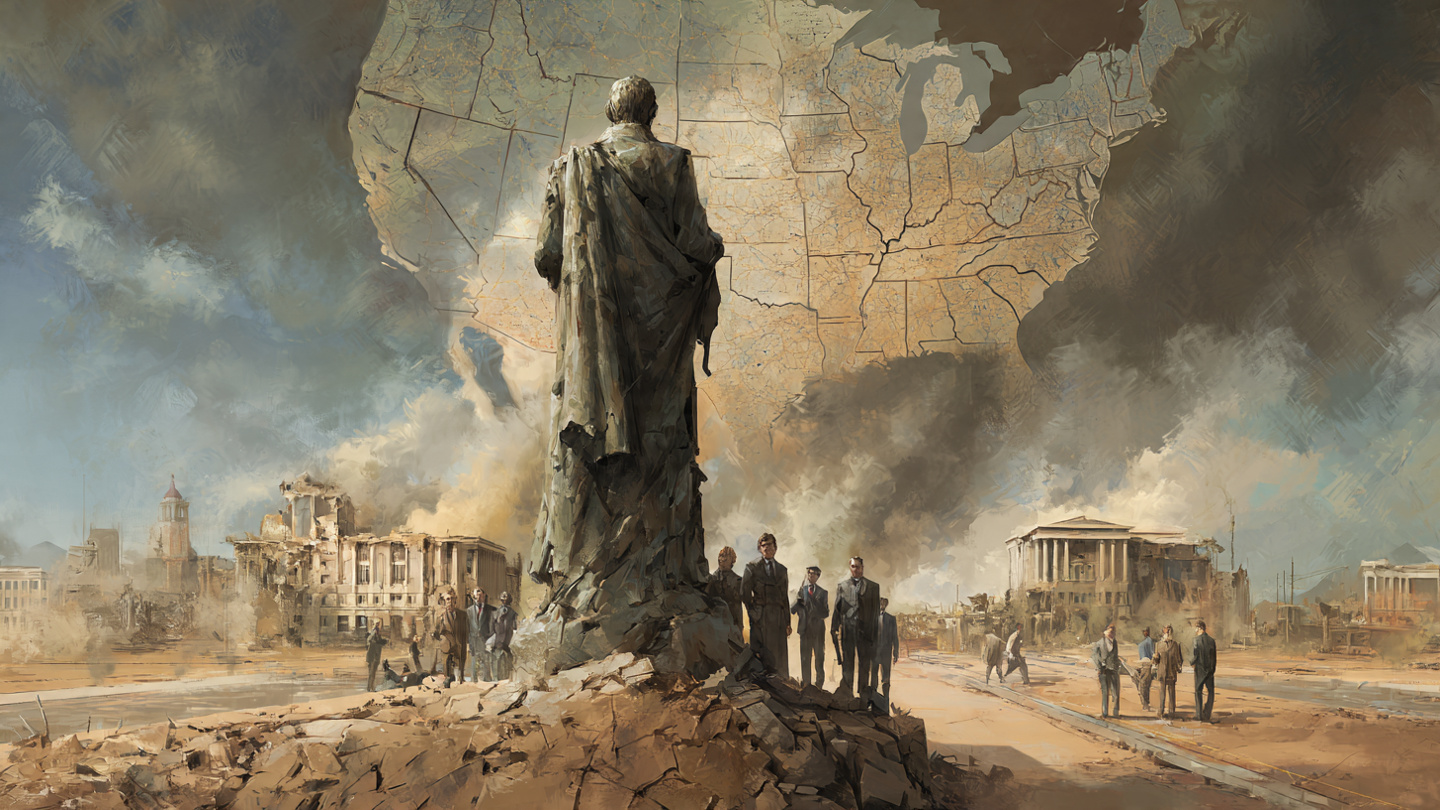
One of the basic errors behind many regime change efforts is the assumption that the political order is identical to the person at its center. In reality, authoritarian and semi-authoritarian systems are held together by networks: intelligence services, tribal or sectarian alliances, military patronage, business elites, party structures, and local power brokers. Remove the top figure and those networks do not vanish. They splinter, adapt, resist, or fight each other.
That is why post-removal periods are so dangerous. The question is never just, “Who replaces the leader?” The harder question is, “Who controls the guns, the bureaucracy, the courts, the borders, the ministries, the money, and the public narrative the next morning?” If there is no credible answer, instability is almost guaranteed.
Power Vacuums Invite Extremism
When central authority collapses, the strongest organized actors usually benefit first, not the most democratic ones. That often means militias, warlords, ideological movements, or insurgent groups. Weak transitional authorities tend to be outmaneuvered by factions that already possess fighters, funding, and local influence.
This is one of the most important practical examples policymakers ignore. A security vacuum does not remain empty for long. It gets filled by whoever is most willing and able to use force. In several cases across the modern Middle East and beyond, efforts to unseat governments opened space not for liberal reformers, but for armed non-state actors who proved far harder to contain.
Nation-Building Is Harder Than Toppling a Government
Even when a leader is genuinely despised, building a stable replacement is a generational project. Elections alone do not create legitimacy. Constitutions alone do not create trust. Foreign backing alone does not create durable institutions.
Successful political transitions require:
- Security on the ground
- Functioning civil administration
- Inclusive political bargaining
- Economic continuity
- Public confidence in the new order
- Protection from external interference
Those conditions are extraordinarily difficult to produce, especially after military intervention or covert destabilization. The same governments that favor aggressive action often underestimate the patience, money, and institutional commitment needed for reconstruction. This is where nation-building failures begin.
Historical Lessons the World Keeps Relearning
Iraq and the Cost of Strategic Overconfidence
No discussion of leadership removal and foreign policy can avoid Iraq. The fall of Saddam Hussein was swift compared with the years of violence, sectarian fragmentation, insurgency, and geopolitical fallout that followed. The assumption that removing a dictator would naturally produce a more stable and pro-Western order proved disastrously simplistic.
What many observers remember most is not just the invasion itself, but the failure to manage the aftermath. Institutions were hollowed out. Security structures disintegrated. Sectarian tensions intensified. Extremist movements found oxygen in the chaos. The result was not a smooth democratic transition but a prolonged crisis whose consequences reached far beyond Iraq’s borders.
The lesson is blunt: military success does not equal political success. Eliminating a regime without a viable postwar architecture can destabilize an entire region.
Libya and the Collapse After Intervention
Libya is another warning. Muammar Gaddafi’s removal was celebrated by many as a victory for humanitarian intervention and anti-authoritarian change. Yet what followed was a fractured state, competing armed groups, persistent instability, and external meddling. Instead of a coherent transition, Libya became a case study in what happens when a ruler falls before institutions capable of governing the country exist.
This matters because Libya revealed a recurring pattern: policymakers often spend enormous energy on the question of how to remove a leader and far too little on how to preserve order afterward. Once the central state weakens, everything from migration flows to arms trafficking to regional proxy conflict can intensify.
Smaller Interventions, Familiar Problems
Even outside headline-making wars, history shows that attempts to shape foreign leadership outcomes can have unintended effects. Covert interference, sanctions designed to trigger collapse, diplomatic isolation aimed at forcing internal rupture, or support for favored factions may produce outcomes very different from the ones advertised.
Sometimes the targeted leader becomes more repressive. Sometimes nationalist backlash strengthens the very regime external actors hoped to weaken. Sometimes local populations resent outside manipulation, even when they dislike their ruler. The idea that citizens will automatically welcome foreign involvement in domestic political change is often based more on wishful thinking than evidence.
The Strategic Risks for the United States

Credibility Can Erode, Not Grow
Supporters of hardline intervention often argue that removing hostile leaders projects power. In the short term, it can. But if the aftermath is chaotic, American credibility may suffer instead of strengthen. Allies begin to worry about judgment. Rivals study the gaps between stated goals and actual outcomes. Local partners become more cautious, wondering whether Washington is committed to long-term stabilization or merely short-term spectacle.
True credibility in foreign affairs comes not only from willingness to act, but from the ability to align means, ends, and consequences. A policy that destroys more than it builds sends a dangerous message about strategic discipline.
Adversaries Learn to Harden Themselves
Another overlooked consequence is how targeted states react. If governments believe the United States seeks leadership removal rather than negotiated pressure or deterrence, they have strong incentives to harden internally. They may expand surveillance, crush dissent more aggressively, deepen security cooperation with rival powers, or accelerate military programs as insurance against external threats.
In other words, a policy intended to weaken hostile regimes can sometimes make them more paranoid, more authoritarian, and more difficult to influence.
Regional Powers Exploit the Chaos
No major political vacuum stays local for long. Neighboring states, ideological networks, and geopolitical rivals quickly move in. Funding streams appear. Militias receive sponsorship. Political factions seek external patrons. A domestic transition becomes a regional contest.
This is one reason US foreign policy must assess not only the target regime, but also the ambitions of every actor waiting for the aftermath. If that work is not done in advance, a campaign to remove one unfriendly leader can unintentionally create a playground for several more dangerous forces.
The Moral Question Is More Complicated Than It Seems
There is also an ethical dimension that deserves honesty. It is easy to speak morally about removing a brutal leader. It is much harder to account morally for what happens to civilians after state collapse, economic breakdown, militia warfare, or displaced populations.
A serious moral framework cannot stop at the moment of intervention. It has to consider the full arc of consequences. If an action predictably leads to civil conflict, humanitarian disaster, or years of instability, then the righteousness of the initial intention becomes much harder to defend.
This is where public debate often fails. It frames the choice as action versus indifference, strength versus weakness, democracy versus dictatorship. But real choices are more demanding. Sometimes the least emotionally satisfying option, such as containment, diplomacy, or long-term pressure, is actually the more responsible one.
What a Smarter Alternative Looks Like

Containment, Pressure, and Realism
Not every hostile leader should be accommodated, and not every regime can be reasoned with. But there is a wide spectrum between passivity and regime change. Smart statecraft uses tools that constrain dangerous behavior without gambling recklessly on political collapse.
Those tools can include targeted sanctions, multilateral diplomacy, regional balancing, deterrence, support for civil society, anti-corruption measures, intelligence coordination, and negotiated de-escalation where possible. None of these approaches are glamorous. None offer instant gratification. But they are often more sustainable than trying to reorder another country from the outside.
In practical terms, a disciplined strategy asks:
- What exact behavior are we trying to change?
- Do we understand the internal structure of the target state?
- Who governs if the current leadership falls?
- What resources are required for five to ten years after intervention?
- Which regional actors will exploit the transition?
- Can our stated moral goals survive the likely humanitarian fallout?
If policymakers cannot answer those questions clearly, they probably do not have a serious plan. They have a slogan.
Support Institutions, Not Fantasy Endings
One of the most durable lessons in international politics is that institutions matter more than personalities. Stable transitions depend on courts, civil administration, security-sector reform, local legitimacy, and economic functionality. Outsiders can sometimes help create conditions for reform, but they cannot simply declare those institutions into existence after a leader falls.
That is why serious foreign policy should focus less on cinematic endings and more on institutional resilience. It should ask how to reduce violence, strengthen accountability, and widen political space over time. That is slower work, but it is the kind that lasts.
Why This Debate Still Matters
The instinct to personalize geopolitical problems has not gone away. In Washington and other capitals, there is always a temptation to imagine that one stubborn ruler is the central obstacle to peace, reform, or alignment. Sometimes that is partly true. But turning that insight into a doctrine of leadership removal is dangerous.
For citizens, voters, and analysts, the most important habit is skepticism toward easy promises. Whenever officials imply that a country will stabilize once one man is gone, alarm bells should ring. That claim has been made repeatedly, and the record behind it is poor.
As someone who has watched these debates unfold over years, I find the pattern remarkably consistent. The opening argument is always confident. The warnings are dismissed as pessimism. The local realities are treated as secondary. Then, once disorder spreads, the same voices insist that the failure came from execution rather than the original assumption. But sometimes the assumption itself is the problem.
Foreign intervention aimed at removing leaders may feel bold. Too often, it is merely shallow. It addresses the most visible symptom while ignoring the deeper disease.
Conclusion
Removing an unfriendly leader can look like decisive foreign policy, but appearances are deceptive. The fall of a ruler does not automatically produce peace, democracy, or strategic advantage. More often, it unleashes uncertainty that is difficult to contain and even harder to reverse. Regime change foreign policy tends to overpromise, underplan, and underestimate the complexity of political order.
If policymakers truly want stability, security, and credible international leadership, they must resist the lure of simplistic solutions. The wiser path is usually slower, less dramatic, and more frustrating in the short term. It means managing threats, strengthening institutions, building coalitions, and thinking beyond the first headline.
The real test of foreign policy is not whether it removes a rival. It is whether life becomes safer, more stable, and more governable afterward. On that measure, the strategy of getting rid of leaders we dislike has too often failed. If we want better outcomes, we need a more patient, honest, and realistic approach to power abroad.
Call to action: If you care about how nations use power, question policies that sell quick victories without explaining the aftermath. Demand strategies grounded in history, institutional thinking, and accountability. In foreign policy, the day after matters more than the day of action.


