Power vacuums rarely stay empty for long, but in Iran, the scramble to fill them is exposing something deeper than a routine leadership reshuffle. The issue is not simply who replaces whom. It is whether the state can still act with a clear voice when key officials are removed, rival institutions compete for influence, and negotiators are left guessing how much authority they truly have. For outside observers, this is a story about geopolitics. For Iranians, it is also a story about stability, legitimacy, and the real cost of a fractured political system.
The Iran leadership crisis has become one of the most important forces shaping the country’s internal politics and foreign policy. When leadership chains are disrupted, the consequences reach far beyond elite circles. Military planning slows, diplomatic channels become unreliable, and economic anxiety deepens. In practical terms, that means every conversation about sanctions relief, regional security, and nuclear diplomacy becomes harder to predict.
From a strategic perspective, this is the kind of instability that can quietly alter a nation’s direction before the world fully recognizes what has changed. A government does not need to collapse to become ineffective. Sometimes it only needs to lose its ability to coordinate.
Why Iran’s Leadership Structure Is Under Pressure
Iran’s political system has always been complex, with overlapping centers of power that include elected institutions, the security establishment, clerical networks, and unelected bodies with significant influence. In stable moments, that layered system can project discipline. In periods of stress, however, it can produce delays, mixed signals, and internal paralysis.
Today, several pressures appear to be converging at once. Senior figures have been killed, replaced, or politically weakened. Lines of communication inside the state are under strain. Decision-makers may hold different views about what Tehran should concede in talks with foreign powers, how aggressively it should respond to security threats, and what level of economic pain is still manageable.
This matters because the Iranian state does not operate like a single executive office. Authority is distributed, often deliberately. That can help preserve regime continuity, but it also makes rapid coordination more difficult when a crisis removes key intermediaries.
- Leadership losses can disrupt institutional memory and trusted decision-making channels.
- Competing factions may push contradictory strategies on diplomacy and security.
- Negotiators may face uncertainty about what they are authorized to offer.
- Public confidence weakens when elite divisions become visible.
- Regional rivals may interpret internal confusion as strategic vulnerability.
The Real Problem: Coordination, Not Just Succession
At first glance, replacing a fallen or sidelined official may seem straightforward. Governments do it all the time. But succession is only one part of the equation. The harder challenge is rebuilding trust, authority, and operational clarity across institutions that do not always share the same priorities.
That is where the current Iran political instability becomes especially significant. A newly appointed figure may hold a title, but titles alone do not guarantee influence. Effective governance depends on personal networks, credibility within the security apparatus, access to the supreme leadership circle, and confidence from bureaucratic stakeholders. If any one of those pieces is missing, policy execution can stall.
Think of it like a corporation facing a sudden boardroom crisis. A new chief executive can be named in hours, but if department heads are unsure whether strategy will hold, major deals freeze. Employees become cautious. Partners delay commitments. Markets react not just to the appointment, but to uncertainty about whether the new leadership can deliver decisions. Iran is facing a similar dynamic, except the stakes involve military command, international diplomacy, and domestic control.
My view is that this kind of fracture is often underestimated from the outside. Analysts tend to focus on the most visible officeholders, but systems like Iran’s depend heavily on informal authority. When those hidden channels are interrupted, the result is not always dramatic public turmoil. More often, it is hesitation, inconsistency, and silent disagreement at the top.
How the Crisis Affects Iran Nuclear Negotiations

No area is more vulnerable to internal confusion than the Iran nuclear negotiations. Diplomatic talks require clarity on bottom lines, fallback options, and acceptable trade-offs. Negotiators must know what concessions are possible, what conditions are non-negotiable, and how far they can go without triggering backlash at home.
If Tehran’s internal coordination is fraying, its envoys may arrive at the table without a fully coherent mandate. That creates multiple risks. First, talks can slow down because representatives need repeated consultations before responding to proposals. Second, foreign counterparts may doubt whether commitments made in private discussions will hold once reviewed by other Iranian power centers. Third, hardliners can exploit ambiguity to block compromise after the fact.
This uncertainty is especially dangerous in high-stakes diplomacy, where timing matters. A temporary opening can disappear quickly if mistrust grows on either side. Even when all parties claim to want de-escalation, weak coordination can make de-escalation politically difficult to execute.
What Negotiators Need but May Not Have
- A clear hierarchy of approval for sensitive concessions
- A unified internal message on sanctions relief and verification
- Confidence that security institutions support diplomatic commitments
- Protection from domestic political backlash after compromise
- Reliable guidance when talks move unexpectedly fast
Without those conditions, negotiations become reactive rather than strategic. That does not mean talks are impossible. It means even modest progress demands more time, more backchanneling, and more tolerance for contradictory signals.
Internal Rivalries and the Struggle for Control
Every fragmented political system contains factions, but not all factionalism is equally disruptive. In Iran, internal rivalries can matter because they shape who controls the narrative of resistance, who gets blamed for economic pain, and who claims credit for any diplomatic breakthrough. These incentives do not always align with national coherence.
Some actors may prefer a harder line, arguing that compromise projects weakness. Others may see tactical flexibility as necessary to relieve pressure and preserve the system. When elite consensus weakens, policy can swing between confrontation and cautious engagement. That makes the country harder to read from abroad and harder to manage from within.
There is also a practical issue: newly elevated officials often need time to build command authority. During that transition, subordinates may hesitate, waiting to see which faction gains the upper hand. In security-sensitive environments, that hesitation can carry serious consequences. Miscommunication, overreaction, or delayed action all become more likely.
For ordinary citizens, these elite struggles are not abstract. They affect inflation, investment, job confidence, and the perceived likelihood of broader conflict. When the public sees a state preoccupied with internal power balancing, it can deepen cynicism about whether national interests are truly guiding policy.
Economic Fallout From Political Fragmentation
The Tehran power struggle is not just a political story; it is an economic one. Markets dislike uncertainty, and prolonged leadership confusion magnifies risk across nearly every sector. Investors pull back. Businesses postpone decisions. Households become more defensive with savings and spending. Even when sanctions are the primary external constraint, internal disorganization can worsen the damage.
Economic stress also feeds back into politics. A government that cannot present a clear strategy for stabilization often loses room to maneuver. That is especially true when inflation, currency pressure, and public frustration are already high. In such an environment, elite fragmentation makes each policy choice more contested and each delay more expensive.
A simple example helps illustrate the point. Suppose Iranian officials hint at renewed diplomatic flexibility. Currency markets may briefly respond with optimism. But if another faction quickly signals resistance, those gains can evaporate. The result is not just volatility on paper. It affects import costs, business planning, and public expectations. Over time, repeated policy whiplash damages credibility.
- Currency instability can worsen when political signals conflict.
- Investment hesitation grows when future policy direction is unclear.
- Household anxiety rises as economic expectations become harder to trust.
- State capacity weakens when crisis management turns into factional bargaining.
Regional Security Risks Are Rising
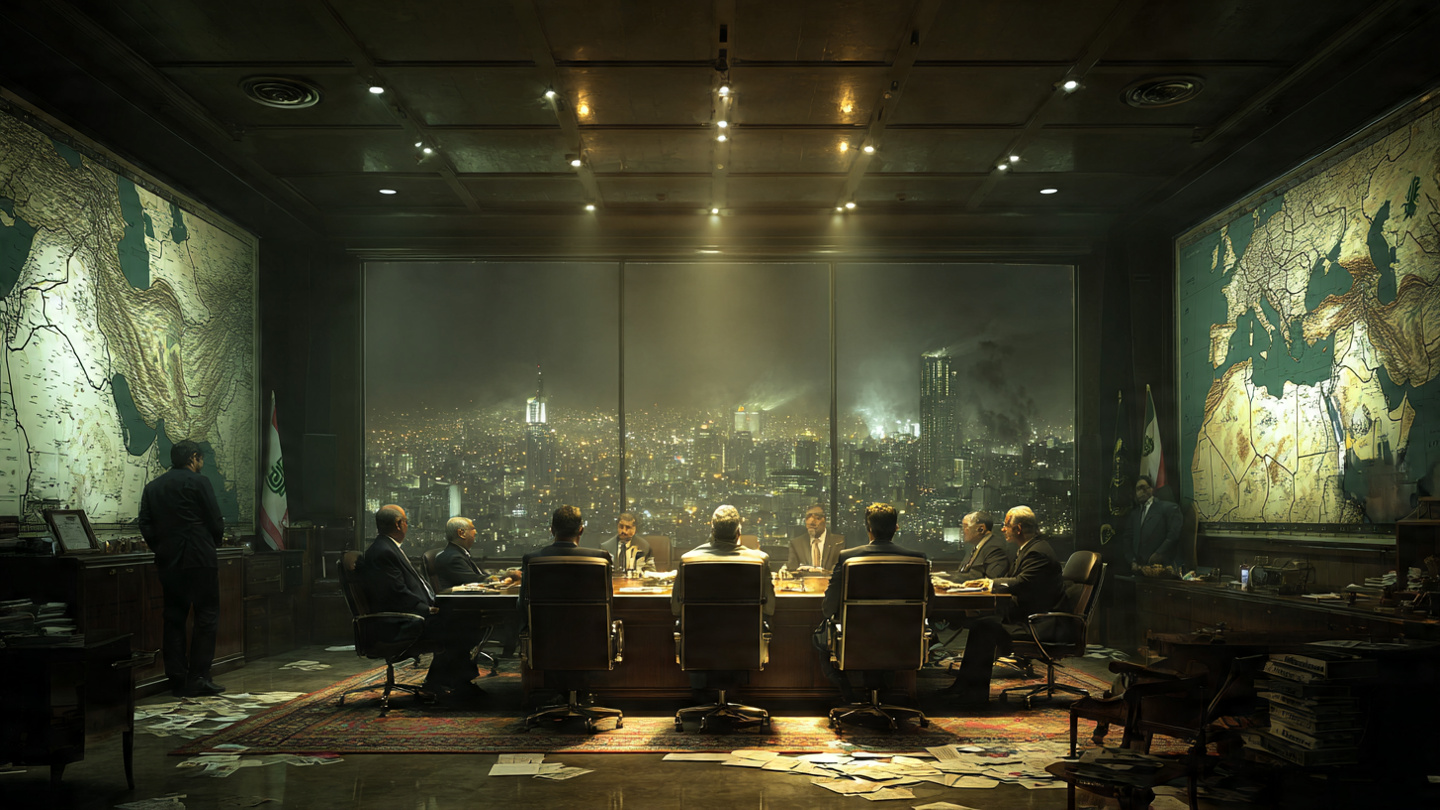
Iran’s internal fragmentation also has consequences beyond its borders. Regional actors are watching closely, and they will draw conclusions about Tehran’s cohesion, intentions, and red lines. If they believe the system is distracted or divided, they may test boundaries more aggressively. At the same time, Iranian institutions may feel pressure to project strength precisely because they fear appearing vulnerable.
This creates a dangerous paradox. A leadership system struggling to coordinate internally may become more unpredictable externally. Not necessarily because it wants escalation, but because different centers of power may send different signals. Some may prioritize deterrence. Others may seek restraint. In a tense region, mixed signals are often interpreted as strategic messages even when they are really signs of internal confusion.
The risk is not limited to deliberate policy. Accidents become more likely when command structures are stressed. If field decisions are made under uncertain guidance, incidents can escalate before senior leaders impose control. That is one reason the current Iran regime uncertainty deserves such close attention from diplomats and security planners alike.
What This Means for the Future of Governance in Iran
The deeper question is whether Iran’s leadership crisis is temporary turbulence or evidence of a longer-term structural problem. States can survive leadership losses if institutions are resilient enough to absorb shocks. But if every major disruption exposes the same weaknesses, it suggests the system depends too heavily on a narrow set of personalities and informal relationships.
That is a dangerous dependency. It can make short-term continuity look stronger than it really is. From the outside, the state may appear intact because public order holds and official statements continue. Yet underneath, coordination may be slowing, trust may be thinning, and strategic discipline may be weakening.
In my opinion, the most telling indicator will be whether Tehran can produce a consistent line on core policy questions over time. Can it negotiate without contradiction? Can it respond to security threats without obvious internal disarray? Can it reassure the public that major decisions are being made from a position of control rather than improvisation? Those are the tests that matter.
Signals to Watch in the Months Ahead
- Whether new appointees consolidate authority quickly or face visible resistance
- Whether diplomatic messaging becomes more coherent across institutions
- Whether economic policy signals remain stable long enough to restore confidence
- Whether security responses appear coordinated or fragmented
- Whether public rhetoric and behind-the-scenes actions begin to align
Why This Story Matters Beyond Iran
It is easy to treat Iran’s internal leadership tensions as a distant issue relevant only to diplomats and regional specialists. That would be a mistake. Iran sits at the intersection of energy markets, strategic waterways, proxy conflicts, and global nonproliferation concerns. When decision-making in Tehran becomes less predictable, the ripple effects can spread far beyond the country’s borders.
For policymakers, businesses, and ordinary readers trying to understand what comes next, the key lesson is simple: instability inside a state does not stay inside the state for long. Leadership fractures alter negotiation behavior, crisis response, and market expectations. They also shape the likelihood of miscalculation in moments when restraint matters most.
The challenge is that fractured systems often produce contradictory evidence. One day, they look capable of discipline. The next, they seem trapped by internal conflict. That is why careful analysis matters more than dramatic headlines. The central issue is not whether Iran still has leaders. It is whether those leaders can still act as one.
Conclusion: A State Under Strain, a Region on Edge

The Iran leadership crisis is no longer a narrow elite story. It is a defining test of how the country governs itself under pressure, how it approaches diplomacy, and how it navigates rising regional risk. Leadership losses, factional rivalries, and uncertain chains of authority are making it harder for Tehran to speak clearly, negotiate confidently, and project strategic coherence.
That does not mean the system is on the verge of collapse. But it does mean that every major decision now carries more uncertainty than before. In politics, uncertainty is often manageable. In nuclear diplomacy and regional security, it can be dangerous.
Anyone trying to understand the future of Iran should focus less on official titles and more on coordination, credibility, and control. Those are the real measures of power in a fractured system. If you want sharper analysis on global power shifts, diplomatic risk, and the forces reshaping world affairs, stay engaged, follow developments closely, and keep asking the question that matters most: who is truly making the decisions, and can they still deliver on them?


