When a U.S. missile strike in Iran reportedly hit a sports hall, the immediate images were shocking enough. But the deeper story is even more consequential: the weapon at the center of the incident appears to be the Precision Strike Missile, or PrSM, one of the newest and least publicly understood systems in the American arsenal. That matters not only because of the damage on the ground, but because it signals a major shift in how the United States could project power across the Middle East.
For observers of military technology, this is the kind of moment that changes the conversation overnight. A weapon that had barely emerged from prototype testing is now being linked to an operational strike in one of the world’s most sensitive flashpoints. For policymakers, analysts, and ordinary readers trying to make sense of the headlines, the questions come fast: What exactly is the Precision Strike Missile? Why would it be used in Iran? How accurate is it, where could it have been launched from, and what does its use say about the future of regional conflict?
In my view, the real significance is not just the strike itself. It is the message embedded in the strike. Modern warfare is increasingly about speed, range, precision, and ambiguity. The PrSM appears to sit at the center of that equation.
What Is the Precision Strike Missile?
The Precision Strike Missile is the U.S. Army’s next-generation surface-to-surface weapon designed to replace the older Army Tactical Missile System, commonly known as ATACMS. Its purpose is straightforward but transformative: deliver highly accurate strikes at longer ranges, with faster response times, and with better survivability against modern air defense networks.
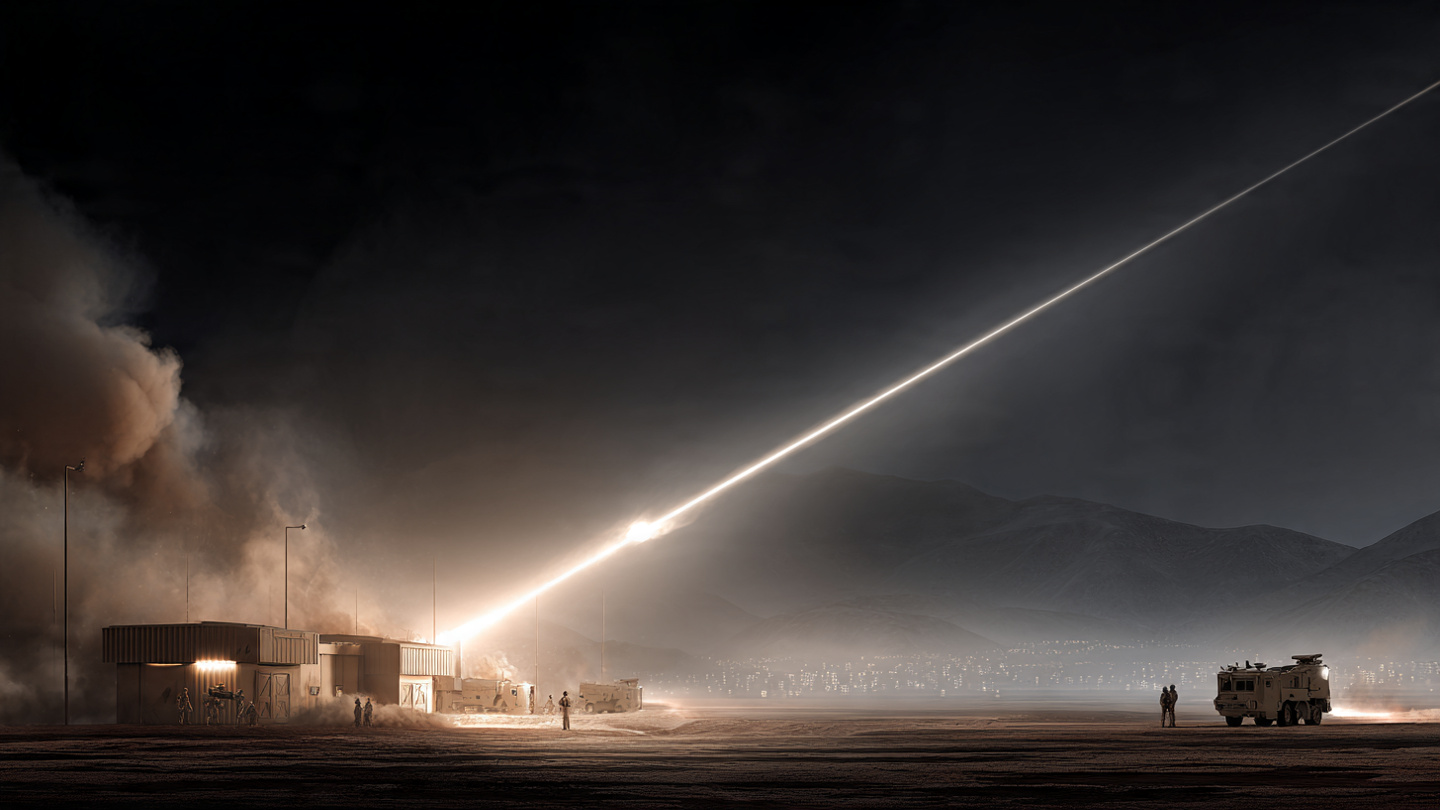
In practical terms, the missile is designed to launch from platforms already familiar to U.S. forces, including the M270 Multiple Launch Rocket System and the HIMARS launcher. That compatibility is a major operational advantage. It means the Army can field a more advanced missile without having to rebuild its entire launcher infrastructure.
What makes the PrSM especially notable is the mix of range, precision, and flexibility. It was built for battlefield environments where commanders need to hit time-sensitive targets such as command posts, radar systems, missile batteries, logistics hubs, or fortified facilities. A sports hall would not normally sound like a military target, but modern conflicts often involve dual-use structures, temporary command sites, storage points, or covert operational nodes concealed inside civilian-looking buildings. That does not answer every legal or moral question, but it does explain why such a location would immediately draw scrutiny from analysts.
- Role: Next-generation U.S. Army surface-to-surface strike missile
- Launch platforms: HIMARS and M270 systems
- Mission set: Long-range precision attacks on high-value targets
- Operational value: Faster strike options with reduced exposure for launch crews
- Strategic effect: Expands U.S. ability to hit targets deep inside contested areas
Why This Strike Matters Beyond the Immediate Blast
A missile strike on Iranian territory is never just a tactical event. It has immediate military implications, but it also sends political, technological, and strategic signals. If the PrSM was indeed used, this would indicate that the United States is willing to bring a highly advanced system into an active regional theater earlier than many expected.
That matters because there is often a gap between a weapon’s test program and its meaningful use in real-world operations. Testing proves performance under controlled conditions. Combat tests everything else: readiness, logistics, targeting confidence, launcher availability, intelligence support, and political risk tolerance.
From a strategic perspective, this event suggests the U.S. military may now be more comfortable deploying cutting-edge systems rapidly when commanders believe the operational payoff justifies the secrecy and escalation risk. In plain English, it shows how quickly a new missile can move from technical briefings into geopolitical reality.
There is another layer here that often gets missed. Regional adversaries closely watch not only what gets hit, but how it gets hit. A precise, hard-to-intercept strike communicates deterrence. It tells rival planners that traditional assumptions about safe depth, hardened facilities, or distance from front-line launch points may no longer hold.
What We Know So Far

Public information remains limited, and that is not unusual in a case like this. Early reporting on sensitive military actions is often incomplete, shaped by official silence, conflicting intelligence assessments, and the fog of conflict. Still, several broad points stand out.
The weapon is linked to a highly secretive capability
The PrSM has been discussed publicly in defense circles for years, but its exact operational deployment status, stockpile size, targeting packages, and overseas basing footprint remain tightly controlled. If it was used in this strike, the decision likely involved high-level authorization and a carefully prepared chain of intelligence support.
The launch location is a major unanswered question
One of the biggest mysteries is where the missile may have been launched from. Since the Precision Strike Missile is a ground-launched system, any operational use in or near Iran immediately focuses attention on U.S. positions and partner territory across the Persian Gulf. Several countries host American military assets, but governments in the region are often deeply sensitive about being seen as a launch point for strikes into Iran.
This sensitivity is easy to understand. Public identification of a launch state could intensify diplomatic pressure, inflame domestic opinion, and increase the risk of retaliation. That is why secrecy around basing is not merely bureaucratic caution; it is part of the operational shield.
The target selection raises difficult questions
A sports hall is not the kind of site most readers associate with a missile strike. That discrepancy is exactly why the incident has drawn attention. In modern conflict zones, civilian buildings can be repurposed for military use, including temporary command functions, arms storage, communications operations, or meetings of paramilitary personnel. At the same time, any strike on a structure with a civilian identity demands close examination, because the legal and ethical stakes are so high.
- Known: The strike has been linked to a new U.S. missile system
- Unclear: Exact launch location, full targeting rationale, and official confirmation details
- Likely: High-level coordination between intelligence, strike planners, and regional command structures
- Critical issue: Whether the target had a military function despite its public identity
Why the Persian Gulf Basing Question Is So Sensitive
To understand why analysts care so much about launch origin, imagine the regional map as a tightly packed chessboard. A missile launched from a nearby partner nation carries different implications from one launched from farther away. Range affects not just technical feasibility but the political meaning of the strike. It can reveal which host countries are willing to support U.S. operations directly, which in turn reshapes regional alliances and deterrence calculations.
For Gulf states, this is a balancing act. Many of them cooperate closely with Washington on defense, intelligence, and air security. At the same time, they often try to avoid being dragged into a direct, visible confrontation with Tehran. If the PrSM can be fired from forward positions with little warning, that gives the U.S. military more options, but it also puts host governments in a more exposed position.
I think this is where the story becomes larger than one strike. It is really about the architecture of American power in the region. Weapons matter, but bases, partnerships, access agreements, and political deniability matter just as much. A missile only extends reach if the surrounding network makes that reach usable.
How the Precision Strike Missile Changes the Battlefield
The Army has long pursued systems that can hit farther and faster without relying entirely on aircraft. Ground-launched precision missiles offer several advantages that are increasingly important in contested environments.
They reduce dependence on airpower alone
Aircraft remain essential, but they are expensive, visible, and vulnerable to dense air defenses. A mobile launcher firing a long-range missile can create a different kind of threat axis. It complicates enemy planning and can strike on short notice.
They create faster kill chains
In modern warfare, speed is often everything. If intelligence identifies a fleeting target, commanders need systems that can translate that information into action before the target moves. The PrSM is designed for that kind of rapid targeting cycle.
They increase pressure on hardened and rear-area targets
Facilities once thought relatively safe due to distance may no longer be safe. That changes how adversaries disperse assets, camouflage command nodes, and structure logistics.
A practical example helps here. In older models of conflict, a commander might assume a warehouse, training hall, or meeting site deep inland had a useful cushion of protection if it sat beyond the effective reach of many battlefield systems. A missile like the PrSM shrinks that comfort zone. Suddenly, rear-area planning becomes front-line planning.
The Secrecy Around the Program Is Part of the Story

Military secrecy is often frustrating to the public, but in this case it serves several functions. First, it protects technical details that could help adversaries adapt. Second, it obscures deployment patterns and stockpile readiness. Third, it shields partner governments from immediate political fallout.
That secrecy, however, comes with tradeoffs. It fuels speculation, weakens public confidence in official narratives, and leaves room for competing interpretations. Was the strike a demonstration of deterrence, a narrow operational response, or part of a broader campaign? Without fuller disclosure, analysts are left piecing together fragments.
Still, the broad trend is unmistakable. The U.S. military is moving toward a model in which long-range precision fires play a much larger role in regional conflict scenarios. The PrSM is one of the clearest expressions of that shift.
What This Means for Iran, the U.S., and the Region
For Iran, a strike like this would reinforce concerns about vulnerability to precision attacks on strategic and semi-covert facilities. That could push Iranian planners toward deeper dispersal, more deception, and faster retaliation doctrines.
For the United States, the use of such a missile would demonstrate confidence in both the system and the intelligence architecture supporting it. But it also raises the stakes. Once a new capability is used, adversaries begin adapting immediately.
For the wider Middle East, the implications are profound. States across the region will be watching for signs that land-based long-range missile warfare is becoming more central to U.S. operations. If so, defense postures, diplomacy, and deterrence strategies may all need to change.
- Iran: Likely to reassess target protection, dispersal, and response options
- United States: Gains a powerful demonstration of reach but assumes greater escalation risk
- Gulf partners: Face intensified scrutiny over hosting, access, and strategic alignment
- Regional balance: Precision ground-launched strikes become a bigger factor in crisis planning
The Legal and Moral Questions Cannot Be Ignored
No analysis of a strike on a sports hall is complete without addressing the obvious issue: if a civilian-labeled structure was hit, the burden of justification is high. International law does not prohibit strikes on a building simply because it has a civilian appearance if it is being used for military purposes. But the standard of distinction and proportionality remains essential.
That is why independent verification matters. Was the facility being used as a command site? Were armed personnel present? Was there a credible assessment that the strike would achieve a legitimate military objective? These are not secondary questions. They are central to how the event will be judged internationally.
In public debate, it is tempting for people to collapse into two extremes: either everything is justified by security logic, or nothing can be explained if civilians might have been nearby. Reality is harder. Serious analysis means holding both truths in view: military necessity may exist, and public accountability still matters.
What to Watch Next
This story is still developing, and the most important clues may emerge gradually rather than all at once. Watch for official statements that clarify the strike’s legal rationale, satellite imagery that helps assess the target site, and defense reporting that sheds light on whether the PrSM has entered a more active deployment phase than previously understood.
Also pay close attention to regional diplomatic behavior. If Gulf governments become unusually cautious, vague, or coordinated in their public messaging, that may indicate just how sensitive the basing issue has become. Likewise, any Iranian response, whether military, rhetorical, or cyber in nature, will offer clues about how seriously Tehran views this new capability.
For readers trying to interpret the bigger picture, the key takeaway is simple: this is not just a story about one missile impact. It is a story about the evolution of U.S. missile technology, the fragility of Middle East deterrence, and the shrinking space between prototype systems and live combat use.
Conclusion
The reported use of the Precision Strike Missile in Iran marks a potentially important turning point in regional warfare. If confirmed, it would show that the United States is prepared to bring one of its newest long-range strike systems into a highly sensitive operational environment, even while key details remain closely guarded. That combination of precision, secrecy, and political ambiguity is exactly what makes the incident so significant.
At one level, the strike is about a single target. At another, it is about a changing military era in which mobility, intelligence integration, and rapid long-range fires can alter strategic assumptions almost overnight. The questions surrounding the sports hall, the launch location, and the target’s true function are not side notes. They are the heart of the story.
If you want to understand where modern conflict is heading, keep watching developments around the Precision Strike Missile, regional basing, and long-range ground-launched weapons. They are no longer abstract defense concepts. They are shaping events in real time.
Stay informed, follow credible reporting, and keep a close eye on how new missile systems are changing the rules of deterrence in the Middle East.


