When a president declares that regime change in Iran is already complete, the statement lands with the force of a headline and the weight of a strategic gamble. It is designed to signal progress, project confidence, and shape public understanding of a conflict that remains deeply unstable. But reality on the ground is rarely transformed by rhetoric alone. In Iran, where power is layered across elected offices, military institutions, intelligence networks, clerical authority, and entrenched political patronage, claims of sudden political collapse demand close scrutiny.
The bigger question is not whether a bold phrase can dominate the news cycle. It is whether sustained pressure, airstrikes, and diplomatic isolation have actually weakened the Iranian system enough to produce a meaningful internal shift. So far, the evidence suggests something more complicated: Iran has absorbed severe pressure, faced visible damage, and still preserved the essential architecture of state control. That does not mean its leadership is unshaken. It means the idea of victory may be easier to announce than to prove.
From my perspective, this is where many foreign policy narratives go wrong. Leaders often describe momentum as if it were a result. A tactical gain becomes a strategic breakthrough. A shift in tone becomes a transformation in power. Yet in conflicts involving the Middle East, especially where national identity, military prestige, and regime survival are intertwined, appearances can mislead even experienced observers.
What Trump’s Iran Comments Actually Signal
Trump’s comments about Iran regime change do more than interpret events. They frame the conflict in political terms that appeal to multiple audiences at once. To supporters, such statements suggest strength and control. To rivals, they signal resolve. To allies, they offer reassurance that pressure is producing results. But to analysts, they raise a practical question: what definition of “complete” is being used?
If the claim means Iran’s leaders are under intense strain, that is plausible. If it means the ruling order has been fundamentally displaced, that is far harder to support. The state still appears capable of enforcing internal order, controlling security channels, managing elite messaging, and projecting enough authority to avoid the appearance of immediate disintegration.
There is also a revealing detail in the suggestion that Iran’s current leaders have become “much more reasonable.” That language implies the military campaign has achieved behavioral change. Yet even if Tehran’s rhetoric has moderated in selected moments, policymakers know that tactical restraint does not automatically equal strategic concession. Governments under pressure often adjust tone to buy time, regroup, test opponents, or reduce immediate vulnerability.
Why political messaging matters in wartime
Wartime narratives are never neutral. They shape diplomacy, investor sentiment, public tolerance for prolonged operations, and the expectations of allied governments. A claim of completed regime change can create the impression that the hard part is over, when in fact the most dangerous phase may still lie ahead.
- Domestic politics: Strong messaging can rally supporters and reduce criticism in the short term.
- International signaling: It can pressure rivals by implying inevitability.
- Alliance management: It reassures partners that military action has a clear purpose.
- Perception risk: If reality fails to match the claim, credibility can quickly erode.
Iran’s Power Structure Looks Damaged, Not Dismantled

To understand why the claim remains contested, it helps to remember how the Iranian system actually works. Iran is not structured like a fragile one-man dictatorship where removing a single figure instantly topples the state. It is a hybrid order with overlapping centers of power. The presidency matters, but so do the Supreme Leader’s office, the Islamic Revolutionary Guard Corps, the intelligence services, the judiciary, the religious establishment, and provincial security networks. This diffusion of authority is one reason the system is difficult to break from the outside.
Even after a month of U.S.-Israeli attacks, the central institutions appear to be functioning. There may be internal strain, disputes over strategy, and growing public exhaustion. But the system still seems capable of command, enforcement, and controlled communication. That is not the profile of a regime that has already been replaced in any meaningful political sense.
One practical example is the difference between infrastructure damage and political displacement. A government can lose military assets, suffer sanctions, and still maintain domestic control if its coercive instruments remain intact. History offers many examples of states that looked cornered from the outside yet retained enough internal capacity to survive. Iran has spent decades preparing for exactly that scenario.
The institutions that keep Tehran resilient
Iran’s durability comes from design as much as ideology. Its leaders have long assumed they would face external pressure, covert operations, and military threats. As a result, redundancy is built into the system.
- Security depth: Multiple intelligence and enforcement channels reduce the risk of sudden breakdown.
- Elite protection: Key figures are insulated by loyal networks and institutional overlap.
- Narrative control: State messaging frames pressure as proof of national resistance.
- Regional leverage: Tehran can still influence events through partners and proxies.
- Political adaptation: The leadership can rotate tactics without surrendering core power.
This is why claims about instant transformation often miss the mark. Iran leadership resilience is not accidental. It is the product of decades of preparing for siege conditions.
Why Airstrikes Alone Rarely Deliver Regime Change
The idea that external force can quickly produce internal political transformation has appealed to strategists for generations. Sometimes pressure can weaken a regime, divide elites, and inspire defections. But more often, sustained military action hardens nationalist sentiment, allows governments to portray themselves as defenders of sovereignty, and gives internal security services a pretext to crack down more aggressively.
That does not mean military pressure is irrelevant. It can degrade command systems, disrupt supply lines, and impose real costs. But there is a major difference between coercion and replacement. One aims to alter behavior. The other aims to transform who governs. The second goal is vastly harder, especially in a country with strong security institutions and a history of surviving external pressure.
In practical terms, regime change usually requires some combination of elite fracture, mass mobilization, economic collapse, and a credible alternative power center. Without those ingredients, military pressure may produce instability without producing transition. That is a dangerous middle ground because it increases the risk of escalation while leaving the core political structure standing.
My own view is that policymakers often underestimate the emotional dimension of state survival. When a nation believes it is under attack, even citizens frustrated with their government may hesitate to welcome outside efforts to force political change. Nationalism and anger do not erase domestic grievances, but they can temporarily reorder priorities.
Common misconceptions about coercive pressure
- Misconception 1: Visible damage equals political collapse.
- Misconception 2: A softer public tone means strategic surrender.
- Misconception 3: Economic pain automatically produces revolt.
- Misconception 4: Foreign pressure easily unites opposition groups.
- Misconception 5: Regional isolation prevents retaliation.
Each of these assumptions has shaped failed predictions in past conflicts. Iran may be under extraordinary pressure, but pressure alone is not proof of transformation.
The Strategic Purpose Behind the Claim
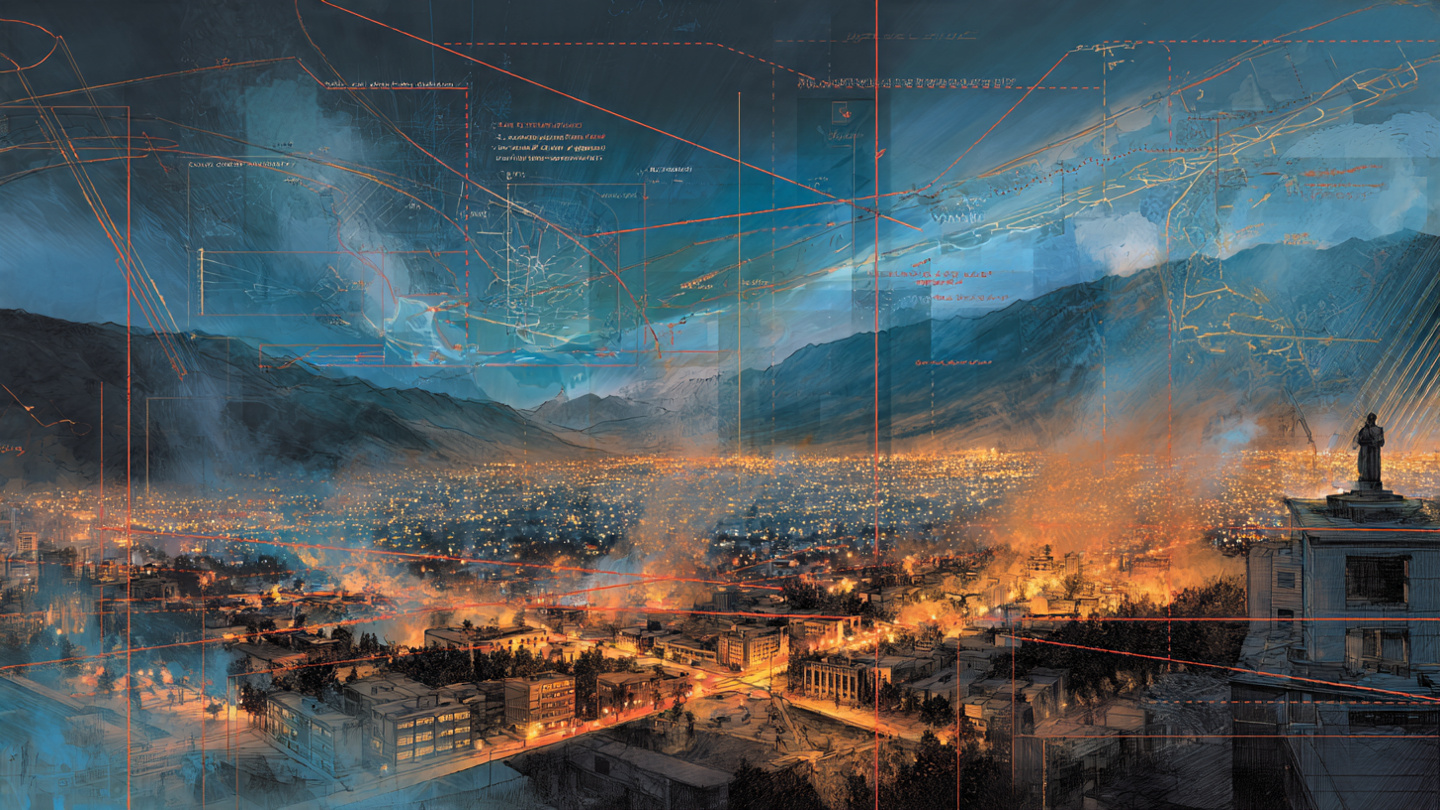
So why make the claim at all? Because in geopolitics, language is often part of the battlefield. Declaring that Trump Iran policy has already achieved its political objective can serve several strategic purposes. It can suggest that continued pressure is justified, lower the political cost of past decisions, and put psychological weight on Iranian decision-makers by implying their position is weaker than they publicly admit.
There is also a media logic here. A complicated conflict becomes easier to sell when reduced to a simple arc: pressure worked, adversaries are bending, goals are within reach. The difficulty is that simplified narratives can trap policymakers. If leaders publicly insist that regime change has effectively happened, any later evidence of regime continuity becomes politically awkward. That can create incentives for further escalation just to preserve the original storyline.
This is one reason careful language matters. Overstating success can narrow diplomatic flexibility. If the conflict later shifts toward negotiation, critics may ask why talks are needed if victory was already secured. If the fighting intensifies, the same critics may argue that earlier claims were premature or misleading.
Who benefits from a stronger victory narrative?
- Political leaders: It creates an image of decisive leadership.
- Military advocates: It strengthens the case that pressure should continue.
- Allied governments: It can help justify coordination and shared risk.
- Markets and observers: It briefly reduces uncertainty by implying direction.
Still, narrative advantage is not the same as strategic clarity. The region remains too volatile for easy declarations.
How Iran May Be Responding Behind the Scenes
Even if Tehran appears publicly stable, that does not mean all is well inside the system. Pressure can trigger elite tension, tactical recalibration, and quiet debate over how to preserve the regime under harsher conditions. Some factions may favor confrontation. Others may prefer limited de-escalation to protect the state’s long-term survival.
This is where the phrase “much more reasonable” deserves closer attention. It may reflect real behind-the-scenes caution from Iranian officials who understand that widening the conflict could threaten critical assets. But it may also reflect a strategic pause rather than a genuine shift in worldview. Governments under pressure frequently oscillate between defiance and pragmatism without abandoning their core objectives.
Consider a practical analogy from business strategy. A company facing a hostile takeover may temporarily cut costs, pause expansion, and soften public messaging. None of that means it has accepted defeat. It means survival requires tactical discipline. States behave similarly, except with far higher stakes and far more tools of coercion.
Iran’s response is likely shaped by three priorities: protect regime continuity, avoid catastrophic miscalculation, and preserve enough deterrence to discourage further attacks. Those goals can coexist with temporary restraint, selective messaging, and a willingness to endure pain rather than concede systemic defeat.
The Regional Stakes Are Bigger Than One Soundbite

The debate over regime change in Iran is not just about one political claim. It goes to the heart of regional stability. Iran sits at the center of multiple fault lines: Gulf security, Israel’s strategic posture, energy markets, proxy conflicts, shipping lanes, and great-power competition. Any serious change in Tehran’s internal power structure would ripple across the entire Middle East.
That is why premature declarations are risky. If allies assume Iran is weakened beyond recovery, they may overestimate the safety of aggressive steps. If Iran believes outside powers are openly pursuing regime collapse, it may conclude that restraint offers no strategic reward. Both paths increase the danger of miscalculation.
There is also the issue of unintended consequences. Weakening a state without replacing it with a viable order can create fragmented violence, economic shock, and prolonged insecurity. The region has already seen how political vacuum can produce chaos far more difficult to manage than a hostile but intact government.
What to watch in the weeks ahead
- Elite cohesion: Signs of public disagreement among top Iranian institutions.
- Security posture: Changes in internal enforcement or military readiness.
- Diplomatic channels: Backdoor contacts, third-party mediation, or conditional talks.
- Regional responses: Actions by allied militias, neighboring states, and global powers.
- Economic stress: Currency pressure, supply disruptions, and public unrest indicators.
These signals will reveal far more than any headline claim about completed political change.
The Real Test: Has Iran’s System Been Altered or Just Pressured?
At the center of this debate is a simple but essential distinction. Has the Iranian regime been altered, or has it merely been pressured? The answer appears to lean strongly toward pressure. Severe pressure, yes. Potentially destabilizing pressure, certainly. But complete regime change? That case remains unproven.
A durable transformation would likely require visible cracks at the top, sustained inability to govern, erosion of coercive control, and the emergence of a credible alternative political order. None of those conditions appears fully established. Instead, the state looks battered yet functional, challenged yet cohesive enough to endure.
For readers trying to understand the bigger picture, the smartest approach is to separate symbolic politics from structural reality. Bold claims are often designed to shape interpretation before the facts are settled. The more consequential question is not what leaders say has happened, but what institutions can still do. In Iran, the answer still seems to be: quite a lot.
That does not mean the status quo is secure forever. It means forecasting collapse is risky, especially in a political system built to survive confrontation. The coming period may still produce deeper fractures, diplomatic surprises, or internal shifts. But those outcomes should be measured by evidence, not by the force of a declaration.
Conclusion
Trump’s assertion that regime change in Iran is already complete is politically powerful, but the current evidence points to a more restrained conclusion. Iran’s leadership may be under intense military, diplomatic, and psychological pressure, yet its core power structure appears firmly in control. Damage is visible. Vulnerability is real. But control and continuity still define the system.
In conflicts this consequential, clarity matters more than confidence. The world does not become safer because a narrative is persuasive. It becomes safer when policymakers and the public understand the difference between tactical gains and strategic transformation. Iran may be bruised, but bruised is not the same as broken.
If you follow global affairs, this is the moment to look past dramatic language and focus on how power actually operates. Stay informed with deeper world news analysis, and keep watching the signals that matter most: elite cohesion, military posture, diplomacy, and public stability. In geopolitics, the truth is usually found not in the loudest claim, but in the structures that still stand after the smoke clears.


