Jerusalem is never just a city. It is memory, devotion, history, and identity layered into stone streets and ancient sanctuaries. That is why any disruption at its holiest places travels far beyond local headlines. On Palm Sunday, one of Christianity’s most meaningful observances, tensions rose sharply when senior Catholic clergy were reportedly prevented from reaching the Church of the Holy Sepulcher to celebrate Mass. For many believers, the incident felt larger than a security dispute. It touched a nerve at the very heart of religious freedom in Jerusalem, access to sacred spaces, and the fragile balance that shapes daily life in the Old City.
Palm Sunday marks Jesus’ entry into Jerusalem, a moment of hope, humility, and public witness. To see that day overshadowed by blocked movement and visible confrontation is, for Christians around the world, deeply unsettling. Even for readers far from the city, the event raises important questions: Who controls access to holy places? How do security decisions affect centuries-old religious traditions? And what happens when a place revered by millions becomes the site of fresh division instead of shared reverence?
From a human perspective, this is what stands out most: sacred rituals depend not only on faith, but also on the ability to gather, walk, pray, and be present. When that basic movement is interrupted, the emotional impact can be profound. The scene in Jerusalem was not merely about logistics. It became a symbol of how quickly spiritual life can be constrained when politics, security, and religion collide.
Why Palm Sunday in Jerusalem Matters So Deeply
To understand the intensity of the reaction, it helps to grasp the significance of the day itself. Palm Sunday in Jerusalem is not an ordinary church service. It is a major moment in the Christian calendar, opening Holy Week and drawing worshippers, pilgrims, clergy, and local Christian communities into shared prayer. In the city where the events of the Gospel unfolded, the symbolism is especially powerful.
The Church of the Holy Sepulcher holds extraordinary importance for Christians because it is traditionally recognized as the site of Jesus’ crucifixion, burial, and resurrection. For Roman Catholics, Orthodox Christians, and other denominations, worship there carries profound theological and historical meaning. Any barrier to entry on a major feast day immediately resonates as more than a routine crowd-control measure.
- Palm Sunday opens Holy Week, one of the most sacred periods in Christianity.
- The Church of the Holy Sepulcher is among the most revered sites in the Christian world.
- Jerusalem access restrictions on a holy day affect clergy, local worshippers, and international pilgrims alike.
- Religious symbolism intensifies public reaction when access is limited at a sacred site.
In practical terms, major feast days in Jerusalem always require careful coordination. Crowds surge. Security concerns rise. Narrow streets become congested. Yet that is precisely why longstanding arrangements, religious protocols, and sensitive communication matter so much. If clergy are blocked or delayed on a day of high spiritual importance, the issue quickly escalates from administration to grievance.
What Happened at the Church of the Holy Sepulcher
Reports from church officials indicated that Israeli police stopped clergymen from reaching the church for Palm Sunday Mass, an incident described by some as unprecedented in living memory and, according to clerical voices, something not seen “for the first time in centuries.” That phrase, powerful and dramatic, reflects the level of distress felt by church authorities. Whether examined as a literal historical claim or as an expression of shock, it captures the seriousness with which the event was received.
The immediate focus fell on Israeli police restrictions around one of Christianity’s central holy sites. Church representatives framed the move as an interference with religious observance. From the perspective of worshippers, the central issue was simple: senior clergy attempting to lead a Palm Sunday liturgy should not face obstruction when approaching one of the faith’s holiest locations.
These moments matter because ceremony in Jerusalem is not incidental. Processions, liturgies, bells, vestments, and public prayer are part of the city’s living religious rhythm. Interrupting them can create a ripple effect that reaches local Christian families, global church leadership, diplomatic observers, and international media all at once.
There is also a personal dimension that should not be ignored. Imagine preparing for one of the most sacred services of the year, only to encounter barriers before reaching the altar. For clergy, that can feel humiliating. For worshippers waiting inside, it can be confusing and painful. For the wider Christian world, it can read as a warning sign that access once taken for granted may no longer be secure.
The Wider Debate: Security vs. Religious Freedom
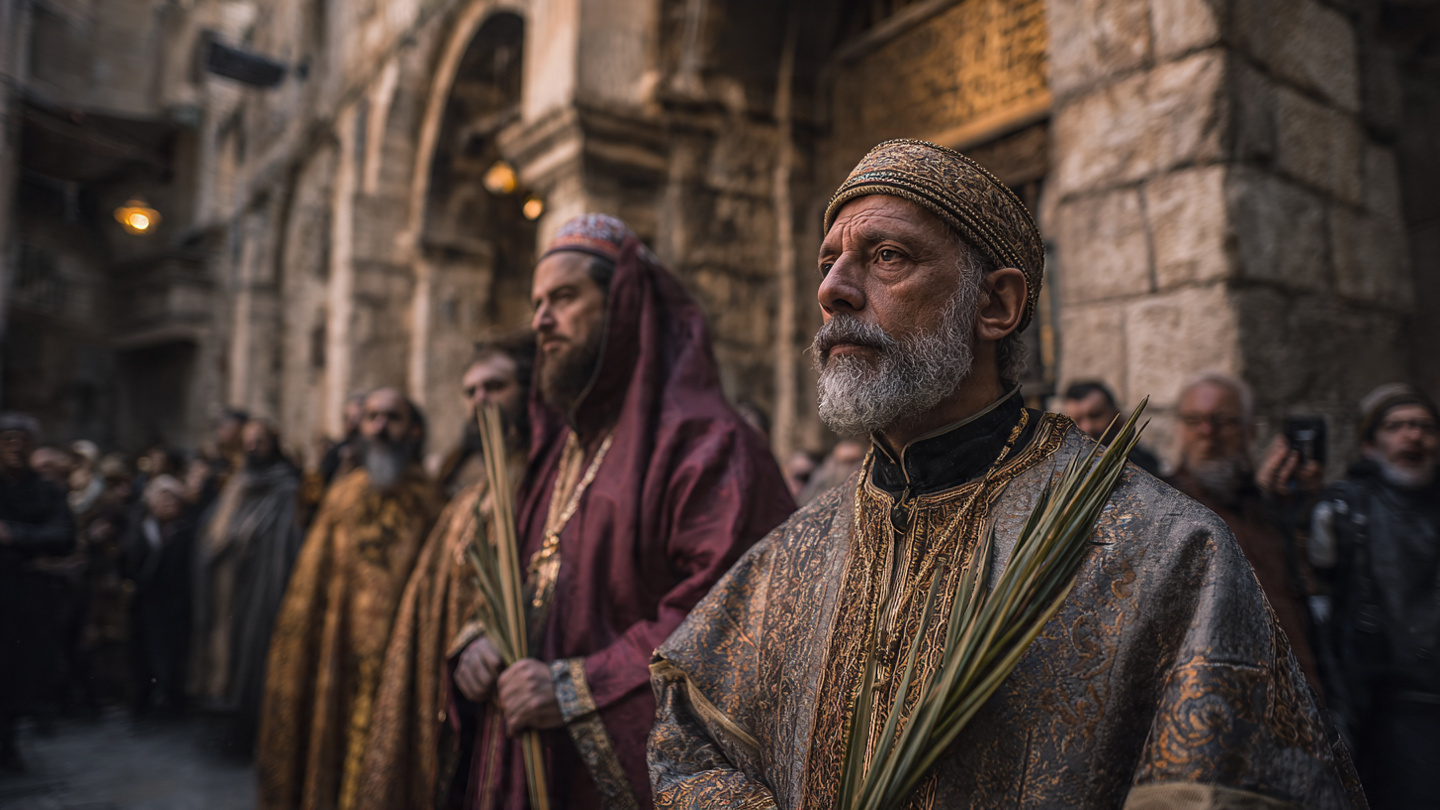
No serious discussion of Jerusalem can avoid the security argument. Authorities often defend movement controls as necessary to manage crowds, prevent violence, and reduce risk in an exceptionally tense environment. In a city where a single incident can trigger broader unrest, security planning is real, not theoretical.
Still, security measures do not exist in a vacuum. They are judged by how proportionate, transparent, and respectful they are, especially when they affect sacred rituals. This is why the Palm Sunday incident has stirred such concern. Critics argue that when restrictions fall on clergy and worshippers during core religious ceremonies, the result is not neutral enforcement. It is perceived as an infringement on access to Christian holy sites and an erosion of trust.
Why the Distinction Matters
A checkpoint, a closed street, or a denied approach may look procedural on paper. But in Jerusalem, context changes everything. The city’s holy places are not museums. They are active sites of devotion, identity, and belonging. Restricting entry on a holy day can feel to believers like restricting the faith itself.
This is the difficult line authorities must navigate:
- Security needs may require temporary controls in crowded areas.
- Religious rights require meaningful access for clergy and worshippers.
- Public trust depends on even-handed treatment and clear communication.
- International scrutiny rises sharply when historic holy sites are involved.
When these priorities are not balanced with extreme care, every measure becomes vulnerable to political interpretation. That is especially true in the Old City, where every route, gate, and plaza holds historical and symbolic weight.
Why Christians Around the World Are Paying Attention
This is not only a local church matter. Jerusalem holy site access is a global concern because the city belongs, spiritually speaking, to billions of people who see it as central to their religious imagination. Events at the Church of the Holy Sepulcher resonate in Rome, Athens, Manila, Lagos, Sao Paulo, London, and countless other places where Holy Week is observed with deep devotion.
For many Christians, the concern is cumulative. It is not just one checkpoint, one delay, or one disputed route. It is the fear that repeated restrictions may slowly normalize reduced Christian presence in the city’s public religious life. That is why symbolic incidents matter so much. They shape how communities interpret their future.
From my perspective, what makes this especially troubling is the contrast between Jerusalem’s message and Jerusalem’s reality. The city is meant to evoke pilgrimage, prayer, and encounter with the divine. When worshippers instead picture barricades, blocked clergy, and contested entry, the image of Jerusalem becomes smaller and sadder than it should be.
That does not mean every restriction is illegitimate. It means every restriction carries a moral burden. Officials have to ask not only whether a measure is enforceable, but whether it preserves the dignity of the people and traditions involved.
The Church of the Holy Sepulcher and the Weight of History
The Church of the Holy Sepulcher is no ordinary building. It is a sacred complex shaped by centuries of prayer, empire, restoration, conflict, and careful coexistence among different Christian communities. Its internal governance is famously delicate, governed by ancient arrangements often referred to as the status quo. Even small disruptions can carry outsized consequences.
That is what makes reported interference on Palm Sunday so sensitive. It does not happen in a vacuum. It enters a landscape where continuity matters. Ritual matters. Precedent matters. To believers, ancient worship is not nostalgia. It is continuity with the faith itself.
A Place Where Symbolism Is Reality
In many parts of the world, access disputes are treated as technical matters. In Jerusalem, they become part of a deeper narrative. The ability of clergy to enter the Holy Sepulcher on a major feast day signals whether historic Christian worship remains protected in practice, not just in principle.
That is why the language used by church officials carried such force. Describing the event as something unseen in centuries was a way of saying the disruption crossed a symbolic threshold. It suggested not an inconvenience, but a rupture with long-established expectations.
- Historical continuity is central to worship at the Holy Sepulcher.
- Clergy access on major feast days is highly symbolic.
- Precedent matters because small changes can signal larger shifts.
- Perception often shapes international reaction as much as formal policy does.
What This Means for Interfaith Relations and Public Confidence
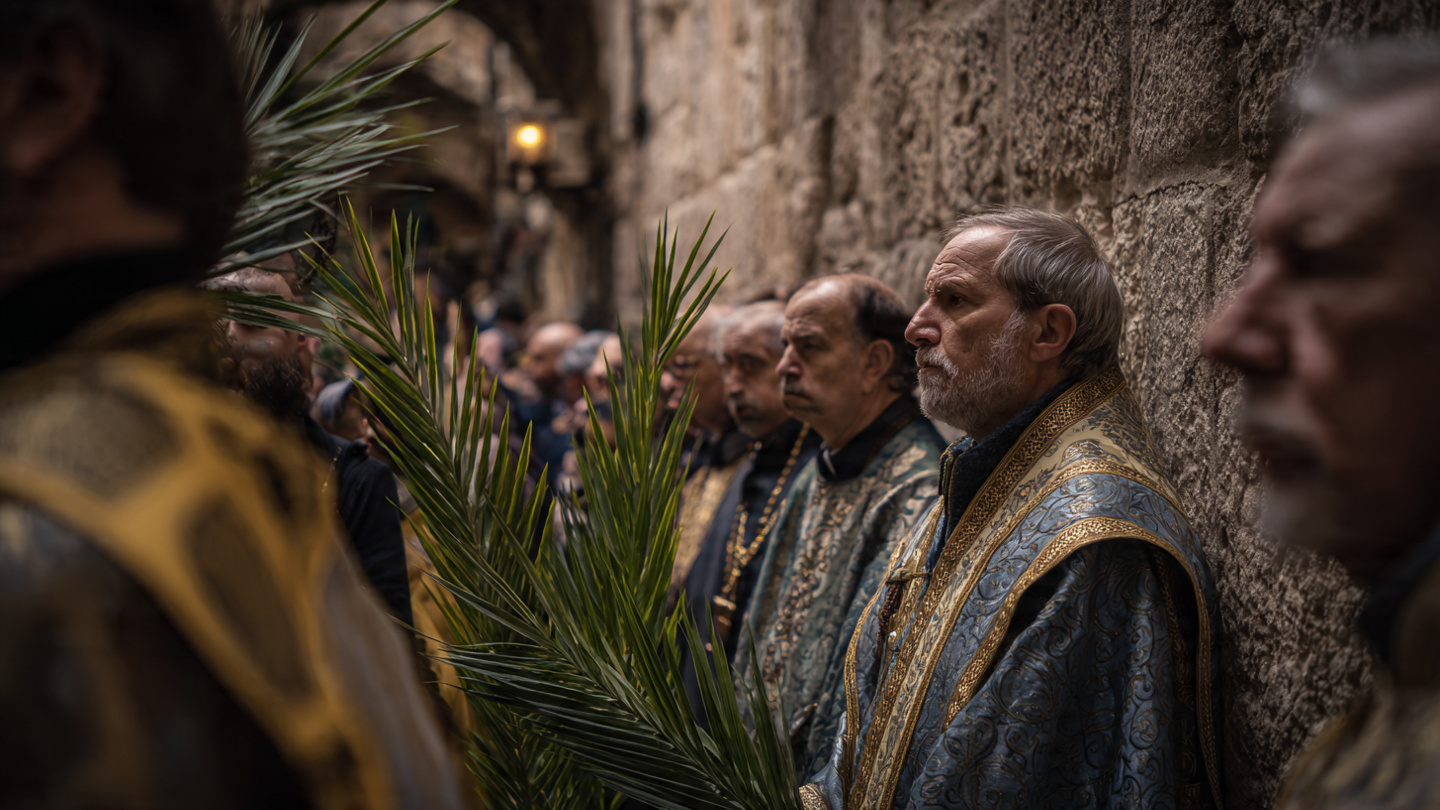
Jerusalem is sacred to Jews, Christians, and Muslims, which makes equal dignity and careful stewardship essential. Any incident involving blocked access to a holy site feeds a larger question: can the city’s religious diversity be managed in a way that is fair, stable, and credible?
Trust is fragile here. Once communities feel singled out or constrained, suspicion grows quickly. Christian leaders may interpret restrictions as marginalization. Security officials may view criticism as disregard for operational realities. Observers abroad may see confirmation of broader political anxieties. In that atmosphere, even modest disputes become loaded with meaning.
A practical example helps explain the stakes. If a city closes roads for a marathon, most residents understand the temporary inconvenience because the purpose is clear and broadly accepted. But if worshippers are blocked from a sacred service without clear communication, the emotional effect is entirely different. The action is no longer seen as management. It is experienced as exclusion.
That is why transparent coordination with religious authorities is indispensable. If movement limits are unavoidable, they must be narrowly tailored, communicated early, and designed to preserve core rituals wherever possible. Anything less risks turning preventable tension into international controversy.
The Human Cost Behind the Headlines
News coverage often focuses on officials, statements, and competing claims. But the real impact is also felt by ordinary people: elderly worshippers making a once-in-a-lifetime pilgrimage, local Christian families trying to observe Holy Week, seminarians accompanying clergy, and parishioners who simply want to pray in peace.
For them, the issue is not abstract diplomacy. It is deeply personal. A grandmother carrying palm branches, a priest preparing a sermon, a choir rehearsing hymns, a family hoping to mark a sacred day together: these are the people who absorb the weight of restrictions most directly.
Religious freedom in Jerusalem is ultimately measured not only by formal guarantees, but by lived reality. Can people reach their churches? Can clergy conduct rituals without obstruction? Can sacred days remain sacred in practice?
These are simple questions, yet they reveal the true condition of access and dignity in the city. Rights that exist on paper but fail at the gate do not feel like rights at all.
What Needs to Happen Next
The way forward requires seriousness rather than slogans. If Jerusalem is to remain a city that honors its global spiritual role, authorities and religious leaders must invest in practical safeguards that prevent repeat confrontations.
Constructive Steps That Could Reduce Future Conflict
- Clear coordination protocols between police and church authorities before major feast days.
- Protected access routes for clergy and essential worship participants.
- Transparent public communication explaining any restrictions in advance.
- Independent review of disputed incidents affecting access to holy sites.
- Respect-centered policing that recognizes the unique sensitivity of sacred events.
None of these ideas are radical. They are the kinds of practical measures that can reduce misunderstanding while protecting both security and worship. In a city as complex as Jerusalem, process matters enormously. So does tone. A respectful approach can prevent escalation before it begins.
There is also a broader responsibility for international church bodies, diplomats, and civil society observers. Attention should not rise only when conflict peaks. Sustained engagement, quiet mediation, and consistent advocacy for protected access are more effective than outrage that appears briefly and then fades.
Conclusion: Jerusalem Must Be More Than a Battleground of Access
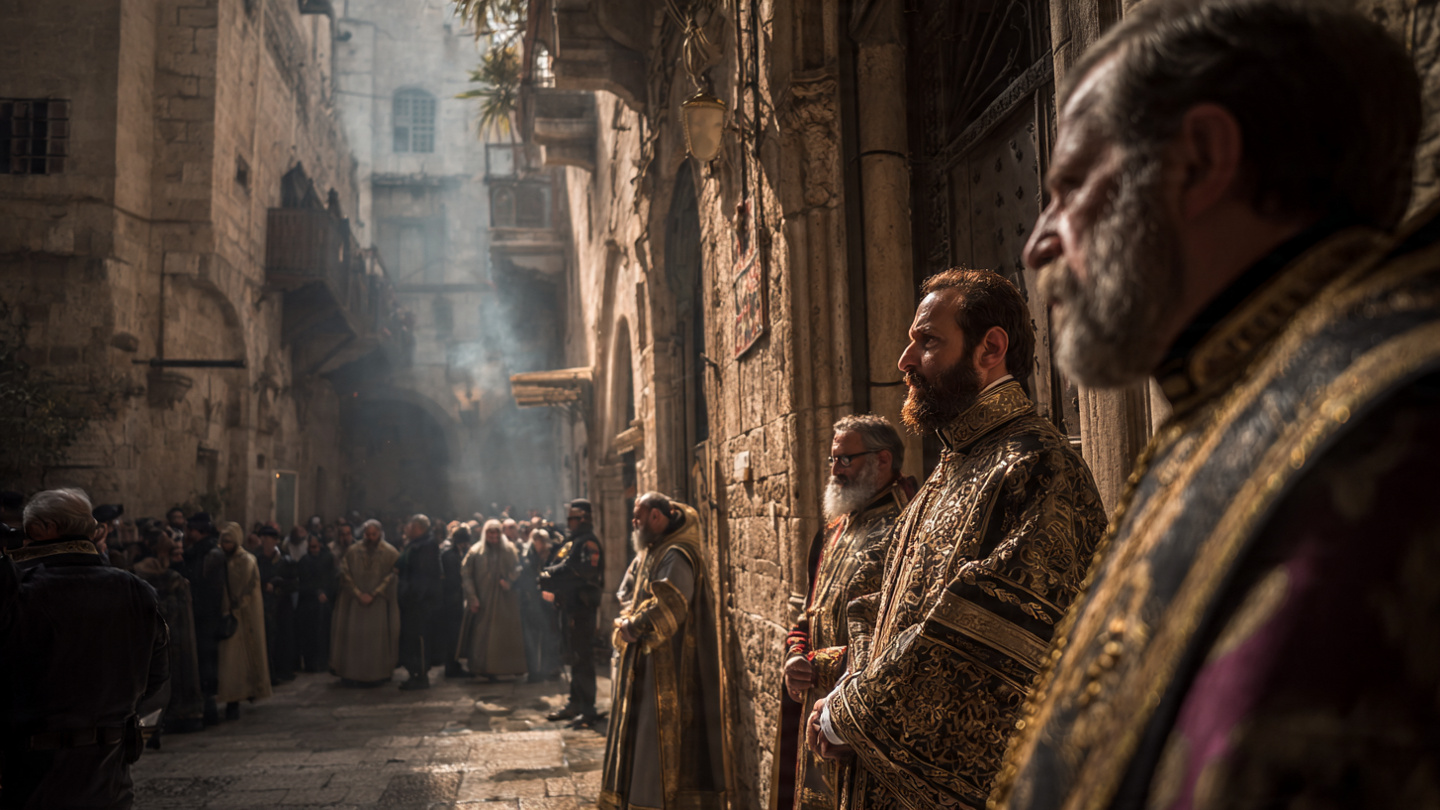
The Palm Sunday disruption at the Church of the Holy Sepulcher has become a powerful reminder of how vulnerable sacred life can be in a city shaped by competing pressures. For Christians, the pain is immediate and spiritual. For the wider world, the incident is a warning that holy places require more than formal reverence. They require active protection, wise administration, and an unwavering commitment to dignity.
Jerusalem holy site access should never become a recurring flashpoint accepted as normal. The city’s sacred significance demands better. Palm Sunday is meant to speak of faith, welcome, and hope. When clergy are blocked and worship is disrupted, that message is overshadowed by distrust and sorrow.
The path forward is still open. It begins with accountability, communication, and a serious commitment to preserving religious freedom for all communities. Jerusalem does not need more symbolic wounds. It needs stewardship worthy of its sacred history.
If you care about religious freedom, Christian holy sites, and the future of shared sacred spaces, stay informed, support responsible dialogue, and pay close attention to how access is protected on the ground. In Jerusalem, small barriers can carry enormous meaning, and protecting worship is one of the clearest ways to defend both dignity and peace.


