Few military images travel faster than those that hint at vulnerability. Photos showing a heavily damaged US radar jet at a Saudi base have done exactly that, drawing immediate attention from defense watchers, regional analysts, and readers trying to understand what such an incident could mean. When an aircraft tied to surveillance, battlefield awareness, and command-and-control appears seriously damaged, the story goes far beyond a single airframe. It touches on operational resilience, regional deterrence, maintenance pressure, and the broader security architecture that underpins US military presence in the Middle East.
What makes this incident especially compelling is not only the visible damage, but also the uncertainty surrounding it. Publicly, US Central Command has not yet commented in detail, leaving room for speculation. In situations like this, silence often amplifies interest. People want to know whether the aircraft was damaged by accident, environmental stress, a ground mishap, hostile action, or another cause entirely. Until officials provide verified facts, the most responsible approach is to examine the strategic context, the role of radar aircraft, and the real-world implications of losing or sidelining such a valuable asset.
From my perspective, this is the kind of defense story that matters because it reveals how fragile even the most sophisticated military ecosystems can be. Advanced aircraft project power and confidence, but they also depend on maintenance crews, secure bases, stable logistics, trained operators, and luck. One damaged radar jet can become a lens through which we view a much larger picture.
Why a US radar jet matters so much
A US radar jet is not just another aircraft on the tarmac. These platforms are central to airborne surveillance, threat detection, and battle management. They extend the eyes and ears of commanders across vast distances, helping track aircraft, monitor airspace activity, and coordinate friendly assets in crowded operational environments. In regions where multiple state and non-state actors operate in close proximity, that capability is not optional. It is fundamental.
Aircraft in this category often support missions that include early warning, air defense coordination, maritime monitoring, and deconfliction among allied forces. In practical terms, they help answer urgent questions: Who is airborne? What is approaching? Which aircraft is friendly, neutral, or potentially hostile? In a tense theater, seconds matter, and radar aircraft exist to buy those seconds before a decision becomes a crisis.
The importance of such a platform becomes even clearer when one is damaged. Unlike standard transport or utility aircraft, radar jets bring together expensive sensors, specialized crews, mission systems, and a rare operational niche. Replacing one is not simple. Repairing one can also be time-consuming, especially if structural, sensor, or fuselage damage is severe.
- Mission value: Radar jets support surveillance, early warning, and command coordination.
- Strategic role: They improve situational awareness in a high-risk regional environment.
- Operational impact: Damage can reduce readiness and strain already limited specialist fleets.
- Political meaning: Images of damaged military assets can influence public perception and adversary calculations.
What the photos appear to signal
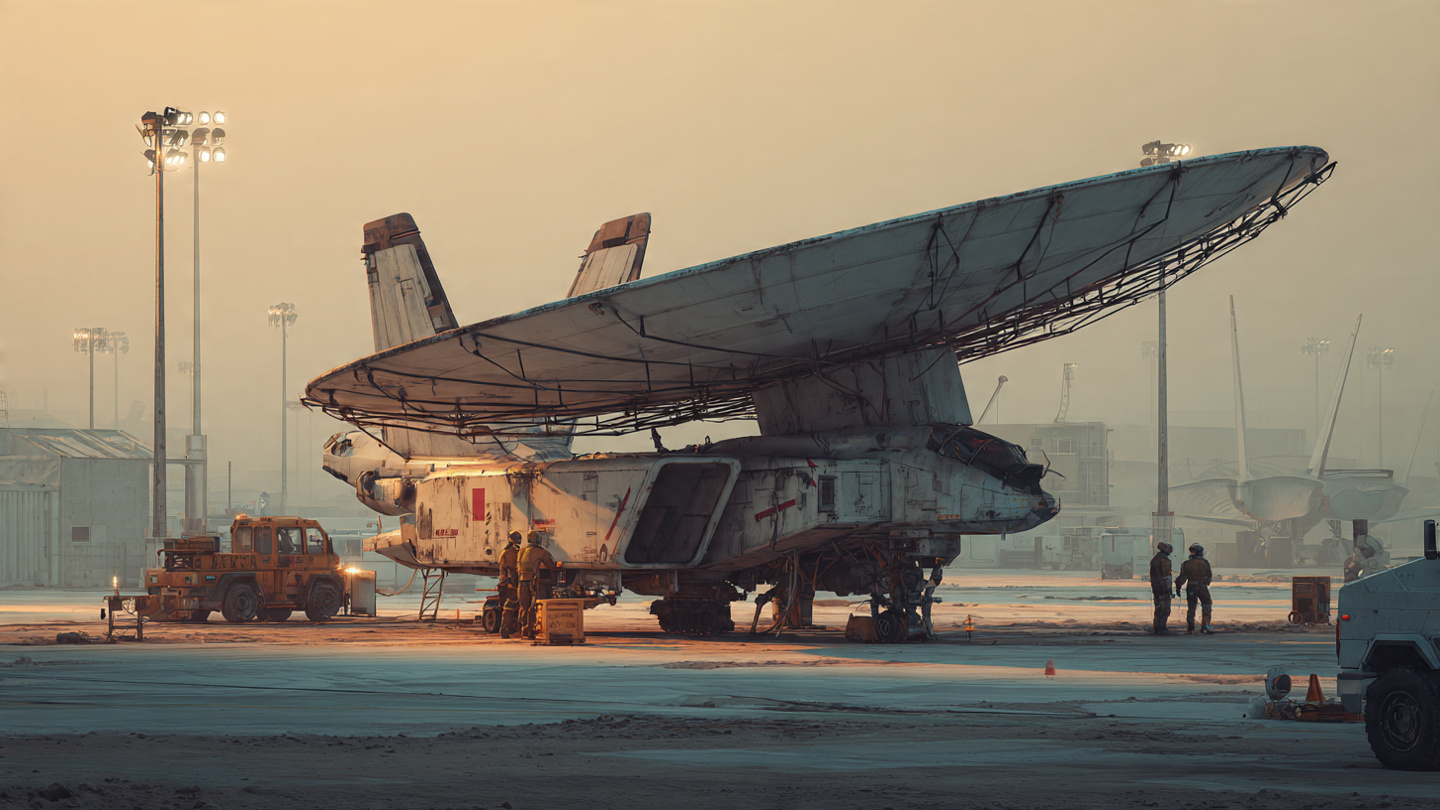
Images of a heavily damaged aircraft naturally invite strong reactions, but visuals alone rarely tell the full story. Damage visible in photos can be dramatic while still being repairable, or it can look isolated while hiding deeper structural problems. In military aviation, that distinction is crucial. A bent airframe, compromised radome, damaged wing root, or fire-related harm can all produce very different recovery timelines and costs.
Without formal confirmation, the safest reading is that the aircraft has suffered a serious incident significant enough to raise questions about serviceability. If the damage affects the radar system, fuselage integrity, or mission electronics, the aircraft could be out of action for an extended period. Even if the aircraft eventually returns to service, the disruption may still matter. Military planners rely on availability rates, not theory. An aircraft in repair is an aircraft unavailable for patrol, deterrence, or command support.
There is also a communication dimension. Once photos enter the public domain, the incident takes on a second life. Analysts begin comparing visual details. Social media amplifies claims. Commentators attach the event to broader regional tensions. This is why official silence, while sometimes necessary in the short term, can create an information vacuum. When people do not get facts, they often fill gaps with assumptions.
Why visual evidence fuels intense scrutiny
Defense-related images are interpreted on multiple levels at once. Aviation specialists examine likely mechanical implications. Regional observers ask whether a hostile actor may be involved. Policy audiences look for signs of readiness gaps. The public often sees something simpler but equally powerful: a symbol of damage to an asset associated with American military reach.
That is one reason stories like this spread so quickly. They sit at the intersection of hard security, geopolitics, and public trust. Even one unexplained image can trigger debate about force protection, aircraft age, maintenance standards, and broader regional stability.
The Saudi base angle and why location changes the story
The fact that the damaged aircraft is reportedly at a Saudi base adds another layer of significance. Saudi Arabia remains one of the most important security partners for the United States in the Gulf. Bases in the kingdom have long supported air operations, surveillance missions, and regional deterrence. Any notable incident on such a site attracts attention not only because of the aircraft itself, but because of what the location represents.
Saudi-based aviation assets sit within a wider network of regional cooperation that includes intelligence sharing, airspace monitoring, and strategic response planning. A damaged radar jet there may prompt questions about local infrastructure, environmental exposure, hangar capacity, ramp safety, and overall base protection. It may also renew debate about how military assets are distributed across the region and whether certain high-value platforms are too concentrated in predictable locations.
From a geopolitical standpoint, the setting matters because the Gulf remains a pressure zone. Missile threats, drone activity, proxy warfare, maritime insecurity, and periodic spikes in state-level confrontation all shape defense planning. In that context, a radar aircraft is not just parked equipment. It is part of the region’s nervous system.
- Regional posture: Saudi bases help support US presence and partner coordination in the Gulf.
- Security symbolism: Damage at a key location can raise broader concerns beyond one aircraft.
- Force protection relevance: The incident may sharpen focus on base safety and asset dispersal.
Possible explanations behind the damage
Until military authorities publish confirmed details, any specific cause must be treated cautiously. Still, broad possibilities can be discussed responsibly. In aviation, serious damage can result from ground collisions, towing mishaps, fire, severe weather, foreign object damage, maintenance errors, landing accidents, or operational incidents. In a sensitive regional environment, observers may also ask whether hostile action played a role, but that requires evidence, not assumption.
This is where defense reporting demands discipline. It is tempting to leap toward the most dramatic explanation, especially when photographs are stark and official statements are limited. But aircraft incidents often come down to a chain of smaller failures rather than a single sensational event. A damaged radar jet could ultimately reflect a mundane but costly ground event just as easily as a more alarming scenario.
Personally, I think the more useful question is not simply, “What happened?” but “What does this reveal?” If an accident occurred, what does it say about base procedures or maintenance tempo? If the damage came from external action, what does it say about regional threat exposure? Either way, the incident becomes a case study in how modern military systems absorb stress.
Why aging fleets face extra pressure
Many specialized surveillance aircraft operate within fleets that are expensive to maintain and difficult to replace quickly. As platforms age, sustainment becomes more demanding. Spare parts may be harder to source, maintenance windows may lengthen, and every unexpected repair can ripple through scheduling. Even highly capable aircraft can become vulnerable to downtime simply because they are asked to do too much for too long.
That does not mean old equals ineffective. Many legacy aircraft remain extremely capable thanks to upgrades and disciplined support. But it does mean that visible damage to a high-value radar jet can trigger wider questions about fleet health, modernization priorities, and whether current readiness assumptions are realistic.
How this could affect US military readiness in the region
Readiness is not only about how many aircraft a military owns. It is about how many can launch, how quickly they can be sustained, and how effectively they integrate with other assets. A damaged radar aircraft can create short-term operational gaps if it was part of an already tight rotation schedule. If crews, sensors, and mission packages were assigned around that platform, planners may need to shift workloads to other aircraft, other bases, or allied support structures.
In practical terms, that could mean increased pressure on remaining surveillance platforms, changes to patrol rhythms, or adjustments in how commanders build airspace awareness. For outside observers, this may sound technical, but it has clear consequences. Fewer available surveillance hours can reduce flexibility. Reduced flexibility can make commanders more cautious. And caution in a volatile region can change deterrence calculations.
There is also a budgetary angle. Repairing a complex military aircraft is costly. If the damage is extensive, the decision may not be purely technical. Officials may weigh repair cost, downtime, transport requirements, and the remaining service life of the aircraft. Sometimes an airframe is restored because its mission value is too important to lose. In other cases, damage accelerates retirement conversations that were already happening quietly.
- Immediate effect: One less aircraft may reduce surveillance availability.
- Secondary effect: Remaining fleets may face heavier operational demand.
- Long-term effect: The incident can intensify debate over modernization and replacement timelines.
The information gap and CENTCOM’s silence
The absence of a detailed public comment from US Central Command is one reason the story continues to gain traction. In fairness, military organizations often avoid immediate disclosure while facts are being verified. Releasing incomplete information can create confusion or compromise an ongoing assessment. That restraint is understandable.
At the same time, silence has a cost. It allows the story to evolve on the strength of imagery alone. That can distort public understanding, especially when online audiences begin attaching the incident to unrelated political or military narratives. A short factual statement, even one that confirms only the basic status of the aircraft and personnel, can reduce speculation without disclosing sensitive details.
This balance between operational security and public transparency is one of the hardest parts of defense communication. Too much secrecy breeds distrust. Too much detail may reveal vulnerabilities. In situations like this, the most effective messaging usually acknowledges the incident, confirms whether injuries occurred, and explains whether the event affects ongoing regional operations.
Why public trust matters in military reporting
When official voices remain quiet, outside interpretations gain power. That is why readers should be cautious with sweeping claims and dramatic certainty. Photos are evidence, but they are not the whole record. Responsible analysis depends on context, technical understanding, and willingness to wait for verified details.
That said, the public has a legitimate interest in this story. A damaged US radar jet at a Saudi base is not a minor curiosity. It concerns taxpayer-funded military assets, regional defense posture, and the credibility of systems designed to provide warning and control in a dangerous environment.
What readers should watch next
As more information emerges, several signals will help clarify the significance of the incident. First, watch for any official statement identifying whether the damage resulted from an accident, maintenance issue, weather event, or external cause. Second, pay attention to whether the aircraft is repaired on site, moved elsewhere, or quietly replaced in the operational rotation. Third, look at whether other surveillance assets increase their visible activity in the region, which could indicate an effort to compensate for lost coverage.
Another useful clue is whether officials frame the incident as isolated or as part of a broader sustainment challenge. If the language shifts toward readiness, modernization, or fleet resilience, then this event may be seen internally as more than a one-off problem. It could become part of a larger policy conversation about how the US sustains high-value aircraft in demanding theaters.
- Cause confirmation: Was the damage accidental, environmental, mechanical, or hostile?
- Recovery plan: Will the aircraft be repaired, relocated, or retired?
- Operational response: Are other surveillance assets filling the gap?
- Strategic messaging: Do officials describe this as isolated or symptomatic?
Conclusion
The images of a heavily damaged US radar jet at a Saudi base have struck a nerve because they combine uncertainty with strategic importance. This is not simply a story about a broken aircraft. It is a story about readiness, resilience, regional security, and the hidden complexity behind military power. Radar jets exist to reduce uncertainty in dangerous environments. When one of them is sidelined, uncertainty returns in a different form.
Whether the final explanation points to an accident, environmental damage, maintenance strain, or something more serious, the incident is a reminder that advanced defense systems remain vulnerable to disruption. For readers, analysts, and policymakers alike, the key is to resist easy conclusions while taking the implications seriously. Capability is not just about technology. It is about sustainment, protection, transparency, and the ability to recover quickly when something goes wrong.
If you follow defense, aviation, or Middle East security, this is the kind of development worth watching closely. Stay alert for verified updates, compare official statements with observable facts, and keep an eye on what this incident reveals about broader military readiness in the region. The first photo may capture attention, but the real story is what happens next.


