When a government puts an artist on trial over a work of art, the case is never only about one sculpture, one image, or one person. It becomes a test of how much room a society leaves for memory, dissent, irony, and uncomfortable truth. The case involving Gao Zhen, the Chinese artist accused of mocking Mao Zedong, carries that weight. It reaches far beyond the courtroom and into a larger question that matters to artists, curators, scholars, and everyday readers alike: what happens when political power decides that art is too dangerous to be seen as art?
Gao Zhen, who later emigrated to the United States, was reportedly detained while visiting China and now faces a possible prison sentence over artwork authorities say crossed a political red line. At the center of the dispute is not violence, fraud, or corruption, but artistic expression. That fact alone explains why the Gao Zhen trial has drawn intense international attention. In my view, this is one of those cases that forces the world to confront a difficult reality: authoritarian systems do not fear art because it is weak, but because it can reshape how people remember history and authority.
Why the Gao Zhen Trial Matters Far Beyond One Courtroom
The significance of this case lies in what it symbolizes. Mao Zedong remains one of the most politically sensitive figures in China. His image is not merely historical; it is bound up with state legitimacy, revolutionary mythology, and the official narrative of national identity. Any artwork seen as ridiculing Mao can quickly move from the realm of culture into the realm of political control.
That is why the Mao artwork controversy surrounding Gao Zhen should not be viewed as a niche issue for the art world. It touches on broader themes including freedom of speech, censorship, the management of historical memory, and the ability of governments to define what counts as acceptable criticism.
Art Becomes Dangerous When It Challenges Official Memory
Art often works by compressing big truths into visual symbols. A painting, sculpture, or performance can say in seconds what an essay might need 5,000 words to explain. That power is precisely why politically charged art is so often targeted. Satire can puncture myth. Irony can expose fear. Recontextualizing a leader’s image can force viewers to look again at what they have been taught not to question.
In Gao Zhen’s case, the accusation that he mocked Mao highlights a familiar pattern in states where political icons are treated as untouchable. Once a leader becomes sacred, criticism of the symbol is treated as criticism of the system itself. The courtroom then becomes an instrument not only of law, but of narrative enforcement.
Mao Remains a Live Wire in Chinese Public Life
For many outside China, Mao may appear to be a historical figure whose legacy is open to debate. Inside China, the picture is far more complicated. Mao is remembered in sharply different ways: as the founder of the People’s Republic, as a revolutionary icon, and also as a leader tied to catastrophic campaigns including the Cultural Revolution. Public discussion of that legacy is tightly managed.
That is why Chinese artist censorship cases involving Mao imagery carry exceptional sensitivity. The issue is not only whether a particular artwork offends. It is whether citizens, artists, and institutions are permitted to reinterpret one of the central symbols of state power.
Who Is Gao Zhen and Why His Work Drew Attention
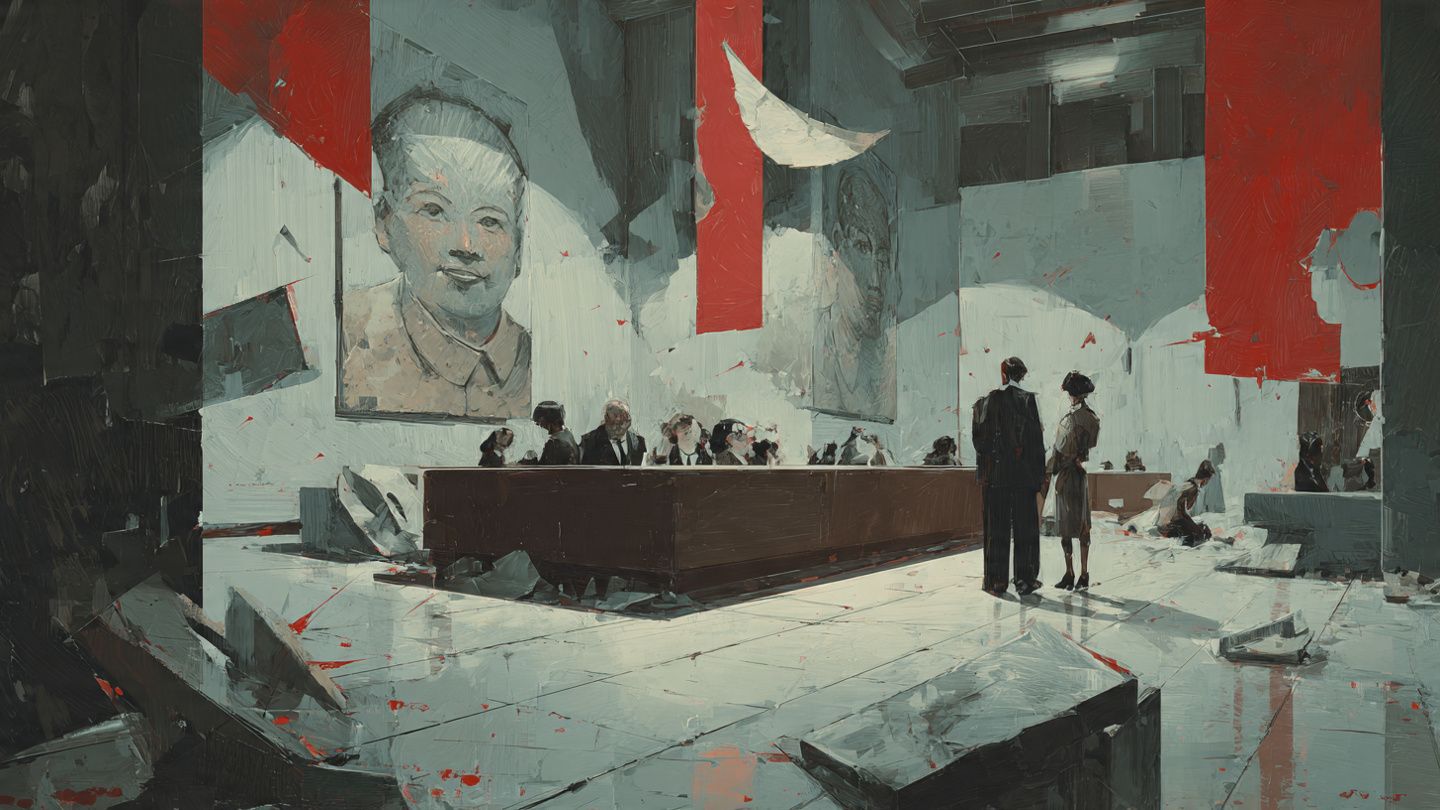
Gao Zhen is best known internationally as one half of the Gao Brothers, the artist duo he formed with his brother Gao Qiang. Their work has long explored trauma, authority, memory, and the psychic aftershocks of modern Chinese history. Across sculpture, photography, and installation, they have repeatedly engaged the image of Mao in ways that are provocative, layered, and intentionally destabilizing.
That body of work has attracted both admiration and controversy. To supporters, it represents a courageous attempt to confront the emotional and political legacy of 20th-century China. To critics, especially in official circles, it can be seen as irreverent or politically subversive. The same object can be interpreted as historical reflection by one viewer and ideological attack by another. That tension is central to understanding the case.
The Gao Brothers and the Politics of Visual Shock
The Gao Brothers built a reputation for using bold visual language rather than safe ambiguity. Their artistic method is not subtle in the way bureaucracies prefer. It asks viewers to sit with contradiction: reverence and violence, grief and ridicule, memory and suppression. This is a common feature of politically engaged art around the world. The goal is not comfort. The goal is to force recognition.
Practical examples help make this clear. When a dissident cartoonist exaggerates a ruler’s face, or when a sculptor places a national icon in an unfamiliar, unsettling context, the artwork is doing more than making a joke. It is testing whether power can survive scrutiny. Artists such as Ai Weiwei and exiled political cartoonists from many countries have shown that visual critique often reaches audiences who would never read a legal brief or historical monograph.
Why Mao Imagery Carries Such Heavy Symbolic Weight
In democratic societies, public figures are often mocked without legal consequence. In tightly controlled systems, however, iconic images serve a different function. They are political anchors. Mao’s portrait, reproduced across decades, is not just a likeness. It is part of a state-approved moral and historical architecture. To alter that image artistically is to challenge the emotional logic of the system that protects it.
This helps explain why the Gao Zhen trial resonates so strongly. The state appears to be sending a message that certain symbols remain beyond reinterpretation, even when the reinterpretation takes place in the language of art.
What the Trial Reveals About Censorship in China
China’s censorship system is often described in terms of internet controls, banned topics, or media restrictions. But the visual arts occupy a distinct place within that ecosystem. Art can circulate through galleries, museums, catalogs, social media, private collections, and international exhibitions. It can also encode criticism in metaphor, symbolism, and style. That flexibility makes it harder to regulate completely, which is one reason authorities pay close attention to artists whose work touches politically sensitive themes.
The prosecution of an artist over allegedly offensive work reinforces a blunt reality: freedom of artistic expression in China remains sharply conditional when it intersects with core political taboos. Even when artists live abroad, travel internationally, or exhibit outside the mainland, they may still face significant risks if they return.
The Law and the Message Behind the Law
Cases like this are never only about technical legal interpretation. They also communicate boundaries. A publicized prosecution can chill speech far beyond the individual defendant because the warning reaches everyone else. Other artists may self-censor. Galleries may decline sensitive exhibitions. Publishers may avoid controversial essays. Universities may steer clear of politically difficult programming.
That chilling effect is often more powerful than any single sentence. One trial can create dozens of invisible cancellations.
- Artists may avoid politically sensitive subjects to reduce personal risk.
- Curators may pass on important work rather than expose institutions to pressure.
- Collectors may hesitate to acquire controversial pieces that could become liabilities.
- Families and collaborators may face anxiety, surveillance, or travel concerns.
- Audiences lose access to honest cultural debate about history and power.
Exile Does Not Always Guarantee Safety
One especially striking dimension of the case is that Gao Zhen had emigrated to the United States years earlier. Many people assume that relocation offers a clean break from state pressure. In practice, that is often not true. For diaspora artists, journalists, scholars, and activists, the risks can persist through travel, family ties, asset exposure, and legal vulnerability upon reentry.
This is a critical lesson for anyone watching the case. Political borders do not always end political reach. That makes the trial relevant not only to Chinese citizens but to global conversations about transnational repression and the costs of dissent in exile.
Why the Global Art World Should Pay Close Attention
The international art community sometimes responds to censorship cases with temporary outrage and then moves on. That would be a mistake here. The Gao Zhen case sits at the intersection of art, law, geopolitics, and memory. It raises urgent questions about how museums, auction houses, academic institutions, and cultural organizations should respond when an artist is prosecuted for work that has already entered international discourse.
If the global art world values freedom only in press releases and not in practice, artists at risk are left isolated. Support must be concrete, visible, and sustained.
Museums, Galleries, and Universities Have Real Leverage
Institutions often underestimate their influence. A museum that continues to discuss politically difficult work publicly helps preserve the historical record. A university that hosts panels on censorship and visual culture widens understanding. A gallery that contextualizes controversial art responsibly can keep debate alive without sensationalism.
Organizations also have credible frameworks to draw on. Principles of cultural freedom and artistic exchange have been recognized in international forums, including by bodies such as UNESCO. While these principles do not eliminate state repression, they do provide a language that institutions can use when defending the importance of open cultural inquiry.
The Market Cannot Replace Moral Clarity
There is also a commercial dimension. Politically significant art often gains value precisely because it is contested. But markets can be morally evasive. Buying a work is not the same as defending the artist. A collector may profit from controversy while remaining silent about repression. That gap matters.
The stronger response is to pair visibility with principle: exhibit the work, explain the context, and speak clearly about the stakes. Otherwise, the market turns dissent into décor while leaving the human cost unaddressed.
Practical Lessons for Artists, Institutions, and Readers
Beyond the immediate headlines, the case offers practical lessons for anyone involved in politically sensitive cultural work. These are not abstract concerns. They shape travel plans, exhibition strategy, archival decisions, and public communication.
For Artists and Cultural Professionals
- Conduct risk assessments before travel if your work has addressed politically sensitive subjects.
- Maintain clear documentation of artworks, exhibition histories, and legal contacts in multiple jurisdictions.
- Discuss contingency plans with galleries, publishers, or collaborators before entering high-risk environments.
- Archive statements and contextual material so your work cannot be easily misrepresented in isolation.
- Build international networks early; support is far more effective when it exists before a crisis.
For Readers and Audiences
Ordinary readers are not powerless observers. Public attention changes the environment around a case. The more informed the audience, the harder it becomes for repression to pass unnoticed. That does not guarantee justice, but silence almost always benefits the stronger party.
From a personal standpoint, this is where the story becomes more than geopolitics. Many people think of art as secondary to “real” political events. I see it differently. Art often tells the truth earlier than institutions do. It captures fear before reports are written and preserves memory after official narratives try to erase it. When an artist is prosecuted for symbolism, satire, or historical challenge, society is being told that imagination itself has become a threat.
The Deeper Conflict: Who Owns History?
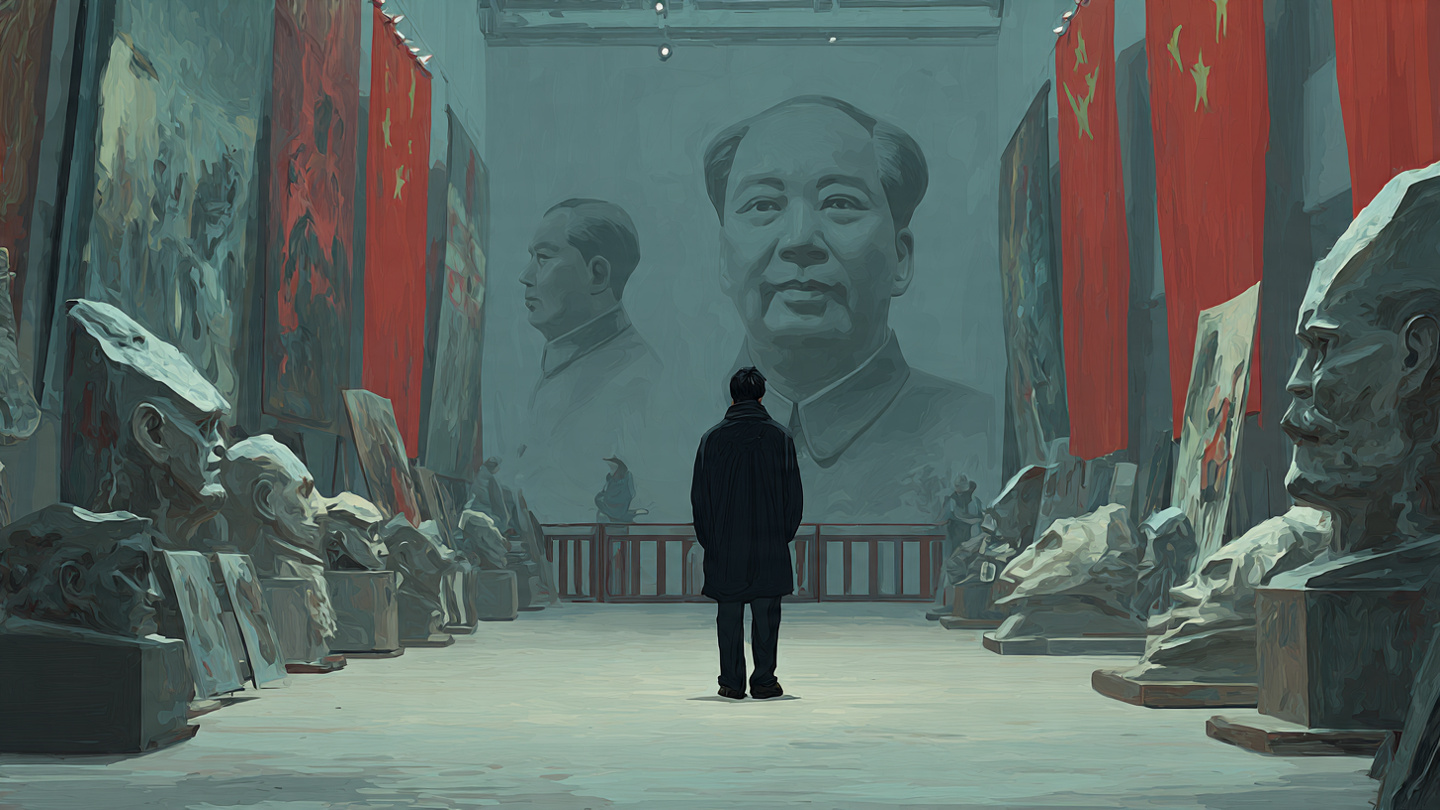
At its core, the Gao Zhen case is about ownership of history. Can only the state define how major political figures are remembered? Can grief, anger, irony, and criticism coexist with national history, or must public memory remain curated from above? Those are not questions unique to China. Many countries struggle over monuments, founding myths, and uncomfortable legacies. The difference is that in more open systems, those battles are fought through debate, protest, scholarship, and competing art. In more restrictive systems, they are more likely to be fought through censorship and prosecution.
This is why the trial matters to anyone who cares about the future of culture. Once a state succeeds in declaring one historical interpretation beyond challenge, it becomes easier to police other forms of expression as well. The argument always begins with an exceptional symbol. It rarely ends there.
Conclusion
The Gao Zhen trial is not simply a legal proceeding against a Chinese artist. It is a revealing confrontation between political authority and artistic freedom, between official memory and individual conscience, between sacred symbols and the human impulse to question them. Whatever the court decides, the case has already exposed the fragile space available for dissent when art touches the deepest nerves of state power.
The most meaningful response is not passive outrage but sustained attention. Follow the case. Read more about Chinese artist censorship. Support institutions and advocates defending cultural freedom. Share informed analysis rather than empty slogans. If the world wants artists to keep telling difficult truths, it has to show that those truths will not be met with silence when the pressure arrives.
Call to action: stay informed, support freedom of expression, and keep conversations about art, history, and political accountability alive. When an artist stands trial for challenging power, the public’s willingness to pay attention becomes part of the story.


