Setting up a serious workout space at home used to feel like a luxury reserved for people with extra square footage and even bigger budgets. That is no longer true. With the right strategy, you can build a highly functional home gym for around $1,300 and cover nearly everything most people need for strength training, conditioning, mobility, and recovery. The key is not buying more gear. The key is buying smarter gear.
I have always believed the best fitness setup is the one you will actually use. A flashy machine that collects dust is far less valuable than a compact bench, a dependable set of adjustable dumbbells, and a mat you step on four times a week. During a major sale event, the price gap between “nice to have” and “worth buying now” narrows fast, which makes this the ideal moment to invest in home gym equipment that supports long-term consistency.
If your goal is to create a training space that feels complete without overspending, this guide breaks down the categories that matter most, where to spend more, where to save, and how to build a balanced setup that works for beginners, busy professionals, and experienced lifters alike.
Why a $1,300 Home Gym Budget Makes Sense
For many households, $1,300 sits in the sweet spot between entry-level and overbuilt. It is enough to buy durable, versatile gear, but not so much that every purchase has to be justified as a forever investment. When chosen carefully, this budget can replace months or even years of gym membership costs while giving you access to training on your own schedule.
More importantly, a thoughtfully designed home gym setup removes friction. There is no commute, no waiting for equipment, no mental negotiation about driving across town after work. That convenience has real value. In my experience, people who train at home more often are not necessarily more motivated. They simply make exercise easier to start.
- Strength training: Adjustable dumbbells, kettlebells, resistance bands, and a bench cover most movement patterns.
- Cardio: A walking pad, exercise bike, jump rope, or rowing machine can fit different space and budget needs.
- Mobility and recovery: Mats, foam rollers, massage tools, and stretch accessories improve comfort and consistency.
- Space efficiency: Foldable or multi-use equipment delivers more function per square foot.
The Best Home Gym Equipment Categories to Prioritize
1. Adjustable Dumbbells: The Highest-Value Purchase
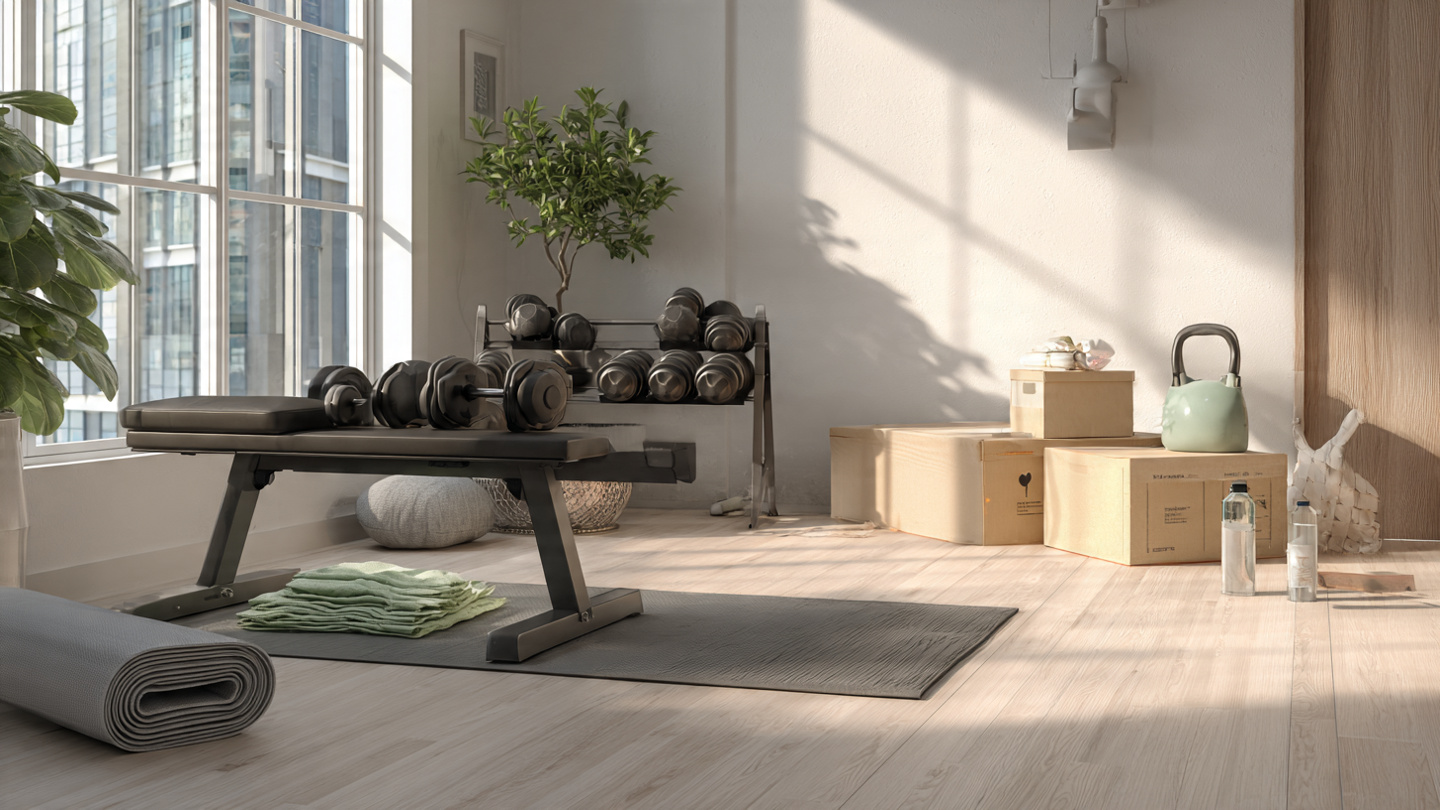
If I had to recommend just one cornerstone item for a budget-conscious home gym, it would be adjustable dumbbells. They replace multiple pairs of weights, save floor space, and make progressive overload far easier than relying on a few fixed dumbbells.
They are ideal for presses, rows, squats, Romanian deadlifts, lunges, curls, shoulder work, and countless accessory movements. For most users, a pair that scales from light resistance to moderately heavy loads can support months, if not years, of training progress.
This is also one category where paying a little more often makes sense. Fast weight changes, secure locking systems, and comfortable handles improve the training experience every single session. When people stop using dumbbells at home, it is often because the adjustment process is clunky, not because dumbbell training stopped being effective.
2. An Adjustable Bench: The Multiplier
A quality bench dramatically expands what your dumbbells can do. Flat presses become incline presses, seated shoulder presses feel more stable, and chest-supported rows become easier to perform with better form. In small home gyms, a foldable adjustable bench offers one of the best returns on investment.
Look for solid frame construction, a stable base, and a pad that feels supportive without being overly soft. A bench should feel dependable. If it wobbles, the whole workout suffers.
For practical use, this combination alone, adjustable dumbbells plus a bench, is enough to train the entire body effectively:
- Goblet squats and split squats for lower-body strength
- Bench press and incline press for chest and shoulders
- One-arm rows and rear delt raises for the upper back
- Seated curls, triceps work, and core drills for accessories
3. Resistance Bands: Affordable and Surprisingly Powerful
Resistance bands are often treated like backup equipment, but they are one of the smartest low-cost additions to any best home gym plan. They work for warm-ups, mobility, assisted pull-up variations, glute activation, shoulder health, and travel workouts. They also fill strength gaps when your dumbbell range tops out.
For example, adding a band to dumbbell presses or squats can increase tension without requiring heavier weights. Bands are also excellent for people rebuilding strength after time away from training because they allow lower-impact movement with controlled resistance.
4. Kettlebells: Compact Tools for Strength and Conditioning
Kettlebells are especially valuable if you want equipment that can blur the line between strength and cardio. Swings, cleans, presses, carries, and goblet squats deliver a lot of training density in a short session. One or two kettlebells can make a small workout area feel much more complete.
In real-world use, kettlebells are fantastic for people with limited time. A 20-minute circuit with swings, squats, and presses can challenge your grip, heart rate, posterior chain, and coordination at once. That makes them a smart addition when you want variety without needing another large machine.
5. Cardio Equipment: Choose Based on Habit, Not Hype
Cardio is where many people overspend. The best machine is not the one with the most features. It is the one that fits your space, joints, schedule, and attention span. During the Amazon Spring Sale, cardio gear often sees meaningful discounts, but that does not mean every option is a good buy.
If you live in a small apartment, a walking pad may be more realistic than a full treadmill. If you prefer low-impact training while watching TV, an exercise bike might be your best bet. If you want the most complete conditioning tool and have room for it, a rower can be a standout choice.
- Walking pad: Best for daily steps, desk work, and low-intensity movement.
- Exercise bike: Best for steady-state cardio and joint-friendly workouts.
- Rower: Best for full-body conditioning and interval sessions.
- Jump rope: Best budget option for intense, space-efficient cardio.
My advice is simple: buy cardio equipment that matches a habit you already have. If you enjoy walking, get the walking pad. If you like cycling classes, get the bike. Do not buy aspirational cardio gear for a fantasy version of yourself.
How to Split a $1,300 Budget Wisely
A balanced budget matters more than chasing the biggest discount. One common mistake is spending almost everything on one premium machine and leaving no room for the accessories that make a gym usable. A better approach is to build from the ground up.
Here is a practical budget framework for a complete home gym setup:
- $350-$500: Adjustable dumbbells
- $120-$250: Adjustable bench
- $30-$80: Resistance bands and a jump rope
- $80-$180: One or two kettlebells
- $250-$500: Cardio equipment, depending on type and discount depth
- $40-$100: Recovery tools such as a mat, foam roller, or massage gun
This type of split gives you strength, cardio, flexibility, and recovery coverage without leaving a weak link in the system. If you already own one category, shift that money toward something that broadens your options rather than duplicating what you have.
Do Not Forget the Recovery and Comfort Essentials
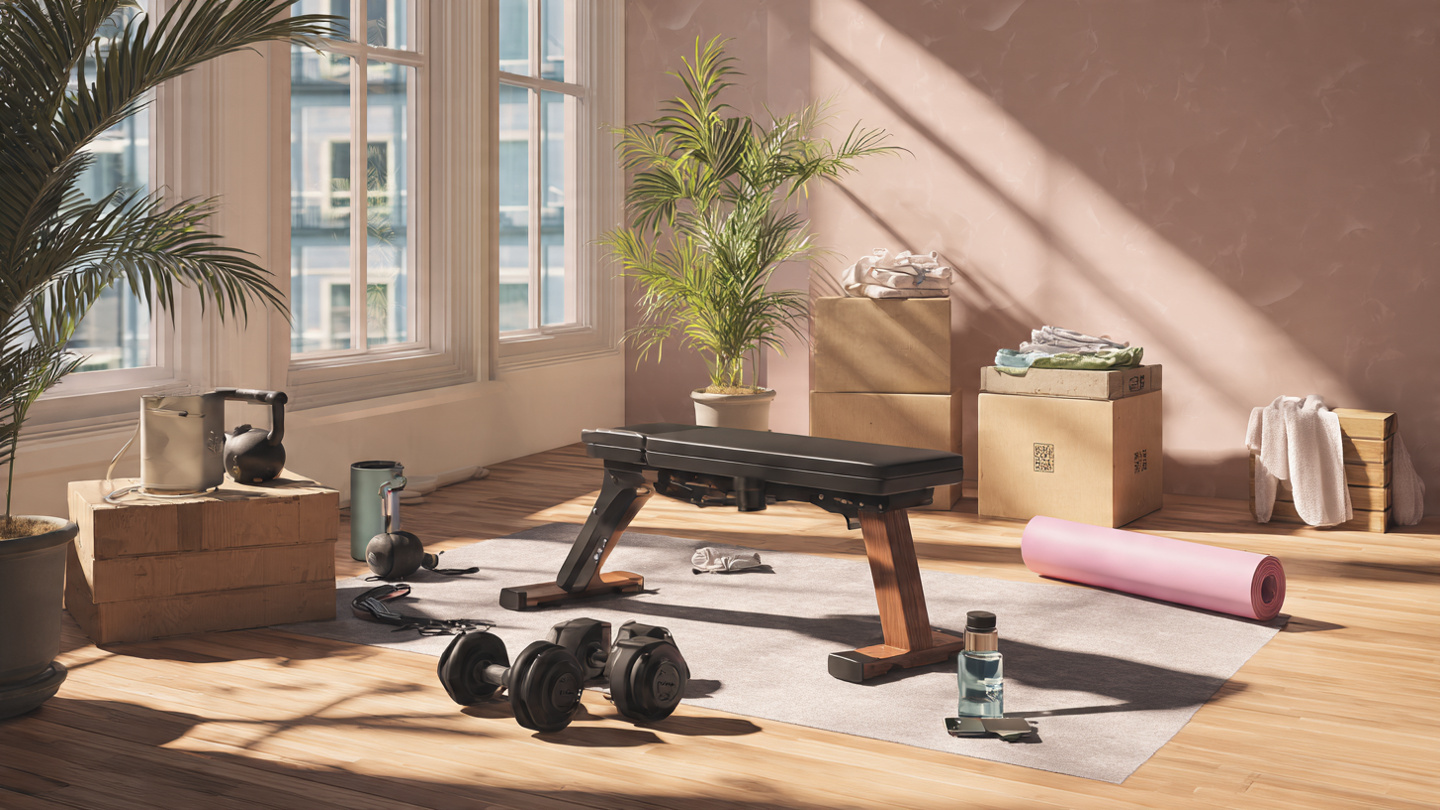
One reason commercial gyms feel easier to train in is that the environment is already prepared. Floors are durable, equipment is positioned correctly, and there is enough space to move safely. At home, those details matter more than most shoppers expect.
A thick workout mat protects floors, improves grip, and creates a psychological cue that it is time to train. A foam roller or massage tool can reduce stiffness and make it easier to stay consistent. Even a small storage rack can improve adherence because it keeps your setup from turning into clutter.
These are not glamorous purchases, but they support the habit loop that makes a home gym worth the investment.
Useful add-ons that improve the experience
- A non-slip workout mat for floor work and stretching
- A foam roller for post-workout recovery
- Mini bands for glute activation and mobility
- A compact storage solution to keep gear accessible
- A simple fan or speaker to make sessions more enjoyable
Who Should Build a Home Gym During a Sale Event?
Not everyone needs a full room packed with equipment, but many people benefit from a modest home setup more than they realize. If your schedule is unpredictable, if the nearest gym is inconvenient, or if you prefer training privately, sale season is a smart time to make the switch.
This is especially true for:
- Beginners who want to start exercising without gym intimidation
- Parents who need efficient workouts close to home
- Remote workers who want quick movement breaks between meetings
- Experienced lifters who want a backup space for busy days
- Budget-conscious shoppers looking to maximize seasonal discounts
From a practical standpoint, even a small corner can become a productive training area. A bench against the wall, adjustable dumbbells underneath, bands in a drawer, and a foldable cardio option nearby can outperform a spare room filled with equipment you never touch.
How to Shop Smart During the Amazon Spring Sale
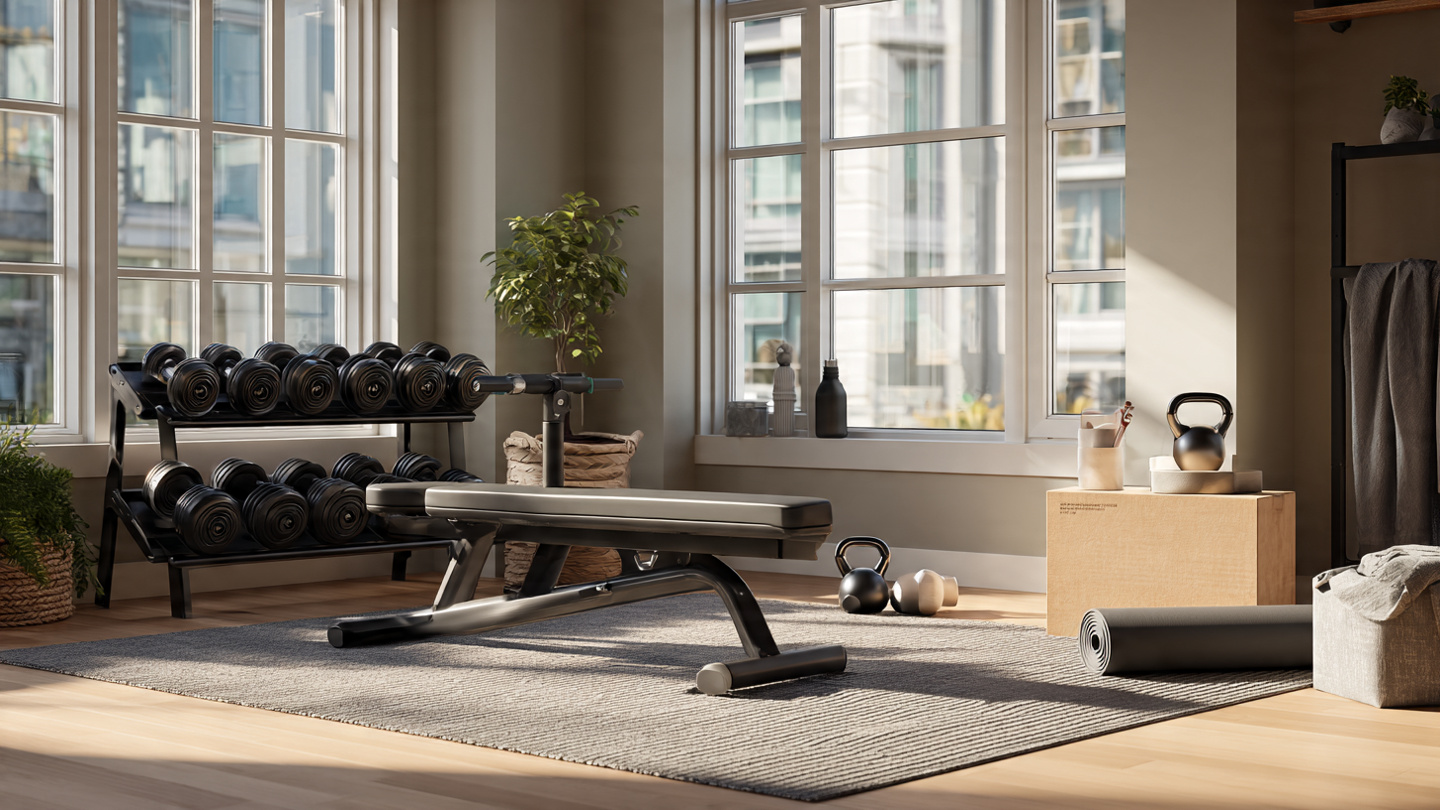
The Amazon Spring Sale can be a great opportunity to save on home gym equipment, but only if you approach it with a plan. Limited-time deals create urgency, and urgency often leads to buying duplicate tools or oversized machines that do not fit your training style.
Before adding anything to your cart, ask three questions: Will I use this at least twice a week? Does it solve a real gap in my current routine? Does it fit comfortably in my space? If the answer is no to any of those, it is probably not a smart purchase, no matter how deep the discount looks.
I also recommend prioritizing equipment with strong user feedback around durability and daily usability. Fancy app integrations are nice, but reliability is better. A stable bench and smooth dumbbell adjustment mechanism will matter more over time than a flashy feature list.
Shopping checklist for better results
- Measure your available floor space before buying
- Check weight limits and dimensions carefully
- Read reviews for stability, noise, and assembly quality
- Compare price history when possible
- Favor multi-use gear over single-purpose gadgets
Sample Home Gym Setups at Different Experience Levels
Beginner setup
A beginner can do extremely well with adjustable dumbbells, a mat, resistance bands, and a walking pad or jump rope. This creates enough variety for full-body strength training, easy cardio, and mobility work without making the process feel complicated.
Intermediate setup
An intermediate user benefits from adding an adjustable bench, a heavier kettlebell, and better recovery tools. At this stage, training variety becomes more important, and a few well-chosen upgrades can make workouts feel far closer to a commercial gym experience.
Busy professional setup
If time is your biggest barrier, focus on equipment that supports efficient circuits. A bench, dumbbells, kettlebell, and low-maintenance cardio option make it easy to complete 25-minute sessions that still feel productive. This is the setup I most often recommend because it matches real life.
Conclusion
A complete home gym does not require a massive budget or a dedicated basement. With about $1,300, you can create a versatile training space that supports strength, cardio, mobility, and recovery in a way that feels practical and sustainable. The smartest path is to focus on foundational gear first, adjustable dumbbells, a quality bench, bands, kettlebells, and one cardio option that matches your lifestyle.
When you buy with intention, every piece of equipment earns its place. That is what transforms a collection of discounted products into a real training environment. The best home gym setup is not the most expensive one. It is the one that removes excuses, fits your routine, and helps you show up consistently.
If you are planning to shop the current deals, start with your core needs, map your budget in advance, and build a space that works for your actual habits, not your idealized ones. A strong, reliable, motivating fitness routine can begin with a few smart purchases today. Now is the perfect time to build a home gym that pays you back in convenience, consistency, and results.

