What begins as a political standoff in Washington can quickly become a real-world crisis for families, workers, and travelers across the country. The longest government shutdown in US history was not just a headline-grabbing milestone. It was a revealing moment that showed how deeply federal funding battles can disrupt everyday life. As the funding lapse stretched on, airport lines grew longer, unpaid workers faced severe financial strain, and confidence in basic public services began to erode.
For many Americans, the shutdown stopped feeling abstract the moment it affected travel plans, mortgage payments, child care schedules, and workplace morale. If you have ever rushed through airport security fearing a missed flight, you can imagine how quickly frustration builds when a system is already stretched thin. That sense of uncertainty became a national experience during the shutdown, especially as the Department of Homeland Security funding lapse pushed airport operations closer to the edge.
This was more than a temporary disruption. It was a case study in how political gridlock can spill into the economy, public safety, and the emotional well-being of hundreds of thousands of workers. Understanding what happened matters because the same structural weaknesses remain in place today.
The Shutdown That Broke Records
The partial government shutdown became the longest in American history after surpassing previous records for a federal funding lapse. At the center of the impasse was a political dispute over border security funding, including money for a wall along the US-Mexico border. While elected officials debated strategy and messaging, the practical consequences spread rapidly through federal agencies and communities dependent on federal paychecks.
Although it was described as a partial government shutdown, the effects were anything but minor. Several agencies continued operating, but key departments experienced funding gaps that affected staffing, planning, and service delivery. The Department of Homeland Security was among the most visible examples because it touches aviation security, border control, emergency preparedness, and transportation systems that millions rely on every day.
The scale of the disruption became especially clear as unpaid federal workers continued reporting for duty. That detail is often overlooked. Many essential employees were legally required to work without receiving their normal pay on schedule. In practical terms, that meant thousands of families were expected to keep the country functioning while carrying the burden of political deadlock.
Key facts that defined the crisis
- Duration: The shutdown lasted 44 days, making it the longest federal shutdown in US history.
- Core dispute: The standoff centered on border security funding and broader immigration politics.
- Visible impact: Airport delays and security bottlenecks turned the shutdown into an immediate public issue.
- Worker strain: Many federal employees and contractors went without timely pay.
- Economic ripple effects: Lost wages, delayed spending, and weakened business confidence spread beyond Washington.
Why Airports Became the Face of the Shutdown

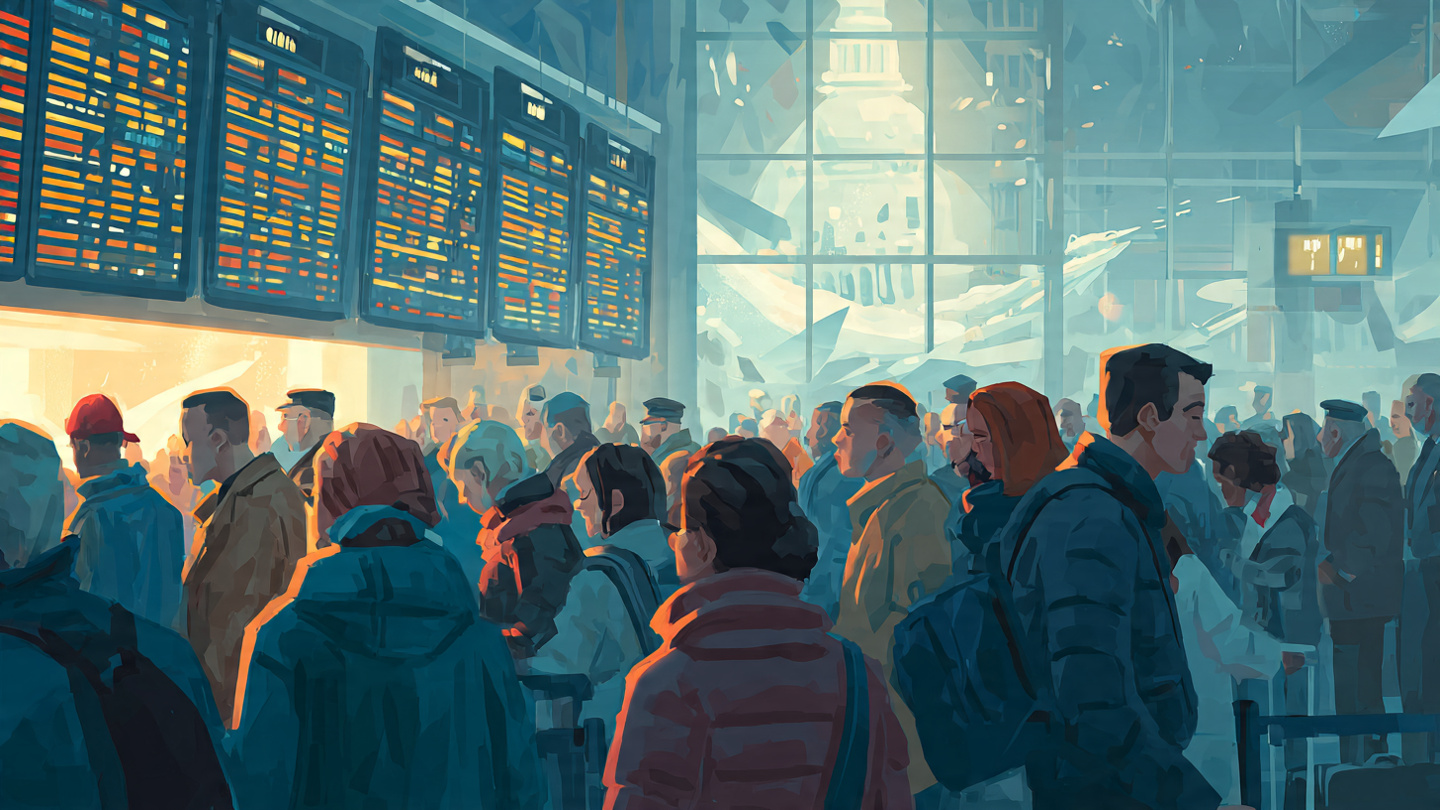
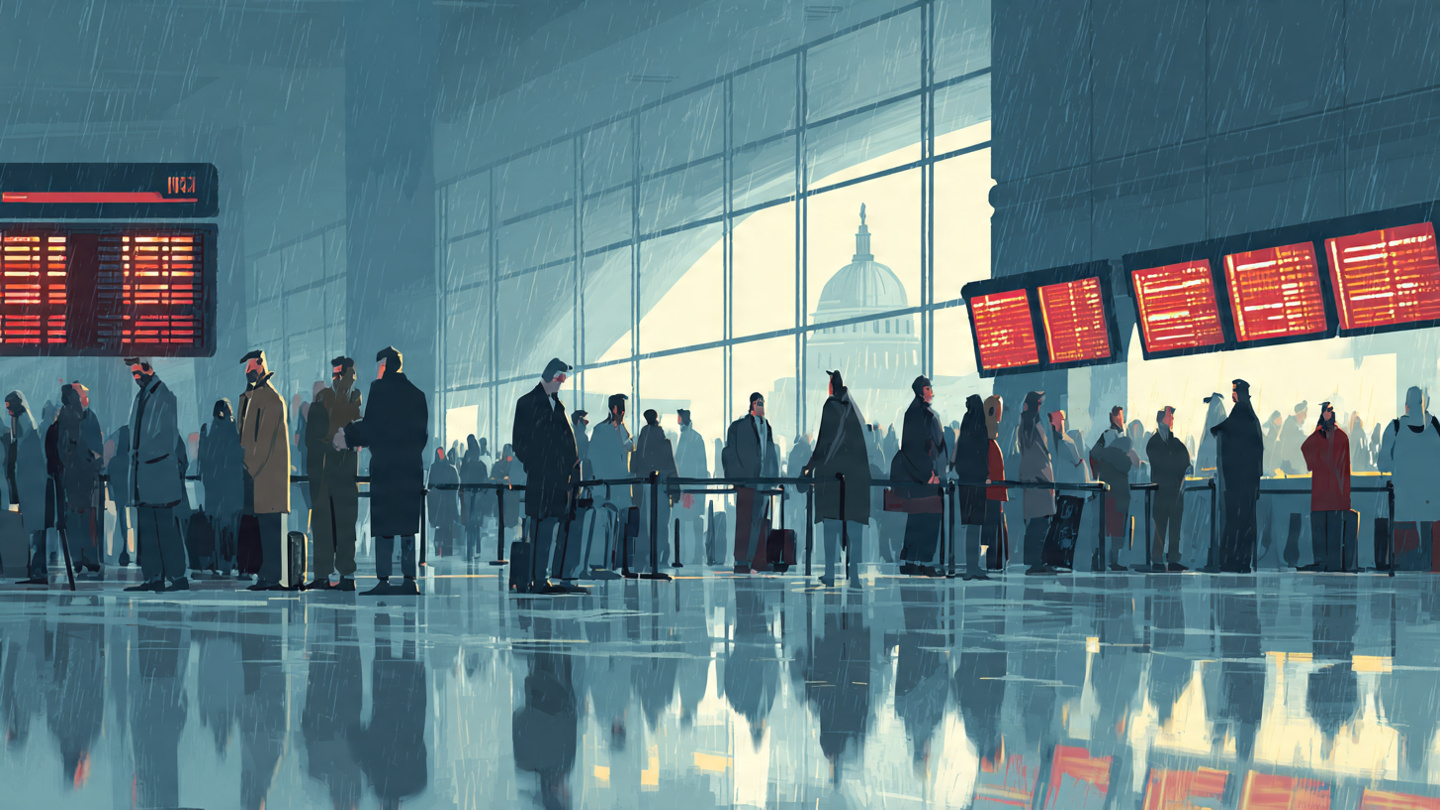
Among all the consequences of the shutdown, few were as visible as the travel chaos at US airports. Air travel is one of the clearest examples of how federal services intersect with private life. When security screening slows down, when staffing becomes uncertain, or when fatigue affects operations, travelers feel it immediately.
The Transportation Security Administration, which falls under the Department of Homeland Security, became a focal point during the funding lapse. TSA officers were considered essential personnel, meaning they still had to report to work even while missing paychecks. Predictably, morale dropped. Reports of increased absenteeism and staffing shortages raised concerns about how long the system could function normally under those conditions.
From a passenger perspective, the consequences were frustrating and expensive. Delays forced travelers to leave home earlier, rebook connecting flights, and absorb extra costs for lodging or missed reservations. Families traveling with children, older passengers, and business travelers on tight schedules felt the pressure most acutely.
What made the airport situation especially important was symbolism. Airports are a public stress test. When lines lengthen, terminals become crowded, and warnings about delays spread across the news, people stop seeing the shutdown as a distant policy dispute. It becomes tangible, measurable, and personal.
How the airport disruption unfolded
- Longer security lines: Fewer available screeners increased wait times at major airports.
- Operational uncertainty: Administrators had to adjust schedules as staffing levels fluctuated.
- Traveler anxiety: Unpredictable delays made flying more stressful and less reliable.
- Economic cost: Missed flights and delayed travel plans affected tourism and business activity.
- Public visibility: Airport disruption gave the shutdown a daily, highly visible human face.
The Human Cost for Federal Workers
Any serious analysis of the government shutdown has to begin with the people who carried its heaviest burden. Federal employees, contract workers, airport screeners, law enforcement officers, and support staff were forced into an impossible position. Some worked without immediate pay. Others were furloughed and told not to report at all. Both situations created real hardship.
It is easy to discuss shutdowns in terms of budget lines and political leverage, but those terms can hide the lived reality. Missing one paycheck can trigger overdraft fees, delayed rent, postponed medical visits, and hard conversations at the kitchen table. Missing multiple pay periods can become a financial emergency. For households already living on narrow margins, the shutdown was not a policy inconvenience. It was a crisis.
In my view, this was one of the most sobering aspects of the entire episode. The people expected to protect airports, patrol borders, inspect food systems, and maintain public safety were asked to do so while worrying about groceries, gas, and child care. That contradiction exposed a troubling weakness in the nation’s budget process.
Contract workers faced an even harsher reality in many cases. Unlike many federal employees who later received back pay, contractors often had fewer protections and less certainty. Janitors, cafeteria workers, and private support staff connected to federal buildings and airports could lose income with little public attention. Their stories rarely dominated cable news, but they were central to the broader economic damage.
Economic Fallout Beyond Washington
The longest shutdown did not stay contained within federal agencies. It spilled into the broader economy, creating a chain reaction that reached local businesses, regional airports, service providers, and consumer spending patterns. Every unpaid worker represents purchasing power temporarily removed from the economy. Every disrupted trip affects hotels, restaurants, rideshare drivers, and conference schedules.
When uncertainty drags on, people delay spending. They hold off on major purchases, postpone travel, skip discretionary shopping, and reduce dining out. Businesses that depend on steady customer demand begin to feel the squeeze. In areas with large federal workforces, that squeeze becomes more intense and immediate.
There is also a confidence effect that matters. Markets, employers, and consumers pay close attention when the federal government appears unable to fund basic operations. Even when the direct economic losses are eventually recouped in part, the reputational cost can linger. A shutdown signals instability, and instability tends to discourage investment and planning.
The broader economic consequences included
- Reduced consumer spending: Unpaid workers cut back on everyday purchases.
- Travel-related losses: Airport disruption affected airlines, hotels, restaurants, and tourism.
- Business uncertainty: Employers delayed decisions while monitoring political risk.
- Local economic pain: Communities with heavy federal employment felt the impact fastest.
- Hidden long-term costs: Damaged trust and reduced productivity can outlast the shutdown itself.
What the Shutdown Revealed About Political Gridlock
The shutdown was not simply the result of one disagreement. It reflected a deeper pattern in American governance: the growing use of must-pass funding bills as leverage in broader ideological battles. That strategy may create dramatic political moments, but it also raises the stakes for ordinary people who have little control over the outcome.
At its core, the episode exposed how fragile basic government operations can become when budget negotiations break down. Essential services do not pause neatly. Security, transportation, public safety, and administration continue to demand coordination every day. When funding becomes a bargaining chip, the public is often asked to absorb the resulting instability.
There is also a trust issue here. Citizens expect political leaders to disagree. That is normal in a democracy. But they also expect fundamental systems to keep functioning. When those systems falter, public frustration grows not just with one party or one president, but with institutions as a whole. That erosion of trust is hard to measure, yet deeply important.
From an SEO perspective, people searching for terms like longest government shutdown in US history, airport delays during shutdown, or Department of Homeland Security funding lapse are often looking for more than a timeline. They want context. They want to understand how a budget fight can affect national life so quickly. The answer is that the federal government is woven into daily routines far more tightly than many people realize until a disruption occurs.
Lessons for Travelers, Workers, and Policymakers
One of the clearest lessons from the shutdown is that resilience matters. Travelers learned the importance of checking airport status early, building extra time into itineraries, and monitoring airline alerts when government services are under strain. Workers learned, painfully, how essential emergency savings can be when institutions fail to provide stability. Policymakers should have learned that shutdowns are not abstract negotiating tools. They are blunt instruments with real human costs.
For travelers, practical preparation can soften some of the impact during future disruptions. Arriving early, choosing direct flights when possible, and signing up for real-time airline notifications can help reduce the stress of unpredictable security delays. For families with inflexible work or school commitments, even small planning changes can make a major difference.
For workers, especially those tied to federal systems directly or indirectly, the shutdown highlighted the value of contingency planning. Not every household can build a robust emergency fund quickly, but understanding expenses, prioritizing essentials, and accessing temporary relief resources can be crucial during a prolonged funding lapse.
For elected leaders, the lesson should be unavoidable: a shutdown is not a symbolic gesture. It is a governance failure that harms public confidence and puts pressure on people who are already doing demanding jobs under intense conditions.
Practical takeaways from the crisis
- Travel smarter: Monitor airport conditions and leave more buffer time during federal disruptions.
- Build flexibility: Households benefit from even modest emergency planning.
- Protect essential workers: Critical personnel should not be left without timely compensation.
- Improve budget mechanisms: Stronger safeguards could reduce the risk of prolonged shutdowns.
- Demand accountability: Voters can pressure leaders to prioritize continuity of basic services.
Why This Moment Still Matters
It is tempting to view the shutdown as a closed chapter, but its significance extends well beyond the dates on a calendar. The same institutional vulnerabilities remain relevant whenever budget deadlines approach and partisan tensions rise. The record-setting duration simply made those vulnerabilities impossible to ignore.
It also changed how many Americans think about government reliability. Before the shutdown, some may have assumed that critical services would be insulated from political conflict. Afterward, that assumption became harder to defend. The airport disruptions, the unpaid workers, and the widespread uncertainty made clear that federal dysfunction can quickly become a personal problem.
In a broader sense, the episode offered a reminder that infrastructure is not only physical. We often think of infrastructure as bridges, roads, and runways. But reliable government operations are also a form of infrastructure. Budget continuity, staffing stability, and institutional trust are what allow systems to function smoothly. When those invisible supports weaken, the consequences show up everywhere from airport terminals to household budgets.
Conclusion
The partial government shutdown that became the longest in US history did more than break a record. It exposed the real cost of political gridlock in a way that no abstract policy debate ever could. Travelers experienced delays and uncertainty at airports. Federal employees and contractors endured financial pressure and emotional strain. Businesses faced lost revenue and weaker confidence. And the public saw, in real time, how fragile essential systems can become when funding lapses drag on.
That is why this moment still deserves close attention. It was not only about one dispute over one budget issue. It was about the relationship between government decisions and everyday life. When basic operations become bargaining chips, the burden falls first on workers and families, not on the political class.
The next time a funding deadline approaches, citizens should ask tougher questions, demand clearer answers, and expect leaders to protect the continuity of essential services. If this analysis helped you understand the shutdown’s lasting impact, share it with others, start a conversation about government accountability, and stay informed before the next budget crisis turns into another national disruption.


