When a missile lands in a populated area, the first casualty is often certainty. Early claims fly in every direction, officials shape narratives to fit strategic goals, and online audiences are left sorting through fragments: a damaged roofline, a crater in a courtyard, dust-covered walls, and conflicting statements about what was actually hit. In cases involving Iran, the United States, and a civilian setting such as a sports hall and a school, the stakes rise immediately. The story is no longer just about one explosion. It becomes a test of evidence, accountability, and the credibility of modern conflict reporting.
What makes this kind of incident so important is not only the military dimension but also the method used to understand it. In recent years, missile strike analysis has evolved far beyond speculation. Investigators now combine satellite imagery, geolocation, blast pattern assessment, shadow measurements, structural damage clues, and publicly available media to reconstruct events with striking precision. That approach matters because it can cut through propaganda and reveal where a weapon landed, what it likely struck first, and how close the blast came to civilian infrastructure.
From a personal perspective, this is where conflict reporting becomes most meaningful. The technical side is fascinating, but the human side is unavoidable. A sports hall suggests community life, routine, youth activity, and normalcy. A school represents learning, family trust, and the expectation of safety. When military action intersects with those spaces, even indirectly, the consequences are felt far beyond the blast radius.
Why This Missile Strike Analysis Matters
A reported U.S. missile strike tied to damage at an Iranian sports hall and school carries significance on several levels. It is a military story, a diplomatic story, and a civilian protection story all at once. The reason analysts focus so intensely on the exact impact point is simple: location changes meaning. A strike hitting an isolated military target has one implication. A strike landing beside a school compound or damaging a sports facility tells a very different story.
Precise location analysis helps answer essential questions:
- Was the intended target military, logistical, or symbolic?
- Did the weapon strike the target directly or impact nearby civilian structures?
- How large was the blast footprint, and what does that suggest about the munition used?
- Were civilian buildings within a foreseeable danger zone?
- Do visual records match official statements from the parties involved?
These questions are not abstract. They shape media coverage, influence international response, and affect whether an incident is viewed as a narrowly targeted operation or a troubling example of collateral damage.
How Investigators Pinpoint a Missile Impact Site
The public often imagines that proving a strike location requires classified intelligence. In reality, a great deal can be done using open evidence. This is the foundation of modern satellite imagery analysis and battlefield verification. Analysts begin with the simplest clue: visual comparison. They look at videos and photographs from the scene, then match visible details to known map data and commercial satellite images.
Geolocation Through Landmarks
Buildings leave signatures. A curved roof, a painted sports court, a schoolyard wall, a cluster of trees, or the spacing between light poles can all serve as geolocation markers. If a video shows a damaged sports hall with a nearby rectangular courtyard and a road intersection at a particular angle, analysts compare those features against overhead imagery until the match becomes convincing.
In an Iranian urban or semi-urban setting, sports halls and schools are often clustered within dense neighborhoods. That makes the work harder, but it also creates more reference points. Once a match is found, the strike can be placed on a map with far greater confidence.
Blast Damage and Crater Reading
After the location is identified, the next step is reading the damage itself. This includes:
- Roof penetration patterns
- Wall collapse direction
- Window shatter radius
- Debris spread
- Crater size and shape
A missile that impacts directly usually leaves a different signature than one that detonates slightly above ground or glances off a structure before exploding. Even partial fragments of evidence can reveal a likely strike sequence. For example, if the sports hall roof is torn inward but the adjacent school facade shows lateral fragmentation damage, analysts may infer that the initial impact occurred at or near the hall, with the school affected by blast overpressure and debris.
Timing Through Shadows and Sequential Media
Another overlooked technique is time verification. Sun angle and shadow direction can help estimate when photographs were taken. Analysts also compare multiple clips posted online to determine whether the footage shows immediate aftermath, later rescue activity, or secondary structural collapse. This matters because the first images often preserve impact evidence before cleanup, fire spread, or official cordons alter the scene.
What the Sports Hall and School Reveal About the Strike

The combination of a sports hall and a school is especially significant because both are recognizable civilian structures. Even if neither was the intended target, their presence reshapes the public understanding of the attack. A sports hall is a large, identifiable building with a distinct roof span, often visible from above. A school compound typically includes open yards, repetitive classroom blocks, and perimeter walls. These are not easily confused with hardened military facilities.
That does not automatically prove deliberate targeting of civilian infrastructure. In conflict zones, the more precise question is whether the strike was aimed at something adjacent, misdirected, or insufficiently discriminating given the surroundings. This is where conflict analysis becomes crucial. It is not enough to say a school was damaged. The full inquiry asks how close the impact was, what was beside it, what the munition was designed to do, and whether decision-makers should have anticipated civilian harm.
There is also a symbolic dimension. Strikes involving schools and sports facilities resonate globally because they represent everyday life. People may not understand the technical specifications of a missile, but they understand a gym roof torn open and classrooms sitting inside a blast zone.
The Role of Satellite Imagery in Verifying the Scene
Satellite imagery has become one of the most powerful tools in modern war reporting. High-resolution commercial images allow investigators to compare a site before and after a strike. This can reveal fresh impact marks, roof damage, scorch patterns, and emergency activity around the location.
In a case involving an Iranian sports hall and school, before-and-after imagery could show:
- A new crater or impact point near the main building
- Collapsed roofing on a large-span athletic structure
- Dark burn marks consistent with a recent explosion
- Vehicle movement or emergency response clustering after the event
- Damage spread from one structure into adjacent educational buildings
What makes satellite verification especially persuasive is that it reduces dependence on political narratives. If a government claims a strike hit a military node, but imagery shows the strongest damage centered on a school-side athletic facility, analysts have grounds to challenge or refine that claim. If the damage is instead confined to a structure with unusual security features or adjacent equipment, the picture may look different.
This is why open-source verification has become indispensable. It does not remove all doubt, but it narrows the range of plausible interpretations. In an age of instant disinformation, that is an enormous public service.
Understanding the Broader U.S.-Iran Context
No missile strike involving the United States and Iran exists in isolation. Every incident is filtered through years of hostility, proxy conflict, deterrence signaling, sanctions pressure, and regional military posturing. A single strike can serve multiple purposes at once: retaliation, warning, disruption, or domestic political messaging.
That context matters because it shapes how evidence is presented. Each side has incentives. One may emphasize precision and necessity. The other may highlight civilian exposure and sovereignty violations. Independent analysis becomes the bridge between those competing narratives.
From a reader's standpoint, one practical lesson stands out: the first version of events is rarely the full version. Initial reports often focus on broad claims, while the real picture emerges only after analysts compare maps, footage, witness testimony, and structural evidence. This is particularly true in fast-moving regional crises, where public information is incomplete and emotionally charged.
What Civilian Proximity Means in Modern Warfare

Urban conflict has made civilian proximity one of the hardest realities in modern military operations. Targets are often embedded near roads, homes, municipal buildings, schools, or recreational centers. That does not erase legal or moral responsibilities. If anything, it heightens them.
A strike near a sports hall and school raises at least three major concerns:
- Risk forecasting: Was the surrounding civilian environment fully considered before launch?
- Weapon effects: Did the selected munition have a blast and fragmentation range suitable for the area?
- Post-strike accountability: Were damage assessments transparent and evidence-based?
These concerns are not only legal debates for specialists. They affect how ordinary readers interpret security policy. If a military operation is described as precise but leaves visible damage in clearly civilian spaces, public trust in that description weakens.
In practical terms, this is why visual analysis matters so much. It helps distinguish between a narrative of disciplined targeting and one of avoidable harm.
How Readers Can Evaluate Strike Claims Critically
For anyone following stories like this, a few habits can make coverage much easier to assess. You do not need to be a satellite analyst to read responsibly. You simply need to know what evidence carries the most weight.
Look for Verifiable Indicators
- Named locations rather than vague regional references
- Before-and-after imagery or map-based geolocation
- Consistent architectural features across footage
- Independent confirmation from multiple outlets or analysts
- Clear distinction between confirmed facts and official claims
Be Wary of Common Distortions
- Footage presented without time or place verification
- Emotionally loaded descriptions without physical evidence
- Assumptions about intent made from damage alone
- Selective framing that ignores nearby structures
- Premature certainty before satellite or on-site analysis is available
In my view, the best reporting on a missile strike does not rush to moral theater. It shows the evidence, explains the limits of what can be known, and then builds the case step by step. That approach respects both the audience and the victims.
Why This Case Resonates Beyond One Strike
The reason this incident has drawn attention is not only because a missile reportedly hit near an Iranian sports hall and school. It resonates because it reflects a larger shift in how wars are documented and judged. Governments still control much of the battlefield, but they no longer control the entire evidentiary record. Commercial satellites, social media footage, geolocation experts, and forensic researchers have transformed the information environment.
That shift has real consequences. It means civilian sites cannot easily disappear into vague official language. It means blast patterns can challenge talking points. And it means public understanding of a strike increasingly depends on transparent, technical analysis rather than trust alone.
At the same time, evidence should never be oversold. Open-source analysis can identify a strike point, outline likely damage mechanics, and test official claims. It cannot always prove intent, chain of command, or the full targeting rationale behind a military decision. The most credible analysis acknowledges both what is visible and what remains uncertain.
Conclusion
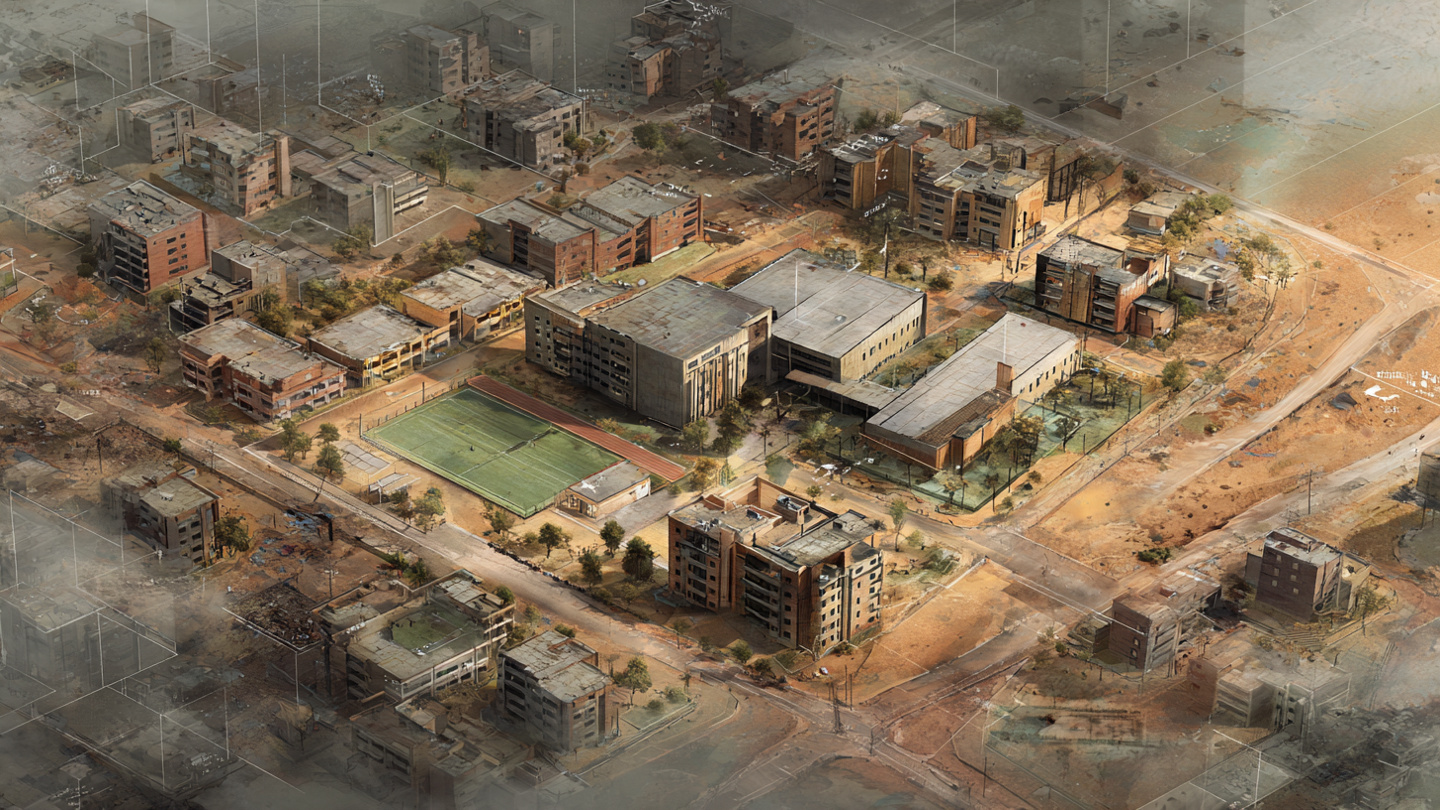
The analysis of a U.S. missile strike in Iran involving a sports hall and school shows how modern conflict reporting now works at its best: carefully, visually, and with disciplined skepticism. By tracing building features, blast effects, and satellite imagery, investigators can move the story away from rumor and toward verifiable fact. That does not erase the political tension surrounding the event, but it does sharpen the public record.
In a region where every military action carries strategic and human consequences, precision in reporting matters almost as much as precision in warfare. A damaged sports hall is not just a structure. A school in a blast zone is not just collateral detail. These are civic spaces, and their exposure changes the meaning of the event for local communities and the wider world.
If you follow global security, regional tensions, or open-source investigations, pay attention to the evidence trail: maps, impact patterns, structural clues, and independent verification. That is where the clearest understanding begins. Stay informed, read critically, and support reporting that values proof over rhetoric.
For readers who want deeper insight into military incidents, satellite imagery, and conflict verification, keep exploring rigorous analysis and share this article with others who want a clearer, fact-driven view of world events.


