Canada’s political map can change with startling speed. One election cycle can leave a party looking essential, while the next can make it seem like an afterthought. That is the challenge now facing the New Democratic Party. After many progressive voters drifted toward Mark Carney’s Liberals, the NDP was forced into a difficult reckoning: what does the democratic left stand for when its traditional base believes another party is better positioned to stop conservatives, manage the economy, or simply win?
Into that uncertainty steps Avi Lewis, a familiar public figure with deep roots in Canadian progressive politics and media. His rise to the leadership is more than a personnel change. It is a stress test for the future of Canada’s left, for the identity of the NDP, and for the broader coalition of labour voters, climate activists, young urban progressives, and working families who have often wanted more ambition than mainstream politics typically offers.
The real question is not whether a new leader can generate headlines. The question is whether he can translate frustration into organization, moral language into electoral strategy, and progressive ideals into a disciplined, persuasive political project. In a fragmented political era, that is a much harder task than it sounds.
The State of Canada’s Left After a Painful Setback
To understand the scale of the challenge, it helps to see why so many center-left and progressive voters migrated away from the NDP in the first place. This was not simply a matter of personality or campaign optics. It reflected a broader anxiety in the electorate.
When voters feel economically insecure, they often prioritize competence, stability, and perceived electability over ideological purity. The Liberals, especially under a figure associated with financial stewardship and institutional credibility, can become a magnet for voters who may agree with the left on many issues but fear “wasting” a vote. That dynamic has haunted social democratic parties not only in Canada, but across many democracies.
For the NDP, the problem has been especially acute. The party often wins praise for raising urgent issues like inequality, housing affordability, public health care, Indigenous justice, and workers’ rights. Yet it frequently struggles to convince voters that it can govern at scale. That gap between moral clarity and governing credibility is where elections are often won or lost.
In practical terms, the post-election landscape leaves the left with several hard truths:
- Progressive votes are highly mobile when fear of a conservative victory dominates the campaign.
- Economic trust matters as much as policy ambition, especially during periods of inflation and cost-of-living pressure.
- Brand confusion hurts when voters cannot clearly distinguish the NDP from the Liberals.
- Coalition politics is fragile because labour, climate, urban, rural, and youth priorities do not always align neatly.
- Leadership alone is not enough unless it is backed by organization, fundraising, and a sharp message.
That is the political terrain Avi Lewis inherits. It is difficult, but it is not hopeless.
Why Avi Lewis Changes the Conversation
Avi Lewis arrives with a unique profile. He is not a conventional insider in the narrow, transactional sense, yet he is also no outsider to public life. His family name carries history, his media background gives him communication range, and his activism gives him credibility among parts of the progressive movement that have often viewed electoral politics with skepticism.
That combination creates both opportunity and risk.
On the one hand, Lewis can speak fluently to activists, union members, students, policy thinkers, and disillusioned progressives who want politics to feel larger than tactical positioning. He can frame issues in terms of systems, values, and long-term transformation. In an age of shallow messaging, that can be powerful.
On the other hand, elections are not won by rhetoric alone. A leader associated with movement politics must still persuade suburban families, older voters, and financially anxious households that he understands everyday trade-offs. Voters may admire conviction, but they also want to know who can lower costs, protect jobs, and navigate uncertainty.
This is where Lewis’s leadership becomes fascinating. If he can bridge movement energy and electoral discipline, he may revive a dormant part of Canadian politics. If he cannot, the NDP risks becoming a party that shapes debates without shaping governments.
A Leadership Test Beyond Symbolism
Too often, leadership contests are treated as emotional resets. A new face arrives, supporters feel renewed, and the party hopes momentum will do the rest. But symbolic renewal fades quickly unless it is tied to a strategic answer to one central problem: why should voters choose this party now?
For Lewis, that answer must go beyond broad appeals to fairness. It must define a distinct role for the NDP in an era where the Liberals can occupy progressive space when politically convenient. In other words, the NDP cannot merely sound nicer, more urgent, or more principled. It must sound necessary.
The NDP’s Core Challenge: Relevance in a Liberal-Dominated Center-Left
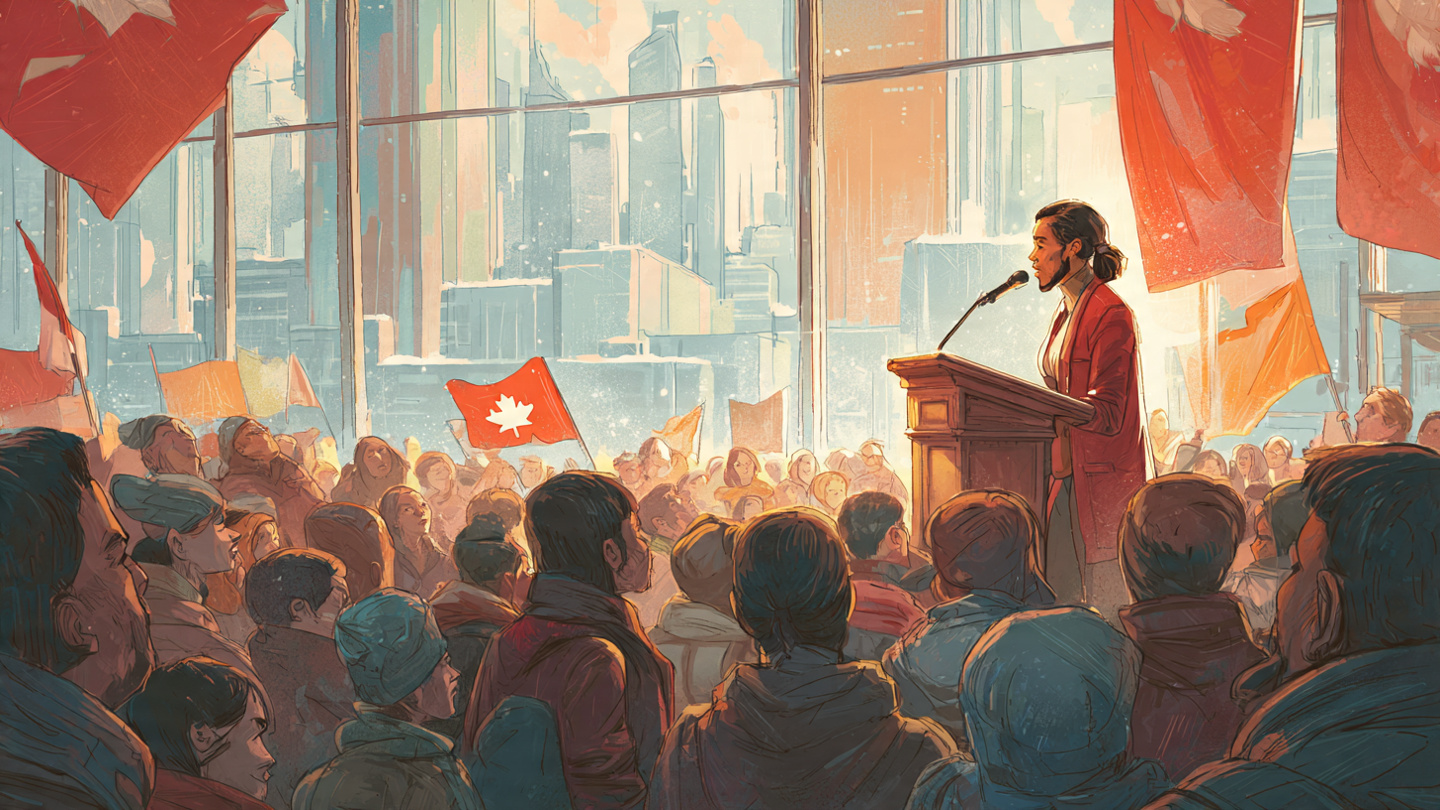
The modern center-left electorate in Canada is crowded. Liberals can promise pragmatic reform. Greens can claim climate urgency. Local movements can channel activist energy. Meanwhile, conservatives can attract working-class frustration by attacking elites, institutions, or urban political culture. In that competitive field, the NDP needs a role voters can understand in seconds.
That role could be built around one argument: the NDP is the only major party willing to challenge the structural causes of insecurity rather than merely soften the consequences. That means speaking directly about corporate concentration, wage stagnation, financialized housing, privatization pressures, and regional inequality.
But there is a catch. Structural critiques can sound abstract if they are not grounded in lived experience. One reason many people stop listening to politics is that they hear competing narratives but see little connection to their daily lives. If the NDP wants to rebuild, it must make politics tactile.
Consider a renter in Toronto, a laid-off resource worker in Alberta, a nurse in Halifax, or a young graduate in Vancouver juggling debt and precarious work. These voters do not need lectures about ideological identity. They need to hear who understands the pressure points in their lives and what will actually change if the NDP gains power.
What a Distinct Left Message Could Sound Like
A stronger progressive politics in Canada message would likely focus on a few deeply felt realities:
- Housing is no longer just expensive; it is reshaping whether people can imagine a stable future.
- Public services are not abstract institutions; they determine whether families feel secure when crisis hits.
- Climate policy is not separate from affordability; the energy transition must create jobs and lower long-term household risk.
- Work has become less predictable; labour protections must adapt to contract, gig, and platform-driven employment.
- Regional fairness matters; any national left project must speak to both urban and non-urban Canada.
If Lewis can turn these themes into a disciplined campaign architecture, the NDP may begin to look less like a protest vessel and more like a serious political home.
Can Avi Lewis Unite Activists and Everyday Voters?
This may be the defining challenge of his leadership. Activists are often the first to supply urgency, volunteers, and ideas. They keep pressure on the political system when mainstream parties go quiet. But mass electorates are broader, less ideological, and often less patient with language that feels academic or morally accusatory.
A successful left leader must therefore do something difficult: maintain credibility with the activist base while speaking in a way that welcomes rather than scolds undecided voters.
From a personal perspective, this is where many progressive movements stumble. They are often right about the underlying crisis but ineffective at building a majority coalition. They can identify what is broken, yet fail to create a political invitation that feels hopeful, practical, and emotionally generous. Voters want to be persuaded, not judged.
Lewis’s strongest path may lie in combining boldness with warmth. Instead of framing politics as a battle between the enlightened and the compromised, he could frame it as a shared attempt to restore dignity, stability, and democratic power to ordinary people. That language is still left-wing, but it is more expansive and electorally durable.
The Importance of Political Tone
Tone matters more than many strategists admit. In politics, people often decide first whether a leader feels trustworthy, grounded, and emotionally intelligible. The policy details matter, but the emotional frame comes first.
If Lewis is seen as articulate but distant, he will struggle. If he is seen as passionate but unrealistic, he will struggle. If he becomes known as a leader who can explain why progressive reform is both humane and workable, the equation changes.
The Issues That Could Fuel an NDP Comeback
No political recovery happens in a vacuum. Parties recover when the public agenda begins to align with what they are best positioned to say. In Canada, several issues could create that opening for the NDP if it acts with precision.
Housing Affordability
Housing may be the single most potent issue for the next generation of left politics. It affects class mobility, family planning, urban development, immigration debates, and personal mental health. A compelling NDP strategy would not only call for more supply, but also confront speculation, investor concentration, and the treatment of homes as financial assets first and social goods second.
Cost of Living and Economic Security
Voters often interpret every political promise through the lens of monthly pressure: groceries, rent, transit, childcare, debt, and wages. The NDP must show that economic security is not a side issue to progressive politics. It is the center of it. A left party that cannot talk plainly about affordability will keep losing voters who agree with its values but doubt its priorities.
Health Care and Public Services
Canadians remain deeply attached to universal public health care, yet many experience the system as strained, delayed, and uneven. This creates a strategic opening. The NDP can argue not just for defending public services, but for modernizing and expanding them in ways that meet actual lived expectations.
Climate and Industrial Policy
Climate politics in Canada will only be electorally successful if linked to jobs, infrastructure, and regional development. Voters are more receptive to ambitious climate action when it is framed as an investment strategy, a competitiveness strategy, and a resilience strategy—not simply as a moral obligation.
That integrated approach could help Lewis appeal to younger climate-conscious voters while reaching working communities that are skeptical of rhetoric not matched by economic planning.
What Could Hold the Left Back
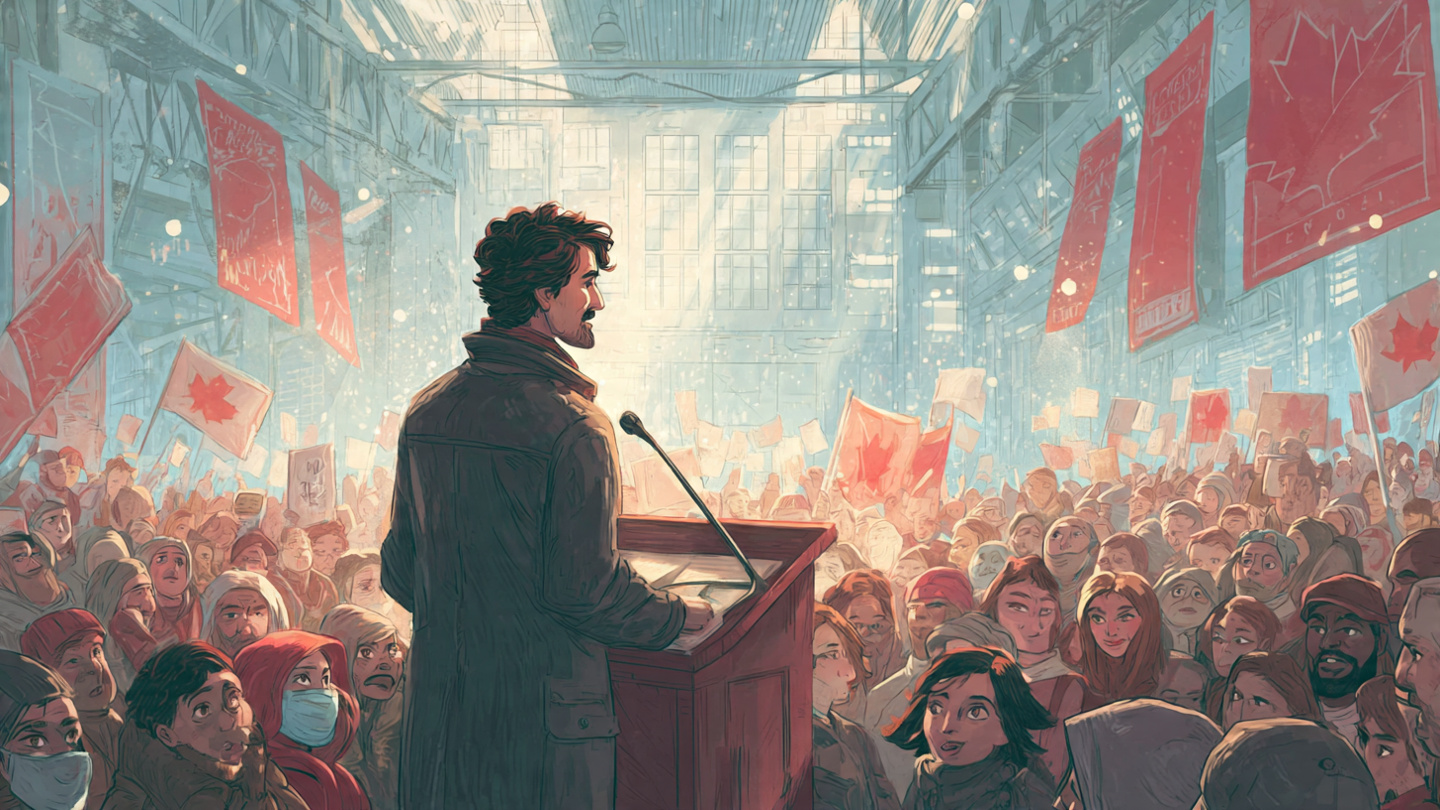
Optimism should not obscure the risks. The NDP’s path back is narrow, and several traps could derail it quickly.
- Message sprawl could leave voters hearing many worthy priorities but no central governing story.
- Overreliance on activist language could reduce broad public resonance outside highly engaged circles.
- Liberal repositioning could absorb popular NDP themes before they translate into electoral gains.
- Organizational weakness in key ridings could limit any leadership bounce.
- Economic credibility gaps could persist if fiscal messaging is vague or defensive.
These are not minor details. They are often the difference between a meaningful comeback and another cycle of frustration.
How Canada’s Left Can Rebuild Credibility
If the goal is not just survival but renewal, the NDP under Avi Lewis will need a multi-level strategy. It must become emotionally resonant, policy-serious, and organizationally ruthless all at once.
1. Tell a Simpler Story
The party should reduce complexity in how it presents itself. Voters need a clear answer to a clear question: what does the NDP do for people who feel locked out of security? Every major policy area should connect back to that core narrative.
2. Speak to Aspiration, Not Only Hardship
Left parties often become strongest when they do not merely diagnose suffering, but articulate a better future people can visualize. Affordable homes, reliable care, decent work, cleaner growth, stronger communities—these are not abstractions. They are aspirations.
3. Rebuild Ground-Level Trust
National media attention helps, but durable politics is local. Constituency organizing, candidate recruitment, community partnerships, and consistent presence between elections matter far more than one leadership moment. A comeback requires infrastructure.
4. Be Specific About Power
Many voters believe the system is tilted, but they are less sure how politics can change that. The NDP should explain exactly who benefits from the status quo and how reforms would redistribute leverage toward workers, renters, patients, and families. Clarity about power makes progressive politics feel real.
What Success Would Actually Look Like
Success for Avi Lewis should not be measured only by immediate electoral gains. In the short term, success may mean restoring coherence, energizing volunteers, winning back younger and urban voters, and making the NDP impossible to ignore in debates about affordability and democracy.
Longer term, success would mean something bigger: rebuilding Canada’s left into a coalition that can compete not just morally, but electorally. That would require persuading voters that progressive change is neither reckless nor symbolic, but practical, modern, and urgently needed.
There is a real opening here. Many Canadians feel the current political economy is not delivering security, mobility, or fairness. They may not all call themselves left-wing, but they recognize that something is out of balance. A credible social democratic project could speak to that unease—if it avoids jargon, performs competence, and offers a convincing route forward.
Conclusion: A New Leader, but a Deeper Test
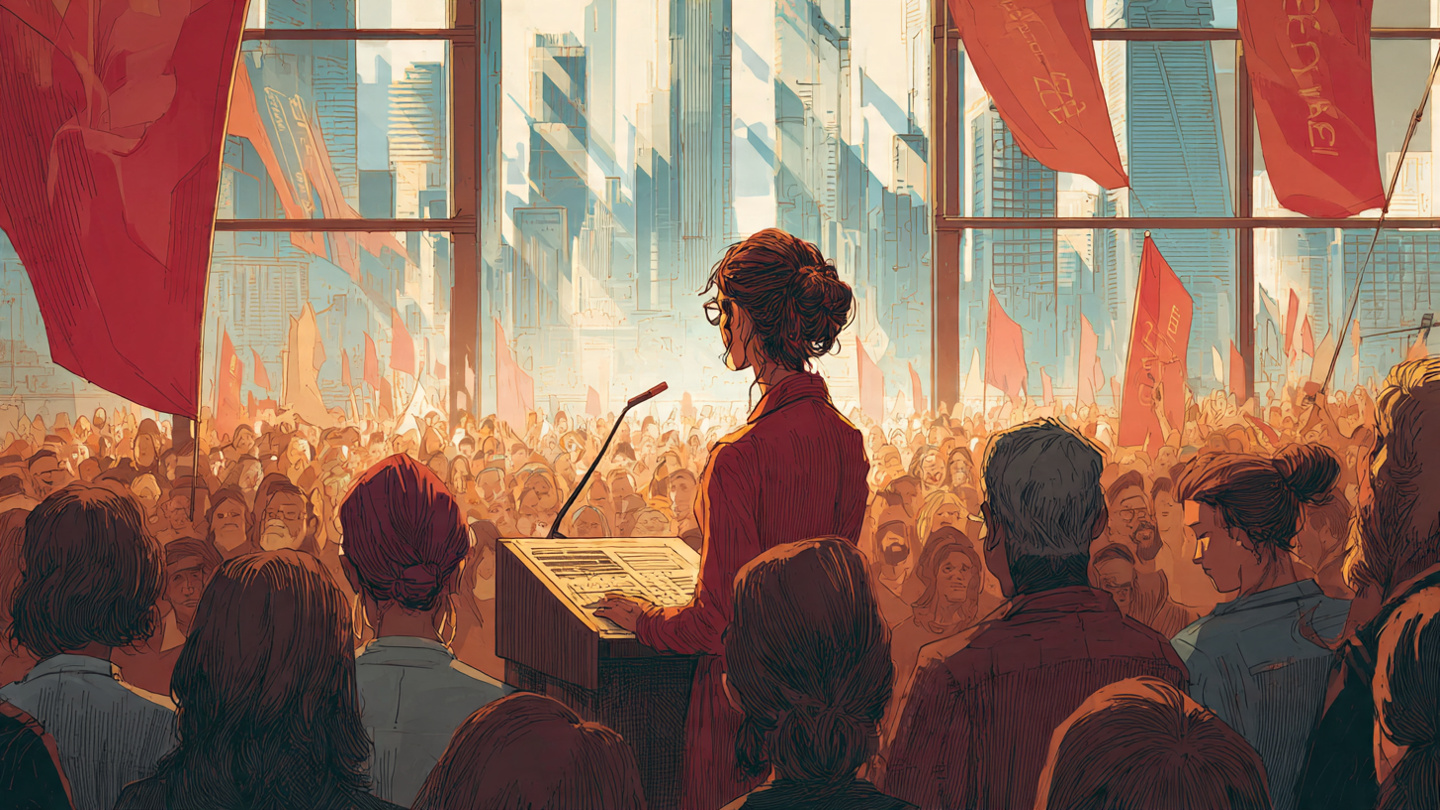
Avi Lewis’s leadership begins at a moment of vulnerability for the NDP and uncertainty for progressive politics in Canada. He inherits a party with history, ideals, and recognizable strengths, but also one struggling with drift, competition, and doubts about electability.
That makes this more than a leadership story. It is a referendum on whether the Canadian left can once again become a disciplined political force rather than a chorus of fragmented frustrations. If Lewis can fuse vision with practicality, activism with persuasion, and conviction with governing credibility, he may do more than revive a party. He may help redefine what progressive politics looks like in Canada for the next decade.
If you are watching Canadian politics closely, this is the moment to pay attention. The future of the NDP will not be decided by one speech or one news cycle. It will be decided by whether the left can speak to the country as it is while still fighting for the country it wants to build. For voters, organizers, and political observers alike, the next chapter starts now.
Want to follow where Canada’s left goes next? Keep a close eye on how the NDP talks about housing, affordability, public services, and climate-linked jobs. Those debates will reveal whether this is simply a reset in tone—or the beginning of a real political comeback.


