Fear sells. Hope sells too. Put those two forces together and you get one of the defining debates of our time: should we treat intelligent machines as the next great leap in human progress, or as a powerful system we barely understand and are rushing to deploy anyway?
That tension sits at the heart of a new tech documentary that tries to occupy the middle ground between panic and blind enthusiasm. It asks the right big questions. How much risk is real? How much is hype? Who benefits when the public is told to be excited, and who pays the price when things move too fast?
What makes the film compelling is not its access to high-profile founders, researchers, and commentators. It is the emotional dilemma it puts in front of viewers: can a technology be revolutionary and reckless at the same time? In my view, that is exactly the right question. The problem is that too many public conversations still drift into easy binaries. Either you are a doomer warning of catastrophe, or you are an optimist promising abundance. Real life is rarely that neat.
This documentary is at its best when it exposes that messiness. It shows why people are fascinated by machine learning, automation, and large-scale computing systems, while also revealing how power concentrates around the companies and executives shaping the future. Yet it also has a weakness: in seeking balance, it sometimes becomes too forgiving of the people with the most influence and the least incentive to slow down.
For viewers trying to understand the future of automation, digital labor, and machine ethics, that tension makes the film worth watching. It may not deliver a final verdict, but it does something more useful. It forces us to examine who gets to define progress.
Why This Debate Feels So Urgent
The reason this topic lands so hard right now is simple: these systems are no longer theoretical. They are already shaping hiring, search, education, finance, customer service, media production, and software development. In many workplaces, automation is no longer discussed as a future possibility. It is a budget line, a management strategy, and a productivity promise.
That shift changes the stakes. Once a technology moves from labs and conference stages into classrooms, hospitals, offices, and public services, the conversation can no longer be driven by novelty alone. We need to ask harder questions about reliability, labor displacement, misinformation, surveillance, copyright, and market concentration.
The documentary understands this broader context. Instead of treating machine learning as a distant scientific frontier, it frames it as a social force that is already reorganizing daily life. That matters, because public understanding often lags behind corporate deployment.
- Work: Automation tools are changing entry-level tasks, creative workflows, and white-collar expectations.
- Trust: Synthetic content, inaccurate outputs, and opaque decision-making make it harder to know what is reliable.
- Power: A small number of companies control critical infrastructure, data pipelines, and commercial access.
- Policy: Regulation remains fragmented while deployment moves at market speed.
- Culture: Films, news coverage, and online discourse increasingly shape public fear and fascination.
Those are not abstract concerns. Consider a teacher trying to detect fabricated homework, a recruiter relying on automated filters, or a junior employee discovering that basic drafting work is being offloaded to software. The question is no longer whether these tools matter. It is whether society has built enough guardrails around them.
A Documentary That Wants the Middle Ground
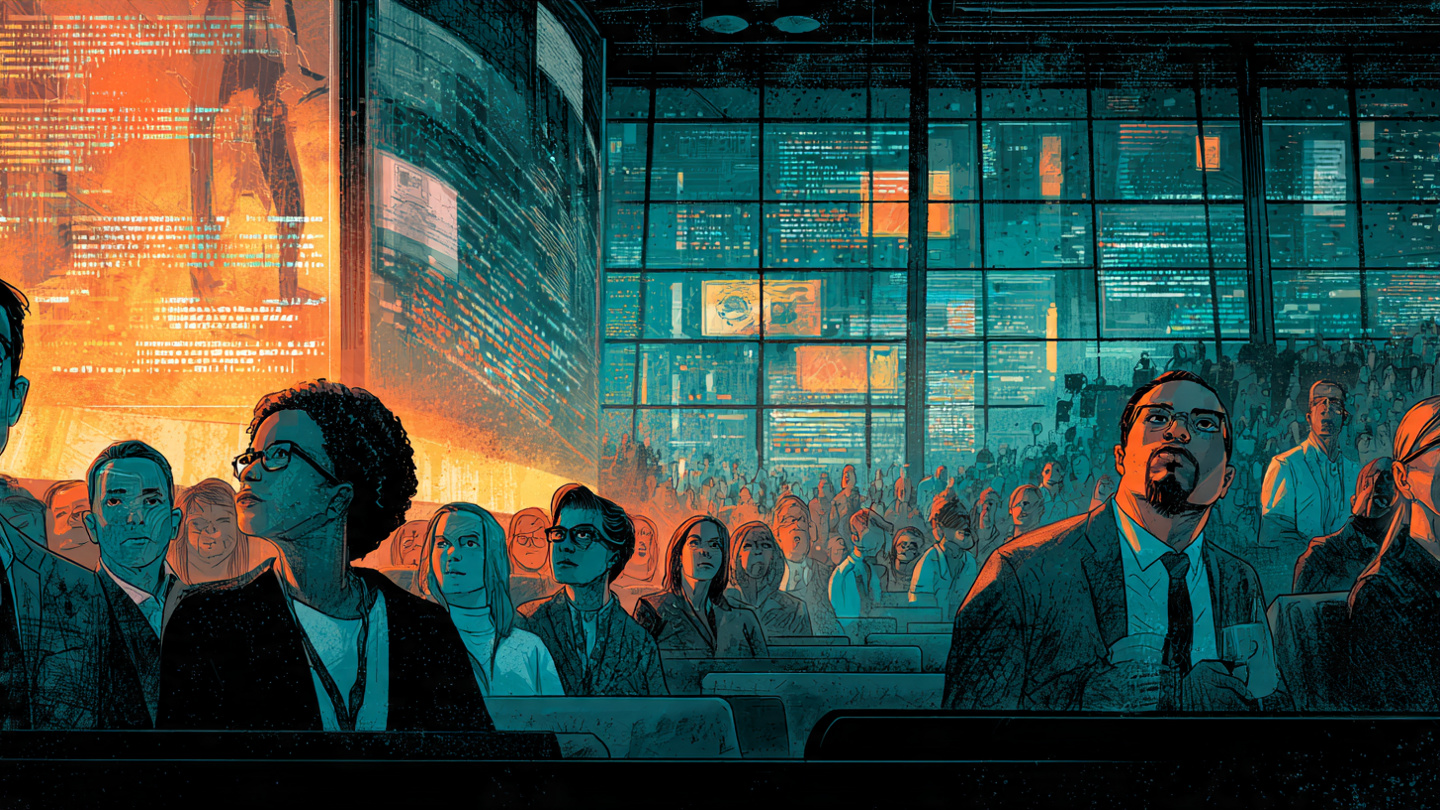
The film clearly wants to avoid ideological extremes. It resists the temptation to present intelligent machines as either salvation or extinction. Instead, it leans into a more nuanced emotional position: cautious fascination. That approach is smart, because the public is exhausted by overheated claims on both sides.
There is real value in a documentary that says, in effect, “slow down, look closer, and separate what is possible from what is probable.” In a media climate built on extremes, moderation can feel refreshing. The film invites viewers to hold two ideas at once: these systems are undeniably impressive, and the stories told about them are often self-serving.
I appreciated that impulse. Too often, technology coverage either becomes free marketing for founders or retreats into speculative apocalypse. Neither approach helps citizens, workers, or policymakers understand what is happening. A serious tech documentary should give the audience context, not just spectacle.
Still, there is a fine line between balance and softness. When a film spends time with powerful executives, the burden is not merely to let them explain themselves. The burden is to test their claims, challenge their framing, and examine the incentives behind their messaging. That is where the documentary sometimes pulls its punches.
Where the Film Succeeds
Its strongest moments come when it highlights contradiction. Leaders warn about profound societal disruption while continuing to accelerate product releases. Companies speak the language of safety while competing aggressively for scale. Public messaging emphasizes human benefit, yet business models depend on market dominance, data access, and investor confidence.
That contradiction deserves sustained scrutiny because it reveals the core dilemma of the modern tech economy: the people best positioned to warn us about risk are often the same people profiting from rapid adoption.
The documentary also succeeds by making room for uncertainty. There is intellectual honesty in admitting that nobody can fully map the long-term consequences of systems developing faster than regulation, education, and labor institutions can adapt. Uncertainty is not weakness. In this case, it is the most truthful position available.
Where the Film Falls Short
Its biggest limitation is that it sometimes mistakes access for accountability. A polished founder interview can create the appearance of depth without delivering real challenge. When influential executives frame themselves as thoughtful stewards of a dangerous but necessary future, that narrative should not be accepted at face value.
Viewers need more than carefully worded concern. They need context about market incentives, lobbying pressure, safety trade-offs, and the practical consequences of scaling first and apologizing later. Without that pressure, a documentary risks turning its most powerful subjects into narrators of their own absolution.
The Accountability Problem at the Center of the Story
The deeper issue raised by the film is not simply whether intelligent machines are dangerous. It is whether the institutions building them can be trusted to regulate themselves. History gives us good reason to be skeptical.
Major technology platforms have repeatedly expanded faster than their ethical frameworks. Social media promised connection and delivered addiction, manipulation, and fractured public trust. Data-driven advertising promised relevance and helped normalize surveillance. Gig platforms promised flexibility while often shifting risk onto workers. In each case, public debate arrived after large-scale adoption.
That pattern should shape how we evaluate current promises. When executives present themselves as both innovators and guardians, viewers should ask a harder question: what would meaningful restraint actually cost them?
If slowing deployment would reduce market share, investor excitement, or strategic advantage, then appeals to responsibility become much less convincing. A documentary covering this territory should stay relentlessly focused on incentive structures. Personality matters. Vision matters. But incentives usually matter more.
One practical example is the race to embed automated systems into every possible product category. Search tools, writing assistants, design platforms, enterprise software, education apps, and workplace dashboards are all absorbing similar capabilities at speed. Once that race begins, every company argues that caution is important while insisting it cannot afford to pause. That is not stewardship. It is competitive pressure dressed up as inevitability.
What the Film Gets Right About Public Fear

One of the documentary’s smarter insights is that fear is often mischaracterized. Public anxiety is not only about science-fiction scenarios. Many people are worried about far more immediate and grounded issues.
- Job erosion: Workers worry that routine tasks will disappear before new roles emerge.
- Truth decay: Audiences fear a flood of convincing but false text, audio, and video.
- Loss of agency: People dislike systems making consequential judgments they cannot inspect.
- Concentrated control: Citizens sense that a handful of firms may shape information access for everyone.
- Human drift: There is a growing unease that convenience may replace skill, reflection, and craft.
These fears are not irrational. In fact, they are often more rational than the glossy marketing language surrounding automation. A parent wondering what students will actually learn if every rough draft is outsourced is asking a serious educational question. A designer wondering how originality survives in a market flooded with derivative content is asking a serious cultural question. A worker wondering whether “efficiency” really means “fewer people” is asking a serious economic question.
The film captures some of this well. It reminds viewers that public concern is not always technophobia. Sometimes it is simply pattern recognition.
Why “Balanced” Coverage Can Still Miss the Truth
There is a common assumption in documentary storytelling that fairness means giving every side equal emotional weight. But in technology coverage, that approach can distort reality rather than clarify it. If one side has billions in capital, control over distribution, and a polished communications machine, while the other side is made up of scattered critics, researchers, labor advocates, and concerned citizens, then equal airtime does not automatically equal balance.
Sometimes truth requires asymmetry. It requires pressing harder on power than on reaction. It requires more skepticism toward the people setting the terms of the conversation than toward those living with the consequences.
That is the central frustration I felt while watching this documentary. It is thoughtful, visually engaging, and intellectually ambitious. But when it comes closest to the people shaping the future, it occasionally loses its edge. It wants to understand them more than confront them.
To be clear, understanding matters. Simplistic villain narratives rarely help. The problem is that empathy without rigor can slide into lenience. And lenience is a luxury the public cannot afford when technologies are scaling into law, medicine, education, media, and work at extraordinary speed.
What Viewers Should Take Away

The most useful takeaway is not a final answer to whether we should be scared. Fear, by itself, is not a strategy. What matters is developing a sharper public vocabulary for evaluating risk, reward, and responsibility.
Here is the framework I would use after watching the film:
- Ask who benefits: Follow the money, market share, and strategic advantage.
- Ask who is exposed: Workers, students, artists, and vulnerable communities often absorb the first harms.
- Ask what is measurable: Look for evidence, error rates, and documented outcomes over visionary language.
- Ask what is reversible: Some product decisions can be rolled back; social damage is much harder to undo.
- Ask who is accountable: Real responsibility requires consequences, not just public statements.
That framework helps move the conversation beyond hype cycles and personality cults. It also gives viewers something more valuable than certainty: discernment.
If you are a business leader, this means resisting the pressure to adopt every new tool without a governance plan. If you are an educator, it means thinking carefully about what forms of learning should remain deeply human. If you are a policymaker, it means closing the gap between innovation speed and public safeguards. If you are an everyday viewer, it means refusing to confuse charisma with credibility.
Conclusion: Curiosity Is Good, Surrender Is Not
This documentary deserves attention because it captures the emotional and political confusion of the moment. It understands that the future of automation is not just a story about software. It is a story about power, labor, truth, trust, and the values we embed into the systems we normalize.
Its greatest strength is that it resists easy fearmongering. Its greatest weakness is that it occasionally treats influential voices with more generosity than they have earned. Even so, the film opens a necessary conversation: how much caution is enough when the people moving fastest are also writing the narrative?
My own view is simple. We should stay curious, informed, and open to genuine breakthroughs. But we should be far less willing to hand over moral authority to executives who stand to gain from public confidence. Optimism has value. So does skepticism. The challenge is knowing when optimism becomes branding and when skepticism becomes civic responsibility.
If this documentary pushes more viewers to ask tougher questions about automation ethics, machine learning risks, and big tech accountability, then it has done something worthwhile. The future should not be decided only in boardrooms, labs, and investor briefings. It should be debated in public, challenged with evidence, and shaped with democratic pressure.
Watch closely. Question confidently. Demand accountability before convenience becomes dependence.
If you want more analysis on technology trends, digital ethics, and the future of computing, follow the conversation and share this piece with someone who still thinks progress and responsibility always arrive together.


