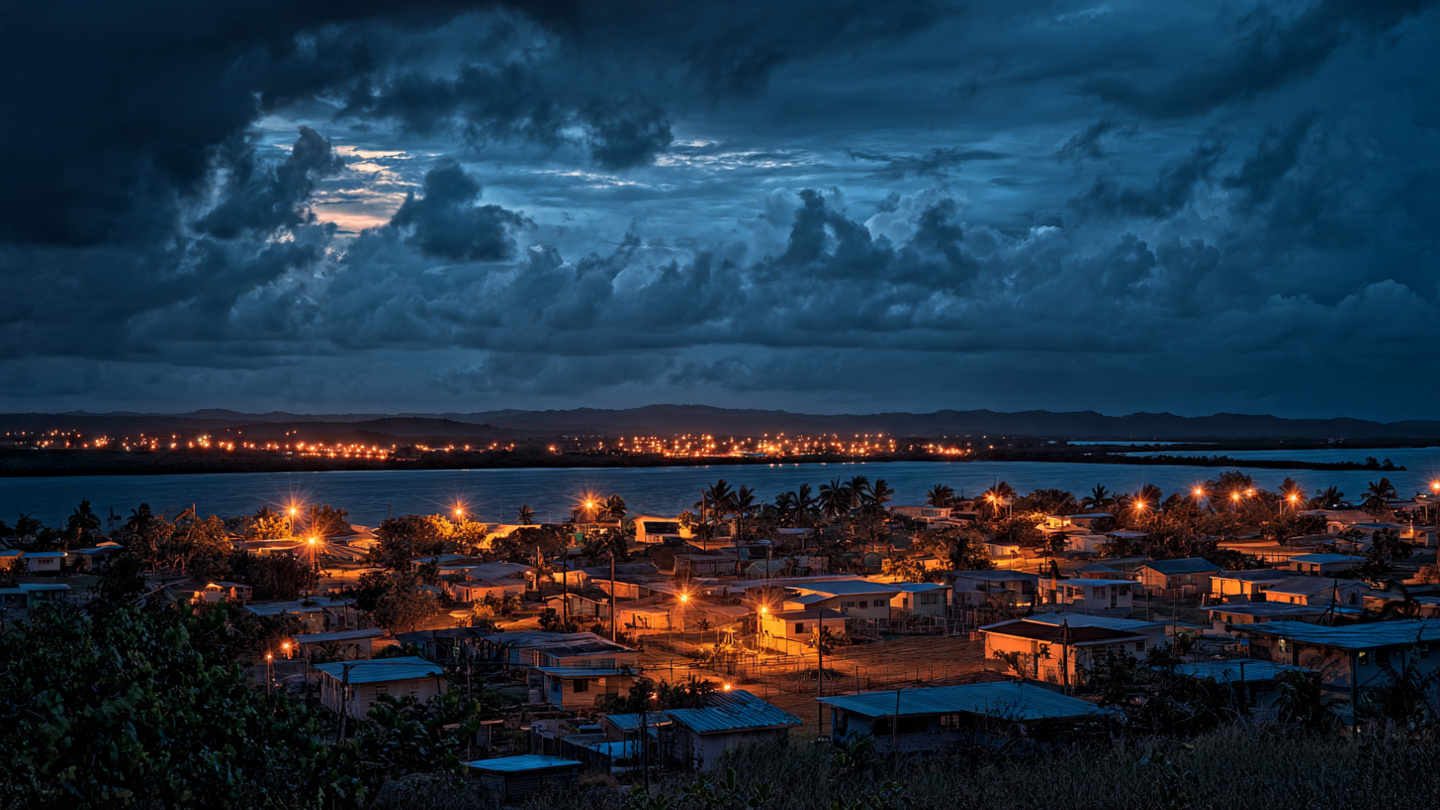
There are few places in the world where political contradiction is as visible as it is around Guantanamo Bay. At night, the U.S. naval base shines with dependable electricity, air-conditioned buildings, and orderly infrastructure. Just beyond that perimeter, many Cuban families face rolling blackouts, fuel shortages, and the daily exhaustion that comes from living in an economy under relentless strain. It is one island, one stretch of coastline, and yet it often feels like two separate worlds divided not only by fences and minefields, but by policy, power, and access.
That contrast is more than symbolic. It speaks directly to the broader story of U.S.-Cuba relations, the effects of the U.S. embargo on Cuba, and the human cost of tightening economic pressure in a country already struggling with structural weakness, aging infrastructure, and limited room to maneuver. For policymakers, Guantanamo is a strategic outpost. For many observers, it is also a glaring reminder that geopolitical decisions do not stay abstract for long. They land in kitchens, hospitals, schools, and fuel lines.
From a personal perspective, what makes this issue so compelling is not only the diplomacy or military posture. It is the intimacy of the contrast. A brightly lit naval installation standing next to communities dealing with darkness forces a difficult question: when pressure is meant to punish a government, who really absorbs the shock first?
The Geography of a Political Paradox
Guantanamo Bay Naval Base occupies one of the most politically charged spaces in the Western Hemisphere. Controlled by the United States for more than a century under a contested lease arrangement, the base sits on Cuban territory but functions as a self-contained American enclave. Its roads, utilities, housing, recreation facilities, and logistics systems are designed to operate with continuity and security, largely detached from the economic realities around it.
That separation is not accidental. Military bases are built to preserve operational readiness regardless of local instability. Yet in Guantanamo, the result is especially striking because the surrounding region has been coping with the fallout of Cuba’s energy crisis, weak oil supplies, and a broader economy repeatedly squeezed by sanctions and restrictions.
The phrase that the military “exists in a bubble” resonates because it captures more than material comfort. It suggests insulation from scarcity, from uncertainty, and from the daily improvisation that defines life for many Cubans. In practical terms, a stable power grid means refrigerated medicine, reliable internet access, transportation, and routine. Outside that bubble, each of those basics can become a challenge.
- Inside the base: secure fuel access, predictable electricity, modern logistics, and protected supply chains.
- Outside the base: vulnerability to power cuts, transport disruptions, food storage problems, and reduced economic activity.
- At the political level: one zone reflects strategic continuity, while the other bears the pressure of sanctions and state inefficiency.
How Sanctions Intensify Cuba’s Energy Struggles
Any serious analysis of Cuba sanctions must begin with an uncomfortable truth: Cuba’s economic problems did not start with recent U.S. policy. The country has long suffered from low productivity, central planning failures, underinvestment, and a chronic inability to generate enough hard currency. But external pressure matters profoundly when a fragile system is already under stress.
Fuel is the clearest example. Cuba depends heavily on imported energy and has limited flexibility when supplies tighten. Restrictions that discourage shipping, banking, insurance, or trade financing can quickly become a practical crisis. A fuel shortfall does not remain confined to the energy sector. It ripples outward into transport, agriculture, manufacturing, and health care.
When fuel becomes scarce, buses run less often, goods arrive late, and refrigeration becomes uncertain. Small businesses lose customers. State workers lose time. Families rearrange their lives around blackout schedules that may or may not hold. Students study by dim light or not at all. In that environment, every additional constraint imposed from abroad has an amplified effect.
This is why discussions of the Trump Cuba policy cannot be reduced to campaign rhetoric or diplomatic signaling. Measures aimed at tightening economic pressure may be framed as tools to isolate the Cuban government, but the immediate burden often falls on ordinary people navigating an already brittle system. The Cuban state may control the economy, but households still experience the pain first.
What a Fuel Embargo Means in Daily Life
To understand the impact, it helps to think in practical, ground-level terms rather than slogans. A restriction on fuel access can reshape an entire day.
- A hospital may delay non-emergency procedures because backup systems and transport become less reliable.
- A family may spend hours traveling a route that once took minutes because public buses are cut back.
- A farmer may struggle to move produce to market before it spoils.
- A restaurant or food vendor may close early when refrigeration or cooking fuel cannot be counted on.
- A neighborhood may lose not just light, but also communication, security, and basic comfort during long outages.
That is what makes the luminous stability of Guantanamo Bay so politically potent. The contrast is visible, immediate, and impossible to ignore.
Guantanamo Bay as a Symbol of Unequal Power
There is a tendency in geopolitical coverage to discuss military installations in purely strategic language: logistics, positioning, deterrence, surveillance, readiness. All of that matters. But Guantanamo Bay also functions as a symbol, and symbols shape public understanding as much as policy papers do.
For Washington, the base represents continuity of presence in a contested region. For Havana, it has long symbolized unfinished sovereignty and historical grievance. For many outside observers, it has become a visual shorthand for asymmetry: the world’s most powerful military maintaining abundance on territory adjacent to communities dealing with scarcity.
This symbolism becomes sharper in moments of economic hardship. When blackouts spread across Cuba, the image of a brightly powered base nearby is not just a matter of optics. It reinforces the perception that great powers can compartmentalize hardship, shielding their own institutions while neighboring populations absorb the consequences of strategic conflict.
In my view, that is why the Guantanamo story matters beyond the headlines. It is not merely about Cuba, and not merely about the United States. It is about what modern power looks like when it is geographically close to suffering but structurally insulated from it.
The Human Cost Behind the Policy Debate
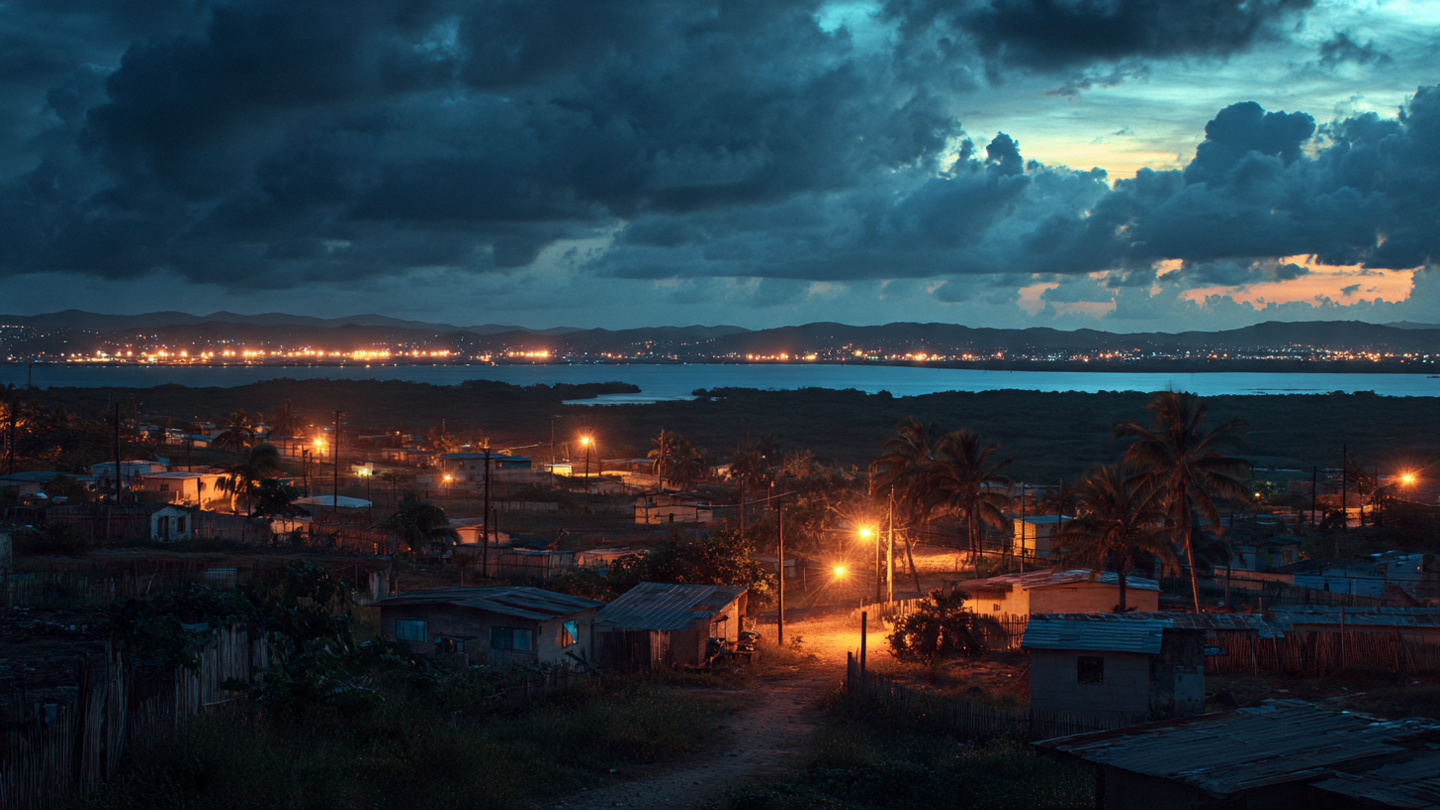
Supporters of maximum pressure often argue that sanctions are necessary because engagement legitimizes an authoritarian government. Critics respond that prolonged economic punishment entrenches hardship without delivering meaningful political reform. Both sides present familiar arguments, but the lived experience of Cuban civilians should remain at the center of the debate.
The problem with broad economic pressure is that it rarely lands cleanly. Governments often find ways to protect priority sectors, preserve elite privileges, and redirect blame outward. Citizens, by contrast, cannot hedge against systemic shortages with the same ease. They wait longer for buses. They search harder for medicine. They live with more heat, more uncertainty, and fewer options.
There is also a generational dimension. Younger Cubans have grown up under prolonged scarcity, interrupted reform cycles, and fading expectations. For them, the issue is not theoretical. It is whether staying in the country offers a viable future. That matters because sustained economic stress often fuels migration, which then becomes another flashpoint in U.S.-Cuba relations.
One of the most important lessons in this story is that infrastructure is political. Electricity is political. Fuel is political. A blackout is not only an inconvenience. In a country with tight controls and limited resources, it becomes a measure of state capacity, external pressure, and social resilience all at once.
Why Ordinary Cubans Feel the Pressure First
When sanctions tighten in a fragile economy, the first effects often appear in the most ordinary routines.
- Food security: shortages worsen when transport and refrigeration become unreliable.
- Health care: medicine storage, emergency response, and hospital operations become harder to maintain.
- Employment: businesses cut hours or productivity drops when power and mobility are disrupted.
- Education: students lose study time, internet access, and basic stability.
- Mental strain: uncertainty, heat, and constant improvisation create cumulative stress that rarely shows up in policy talking points.
These consequences do not excuse the failures of the Cuban state. They do, however, complicate any simplistic claim that harsher pressure automatically produces better outcomes.
The Strategic Logic—and Its Limits
To be fair, U.S. policymakers who support a hard line toward Cuba do not usually present it as an attack on civilians. Their stated aim is often to constrain government revenue, reduce regional influence, and signal consequences for repression or anti-democratic behavior. In strategic terms, that logic is understandable. States use economic leverage because it appears less destructive than military force and more forceful than diplomacy alone.
But strategy should be judged by results, not intentions. If a policy deepens misery without producing meaningful political opening, then its humanitarian and strategic value deserves scrutiny. Cuba’s leadership has shown a long ability to survive isolation, absorb blame, and convert confrontation into a narrative of resistance. That does not mean pressure never matters. It means pressure alone rarely delivers the transformation its advocates promise.
Meanwhile, the military side of the U.S. presence remains largely protected from the turbulence it helps frame. That is the bubble at the heart of the story. The base does not face the same blackouts. Its supply systems are not negotiated day by day in crowded stores or delayed transit routes. It stands as proof that power, when organized effectively, can create islands of certainty in the middle of regional instability.
The harder question is whether that certainty contributes to long-term resolution or simply highlights the divide.
What This Divide Reveals About Modern Geopolitics
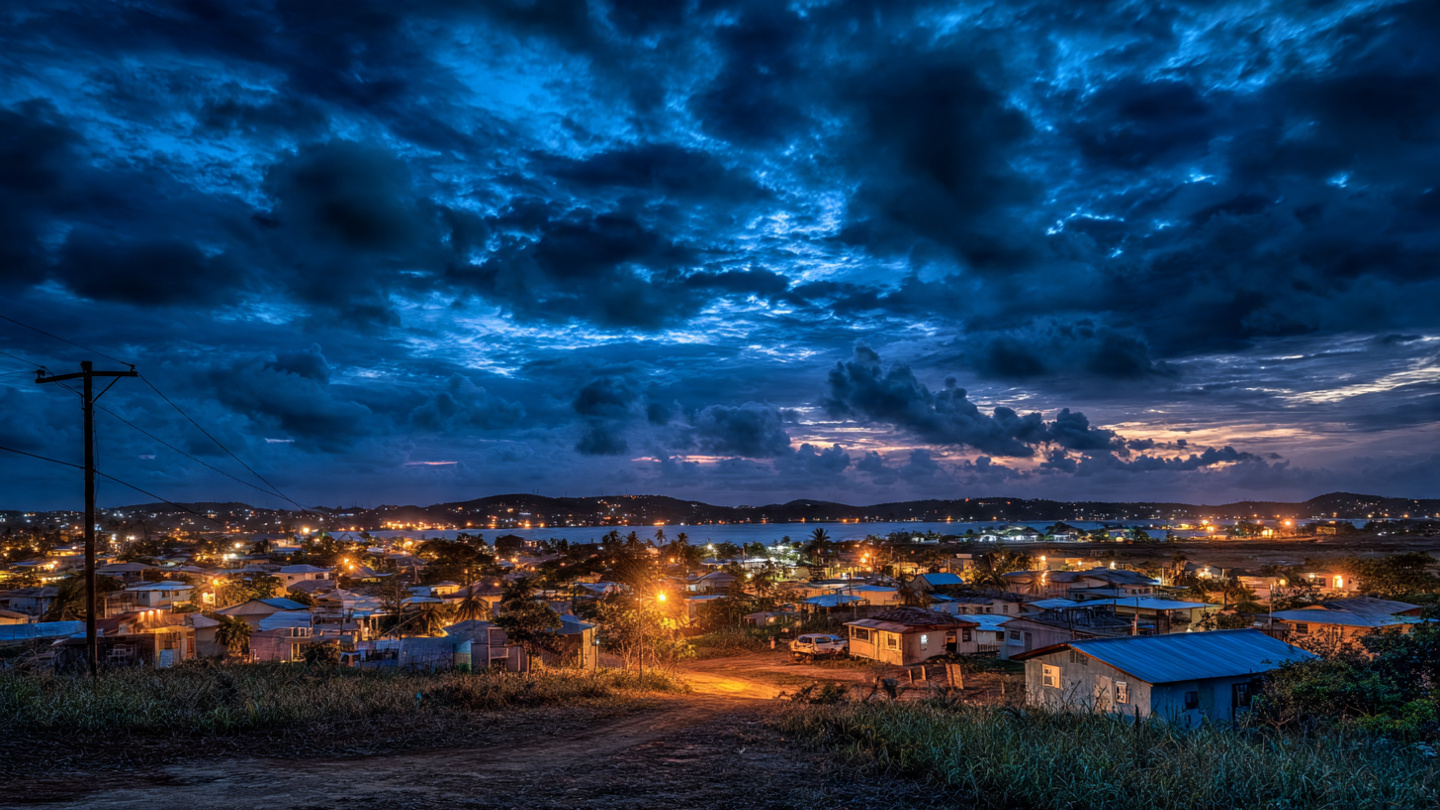
The contrast between Guantanamo Bay and surrounding Cuba offers a broader lesson about how geopolitical pressure works in the twenty-first century. It is no longer only about borders, troop numbers, or naval reach. It is about energy access, financial chokepoints, transport networks, and the ability to preserve functionality while others lose it.
In that sense, Guantanamo is a case study in controlled resilience. The base embodies the capacity of a powerful state to maintain operational normalcy even in politically hostile terrain. Cuba, by contrast, illustrates what happens when a weaker state faces both internal inefficiency and external restriction at the same time.
For readers trying to make sense of the issue, a few realities are worth keeping in view:
- Sanctions do not operate in a vacuum: they interact with preexisting structural weakness.
- Military enclaves are designed to resist disruption: their stability can mask the severity of neighboring hardship.
- Visible inequality changes political perception: infrastructure can become a powerful narrative in itself.
- Humanitarian impact matters strategically: public suffering can fuel migration, resentment, and long-term instability.
- Policy success requires measurement: if pressure grows but reform does not, assumptions should be reexamined.
That is why this story deserves attention beyond a single administration or a single embargo measure. It captures the enduring tension between coercion and consequence, between strategic intent and social reality.
Conclusion: One Island, Two Realities
At the edge of Cuba, the glow of Guantanamo Bay Naval Base tells a larger story than military readiness. It reveals how power can concentrate security and comfort in one enclosed space while scarcity spreads just outside it. In the surrounding communities, blackouts and fuel shortages are not abstractions. They shape meals, commutes, medical care, work, and hope. Inside the base, the machinery of state capacity continues to function with far greater certainty.
The divide is not only geographic. It is political, economic, and moral. It raises difficult questions about the real-world effects of the U.S. embargo on Cuba and whether pressure that promises leverage may, in practice, deepen civilian hardship faster than it changes government behavior. For anyone serious about foreign policy, that contrast should not be easy to dismiss.
If there is a lesson here, it is that effective policy must be judged not just by how forceful it sounds, but by what it produces in everyday life. When one side of a fence glows and the other goes dark, the image demands more than outrage or ideology. It demands honest evaluation.
Want to follow the forces reshaping Cuba, U.S. strategy, and the wider region? Stay engaged with reporting and analysis that connect policy to lived reality, because the most important geopolitical stories are often the ones people can see from across a single line in the dark.


