The idea of reporting to software instead of a human manager once sounded like a plot twist from a futuristic drama. Now, it is becoming a serious workplace question. A recent national poll found that 15% of Americans would be willing to work under a digital boss, meaning a program that assigns tasks, sets schedules, and directs day-to-day responsibilities. That number may not represent the majority, but it is large enough to signal a major shift in how people think about authority, efficiency, and trust at work.
I find that number fascinating because it says less about machines and more about people. When workers say they would accept a digital supervisor, many are not necessarily celebrating automation. In many cases, they may be reacting to frustrations with inconsistent management, office politics, unclear expectations, and the emotional stress that can come with human leadership. If a system feels more predictable, more objective, and less biased, some employees may view it as an upgrade.
At the same time, the idea raises hard questions. Can software truly understand nuance? Can it motivate a team, resolve conflict, or recognize when someone is struggling? Can it lead with empathy, or does it reduce people to performance metrics? The answer is not simple, and that is exactly why this trend deserves attention.
As businesses search for productivity gains and workers demand more flexibility and fairness, algorithmic management is moving from the edges of the labor market into mainstream conversation. The bigger issue is not whether digital supervisors exist. In many industries, they already do. The real issue is how far employers will go and whether workers will accept that trade-off.
What the 15% Figure Really Tells Us
On the surface, 15% may sound like a niche opinion. But in a country with a massive workforce, that percentage represents millions of people. It tells us that a meaningful segment of the public is open to a workplace where decisions traditionally made by supervisors are handled by software.
That matters because workplace change often begins at the margins. Remote work, gig platforms, and digital scheduling tools all started with limited adoption before becoming normal in many sectors. A willingness among even a minority of workers can give employers permission to experiment, especially in industries that prioritize speed, scale, and cost control.
- 15% are open to a digital boss, showing real appetite for nontraditional management structures.
- The majority remain skeptical, which suggests trust and human connection still matter deeply at work.
- Interest likely varies by industry, with tech, logistics, retail, customer service, and gig work leading the shift.
- The number reflects frustration as much as innovation, especially where workers feel poorly managed today.
In my view, this data point should not be read as a vote against human leadership. It should be read as a warning to employers: if workers are willing to consider software as a direct supervisor, many may already be dissatisfied with the human systems currently in place.
Why Some Workers Would Prefer a Digital Boss

Predictability Feels Safer Than Personality
One of the biggest attractions of software-led management is consistency. Human bosses can be inspiring, but they can also be moody, political, distracted, or inconsistent. A digital system, by contrast, often follows rules. It may assign shifts based on availability, route tasks according to deadlines, and evaluate output using fixed criteria. For workers who have dealt with favoritism or unclear standards, that can feel refreshing.
Imagine two employees with similar performance. Under a weak manager, one might get better assignments because of personal chemistry. Under a rule-based system, both might be evaluated the same way. That sense of fairness, whether fully real or not, has powerful appeal.
Speed and Convenience Matter
Workers increasingly operate in fast-moving environments. Delivery drivers, warehouse teams, freelancers, and customer support staff often need instant updates rather than long meetings. A digital boss can send assignments immediately, adjust schedules in real time, and keep records without delay.
For some employees, especially those who value autonomy, this can feel more efficient than waiting for a manager to respond to messages or approve small decisions. When people say they would work for a digital boss, they may actually be saying they want fewer bottlenecks.
Less Social Friction, Fewer Power Games
Not everyone thrives in office politics. Some workers prefer a clean, transactional relationship with work: tell me the goal, give me the tools, and let me do the job. A digital supervisor can seem appealing because it removes layers of personality conflict, emotional pressure, and unclear expectations.
That does not mean people want a cold workplace. It means some workers are tired of workplaces where success depends too much on perception, charm, or personal alliances. Digital management can look attractive when human leadership feels subjective or exhausting.
The Hidden Risks of Algorithmic Management
Efficiency Without Empathy Can Backfire
The strongest argument against a digital boss is simple: work is human. People get sick, burn out, face family emergencies, and struggle in ways that cannot always be measured. A system may recognize missed deadlines or reduced output, but it may miss context. Without empathy, management becomes mechanical, and mechanical management can quickly become harsh.
A human supervisor can notice when a usually strong employee seems overwhelmed and offer support. A rule-based system may simply flag them as underperforming. That difference matters not just ethically, but operationally. Burned-out workers are less productive, less loyal, and more likely to quit.
Bias Does Not Disappear Just Because It Is Automated
There is a popular myth that software is naturally objective. It is not. Systems reflect the data, rules, and goals chosen by people. If those inputs are flawed, the outcomes can be flawed as well. An automated scheduler may unintentionally favor certain availability patterns. A performance system may reward speed while overlooking quality, collaboration, or customer care.
This is why businesses must resist the temptation to treat digital oversight as neutral by default. Algorithmic management can scale decisions quickly, but it can also scale mistakes just as fast.
Workers Need Someone to Appeal To
One of the biggest practical problems in software-led management is accountability. If a system cuts hours, changes priorities, or issues warnings, who explains the decision? Who listens when the system gets it wrong? Workers may tolerate automation more readily when a human leader remains available to review exceptions and resolve disputes.
In real workplaces, edge cases are not rare. They are constant. A parent needs a schedule adjustment. A top performer has an off week. A customer complaint is misleading. These situations require judgment, not just rules. Without human oversight, digital management can feel like a locked door.
Where Digital Bosses Are Already Showing Up
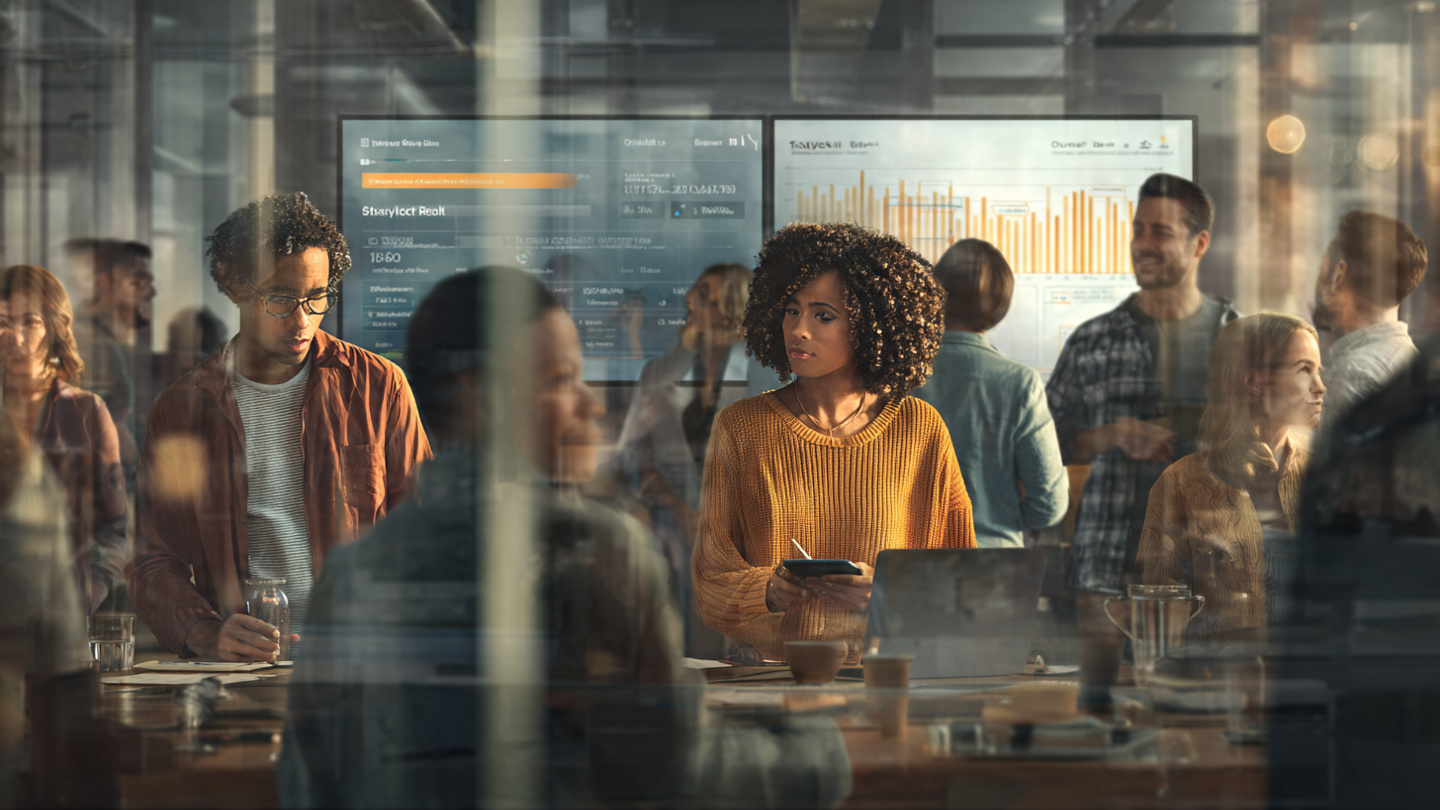
This shift is not theoretical. Variations of software-directed work already exist across multiple industries. In some settings, workers receive tasks, routes, deadlines, and ratings through apps or internal systems with very little direct human intervention.
- Warehousing: picking speeds, routes, and quotas are often guided by software.
- Delivery and ride platforms: drivers receive assignments, routing, and performance feedback through apps.
- Retail and hospitality: scheduling tools increasingly shape hours and staffing levels.
- Customer service: dashboards monitor response times, resolution rates, and workflow priorities.
- Freelance marketplaces: worker visibility and opportunity can depend on ratings and system logic.
In many of these environments, workers may technically have human managers, but their daily experience is already heavily structured by automated systems. That is why the public is becoming more open to the idea. For millions of workers, the digital boss has quietly arrived in partial form.
What This Means for Employers
Technology Should Support Managers, Not Replace Leadership
The smartest companies will not ask whether software can fully replace managers. They will ask where technology can improve management while preserving the human elements that matter most. Scheduling, workflow coordination, reporting, and administrative tasks are all areas where digital tools can remove friction. Coaching, conflict resolution, recognition, and trust-building are different.
That distinction is crucial. If employers use software to eliminate repetitive management tasks, human supervisors can spend more time leading well. If employers use software mainly to cut managerial headcount, they may create a workplace that feels efficient on paper but brittle in practice.
Transparency Builds Trust
If workers are expected to follow decisions made by software, they need to understand how those decisions happen. What metrics are being measured? How are schedules assigned? What triggers alerts or penalties? What options exist if the system makes a mistake?
Transparent communication can reduce fear and resentment. Hidden systems tend to create suspicion. In my experience, people can adapt to almost any process if it feels understandable and fair. They resist when it feels mysterious and one-sided.
Human Review Must Remain Part of the Process
Every business experimenting with digital management should maintain clear human checkpoints. Employees should be able to question outcomes, request exceptions, and speak with a real person when the stakes are high. That is not just good culture. It is good risk management.
A workplace that blends automation with human judgment is far more resilient than one that treats software as unquestionable authority.
What Workers Should Think About Before Accepting This Model

For employees, the rise of digital bosses is not only a corporate story. It is a career question. Before accepting a role shaped by software-led oversight, workers should ask practical questions about control, flexibility, and fairness.
- How are tasks assigned? Ask whether workload is balanced and whether priorities can be challenged.
- How is performance measured? Clarify whether evaluation is based only on speed or includes quality and collaboration.
- Who handles exceptions? Find out whether a human manager can review special circumstances.
- How often do schedules change? Frequent shifts may create instability, especially for caregivers.
- What data is being tracked? Employees should know what is monitored and how that information is used.
These questions matter because convenience can come with hidden costs. A digital boss may feel efficient when everything is running smoothly. The real test comes when life gets complicated, goals conflict, or the system gets something wrong.
The Future of Work Is Likely Hybrid
The most realistic future is not a workplace run entirely by software or entirely by traditional bosses. It is a hybrid model. Digital systems will continue to handle scheduling, performance dashboards, workflow distribution, forecasting, and repetitive coordination. Human leaders will remain essential for culture, ethics, conflict management, mentorship, and strategic judgment.
This hybrid future could be better than either extreme if businesses build it thoughtfully. Workers could gain faster communication, clearer expectations, and more consistent operations, while still having access to humane leadership. But that outcome is not guaranteed. It depends on whether employers treat people as partners rather than data points.
Personally, I do not think most workers truly want a machine in charge of their lives. I think many want something simpler: a fairer, clearer, less stressful workplace. If digital tools help deliver that, they will gain acceptance. If they increase surveillance, rigidity, or isolation, workers will push back.
Conclusion: A Small Number With Big Meaning
The finding that 15% of Americans would work for a digital boss may sound like a novelty headline, but it reflects a deeper transformation in the modern workplace. Workers are reevaluating what they want from management. Employers are rethinking how decisions get made. And technology is increasingly sitting in the middle of that relationship.
The real lesson is not that human managers are becoming obsolete. It is that workers are hungry for consistency, speed, fairness, and transparency. When traditional leadership fails to provide those things, people become more open to alternatives that once seemed unthinkable.
Businesses that pay attention now will be better prepared for the next phase of workplace change. They will use digital systems to improve operations without sacrificing empathy or accountability. Workers who stay informed will be better positioned to choose employers that balance efficiency with respect.
If this trend interests you, now is the time to examine how your workplace handles scheduling, oversight, and performance. Ask whether technology is helping people do better work or simply demanding more from them. The future of work is being shaped right now, and the smartest move is to be part of that conversation before the rules harden around you.
Want to stay ahead of workplace trends? Follow the latest developments in management, labor, and business innovation, and use them to make smarter career and leadership decisions.


