Hook: A fuel crisis does not begin only at ports, pipelines, or policy tables. It becomes real when a taxi driver sleeps in his car to keep his place in line, when a delivery rider loses half a day waiting for petrol, and when families quietly recalculate every trip they can no longer afford. In Myanmar, that reality is unfolding in plain sight. As the Iran war rattles global energy markets, the shock is being felt far from the Middle East, with long queues at petrol stations, rising anxiety over supply, and growing pressure on transport-dependent livelihoods.
What makes this moment especially troubling is that Myanmar was already vulnerable. A country facing economic fragility, currency pressure, and logistical constraints has little room to absorb another external blow. When fuel imports become more expensive and supply chains tighten, the effect reaches every corner of daily life: commuting, food distribution, goods pricing, small business operations, and household budgets. The current Myanmar fuel crisis is not just an energy story. It is a business story, a consumer story, and a warning about how global conflict can intensify local hardship.
From my perspective, the most striking part of crises like this is how quickly they move from abstract headlines to intensely personal consequences. Many readers may follow the Iran war as a geopolitical event, but for people standing in line for fuel under the heat, the issue is immediate and practical: Will there be enough petrol today, and at what price?
Why the Iran War Is Hitting Myanmar So Hard
The link between the Iran war and fuel shortages in Myanmar may seem indirect at first, but energy markets are highly interconnected. Conflict involving a major oil-producing region can trigger sharp price swings, freight uncertainty, insurance costs, and fears of supply disruption. Even countries that do not import directly from a conflict zone can still suffer the knock-on effects through higher global prices and tighter regional availability.
Myanmar is especially exposed because it relies heavily on imported fuel. That means every external shock, whether from crude oil pricing, shipping routes, foreign exchange volatility, or supplier caution, can quickly filter through to local distribution. When panic spreads in the market, consumers often rush to fill tanks, stations limit sales, and queues lengthen. That combination can create a self-reinforcing cycle of scarcity, whether the shortage is fully physical or driven partly by fear.
In practical terms, several pressures are colliding at once:
- Higher global oil prices raise the base cost of fuel imports.
- Shipping and insurance risk increases the expense of moving fuel across uncertain routes.
- Currency weakness can make every imported litre more expensive in local terms.
- Distribution bottlenecks slow down how fast supply reaches retail stations.
- Public concern encourages stockpiling and larger-than-normal purchases.
When these forces hit at the same time, long queues are almost inevitable.
Inside the Long Petrol Station Queues in Myanmar
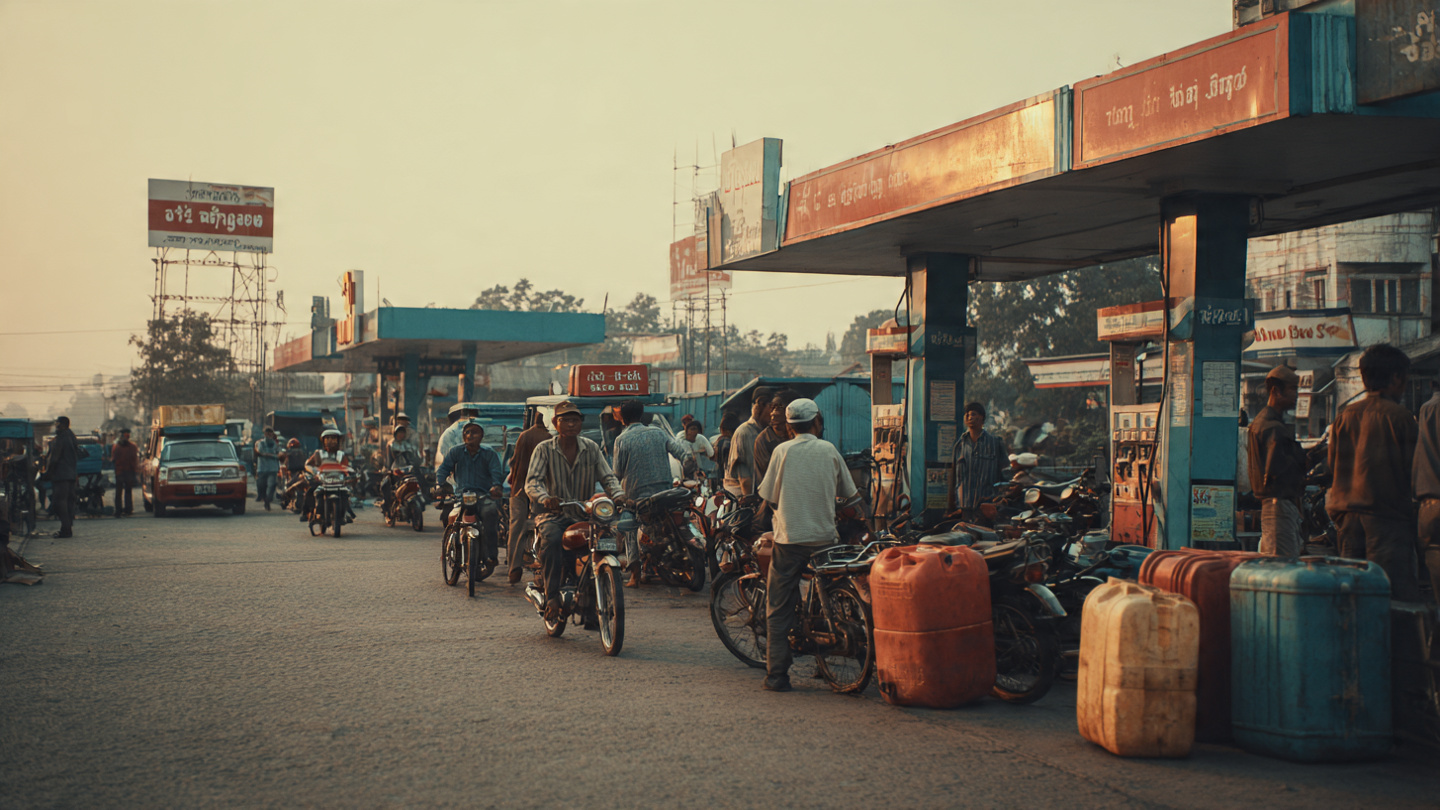
Reports of drivers waiting for hours at petrol stations are more than images of inconvenience. They signal a deeper breakdown in confidence. In healthy markets, consumers trust that fuel will be available when needed. In stressed markets, that trust disappears. People fill up early, buy more than usual, and travel longer distances to find stations with supply.
For transport workers, this disruption can be devastating. A taxi driver who spends three or four hours in a queue loses productive income. A bus operator may have to reduce routes. A truck driver transporting vegetables, rice, or medicine faces delivery delays that can ripple through markets. The longer queues grow, the more the economy slows in visible and invisible ways.
There is also a social psychology to fuel shortages. Once motorists see lines forming, they assume the next station may be worse. That fear alone can intensify demand. People who might otherwise wait until tomorrow decide to buy today. Stations under pressure may then ration sales to stretch limited inventories, which confirms public fears and prolongs the cycle.
In cities, the burden often falls on workers who cannot afford to lose time. In smaller towns and rural areas, the challenge can be even more severe because fuel access may already be limited and transport options more constrained.
How the Crisis Feels on the Ground
Imagine a small retailer who depends on a motorbike to collect inventory every morning. If fuel runs low, prices rise, or queues stretch too long, that routine collapses. The shop opens late. Certain products do not arrive. Customers turn away. Income falls. Now multiply that disruption across thousands of businesses, farmers, couriers, and service providers, and the scale of the fuel shortage in Myanmar becomes clearer.
For households, the effects are equally tangible. Families begin combining errands, cutting non-essential travel, or shifting spending away from food, schooling, and healthcare just to cover transport costs. That is how an energy shock becomes a broader cost-of-living crisis.
The Business Impact: Transport, Prices, and Inflation Risks
Fuel is not just another commodity. It is an input cost embedded in nearly every sector of the economy. When the Myanmar fuel crisis deepens, the first wave hits transport. The second wave hits logistics. The third wave reaches consumer prices.
Businesses that rely on transportation feel the pressure fastest:
- Delivery companies face higher operating costs and scheduling delays.
- Food distributors may pass costs on to markets and retailers.
- Manufacturers see raw material transport become more expensive.
- Farmers struggle with fuel costs for machinery and shipping produce.
- Small enterprises lose flexibility because they lack reserves or bargaining power.
The result is often inflationary pressure. If fuel prices rise and transport slows, goods become more expensive to move and sell. Perishable products are especially vulnerable because delays can increase waste. In a fragile economy, even modest increases in logistics costs can have outsized consequences for essential goods.
This is why energy disruptions matter so much to business readers. Fuel shortages are not isolated sector problems. They are economy-wide multipliers. A station queue today can become a market price increase tomorrow.
Small Businesses Face the Sharpest Pain
Large firms may have stronger supplier networks, stored inventories, or access to alternative arrangements. Small businesses usually do not. A food vendor, ride-hailing driver, local wholesaler, or independent delivery operator often works on thin margins. Even a few days of unstable fuel access can threaten cash flow.
From a personal standpoint, these are the moments that reveal how unevenly crises are experienced. The people most exposed are often those with the least financial cushion. A corporate fleet may absorb delays. A single-driver household business may not survive them for long without passing higher costs onto customers.
Why Myanmar Is Especially Vulnerable to Global Energy Shocks
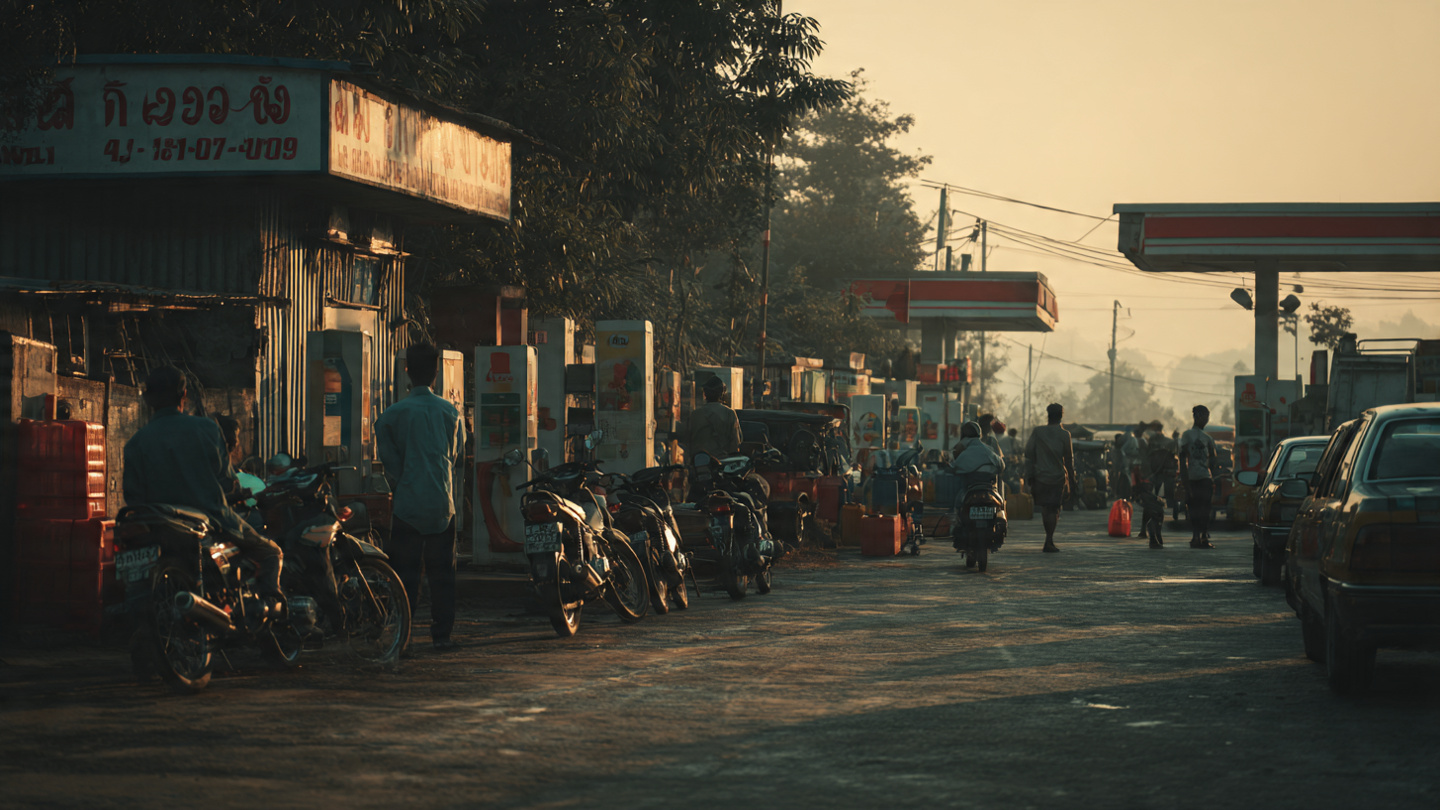
Not every country reacts to an oil shock in the same way. Myanmar’s vulnerability comes from a combination of import dependence, market sensitivity, and broader economic fragility. When fuel supply becomes uncertain, even minor distribution problems can escalate quickly.
Several structural factors increase the risk:
- Heavy reliance on imported fuel exposes the market to international volatility.
- Foreign exchange stress can make import financing more difficult.
- Weak infrastructure increases delivery delays and uneven supply distribution.
- Low consumer confidence can accelerate panic buying.
- Limited buffers reduce the system’s ability to absorb sudden disruptions.
These vulnerabilities mean the country does not need a complete shutdown of fuel supply to experience a crisis. It only takes enough disruption to create uncertainty, and uncertainty alone can rapidly reshape market behavior.
For international observers, this should serve as a reminder that global commodity shocks are never distributed evenly. The same barrel price increase that seems manageable in one economy can become destabilizing in another.
Could the Fuel Shortage Get Worse?
That depends on several moving parts. If the Iran war continues to unsettle energy markets, import costs may remain elevated. If shipping risk rises, supply timelines may become less predictable. If public anxiety keeps building, queue-driven demand pressure could extend the crisis even if some supply continues to arrive.
There are also two separate dimensions to monitor:
- Price risk: fuel becomes available, but at a much higher cost.
- Availability risk: fuel is harder to obtain, even if official prices are managed.
Either one creates hardship. Together, they are much more dangerous. A prolonged imbalance could affect transport services, retail pricing, and labor productivity, while undermining already strained consumer confidence.
Businesses and households usually adapt in stages. First they wait longer. Then they reduce travel. Then they raise prices, cut services, or change routines. Those adaptations can keep the economy moving, but often at a lower level of efficiency and higher social cost.
What to Watch Next
Anyone following the situation should keep an eye on a few practical signals rather than only global oil headlines:
- Queue length and station rationing show local supply stress in real time.
- Retail fuel price changes indicate whether costs are being passed through.
- Transport fare increases reveal secondary inflation effects.
- Delivery delays and product shortages hint at broader supply chain disruption.
- Government or importer announcements may signal policy responses or expected resupply.
These indicators often tell a clearer story than commodity charts alone because they show how the crisis is actually being experienced in daily life.
How Households and Businesses Typically Respond
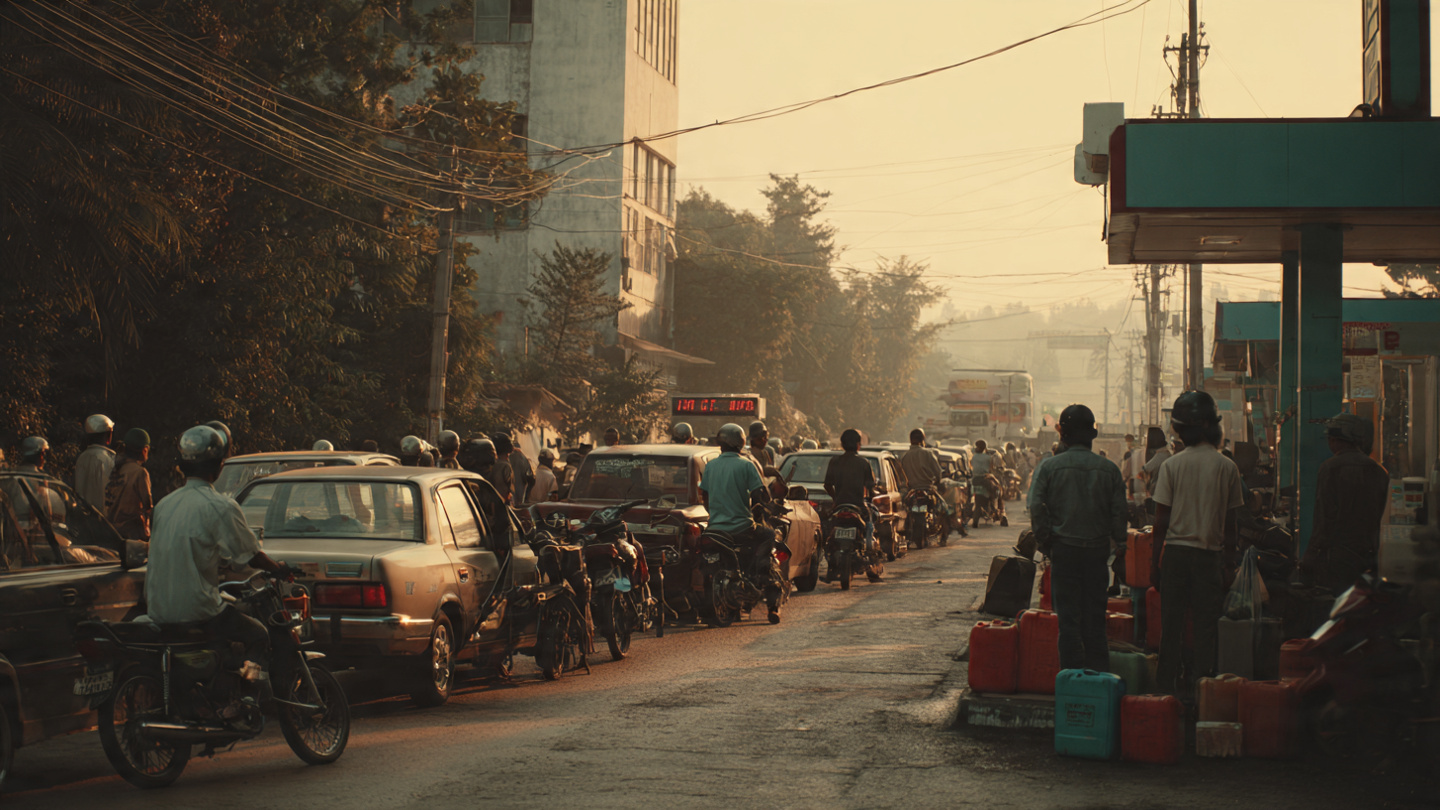
During periods of fuel stress, adaptation becomes essential. While no workaround fully solves a supply problem, practical responses can reduce immediate pressure.
For households, common adjustments include limiting discretionary trips, coordinating shared transport, and buying essentials in fewer but larger shopping runs. For businesses, the response may involve route optimization, fuel budgeting, delivery rescheduling, and more careful inventory planning.
Some examples are straightforward but effective:
- A delivery service groups orders by neighborhood to reduce wasted mileage.
- A retailer increases restock frequency planning to avoid emergency trips.
- A family combines school, shopping, and work-related travel into one route.
- A transport operator shifts fueling times to avoid peak queues where possible.
These are not glamorous solutions, but in a real-world fuel shortage, efficiency becomes a survival tool.
At a broader level, crises like this also underline the importance of resilient energy planning. Countries that build stronger storage capacity, diversified supply channels, and more efficient transport systems are generally better prepared for external shocks. That is a long-term lesson, but it becomes impossible to ignore during moments like this.
The Bigger Lesson From Myanmar’s Fuel Crisis
The long lines at petrol stations in Myanmar are not just a local inconvenience caused by a distant war. They are a sharp example of how global energy markets transmit instability across borders with remarkable speed. A conflict in one region can reshape trade expectations, alter shipping risk, increase import costs, and squeeze daily life thousands of miles away.
This is why the current crisis matters beyond Myanmar. It highlights the fragility of countries that depend heavily on imported energy while facing limited economic buffers. It also shows why energy security is not only about national reserves or headline prices. It is about whether workers can get to jobs, goods can reach markets, and families can afford ordinary movement.
In business terms, the story is simple: when fuel becomes uncertain, everything else becomes more expensive, more delayed, and more fragile. In human terms, the story is even simpler: time, income, and stability begin to disappear one queue at a time.
Conclusion
The Myanmar fuel crisis is deepening because the Iran war has injected new instability into already tense energy markets, and Myanmar is one of the places least able to absorb the shock. Long queues at petrol stations are the visible symptom, but the deeper consequences stretch across transport, retail, food distribution, household budgets, and small business survival. What looks like a fuel issue is, in reality, a broad economic pressure point.
If the conflict continues and supply concerns persist, Myanmar could face a longer period of elevated prices, disrupted mobility, and weakened consumer confidence. The immediate concern is keeping fuel moving through the system. The longer-term challenge is building enough resilience so that future external shocks do not cause the same level of disruption.
Call to action: If you follow regional markets, supply chains, or energy policy, now is the time to pay close attention to Myanmar. Monitor how fuel availability, transport costs, and consumer prices evolve, because these signals often reveal the true economic impact of global conflict long before official statistics catch up. For businesses, staying flexible and planning for volatility is no longer optional. It is essential.


