Self-driving cars are supposed to excel at routine driving. They do not get tired, distracted, or impatient. They can scan in every direction, process motion in milliseconds, and react without emotion. That promise is exactly why so many people expect autonomous vehicles to handle something as obvious as a stopped school bus. Yet when robotaxis struggle with school bus stop signals, the issue lands differently. It feels less like a technical glitch and more like a breach of a basic social contract: children must be protected first, no exceptions.
In Austin, repeated concerns about Waymo vehicles interacting improperly around school buses have pushed an uncomfortable question into public view: How do self-driving cars actually learn from the world around them? If local officials try to help, if routes are known, if school buses are among the most recognizable vehicles on the road, why does the problem persist? As someone who follows transportation technology closely, I think this is one of the clearest examples of the gap between impressive automation and truly reliable real-world judgment.
The deeper story is not only about one company or one city. It is about the limits of machine learning, the difficulty of edge cases, and the challenge of teaching autonomous vehicles to respect not just traffic laws, but context, intent, and the unwritten caution humans apply when children may be nearby.
Why School Bus Encounters Matter So Much
School bus safety is not a niche issue. It is a high-stakes public safety scenario with clear legal rules and almost zero tolerance for error. When a school bus extends its stop arm and flashes red lights, drivers are expected to stop because children may cross unexpectedly. A human driver does not need a complicated philosophical framework to understand the moment. The visual signal, the social meaning, and the risk profile are obvious.
For autonomous vehicles, however, this event is not just one object detection task. It is a layered decision problem. The system must identify the bus, interpret the stop arm, distinguish red flashing lights from other lighting conditions, map the lane configuration, understand local right-of-way rules, predict pedestrian movement, and make a safe stop with enough margin. That sounds manageable in theory. In practice, every variable introduces uncertainty.
- Children are unpredictable, which means the safest response often requires extra caution beyond the minimum rule set.
- Road geometry varies, including divided roads, narrow lanes, temporary construction, parked cars, and unusual pickup patterns.
- Visibility changes fast because of glare, rain, shadows, and vehicles partially blocking the bus.
- Local laws can be nuanced, especially around medians, opposite-direction traffic, and special school zones.
- Public trust is fragile, so even a handful of mistakes can damage confidence in autonomous vehicle safety.
This is why the issue resonates far beyond Austin. If robotaxis cannot consistently handle one of the most sensitive traffic scenarios on public roads, many people reasonably ask what other situations may still be under-learned.
What Likely Went Wrong on the Road
The Stop Arm Problem Is More Complex Than It Looks
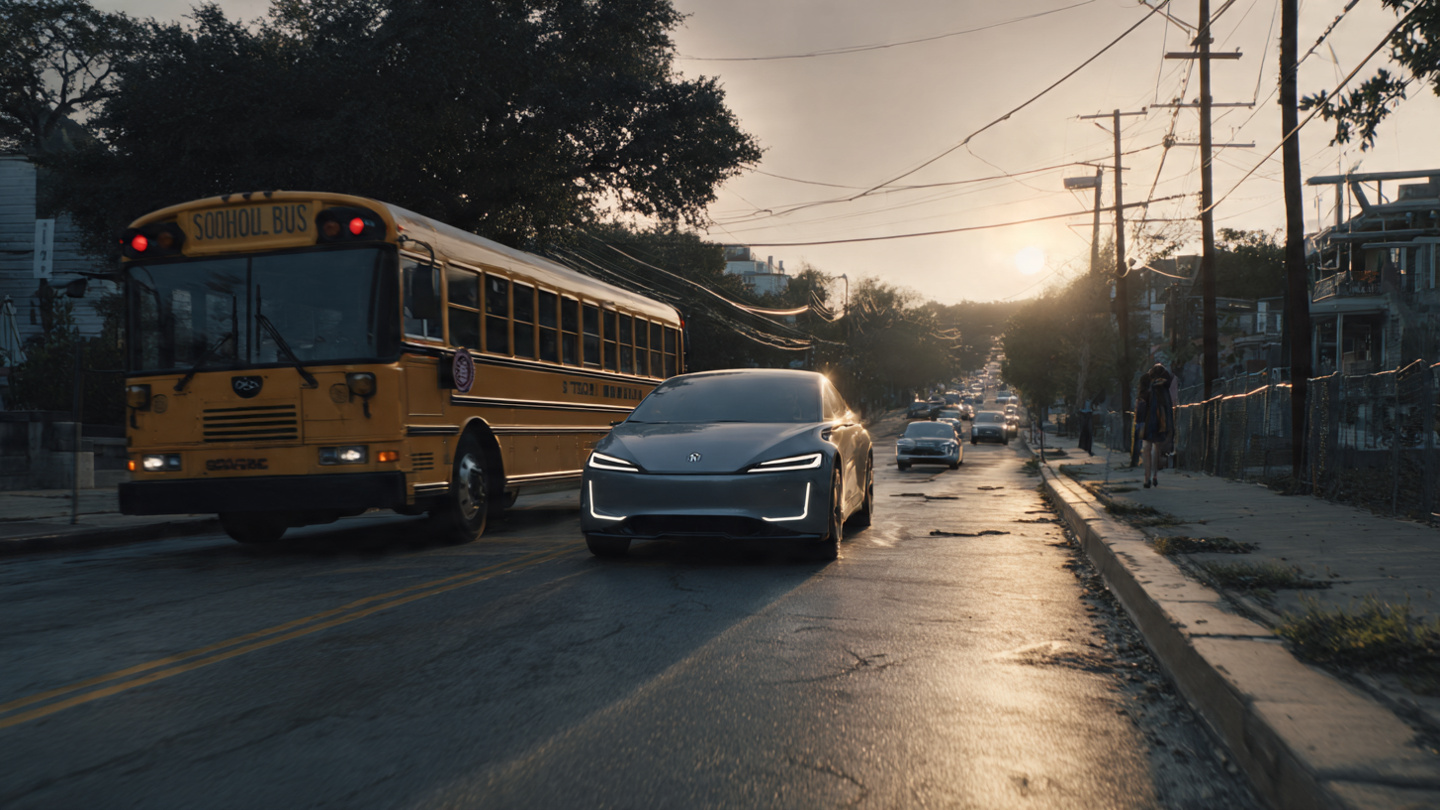
To most drivers, a school bus stop arm is unmistakable. But for a self-driving car, recognition is not the same as response. A system may detect a school bus visually and still fail at the behavioral layer. It might identify the bus but misclassify whether the stop arm is currently active. It might see flashing lights but hesitate over lane relevance. It might understand the rule too late for a smooth stop. Or it might encounter a scenario that looks close to prior examples, yet differs in one critical way.
This is where public conversation often breaks down. People hear that autonomous vehicles use lidar, radar, cameras, and advanced AI models, then assume the car has a near-human understanding of the scene. In reality, these systems are excellent at pattern recognition within trained boundaries, but the world constantly creates exceptions at the edges. A folded stop sign, a bus angled unusually at a curb, bright sun reflecting off windows, or an unconventional school loading zone can all create decision friction.
Edge Cases Are the Real Battlefield
Engineers often talk about edge cases, the rare or difficult scenarios that are underrepresented in training data. School bus interactions are full of them. A child may run back toward the bus for a forgotten backpack. A crossing guard may motion one way while the lights suggest another. A bus may stop in a place that does not match a pre-mapped expectation. A road may look divided on a map but behave like a shared crossing point in reality.
One practical example is the difference between formal compliance and defensive driving. A self-driving car may determine that a technical rule allows it to proceed in a certain lane configuration. A careful human driver, seeing children nearby, may still choose to pause. That extra layer of social caution is hard to encode because it depends on judgment, not just logic.
How Autonomous Vehicles Learn and Why That Process Can Stall
Training Data Is Not the Same as Understanding
Waymo and other autonomous vehicle companies improve performance by collecting enormous volumes of driving data, labeling events, testing software changes in simulation, and validating behavior on real roads. This process is powerful, but it can create a false sense of completeness. More examples do not automatically equal deeper understanding. A model can become very good at recognizing common school bus patterns while remaining vulnerable to uncommon but dangerous variations.
That is a crucial point for anyone following self-driving cars. Machine learning systems do not learn like children learn. A child quickly absorbs the moral importance of a stopped school bus because adults repeatedly emphasize the reason: kids could be crossing. An autonomous vehicle does not grasp the moral meaning. It learns associations, confidence thresholds, and policy responses under constrained conditions.
When people say a robotaxi should simply be taught to stop for school buses, they imagine a direct and durable lesson. But in technical reality, that lesson may need to be broken into many sub-problems:
- Detect the bus correctly from multiple angles and distances.
- Read the stop arm state accurately in motion and low visibility.
- Interpret whether the legal stop requirement applies to the vehicle's lane.
- Predict the possibility of child movement even when no pedestrian is yet visible.
- Choose a comfortable but conservative braking profile.
- Avoid regressions in other rare roadway scenarios.
That final point matters more than most people realize. Fixing one edge case can unintentionally affect performance elsewhere. Safety engineering is not just about adding a new rule. It is about preserving reliability across thousands of interacting behaviors.
Local Adaptation Has Limits
When local stakeholders try to help autonomous vehicle companies, the instinct makes sense. School districts know bus routes, pickup times, and problem intersections. Sharing that knowledge sounds like a practical shortcut. In some cases, it probably does help by giving companies more context and better opportunities for targeted testing.
But there is a limit to what local information can solve. Autonomous vehicles do not only need route awareness; they need robust scene interpretation in real time. Knowing where buses usually stop is useful. It does not guarantee correct behavior when a bus stops unexpectedly, detours around construction, or loads children in an unusual position. A system trained too tightly around known routes risks becoming brittle instead of broadly safe.
This is one reason a district's cooperation may not produce immediate results. The challenge is not merely missing information. It is translating messy, real-world traffic behavior into dependable machine action under uncertainty.
Why Public Trust Erodes So Quickly
People Judge Safety by Common-Sense Scenarios
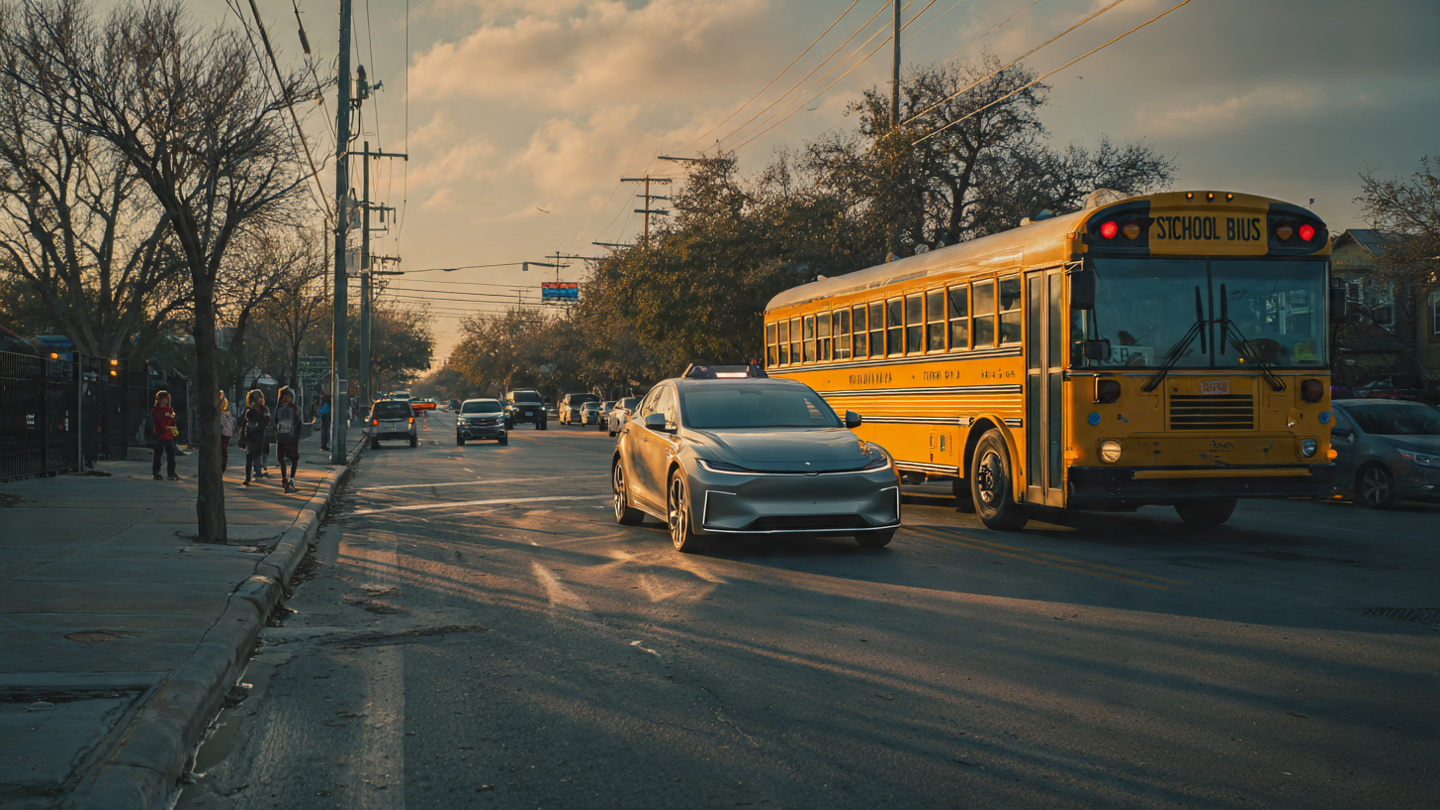
Most people do not evaluate self-driving cars by benchmark charts or disengagement statistics. They judge them by intuitive safety moments: a cyclist in the rain, a pedestrian near a crosswalk, an ambulance approaching, or a school bus with red lights flashing. If the technology appears shaky in those scenarios, confidence drops fast.
That reaction is rational. The public is not asking autonomous vehicles to be perfect in abstract terms. It is asking them to perform reliably in situations where human communities have already established strong norms. School bus safety is one of the clearest such norms. A robotaxi that misses that signal feels out of step with the most basic expectations of responsible driving.
Trust Depends on Transparency
Another problem is that autonomous vehicle learning is often opaque to the public. Companies may say they are investigating, retraining models, updating behavior policies, or expanding scenario testing. Those steps may be real and meaningful, but they can sound vague to parents, teachers, and local officials who want immediate reassurance.
In my view, this is where the industry still struggles. Technical sophistication without plain-language accountability is a trust killer. Communities want to know what happened, why it happened, what changed, how it was validated, and whether independent oversight confirms the fix. Without that level of clarity, each incident reinforces the fear that robotaxis are learning in public at everyone else's expense.
What Better Autonomous Vehicle Safety Could Look Like
More Than Better Sensors
It is tempting to assume the answer is simply more hardware. Better cameras, sharper lidar, cleaner maps, and stronger compute all matter. But school bus safety shows that the harder challenge is behavioral conservatism. The safest autonomous vehicle in these moments may be the one willing to slow earlier, stop longer, and accept occasional inefficiency in exchange for a larger safety margin.
That is not glamorous. It may even annoy some riders who expect smooth, assertive travel. But when children could be nearby, conservative behavior should not be seen as weakness. It should be treated as product maturity.
Practical Fixes the Industry Should Prioritize
If autonomous vehicle companies want to reduce school bus mistakes and rebuild public confidence, several improvements stand out:
- Scenario-first testing: Build dense simulation libraries around school bus encounters, including unusual road layouts, weather shifts, and partial occlusions.
- Local policy tuning: Apply city-specific and state-specific rules with extra caution where school transportation patterns are complex.
- Higher safety margins: Bias behavior toward earlier stopping and more conservative interpretation when a school bus is detected.
- Independent audits: Allow third-party review of incident categories involving children, school zones, and vulnerable road users.
- Faster feedback loops: Turn reports from school districts, transit agencies, and residents into rapid test cases rather than slow internal reviews.
- Public reporting: Explain fixes in clear language so communities understand what changed and how it was validated.
These steps would not eliminate every risk, but they would move the industry closer to a more credible model of autonomous vehicle safety.
The Bigger Lesson for Waymo and the Self-Driving Industry
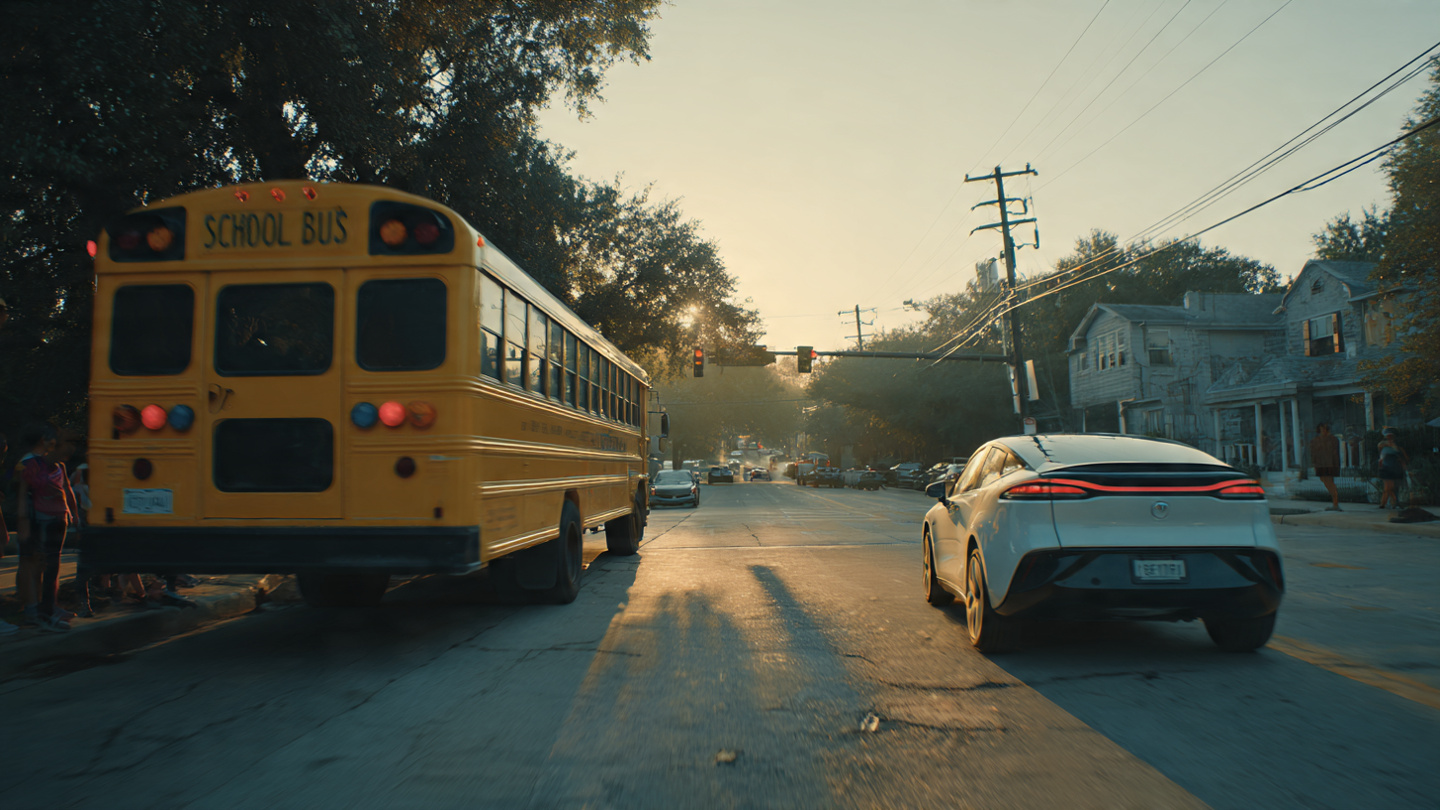
The most important takeaway is not that self-driving cars cannot improve. They clearly can, and they already outperform human drivers in certain narrow tasks such as maintaining attention, tracking multiple moving objects, and avoiding fatigue-based errors. The lesson is that real-world driving competence is not measured only by average performance. It is measured by behavior in emotionally charged, legally sensitive, socially understood situations where people expect near-zero mistakes.
School bus encounters sit squarely in that category. They expose the difference between mapping a road and understanding a community. They reveal how automation can be technically advanced yet still feel incomplete. And they remind policymakers that deployment should not race ahead of proof in the moments that matter most.
For Waymo, Austin is more than a service area. It is a case study in how public infrastructure, local institutions, and machine learning systems collide in everyday life. For city leaders and school districts, the message is equally clear: collaboration with autonomous vehicle companies is useful, but collaboration alone is not a substitute for verifiable safety performance.
Conclusion
The struggle to get robotaxis to stop reliably for school buses is not a minor software inconvenience. It is a revealing test of whether autonomous vehicles can translate powerful sensing and machine learning into trustworthy public behavior. Waymo, school bus safety, and Austin have become part of a larger debate about how self-driving cars learn, adapt, and earn legitimacy.
If the industry wants long-term acceptance, it must stop treating these incidents as isolated anomalies and start treating them as defining moments. Parents do not care how elegant the codebase is. Communities do not care how advanced the sensor fusion stack sounds. They care that when a bus stops and children may cross, every vehicle on the road, human-driven or autonomous, responds the right way every time.
The path forward is still open. Better testing, clearer accountability, stronger local coordination, and more conservative behavior policies can make autonomous vehicles safer around school buses. But the standard must remain uncompromising. If self-driving cars are going to share public roads, they need to prove that the most important rules are not merely detected, but deeply respected in action.
CTA: If you are tracking the future of self-driving cars, pay close attention to how companies handle school bus safety, pedestrian protection, and other high-consequence edge cases. Those are the moments that will determine whether autonomous vehicles become a trusted part of daily life or a technology that arrived before it was truly ready.


