The steering wheel is one of those objects most people barely notice until something feels wrong. It sits in front of the driver on every trip, touched more than almost any other part of the car, yet rarely admired with the same enthusiasm reserved for headlights, wheels, or sweeping body lines. And that is exactly what makes it fascinating. A steering wheel has to disappear when it works well, but stand out when a brand wants to make a statement. It must be strong, safe, intuitive, comfortable, and visually coherent. In modern vehicles, it must also serve as a command center.
From a distance, the job may seem straightforward: make a circular device that turns the front wheels. In reality, steering wheel design is one of the most deceptively difficult problems in automotive design. Every curve, spoke, stitch line, button placement, material choice, and thickness decision affects how a driver feels, reacts, and trusts the machine. That pressure only grows as cars add more digital interfaces, advanced driver assistance, and competing expectations around luxury, sportiness, and minimalism.
I have always thought the steering wheel is where a car reveals its true character. You can forgive a mediocre dashboard or an unremarkable center console, but if the wheel feels awkward, cheap, busy, or unnatural in your hands, the entire driving experience suffers. It is the handshake of the automobile, and first impressions matter.
The Steering Wheel Is the Car's Most Human Interface
More than any display or touch panel, the steering wheel is the direct connection between person and machine. It translates intention into movement. When a driver enters a vehicle, the wheel is often the first component they adjust, grip, and subconsciously judge.
That intimate role means designers are not simply shaping an object. They are crafting an interface for confidence. A well-designed steering wheel communicates control before the car even moves. The diameter suggests agility or stability. The rim thickness hints at sport or comfort. The texture tells the hand whether this is a luxury sedan, a rugged truck, or a precision-focused sports car.
- Ergonomics determines how natural the wheel feels over minutes and hours.
- Safety governs structure, impact behavior, airbag integration, and control placement.
- Usability shapes how easily a driver can access features without distraction.
- Brand identity influences form, trim, stitching, logo placement, and emotional tone.
- Technology integration adds layers of complexity as more functions migrate onto the wheel.
This is why elite designers treat it as more than a part. It is a behavioral tool, a safety component, and a brand signature all at once.
Why Steering Wheel Design Is Harder Than It Looks
It Must Feel Natural to Many Different Drivers
Cars are used by people of different heights, hand sizes, driving habits, and physical abilities. A steering wheel that feels perfect to one driver may seem too thick, too thin, too slippery, or too crowded to another. Designers must therefore target a broad middle without making the result bland.
The challenge is especially acute in global markets. Preferences vary by region. Some buyers want a substantial, padded rim that suggests comfort and luxury. Others prefer a tighter, firmer wheel that feels sporty and precise. Even the resting position of thumbs matters. Slight changes in contouring can transform comfort during long drives.
It Must Integrate an Airbag Without Looking Bulky
This is where beauty and engineering collide. The center hub of the steering wheel must house an airbag system and support the necessary structure for crash performance. That requirement limits freedom. Designers cannot simply create any elegant shape they imagine. The central form has to accommodate deployment zones, materials, seams, and impact requirements.
Making that center look clean rather than heavy is one of the great hidden arts of the discipline. It is easy to sketch something dramatic. It is far harder to turn that sketch into a compliant, manufacturable, attractive product.
It Must Handle an Explosion of Controls
In older vehicles, the steering wheel had a simpler job. Today it often contains controls for audio, calls, voice assistants, cruise functions, driver assistance systems, menus, heating, and sometimes drive modes. Some premium vehicles even add touch-sensitive sliders, mini trackpads, or haptic surfaces.
That sounds convenient in theory, but car interior design becomes significantly more difficult when the wheel turns into a control cluster. Buttons need to be identifiable by feel. They cannot crowd the thumbs. Icons must be readable. The layout should minimize accidental inputs while driving through corners or rough roads. In other words, every added feature risks making the wheel less intuitive.
Form vs. Function: The Core Tension
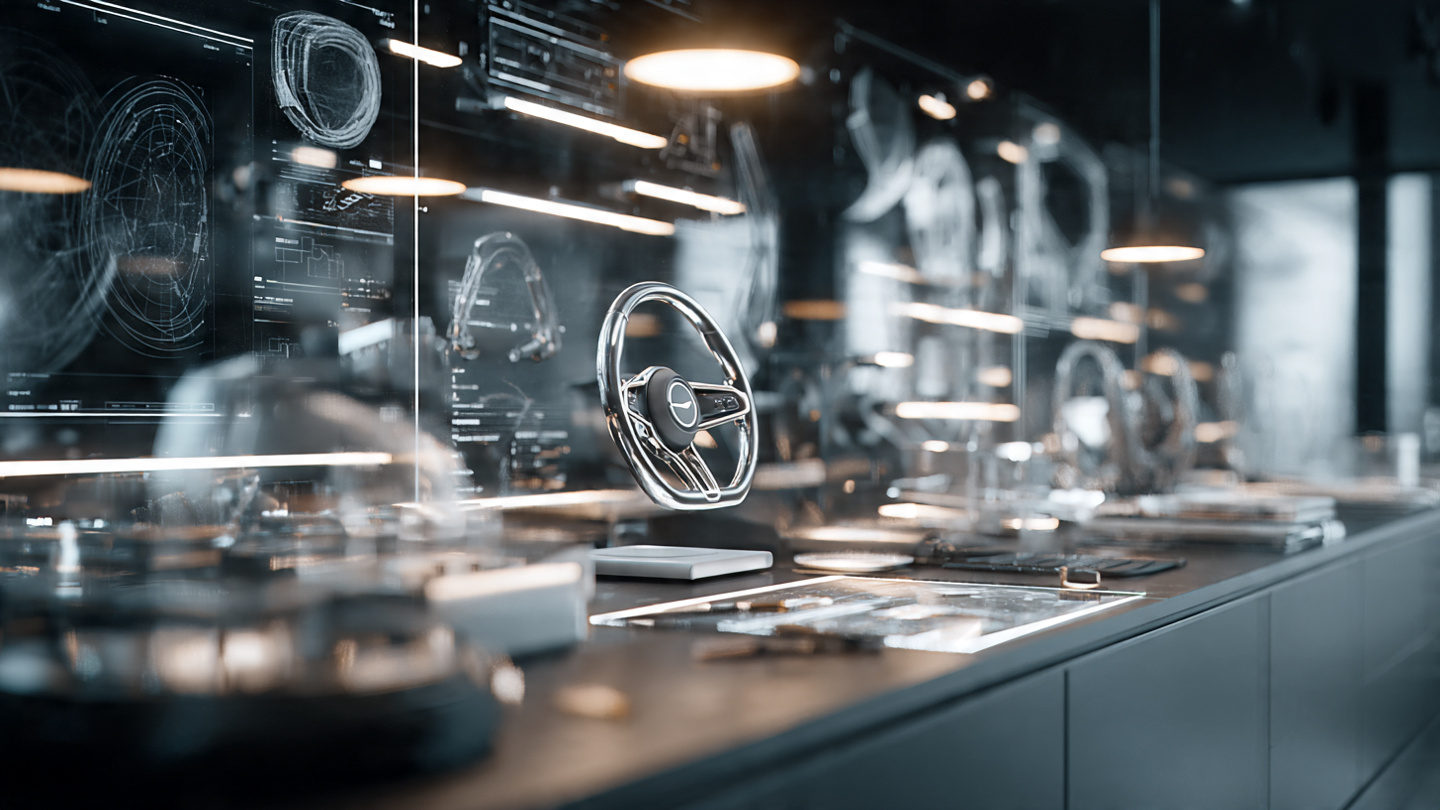
Automotive history is full of steering wheels that looked impressive in photos but felt odd on the road. It is also full of perfectly functional wheels that failed to inspire. The most successful examples reconcile both demands.
Functional steering wheel design begins with grip, sightlines, leverage, and control logic. Yet form cannot be treated as decoration layered on top. The shape influences usability. Flat-bottom wheels, for example, may improve ingress, support sport-oriented branding, and look more technical, but they also alter hand movement during low-speed maneuvers. Squared-off wheels can feel futuristic, yet may reduce the instinctive fluidity of turning input if pushed too far.
This is why radical concepts often soften by the time they reach production. Real use exposes what renderings hide. A concept may look visionary on stage, but everyday driving asks harder questions. Can a driver comfortably reverse with one hand? Can they see the instrument cluster through the top opening? Does the wheel feel balanced while parking, cruising, and cornering?
Designers such as Jony Ive have long been associated with the pursuit of elegant reduction, but the steering wheel resists simplification more than many consumer objects. You cannot strip away complexity if the user still needs confidence, tactility, and immediate comprehension at highway speed. Minimalism in a car only succeeds when the remaining elements work exceptionally well.
The Invisible Science Behind a Great Wheel
Ergonomics Is Not Optional
Steering wheel ergonomics is where many designs win or lose. Designers study hand posture, thumb reach, palm pressure, and rotational movement to determine ideal dimensions and surface transitions. Something as minor as a harsh seam under the fingers can become irritating after a week of commuting. A wheel that feels too thick may reduce perceived precision. One that feels too thin can seem cheap or fatiguing.
Common ergonomic variables include:
- Rim diameter and cross-section
- Thumb rest shape and depth
- Distance between spokes
- Reach to buttons while maintaining grip
- Surface friction in hot, cold, or humid conditions
- Visibility of gauges and head-up display elements
Design teams refine these details through clay models, foam bucks, prototypes, and user testing. The final result often reflects hundreds of small adjustments invisible to the average buyer.
Materials Change the Emotional Experience
The material of a steering wheel has an outsize impact on perceived quality. Leather remains popular because it combines warmth, grip, durability, and premium appeal. Synthetic alternatives have improved dramatically and can offer consistency, cost advantages, and sustainability benefits. Performance-oriented models may use Alcantara-like finishes, though these can divide opinion because of wear patterns and maintenance demands.
Then there is trim. Metal-look accents can signal precision, while wood can suggest tradition and luxury. Gloss black may look sleek in a showroom but show fingerprints quickly. Matte finishes often age better in daily use. These choices are not merely aesthetic. They affect temperature, tactile response, and distraction.
Manufacturing Constraints Shape What Reaches the Road
Some of the most elegant steering wheel ideas never make it to production because they are too expensive, too difficult to assemble consistently, or too vulnerable to wear. Stitching must align. Buttons must survive repeated use. Surfaces must resist UV damage, skin oils, cleaning products, and temperature swings. Airbag cover seams must open correctly in a crash. The wheel must feel solid after years of torque and vibration.
In that sense, the production steering wheel is always a negotiation between ideal design and industrial reality. The best teams hide those compromises so well that the object feels inevitable.
Technology Has Raised the Stakes
As vehicles become more digital, the steering wheel sits at the center of a design debate: should it remain a tactile, mechanical control or evolve into a multi-function smart interface? The answer increasingly seems to be both.
Modern drivers expect convenience and connectivity, but they also want immediate clarity. Touch-sensitive controls may look advanced, yet physical buttons remain easier to locate without taking eyes off the road. Haptic feedback can help, but only if tuned well. Overloaded surfaces can increase cognitive load at the exact moment attention matters most.
The rise of semi-autonomous features has made matters even more complex. A wheel now has to support transitions between active driving and assisted driving. It may need sensors that detect hand presence, indicator lights for system status, and controls that communicate advanced functions simply.
This creates a powerful design question: how do you make a high-tech steering wheel that still feels timeless? Brands that chase novelty too aggressively risk creating a wheel that feels dated in a few years. Brands that ignore digital expectations risk seeming old-fashioned.
Brand Identity Lives in the Wheel
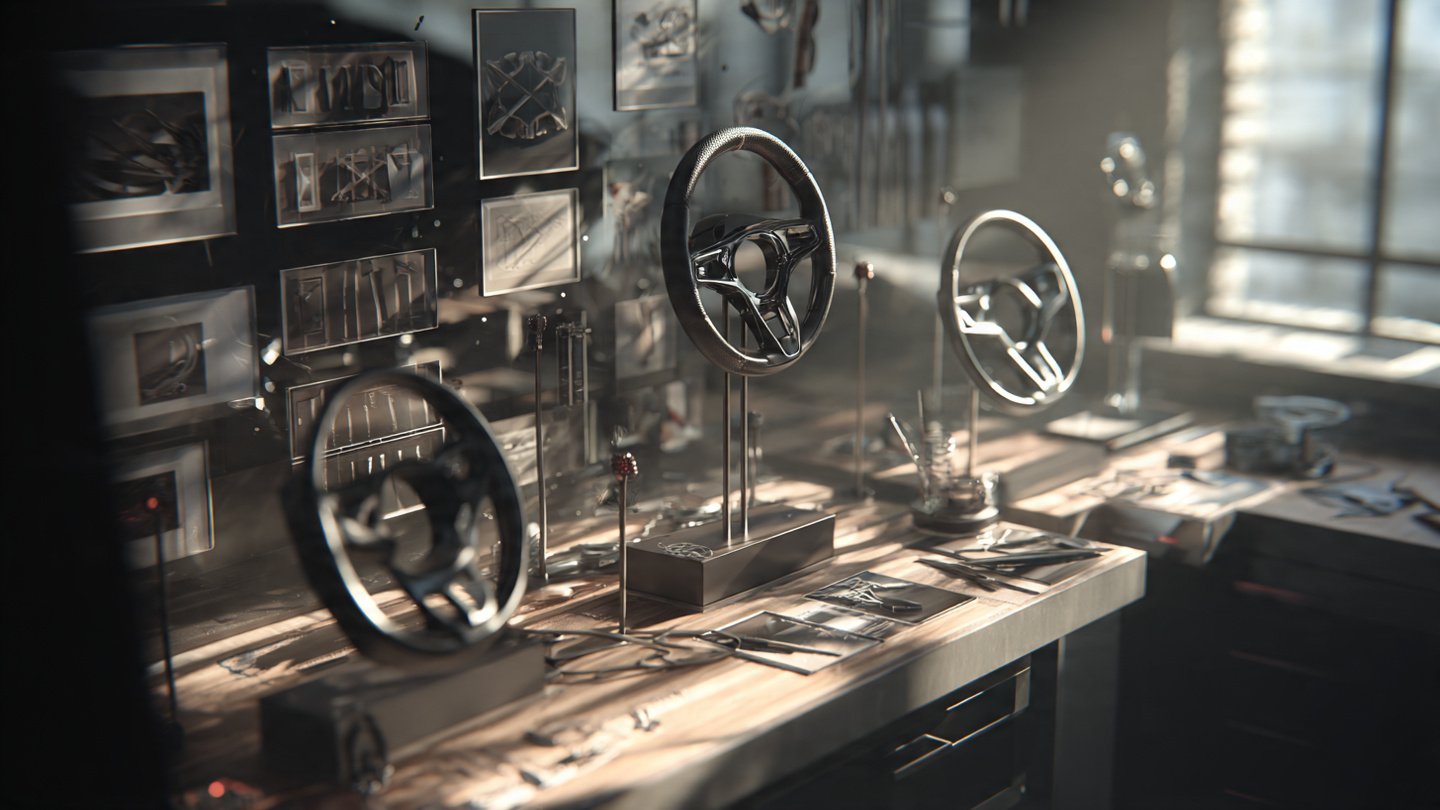
A steering wheel is one of the clearest expressions of a carmaker's identity. Before the engine starts, the wheel already signals what the brand believes about driving.
A luxury brand may favor calm surfaces, restrained controls, and supple materials. A performance brand might use thicker grips, strong contouring, and assertive spoke geometry. A tech-forward company may lean into clean forms, minimal buttons, and unconventional shapes. Even stitching color can influence perception.
This is why steering wheels are often discussed intensely within design studios. They are symbolic. A poorly judged wheel can undermine the rest of an otherwise brilliant cabin. A strong one can elevate the entire interior.
In practical terms, the wheel must answer several identity questions at once:
- Does it look distinctive from the driver's seat?
- Does it reflect the vehicle's mission?
- Does it feel authentic to the brand's history or future direction?
- Does it support the emotional tone of the cabin?
When those answers align, the steering wheel becomes more than functional hardware. It becomes a memorable part of the ownership experience.
What Drivers Notice Instantly
Even non-designers react quickly to steering wheels, often in ways they cannot fully articulate. They notice whether the wheel feels trustworthy. They notice if the controls are confusing. They notice if the rim feels satisfying during a turn. That reaction matters because it shapes perceived quality across the entire vehicle.
From personal experience, the best steering wheels share a few qualities. They disappear during routine driving, then come alive when precision matters. Their controls become second nature. Their materials feel good on a cold morning and after a long trip. They never ask the driver to think too hard about basic actions.
That may sound simple, but it is one of the highest compliments in design: the object performs so gracefully that the user forgets the complexity behind it.
The Future of Steering Wheel Design
More Personalization
As interiors become software-rich, expect more configurable steering wheel functions. Button mapping, heating zones, feedback settings, and interface behavior may become increasingly personalized to the driver profile.
Smarter Safety Integration
Future wheels may incorporate better hand-detection systems, adaptive feedback, and more nuanced communication with driver assistance features. The goal will be to support attention without becoming intrusive.
Sustainable Materials With Premium Feel
One of the most promising developments in vehicle interior technology is the rise of sustainable alternatives that do not feel like compromises. As buyers become more conscious of material sourcing, brands will need to deliver eco-minded solutions that still feel luxurious and durable.
Balanced Minimalism
The strongest future designs are unlikely to be the most extreme. Instead, they will probably blend clean visual architecture with carefully preserved tactile controls. In other words, the next great steering wheel may be one that looks simpler while quietly doing more.
Conclusion: Small Object, Massive Responsibility

The steering wheel is deceptively humble. It does not shout for attention the way a massive touchscreen or dramatic exterior silhouette does. Yet few components carry more responsibility. It must manage safety, comfort, usability, technology, emotion, and brand expression in a space measured by inches.
That is why steering wheel design remains one of the most challenging tasks in the automotive world. The best examples feel inevitable, but they are the result of relentless iteration, competing priorities, and an unusual level of design discipline. They prove that true sophistication is not about adding more. It is about resolving complexity so elegantly that the driver experiences only confidence.
If you care about cars, pay closer attention to the steering wheel the next time you sit behind one. Feel the rim. Test the buttons. Notice the sightlines, materials, and proportions. You may discover that this everyday object says more about a vehicle than any brochure ever could.
Want deeper insights into automotive design, vehicle technology, and the products shaping how we drive? Keep exploring the latest analysis, and use your next test drive as a chance to judge the one component your hands will never stop evaluating.


