What if the next great data center is not built in Nevada, Texas, or northern Sweden, but in orbit above Earth? That question no longer sounds like distant science fiction. It now sits at the center of one of the most ambitious startup stories in modern technology. Starcloud, a young company with a strikingly bold mission, has raised $170 million in Series A funding to develop data centers in space. Even more remarkable, the company reached unicorn status just 17 months after Y Combinator demo day, making it one of the fastest breakout startups in the accelerator’s history.
This milestone matters for more than startup watchers and venture capital circles. It points to a deeper transformation underway in the global computing economy. As artificial intelligence workloads surge, cloud infrastructure strains under rising energy demands, and nations compete for strategic control over digital systems, the idea of space data centers is moving from speculative concept to high-stakes industrial strategy.
From a personal perspective, this is one of those moments in tech that feels easy to dismiss at first and impossible to ignore later. Many people laughed at reusable rockets before they reshaped aerospace economics. In the same way, orbital compute infrastructure may sound extravagant today, yet it speaks directly to some of the hardest problems in the digital world: power, cooling, latency, resilience, and scale.
The Big Idea Behind Starcloud
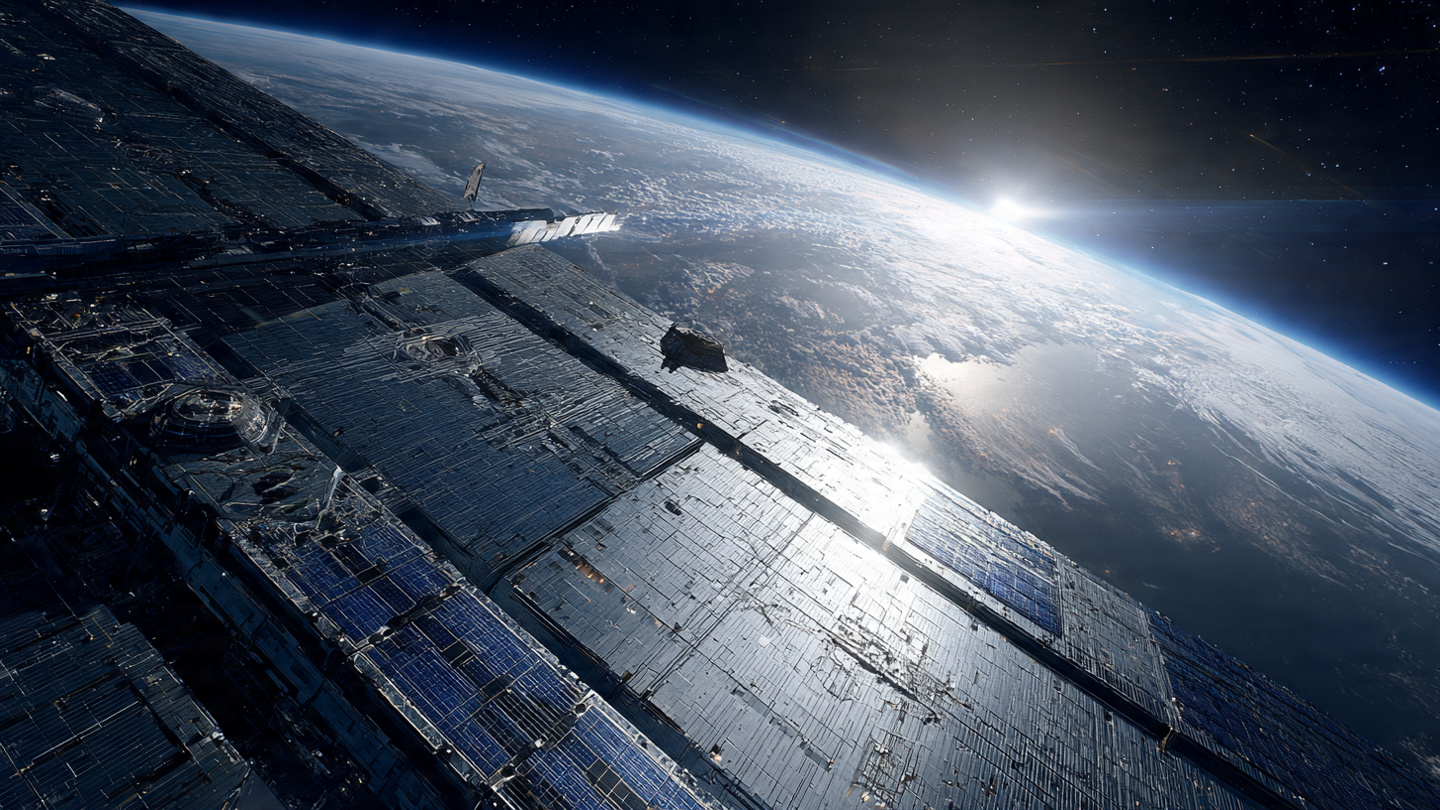
Starcloud is building toward a future where compute infrastructure can operate beyond the limits of Earth-based facilities. Traditional data centers require vast tracts of land, huge electrical capacity, expensive cooling systems, and reliable physical security. They also face increasing scrutiny over carbon emissions, water use, and regional grid pressure. Starcloud’s vision proposes a different model: place compute hardware in orbit, harness space conditions as operational advantages, and create a new class of infrastructure designed for the next era of high-performance computing.
At first glance, the concept sounds almost too audacious. But the logic behind it is surprisingly grounded. Space offers near-constant access to solar energy in some orbital configurations, naturally cold conditions for thermal management, and physical separation from many terrestrial risks. In theory, orbital data centers could eventually support workloads that are too energy-intensive, too sensitive, or too strategically important to depend entirely on ground-based systems.
The timing also helps explain investor enthusiasm. The growth of AI has created unprecedented demand for compute. Training and running large models require vast amounts of processing power, specialized chips, and continuous energy availability. That demand is not slowing down. If anything, it is accelerating faster than conventional infrastructure can comfortably absorb. Startups that promise new computing paradigms now sit at the intersection of venture capital, national competitiveness, and industrial necessity.
Why Investors Are Paying Attention
Raising $170 million at the Series A stage is not simply a sign of hype. It suggests that investors see Starcloud as a serious contender in a market that may define the future of infrastructure. This is not just about launching hardware into orbit. It is about owning a foundational layer of tomorrow’s digital economy.
There are several reasons the company’s story resonates so strongly:
- AI demand is exploding and existing data center capacity is under growing strain.
- Energy constraints are becoming a central bottleneck for cloud expansion across major regions.
- Geopolitical risk is rising, increasing interest in more resilient and distributed infrastructure.
- Space launch economics have improved, making once-impossible business models worth revisiting.
- Top-tier venture investors want platform companies, not just software tools, and infrastructure is a powerful category.
In practical terms, investors are betting that if Starcloud solves even part of this challenge, it could help define a new market. That market would not be limited to startups or experimental labs. It could serve cloud providers, defense organizations, scientific institutions, telecommunications operators, and AI companies that need massive computing throughput.
How Space Data Centers Could Work

To understand the opportunity, it helps to break the concept down into its engineering and operational components. A space data center would likely consist of modular computing payloads launched into orbit, connected through high-bandwidth communications systems, powered largely by solar energy, and managed remotely with a high degree of automation.
Power Generation in Orbit
One of the strongest arguments for orbital infrastructure is energy access. Space-based systems can use solar panels without many of the atmospheric or weather disruptions that affect Earth-based renewables. While energy storage and orbital design remain critical challenges, the broader appeal is clear: a data center in space may have more direct access to solar power than one tied to congested terrestrial grids.
Thermal Management
Cooling is one of the most expensive and operationally sensitive parts of running a data center. In space, heat does not dissipate in the same way it does on Earth, so the engineering is complex. Yet the controlled environment also opens new design possibilities. If Starcloud can build reliable thermal systems for space hardware, it may unlock a major competitive advantage in long-duration compute performance.
Modular Deployment
The most viable path is unlikely to be a single giant orbital server farm launched all at once. A more realistic model is modular deployment: smaller units, tested incrementally, upgraded over time, and linked through secure communication networks. That approach mirrors how many successful technology platforms mature, starting with narrow, high-value use cases before expanding.
Autonomous Operations
Because orbital systems cannot rely on frequent hands-on maintenance, software automation will be essential. That means predictive diagnostics, fault isolation, remote orchestration, and resilient system design will likely matter just as much as rocket access or chip procurement. In that sense, Starcloud is not only a space company. It is also a systems software and infrastructure company.
The Market Forces Driving Orbital Computing
Starcloud’s rise says as much about the market as it does about the company. Several trends are converging at once, creating the conditions for extreme ideas to attract real capital.
AI Is Reshaping Infrastructure Economics
Artificial intelligence is turning compute into one of the most valuable resources in the world. Every major model release, inference service, and enterprise deployment adds pressure to the supply chain for chips, power, cooling, and data center capacity. Companies that can unlock new sources of compute are not solving a niche problem. They are stepping into one of the most urgent bottlenecks in the entire technology sector.
I have watched how discussions about AI have shifted over the past two years. At first, the focus was mostly on models, features, and interfaces. Now the conversation increasingly comes back to physical constraints: who has the chips, who has the energy, who can build the data centers fast enough, and who can sustain costs over time. That shift makes Starcloud’s timing feel unusually sharp.
Space Has Become a Commercial Platform
The private space industry has matured far beyond launch headlines. Lower launch costs, reusable rockets, improved satellite manufacturing, and stronger commercial ecosystems have made orbit a more realistic operating environment for businesses. The next wave is not only about getting to space. It is about building commercially useful systems once you are there.
That is a crucial distinction. Starcloud is part of a broader trend in which space is treated less like a destination and more like an operational layer for communications, sensing, defense, and now possibly computing.
Resilience Matters More Than Ever
Modern data infrastructure is vulnerable to local disruptions, energy shortages, extreme weather, regulatory bottlenecks, and geopolitical tension. Space-based systems introduce their own risks, but they may also offer strategic diversification. For some customers, especially governments and critical industries, resilience can justify premium infrastructure decisions.
The Challenges Starcloud Must Overcome
For all the excitement, this is still a brutally difficult business. Space data centers are compelling in theory, but there is a long road between concept and large-scale deployment. Investors may believe in the upside, yet the execution risk is enormous.
- Launch costs remain significant, even after major improvements in the commercial space sector.
- Hardware reliability must be exceptional because replacement and repair are far harder in orbit.
- Radiation and environmental exposure can affect chips, memory, and system longevity.
- Latency and bandwidth limitations may restrict which workloads are most practical in space.
- Regulatory and security issues could become highly complex as the platform scales.
These hurdles should not be glossed over. In fact, they are central to evaluating whether Starcloud becomes a category leader or a fascinating experiment. The company will need to prove technical credibility in stages, likely beginning with specialized workloads where the benefits of orbital deployment clearly outweigh the costs.
A useful comparison is the early cloud computing era. At one time, many large organizations hesitated to move critical workloads off their own servers. Over time, economics, reliability, and software ecosystems changed that perception. Space computing could follow a similar pattern, but only if early applications demonstrate undeniable value.
What Use Cases Make Sense First?
The smartest path for Starcloud may not be broad enterprise hosting from day one. Instead, the company could focus on workloads that are uniquely suited to orbital deployment.
AI Training for Specialized Models
If Starcloud can offer access to energy-rich, dedicated compute clusters, certain AI customers may find the model attractive, especially for training jobs that can tolerate some communication complexity in exchange for large processing availability.
Defense and Secure Government Computing
National security applications often prioritize resilience, redundancy, and strategic control over lowest-cost operation. Space infrastructure could appeal to agencies that need hardened systems and distributed architecture.
Scientific Research
Large-scale simulation, Earth observation processing, and astrophysics-related workloads may benefit from systems located closer to space-based data sources. In some scenarios, processing data in orbit before transmission could reduce bottlenecks and improve efficiency.
Edge Processing for Satellite Networks
As satellite constellations continue to grow, onboard or near-orbit compute becomes more valuable. Instead of sending every bit of raw data to Earth, orbital processing nodes could filter, compress, analyze, and prioritize information before downlink.
These practical examples matter because they move the idea from spectacle to strategy. The most successful frontier technologies usually win by solving a narrower, urgent problem first. Once trust builds, larger markets follow.
Why the Unicorn Milestone Matters
Becoming a unicorn 17 months after demo day is more than a flashy headline. It signals that the market sees Starcloud as operating in a category large enough to support venture-scale outcomes, even at an early stage. That kind of speed is rare, especially in deep tech, where hardware timelines are often longer and capital intensity is much higher than in software startups.
This also says something important about today’s investment climate. Venture capital remains cautious in many sectors, but it still moves aggressively toward companies that combine three things: a massive infrastructure problem, a credible technical thesis, and a market timing advantage. Starcloud appears to check all three boxes.
There is another layer here too. The company’s rapid rise reflects how startup ambition itself has changed. Founders are once again aiming at civilization-scale problems, not just workflow optimization or consumer convenience. Investors, in turn, are rewarding teams willing to tackle hard engineering challenges that could reshape foundational systems.
What This Means for the Future of Technology
If Starcloud succeeds, the impact could extend far beyond one company valuation. It could alter how we think about cloud infrastructure, energy strategy, and the physical geography of computing. The notion that all serious compute must live on Earth may eventually feel outdated.
Even if the company does not achieve its full vision immediately, its progress could push the broader industry forward. Competing startups may explore adjacent models. Established cloud providers may invest in orbital partnerships. Governments may expand support for dual-use infrastructure that blends commercial and strategic utility.
That is often how transformative sectors develop. The first breakthrough is not always total dominance. Sometimes it is proof that a previously impossible market deserves to exist.
For readers watching from the outside, this is a reminder that some of the most important technology trends now sit at the intersection of software, hardware, energy, and geopolitics. The future of computing will not be shaped by code alone. It will also be shaped by where the machines live, how they are powered, and who controls access to them.
Conclusion: A High-Risk Vision With Enormous Upside

Starcloud’s $170 million Series A is not just a funding event. It is a statement about where the technology world believes the next infrastructure frontier may be. Space data centers remain an audacious bet, and plenty can still go wrong. The engineering is hard, the economics are unproven at scale, and the path to commercial adoption will demand patience as much as ambition. But the company has already done something few startups ever manage: it has turned a radical idea into a serious conversation about the future of computing.
For founders, investors, technologists, and policy leaders, Starcloud offers a powerful case study in what happens when market timing meets deep technical conviction. In an era defined by AI demand, energy pressure, and strategic competition, orbital computing no longer sounds like fantasy. It sounds like a frontier.
If you follow the future of infrastructure, cloud computing, or the commercial space economy, this is a company worth tracking closely. The next chapter in digital power may not be built just on land. It may be launched.
Want to stay ahead of the biggest shifts in technology and startups? Keep watching the emerging space infrastructure market, because the companies building tomorrow’s compute layer are already redefining what scale means today.


