Smart software is no longer a futuristic concept sitting in a lab or hidden inside a tech company demo. It is now part of everyday American life, helping people draft emails, compare products, summarize documents, plan trips, answer questions, and even support decisions at work. Yet as adoption grows, something more complicated is happening beneath the surface: trust is not keeping pace.
That disconnect matters. A tool can be fast, convenient, and widely available, but if users believe its answers may be misleading, biased, or impossible to verify, enthusiasm turns into hesitation. In homes, offices, classrooms, and government spaces, people are asking a simple question with profound consequences: Can I rely on what this technology tells me?
From my perspective, that question captures the central challenge of the current digital era. People are not rejecting innovation outright. Most are willing to experiment when a new tool promises speed or convenience. What they want is something deeper than novelty. They want clarity, accountability, and control. They want to know where information comes from, why a system reached a conclusion, and what happens when it gets something wrong.
A recent national mood snapshot reflects that tension clearly. More Americans report using intelligent digital tools, but a smaller share say they trust the results. That gap between usage and confidence is becoming one of the defining technology stories in the United States.
The New American Paradox: High Adoption, Low Confidence
The most striking takeaway is not that digital tools are spreading quickly. That was expected. The real surprise is that wider use has not translated into stronger trust. Historically, many technologies earned credibility through familiarity. The more people used online banking, GPS navigation, or video calling, the more normal and dependable those services felt. This time, the pattern looks different.
Instead of trust growing alongside usage, many people seem to be learning the limits of smart software in real time. They test it, appreciate its convenience, then discover it can sound confident while being incomplete, inaccurate, or context-blind. In some cases, it saves time. In others, it creates new risks.
- Adoption is rising as more people use intelligent tools for work, school, and daily tasks.
- Trust remains weak because many users doubt the accuracy of outputs.
- Transparency concerns are growing as people struggle to understand how answers are produced.
- Regulation is a public priority for those who want clearer rules and oversight.
- Societal impact worries persist around jobs, misinformation, privacy, and fairness.
This is not a contradiction once you look closely at how people behave. Americans often adopt useful tools before they fully trust them. Think about social media, online marketplaces, or app-based services in their early years. People used them because the convenience was immediate, even while concerns about safety, privacy, or reliability lingered. What makes today’s shift more significant is that these systems increasingly shape information, recommendations, and decisions. That raises the stakes.
Why Trust Is So Hard to Earn

Trust is not built through polished interfaces or bold marketing claims. It is built when people feel that a tool is understandable, consistent, and accountable. Smart software often struggles on all three fronts.
People Cannot Easily See How Answers Are Produced
One of the biggest barriers is opacity. Users may receive a polished response in seconds, but they often cannot tell how the system arrived there. Was the answer based on verified sources, outdated material, pattern matching, or a flawed assumption? When that process remains hidden, confidence naturally declines.
Imagine a small-business owner using an automated assistant to summarize market trends before a pitch meeting. The output looks clean and convincing, but one statistic is wrong and one competitor is mischaracterized. If the owner cannot trace the information back to reliable sources, the tool becomes harder to trust the next time around.
Mistakes Often Sound Convincing
Perhaps the most unsettling trait of modern digital assistants is that they can present errors with extraordinary confidence. A human expert who is uncertain may pause, hedge, or explain limitations. A machine-generated response may deliver a false statement in a smooth, authoritative tone. That mismatch between tone and truth damages trust quickly.
For ordinary users, this creates a hidden burden. They must verify the answer even after using the tool. In that scenario, convenience starts to fade. If every output requires fact-checking, people begin to wonder whether the time savings are real.
Bias and Fairness Remain Open Questions
Another concern is fairness. Many Americans worry that automated systems can reinforce bias in hiring, lending, education, housing, healthcare access, or law enforcement. Even if a system is marketed as objective, people understand that technology reflects the data, assumptions, and goals built into it.
That skepticism is not irrational. If a recommendation engine treats one group differently from another, or if a resume screening tool favors certain profiles based on historical patterns, the effects can be serious. Trust weakens when the public believes the rules are hidden and the consequences are uneven.
Privacy Feels Fragile
Trust also depends on how personal information is handled. Many users remain uneasy about what data is collected, stored, shared, or used for training and optimization. They may enjoy the convenience of smart features, but still feel uncomfortable feeding private thoughts, work files, health questions, or financial details into systems they do not fully understand.
That concern becomes stronger in workplaces, where employees may not know whether internal prompts, drafts, or uploaded documents stay confidential. The broader the adoption, the more urgent the demand for clear data rules becomes.
What Americans Are Really Asking For
When people say they do not trust emerging digital tools, they are not necessarily calling for those tools to disappear. More often, they are asking for conditions that make trust possible.
Clearer Explanations
Users want plain-language answers to basic questions: Where did this information come from? How recent is it? What sources influenced the result? What are the known limitations? A system that can explain itself is more likely to be used responsibly.
Independent Oversight
Many Americans are signaling that self-policing by the industry is not enough. They want standards, audits, and rules that apply across companies and sectors. That does not mean blocking innovation. It means recognizing that powerful technology should face meaningful accountability, especially when it affects employment, education, healthcare, finance, or public information.
Human Backstops
Another recurring theme is the need for human judgment. People are more comfortable when automated tools assist rather than replace human decision-makers. A teacher can use software to organize materials, but final feedback should still reflect professional judgment. A bank can use digital screening to flag applications, but critical lending decisions should not become a black box.
In practice, trust often rises when people know there is a real person who can review a result, explain an error, and correct a bad outcome.
How This Plays Out in Everyday Life
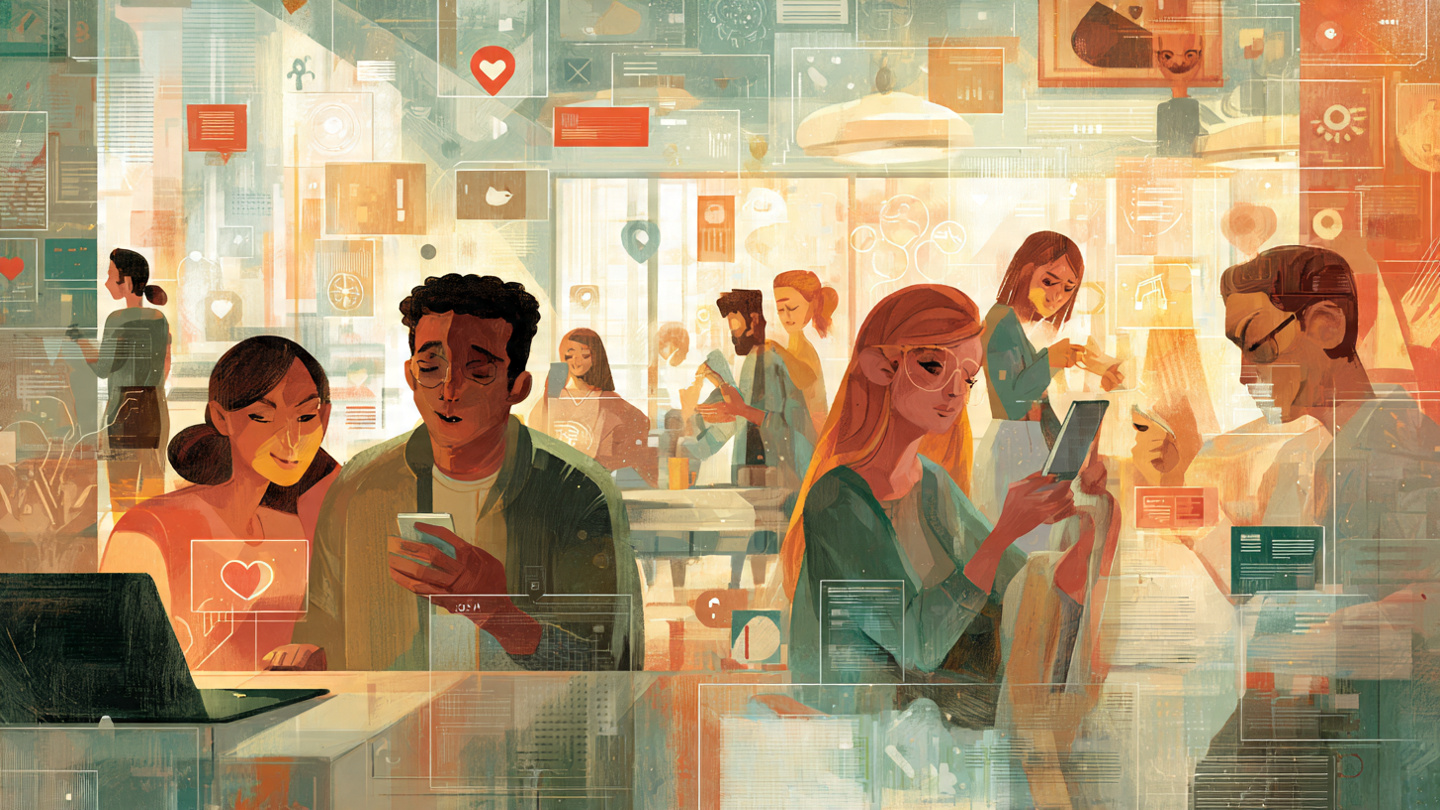
The trust gap is not abstract. It shows up in practical situations every day.
At Work
Employees increasingly use smart software to speed up routine tasks such as drafting reports, summarizing meetings, generating ideas, or organizing research. Used well, these tools can reduce repetitive work and free up time for strategy or creativity. Used carelessly, they can introduce errors into client documents, internal planning, or public communications.
Consider a marketing team preparing a campaign brief. An automated assistant may help produce a first draft in minutes, but if the demographic data is outdated or the tone misses the brand voice, human review remains essential. Teams that treat outputs as a starting point rather than a final answer tend to get the best results.
In Education
Students and teachers are navigating similar tension. Smart software can support brainstorming, simplify complex explanations, and help non-native English speakers communicate more confidently. At the same time, educators worry about accuracy, overreliance, and the erosion of critical thinking.
The healthiest path is likely not blanket rejection or total embrace. It is teaching students how to question outputs, cross-check facts, and understand when automated help is useful versus risky. In other words, digital literacy now includes trust literacy.
In News and Information
This may be the most sensitive area of all. If people cannot tell whether a summary, quote, image, or claim was produced accurately, the broader information environment becomes shakier. Americans are already fatigued by misinformation, manipulated content, and low-confidence headlines. Smart software can help organize knowledge, but it can also amplify confusion if used irresponsibly.
That is why transparency matters so much. Readers want to know not just what they are seeing, but how it was assembled and whether it has been reviewed.
The Business Stakes Are Rising Fast
For companies building or deploying intelligent digital tools, the message is clear: usage alone is not victory. A product can post strong adoption numbers while still suffering from a trust deficit that limits long-term value. If customers view a tool as helpful but unreliable, loyalty will remain fragile.
Businesses that want durable growth should pay attention to four priorities.
- Accuracy must improve in real-world use cases, not just controlled demos.
- Source visibility should be easier for users to access and understand.
- Privacy safeguards need to be explicit, readable, and enforceable.
- Human support should remain available when users need clarification or correction.
In many industries, trust will become a competitive differentiator. The companies that win may not be the ones with the flashiest features, but the ones that prove they can deliver dependable outcomes, explain their systems, and respect user boundaries.
What Better Regulation Could Look Like

Public concern about regulation is often framed as a debate between innovation and restriction, but that is too simplistic. Good rules do not have to smother progress. In many cases, they create the conditions for sustainable adoption by setting expectations early.
Thoughtful oversight could focus on practical standards such as disclosure, risk-based testing, consumer protections, audit trails, and special rules for high-impact sectors. A chatbot helping someone brainstorm dinner ideas does not pose the same risk as a system influencing medical triage, credit decisions, or hiring outcomes. Americans seem to recognize that distinction and want safeguards that match the level of potential harm.
There is also a cultural element here. People are more likely to trust a system when they believe someone is accountable if it fails. Regulation, at its best, tells the public that powerful tools do not operate outside the social contract.
The Road Ahead: Skepticism Is Not Rejection
It would be a mistake to interpret falling trust as evidence that Americans are turning away from smart software altogether. In reality, skepticism can be healthy. It signals that people are engaging with these tools seriously rather than passively accepting them. They are testing claims, noticing weaknesses, and demanding better standards.
That pressure may ultimately improve the technology. When users insist on explainability, better sourcing, stronger privacy, and human oversight, developers and policymakers are pushed toward more responsible design. Trust should not be assumed. It should be earned.
Personally, I see this moment as a turning point. The first phase of adoption was driven by curiosity and speed. The next phase will be shaped by credibility. The winners, whether they are companies, institutions, or public leaders, will be the ones that understand a simple truth: people do not just want fast answers. They want answers they can live with.
Conclusion
Americans are embracing smart software in growing numbers, but growing use has exposed a crucial weakness: convenience is not the same as confidence. People are willing to experiment with powerful digital tools, yet they remain uneasy about accuracy, transparency, privacy, bias, and the broader social impact. That tension is not a side story. It is the main story.
Trust is now the real battleground. The future of intelligent technology in the United States will depend less on how quickly tools spread and more on whether the public believes those tools are honest, explainable, and accountable. Businesses must build with responsibility. Policymakers must act with clarity. Users must stay curious, but cautious.
If you use smart software in your daily life, this is the moment to become a more intentional user. Ask where information comes from. Verify important claims. Protect sensitive data. Push employers, schools, and platforms to explain how automated systems work. The more the public demands transparency and responsibility, the more likely this technology will evolve in ways that truly serve people.
Explore more digital trends coverage and join the conversation about what trustworthy technology should look like next.


