Modern medicine has no shortage of ambition. It wants earlier diagnoses, better drug discovery, more precise treatments, and care plans tailored to every individual. But there is one stubborn problem at the center of all that progress: data. Not just the amount of it, but the quality, accessibility, and usability of it. Hospitals collect enormous volumes of information, yet much of it remains fragmented across systems, locked behind privacy barriers, or too inconsistent to support meaningful research at scale. That is exactly where Mantis Biotech enters the conversation, with a bold vision built around digital twins in healthcare and the creation of synthetic datasets that can unlock new possibilities for medicine.
What makes this development especially compelling is that it addresses one of the least glamorous but most important bottlenecks in healthcare innovation. In my view, the future of medicine will not be determined only by breakthrough therapies or advanced devices. It will also depend on who can organize messy biological and clinical information into models that are useful, trustworthy, and scalable. Mantis Biotech is working on that infrastructure layer by building digital representations of human biology that can help researchers, clinicians, and life sciences companies test ideas faster and more safely.
The company’s approach centers on combining scattered data sources into structured, synthetic representations of people and physiological systems. These models are often described as digital twins of the human body, a concept that has gained serious attention across precision medicine, biotech innovation, and computational health. If successful, this strategy could help solve the data availability problem that slows everything from disease modeling to treatment optimization.
The Healthcare Data Problem Is Bigger Than Most People Realize
Healthcare is rich in information but poor in interoperability. Electronic health records, lab reports, imaging files, genomics data, wearable device outputs, prescription histories, and patient-reported outcomes all exist in separate formats and systems. Even when that information could offer life-saving insights, it is often difficult to combine into a coherent picture of a patient or population.
That creates a serious challenge for researchers and healthcare companies. Building strong predictive models requires clean, representative, high-volume data. Yet access to such data is limited by privacy rules, institutional silos, inconsistent labeling, and the reality that some diseases simply do not generate enough usable real-world patient records for robust analysis. The result is a paradox: medicine has more data than ever, but actionable data remains scarce.
This is where clinical data availability becomes a strategic issue, not just a technical inconvenience. If researchers cannot access sufficiently detailed and diverse patient-level information, development timelines stretch, experiments become less reliable, and innovation slows down. In practical terms, that means delayed therapies, inefficient trials, and missed opportunities to identify patterns hidden inside human physiology.
- Fragmentation: patient data lives across hospitals, labs, insurers, and devices.
- Privacy constraints: strict safeguards are essential, but they can limit research access.
- Bias and sparsity: many datasets are too narrow, too small, or not diverse enough.
- Standardization issues: inconsistent formats reduce model quality and interoperability.
- Clinical complexity: human biology changes over time, making static data less useful.
In other words, the challenge is not merely collecting information. It is turning fragmented information into a dynamic, usable system that reflects how real humans function. That is the promise behind digital twins.
What Digital Twins Mean in Healthcare

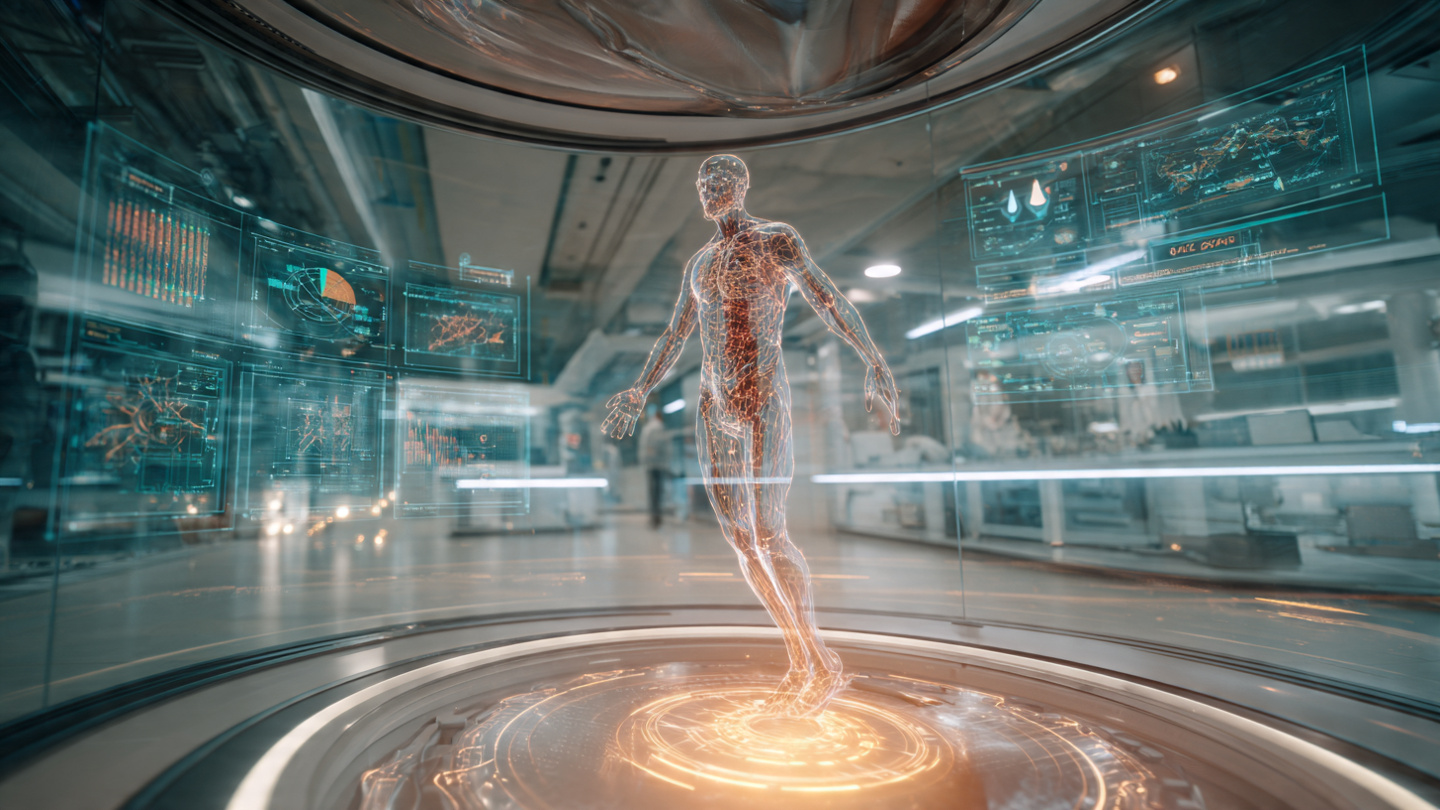
The phrase digital twin originally gained traction in engineering and manufacturing, where companies create virtual replicas of machines or systems to simulate performance, detect problems, and improve efficiency. In healthcare, the idea is far more ambitious and far more personal. A digital twin is a computational model of a person, or part of a person, that reflects anatomy, physiology, disease progression, and in some cases even behavior or treatment response.
Think of it as a living simulation rather than a static record. Instead of simply storing a patient’s past data, a digital twin aims to represent how that person’s body may behave under different conditions. Researchers can use that model to ask high-value questions: How might a disease evolve? Which treatment is most likely to work? What biomarkers matter most? How could a therapy affect one subgroup differently from another?
That potential matters because medicine increasingly depends on prediction. Doctors are no longer interested only in what happened last year. They want tools that help anticipate what comes next. Pharmaceutical companies want to simulate trial scenarios before enrolling expensive cohorts. Health systems want to identify risk earlier and personalize interventions more effectively. Digital twins in healthcare could become a bridge between raw data and smarter decisions.
Still, this vision only works if the underlying models are fed with enough relevant and realistic information. That is why Mantis Biotech’s focus on synthetic datasets is so important.
How Mantis Biotech Uses Synthetic Datasets
Mantis Biotech is tackling the problem by aggregating disparate data sources and using them to create synthetic datasets that preserve statistical and biological usefulness without exposing identifiable patient information in the same way raw records do. These synthetic datasets can then support the creation of digital twins that reflect meaningful human patterns across anatomy, physiology, and behavior.
This matters because healthcare data is often either too sensitive to share broadly or too incomplete to be truly useful on its own. Synthetic data offers a middle path. When designed properly, it can reproduce the relationships, trends, and variation found in real populations while reducing direct privacy risks. For companies building models, that opens the door to better experimentation, larger simulations, and broader collaboration.
In practical terms, a company like Mantis Biotech can help transform disconnected signals into a more unified biological framework. Data from imaging, lab testing, clinical histories, sensors, and population studies can be organized into representations that better capture the complexity of human health. Instead of working with isolated snapshots, teams can begin to model systems over time.
What I find especially significant here is the shift in mindset. Traditional data strategy often asks, “How do we protect and store what we already have?” This newer approach asks, “How do we create usable, privacy-conscious representations that let us discover what we do not yet know?” That is a much more forward-looking proposition.
Why Synthetic Data Is So Valuable
- Scalability: it can expand scarce real-world datasets into more usable research resources.
- Privacy support: it helps reduce direct exposure of sensitive patient information.
- Model training: it provides broader inputs for machine learning and simulation tools.
- Rare disease research: it can help address gaps where real patient cohorts are limited.
- Testing environments: it allows teams to experiment before using live clinical workflows.
Of course, synthetic data is not magic. It must be carefully validated to ensure it reflects real-world biological relationships rather than introducing false confidence. But if the methodology is strong, the upside is considerable.
Why This Could Change Drug Development and Precision Medicine

The pharmaceutical industry spends years and billions of dollars moving therapies from concept to clinic. A significant share of that cost comes from uncertainty. Researchers often struggle to identify the right targets, predict adverse effects, recruit suitable trial participants, and understand how treatments will perform across diverse patient populations. Better data models can reduce that uncertainty, and digital twins may become one of the most powerful tools in the process.
Imagine a biotech company developing a treatment for a chronic inflammatory condition. Instead of relying only on narrow historical datasets, it could use validated digital twins to simulate disease progression across different patient profiles. That could help identify which biomarkers are linked to better outcomes, which subgroups are most likely to respond, and which trial design may yield the clearest results. The efficiency gains could be enormous.
Now consider hospital care. A clinician treating a patient with multiple interacting conditions often faces a complicated picture: medication interactions, metabolic differences, fluctuating lab markers, and uncertain progression patterns. A robust digital twin model could eventually support more individualized treatment planning by showing how certain interventions might play out in a virtual setting before decisions are made in the real world.
This is the essence of precision medicine: tailoring care to the biological reality of each patient rather than relying solely on averages from broad populations. Mantis Biotech’s model fits directly into that future by trying to create the computational foundation that precision medicine requires.
Potential Use Cases for Digital Twins in Healthcare
- Drug discovery: simulating biological responses before costly wet-lab or clinical stages.
- Clinical trial design: improving cohort selection and scenario testing.
- Disease progression modeling: understanding how conditions evolve over time.
- Treatment personalization: identifying likely responses for specific patient profiles.
- Operational planning: supporting hospitals and researchers with better forecasting tools.
If these use cases mature, digital twins in healthcare could become as foundational to modern medicine as imaging or electronic records are today.
The Opportunity Comes With Serious Challenges
Any conversation about digital health innovation must also include caution. Healthcare is not consumer software. The margin for error is lower, the ethical stakes are higher, and the consequences of overpromising are real. Mantis Biotech may be working on an exciting frontier, but success in this field depends on credibility, validation, and thoughtful governance.
One major question is representativeness. Synthetic datasets are only as strong as the real-world data and assumptions used to build them. If the source material is biased toward certain demographics, care settings, or disease stages, then the resulting digital twins may reproduce those same blind spots. That could limit clinical usefulness and even deepen disparities if not addressed early.
Another challenge is explainability. Researchers and clinicians need to understand how a model arrives at conclusions, especially when those conclusions could influence treatment or trial design. Black-box systems may impress investors, but medicine rewards transparency and evidence. Any company in this space must prove that its outputs are not just sophisticated-looking simulations, but reliable tools grounded in biological plausibility and clinical relevance.
Regulation is another major factor. As digital twins become more involved in medical decision-making, developers will face increased scrutiny from regulators, healthcare institutions, and ethics boards. Standards for validation, auditability, and deployment will matter tremendously. In my opinion, the winners in this sector will not simply be the fastest builders. They will be the teams that can combine technical innovation with trust.
- Validation: models must align closely with real clinical outcomes.
- Bias mitigation: data diversity is essential for fair and reliable performance.
- Regulatory oversight: healthcare applications demand rigorous scrutiny.
- Clinical integration: tools must fit real medical workflows, not just lab environments.
- Trust: adoption depends on transparency for clinicians, researchers, and patients.
Why Mantis Biotech Stands Out in a Crowded Innovation Cycle
Healthcare technology attracts no shortage of hype, but the most durable companies tend to focus on infrastructure problems that others overlook. Mantis Biotech appears to be doing exactly that. Rather than chasing a flashy single-use application, it is addressing the underlying data architecture needed to make multiple high-value applications possible. That includes modeling anatomy, physiology, and behavior in ways that could support research across therapeutic areas.
There is also a broader timing advantage. The healthcare industry is under pressure from every direction: rising costs, aging populations, more complex chronic disease burdens, and increasing demand for personalized care. At the same time, computational biology, biomarker science, and multimodal data analysis are advancing rapidly. A company that can connect these trends through usable digital twins has a chance to become strategically important.
From a business perspective, this could make Mantis Biotech relevant not only to hospitals and academic centers, but also to pharmaceutical companies, contract research organizations, health systems, and insurers interested in better forecasting and risk modeling. In other words, solving the data availability problem is not a niche technical task. It is a gateway to broader transformation across the healthcare economy.
Personally, I think that is why this story matters. It is easy to get excited about futuristic medicine, but truly transformative change often begins with improving the quality of the invisible plumbing behind the scenes. Better data models may not be glamorous in the way a new therapy is glamorous, yet they can shape everything that comes after.
What the Future of Digital Twins Could Look Like
In the near term, digital twins are likely to be used first in research, simulation, and decision support rather than as fully autonomous clinical authorities. That is the sensible path. Build confidence in controlled settings, validate outcomes, and expand carefully. Over time, however, the impact could become much larger.
We may see digital twins used to monitor chronic conditions continuously, helping care teams understand subtle changes before symptoms escalate. Drug developers could use them to identify promising candidates faster and fail weaker options earlier. Researchers studying rare conditions could model biological dynamics even when patient populations are small. Public health teams might use aggregate digital twin frameworks to understand disease burdens and intervention trade-offs in more nuanced ways.
None of this replaces physicians, researchers, or real patient evidence. Instead, it enhances their ability to reason through complexity. That is the most compelling version of health technology: not replacing expertise, but amplifying it.
For readers trying to understand why Mantis Biotech deserves attention, the answer is straightforward. The company is working on one of medicine’s hardest and most valuable problems: how to build usable, privacy-aware, biologically meaningful data systems in a world where healthcare information is abundant but inaccessible. If it succeeds, the benefits could ripple across diagnostics, therapeutics, clinical trials, and patient care.
Conclusion
Mantis Biotech represents a powerful idea at the intersection of biotechnology, data science, and healthcare infrastructure. By creating synthetic datasets that support digital twins in healthcare, the company is taking aim at the data availability problem that slows modern medicine. The implications are significant: faster research, smarter clinical modeling, more efficient trials, and a stronger foundation for precision medicine.
The road ahead will require validation, ethical rigor, and sustained trust. But the direction is clear. Healthcare needs better ways to represent human complexity without compromising privacy or usability, and digital twins may become one of the most important tools to achieve that. If you care about the future of drug discovery, personalized treatment, and scalable medical innovation, this is a space worth watching closely. The next era of medicine may not begin in the exam room. It may begin in the data model.
Call to action: Keep an eye on companies building the infrastructure for computational health. The breakthroughs that matter most tomorrow may come from the platforms quietly solving medicine’s toughest data challenges today.


