The idea sounds like science fiction at first: a person with a brain implant using signals from the mind to make music. Yet this is no longer a distant fantasy. It is part of a rapidly expanding conversation around brain-computer interfaces, a field that sits at the crossroads of neuroscience, software design, accessibility, and human creativity. What makes this story especially compelling is not just the technology itself, but the larger lesson behind it: if brain-computer interfaces are ever going to become part of daily life, they cannot be merely functional. They have to be meaningful, intuitive, and, above all, enjoyable.
That point matters more than many technologists like to admit. People do not build lasting relationships with devices because those devices are technically impressive. They keep using them because they solve real problems, fit naturally into life, and offer some degree of delight. In the world of neurotechnology, that shift from utility to experience may define who leads the next decade of innovation.
The Moment Brain Signals Become Music
Music is one of the most revealing test cases for brain-computer interfaces because it combines emotion, precision, experimentation, and feedback. A user can immediately tell whether a system feels responsive, frustrating, inspiring, or awkward. When someone creates sound through a brain implant, the result is more than a technical demonstration. It becomes proof that the mind can interact with digital systems in ways that feel expressive rather than mechanical.
This changes the public conversation. Most people hear about brain implants in clinical or highly specialized contexts, such as restoring movement, enabling communication after paralysis, or assisting people with severe neurological injury. Those are vital applications, and they deserve attention. But creative use cases like music reveal another side of the field. They suggest that brain-computer interface technology is not only about compensation for loss. It may also open entirely new forms of human expression.
That distinction is important because it expands the audience. A medical device helps one type of user solve a serious challenge. A creative platform invites society to imagine broader possibilities. Once people see thought controlling rhythm, tone, or digital instruments, they start asking bigger questions about gaming, design, education, communication, and entertainment.
Why Enjoyment Is Not Optional
One of the smartest observations emerging from this space is simple: technology people actually enjoy using has a much better chance of succeeding. This may sound obvious, but in frontier sectors it is often overlooked. Engineering teams focus on signal quality, bandwidth, latency, and hardware reliability. Investors focus on scalability and regulatory pathways. Researchers focus on accuracy and safety. All of that matters. But the user ultimately decides whether a product becomes part of life.
Think about the difference between a tool that works and a tool that invites repeated use. A system may technically allow someone to perform a task, but if it feels exhausting, unnatural, or emotionally flat, adoption will remain limited. In contrast, if a brain-computer interface feels rewarding, playful, and empowering, users will return to it, learn faster, and discover new applications on their own.
That is why music offers such a powerful lens. It demands engagement. Nobody sticks with a musical instrument solely because it exists. They stick with it because it creates a personal connection.
- Utility gets users to try a product.
- Usability helps them complete a task.
- Enjoyment gives them a reason to come back.
- Meaning turns a technology into part of identity.
From my perspective, this is where many advanced technologies either break through or quietly stall. The public rarely embraces a product because it is futuristic. People embrace it when it feels human.
What Brain-Computer Interfaces Actually Do
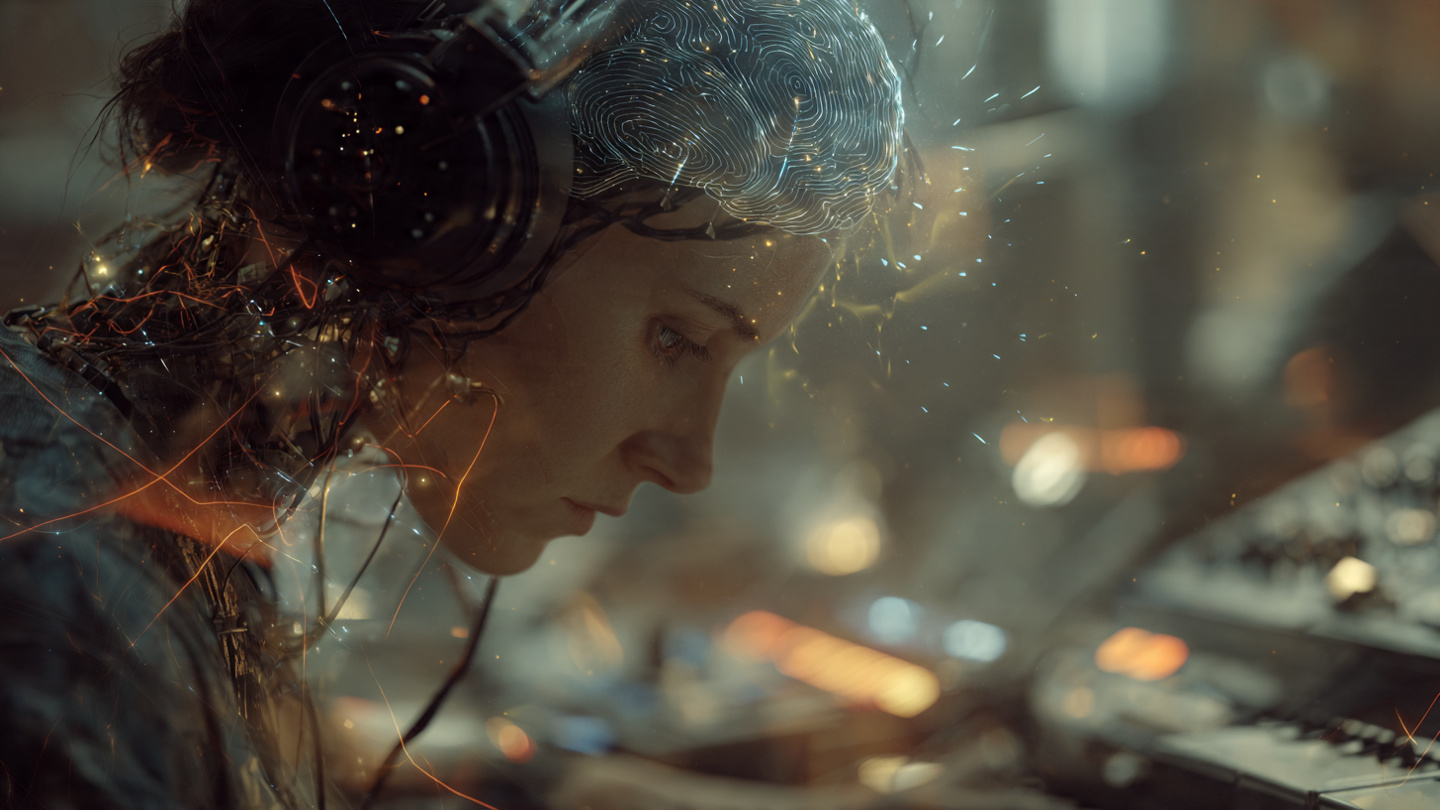
At a practical level, a brain-computer interface translates neural activity into commands that a computer can interpret. Depending on the system, that may involve invasive implants, minimally invasive sensors, or external devices placed on the scalp. In the case of a brain implant, electrodes can capture more detailed neural signals, which may improve responsiveness and control.
Those signals are then processed by software that identifies patterns and maps them to actions. In a musical application, those actions could include:
- Selecting notes or chords
- Changing tempo or rhythm
- Controlling volume and sound texture
- Triggering samples or loops
- Manipulating visual effects during a performance
The technical achievement is impressive, but the deeper challenge lies in interpretation. The human brain is not a keyboard. Neural activity is rich, complex, and context-dependent. Turning those patterns into smooth creative control requires careful calibration, adaptive algorithms, and thoughtful interface design.
That is why the future of brain implants will not be determined by hardware alone. It will depend on how well designers convert raw neural data into experiences that feel direct and natural.
From Medical Breakthrough to Creative Platform
Historically, much of the excitement around brain implants has centered on medicine. For good reason, researchers have pursued applications that can help restore communication, movement, or autonomy for people living with major physical limitations. These are some of the most meaningful uses of modern technology.
Yet creative projects may play an equally important role in shaping public adoption. When users can make music, paint digitally, control immersive environments, or experiment with new forms of performance, the technology becomes easier to understand and easier to imagine in everyday culture.
There is a pattern here that we have seen before in consumer technology. Innovations often begin in specialized or expensive settings, then gradually spread through experiences that are more accessible, emotional, and entertaining. That does not diminish the seriousness of clinical use. It simply recognizes that culture often accelerates what medicine starts.
A brain implant that helps someone communicate is transformative. A brain implant that also lets someone create art, play with sound, or perform for an audience shows a fuller vision of what independence and expression can mean.
The User Experience Problem Few People Talk About
For all the headlines about futuristic interfaces, the hardest part may be far less glamorous: creating a user experience people can tolerate for hours, days, and years. If setup is difficult, if training takes too long, if feedback is confusing, or if results feel inconsistent, even highly advanced systems can lose momentum.
This is where human-centered design becomes essential. The most successful brain-computer interfaces will likely be the ones that respect mental effort. They will reduce friction instead of adding it. They will make learning visible, reward experimentation, and support gradual mastery.
Consider how that applies to music. A successful system would not merely translate thought into sound. It would help the user understand why certain signals produce certain results. It would support improvisation without forcing perfection. It would allow mistakes that feel creative rather than catastrophic. In other words, it would behave less like a clinical console and more like an instrument.
That difference matters. An instrument invites discovery. A rigid machine demands compliance.
Design Features That Could Define Adoption
- Fast feedback loops so users can connect intention with output in real time
- Personalized calibration that adapts to individual neural patterns and habits
- Low-friction interfaces with minimal setup and clear visual guidance
- Creative flexibility that encourages experimentation instead of narrow task completion
- Emotional reward through sound, achievement, collaboration, and progress tracking
In my view, these factors will matter just as much as hardware breakthroughs. The companies and researchers who understand this early will likely shape the most influential products.
Why Music Is the Perfect Testing Ground
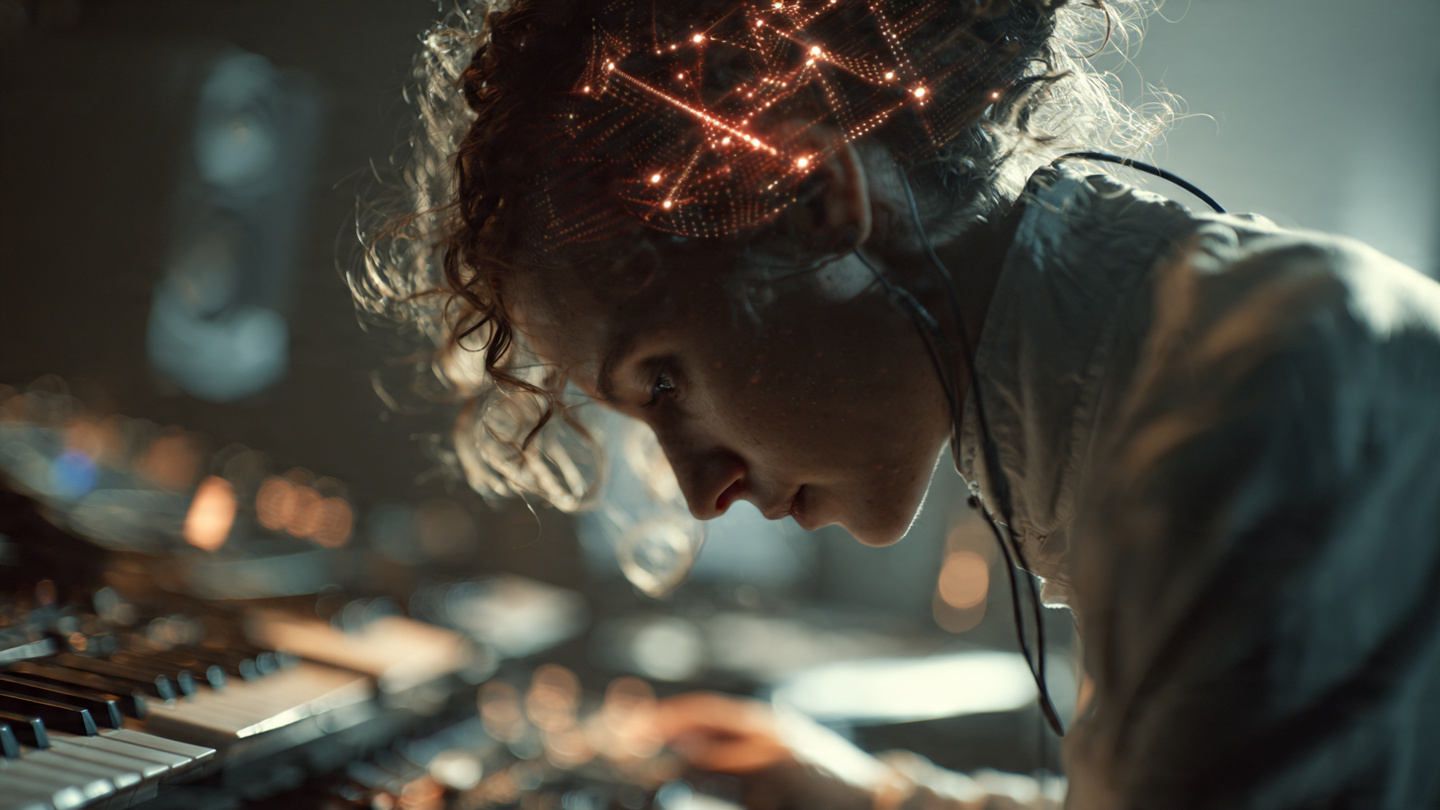
Music exposes both the strengths and weaknesses of any interface. If control is delayed, people hear it immediately. If the system is too rigid, creativity suffers. If the interaction feels smooth, the emotional response is immediate and powerful.
That makes music a uniquely valuable proving ground for brain implant technology. Unlike static demonstrations, musical interaction requires timing, responsiveness, and expression all at once. It also creates something audiences can understand without technical training. A person may not grasp signal processing or neural decoding, but they understand melody, rhythm, and performance.
There is also a social dimension. Music is often collaborative. It invites participation, reaction, and shared experience. If brain-computer interfaces become part of musical creation, they may move from isolated labs into public spaces, classrooms, studios, and live events. That kind of visibility could do more to normalize the technology than any white paper ever could.
Practical examples are easy to imagine:
- A composer uses neural control to generate ambient textures while playing a traditional keyboard
- A performer with limited mobility directs a live electronic set through a brain-computer interface
- A student explores composition through thought-driven digital instruments
- A therapy program uses music creation to build engagement and cognitive confidence
Each scenario shows the same principle: the more intuitive and rewarding the experience becomes, the more valuable the technology becomes.
The Business Case for Joyful Neurotechnology
There is also a strong commercial lesson here. Technologies that depend on long-term learning and user trust cannot rely solely on technical novelty. They need retention. They need advocacy. They need people who not only use the product, but talk about it, demonstrate it, and imagine new uses for it.
Enjoyable products do this naturally. Frustrating products do not.
In market terms, that means the future of brain-computer interfaces may depend on factors such as:
- User engagement rather than raw trial numbers
- Community adoption through creators, educators, and developers
- Platform expansion into software ecosystems, apps, and accessories
- Brand trust built on safety, reliability, and emotional resonance
We often talk about breakthrough technologies as if success is a straight line from invention to adoption. It never is. The products that endure are usually the ones that combine technical capability with emotional intelligence. Brain implants will be no exception.
Ethics, Access, and the Human Question
As excitement grows, it is also important to keep the conversation grounded. Brain-computer interface technology raises major questions around privacy, consent, access, and inequality. Neural data is deeply personal. If systems become more widespread, users will need strong protections around how data is stored, interpreted, and shared.
Access is another issue. If advanced brain implants remain available only to a narrow group of users, the benefits of the technology could be concentrated rather than broadly distributed. That would be especially troubling in creative and educational settings, where new tools can shape opportunity.
There is also a cultural question worth asking: what does it mean when thought itself becomes an interface? For some people, that sounds liberating. For others, it may feel invasive or unsettling. Both reactions are understandable. The way forward will require transparency, careful regulation, and a design philosophy that respects human dignity at every stage.
Still, one truth remains clear. If this technology is going to earn public trust, it must improve life in ways people can actually feel. Not just in theory. Not just in performance metrics. In lived experience.
What the Future May Look Like
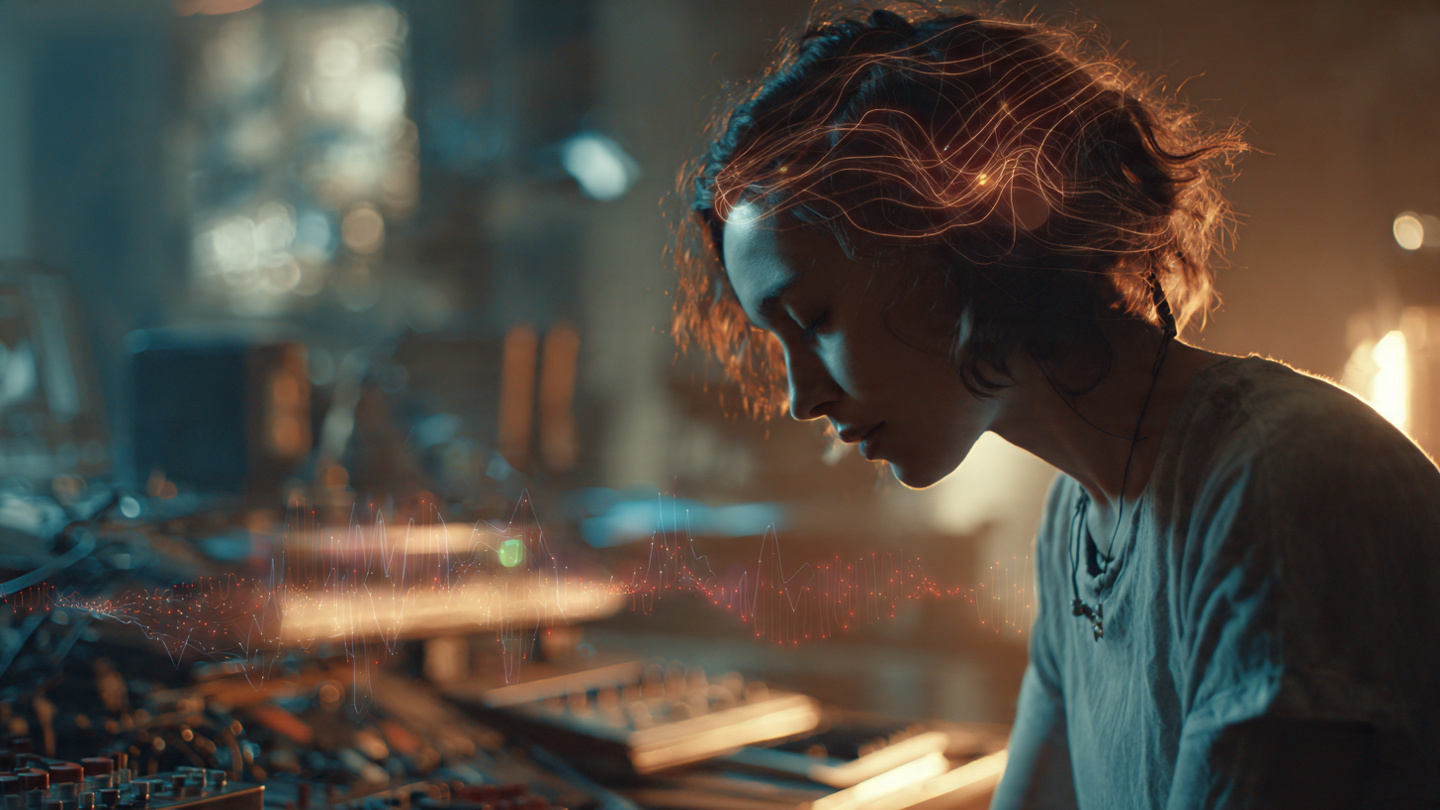
It is still early, but the direction is becoming easier to see. Brain implants are moving from narrow demonstrations toward richer forms of interaction. As signal decoding improves and software becomes more adaptive, users may gain access to interfaces that feel less like operating a machine and more like extending the self.
Music may be only the beginning. The same principles could influence gaming, communication tools, virtual environments, collaborative design platforms, and assistive technologies. But the lessons emerging now are unlikely to change.
- People need control that feels dependable.
- People need feedback that feels immediate.
- People need experiences that feel rewarding.
- People need technology that fits human behavior, not the other way around.
That is why stories about making music with a brain implant matter so much. They do more than showcase innovation. They reveal the standard the field will ultimately be judged by. Not whether the system can work, but whether people want to live with it, create with it, and return to it willingly.
Conclusion
The rise of brain-computer interfaces marks one of the most fascinating shifts in modern technology. A brain implant that turns thought into music captures attention because it blends science with creativity, engineering with emotion, and possibility with practicality. But the most valuable insight is not simply that it can be done. It is that the future of neurotechnology will belong to experiences that feel natural, empowering, and even joyful.
If brain-computer interfaces are to move beyond laboratories and headlines, they must become more than advanced tools. They must become interfaces people trust, enjoy, and understand. Music offers a glimpse of that future because it reveals something fundamental: the best technology does not just extend ability. It expands expression.
If you are watching the future of brain implants, do not focus only on speed, precision, or technical milestones. Watch for the products that make people feel more creative, more capable, and more connected. That is where real adoption begins, and that is where this story becomes bigger than technology alone.
Want to stay ahead of the next wave of neurotechnology? Follow developments in brain-computer interfaces, accessibility design, and creative tech now, because the tools that seem experimental today may soon shape how we communicate, perform, and create.


