King of the Hammers is not just another date on the motorsports calendar. It is a full-throttle collision of speed, endurance, engineering, and desert chaos. Every winter, thousands of fans, racers, mechanics, campers, and thrill-seekers descend on Johnson Valley, California, for a week that feels equal parts race, festival, and social experiment. The noise is constant, the dust gets everywhere, and the vehicles look like they were built to survive the end of the world.
If you have ever wondered what happens when high-speed desert racing meets brutal rock crawling, this is the answer. It is raw. It is unpredictable. It is often glorious and sometimes disastrous. And that is exactly why people cannot look away.
From stock-class underdogs to million-dollar trophy trucks and custom-built Ultra4 monsters, the event has become one of the most fascinating spectacles in modern motorsport. For fans, it offers the kind of authenticity that many polished racing series have lost. For drivers, it is a test of nerve and mechanical sympathy. For the sport itself, it is proof that extreme competition still has the power to create a culture all its own.
The Hook: Why King of the Hammers Captures Attention
Most racing series ask one question: who is fastest? King of the Hammers asks something far more interesting: who can stay fast when the terrain is actively trying to destroy them? That difference is everything.
In a single race, drivers must hammer across open desert at triple-digit speeds, pick precise lines through car-breaking boulder fields, recover from damage on the fly, and keep their bodies sharp enough to make split-second decisions for hours. This combination creates one of the most demanding formats in all of off-road racing.
What makes the event so magnetic is the contrast. One moment, a vehicle is floating across sand washes like a missile. The next, it is inching over jagged rock ledges with a tire hanging in space. It is motorsport at both extremes: violent speed and technical patience. That tension keeps fans engaged because the outcome can change instantly.
Personally, that is what makes this event unforgettable. In many races, you can predict the rhythm after a few laps. Here, the course itself feels like a living opponent. Every section tells a different story, and every machine seems one impact away from brilliance or disaster.
What Exactly Is King of the Hammers?
Held in the Southern California desert, King of the Hammers is the signature event of the Ultra4 racing world. It began as a grassroots challenge among a small group of elite off-roaders and has grown into a major annual gathering that attracts tens of thousands of spectators. What started as a niche proving ground now sits at the center of the extreme 4x4 universe.
The format is deceptively simple: complete a course that combines punishing desert sections with some of the harshest rock obstacles in competitive motorsport. In practice, that means the race favors drivers who can do everything well. Pure speed is not enough. Technical skill is not enough. Reliability is not enough. You need all three.
The event includes multiple classes and race types
- Ultra4 cars built specifically for mixed-terrain punishment
- Trophy trucks and desert-capable machines that showcase raw speed
- UTVs and side-by-sides that bring close racing and fan-friendly action
- Dirt bikes and other support categories that expand the event’s appeal
- Stock and grassroots builds that preserve the underdog spirit of the sport
That broad lineup helps explain why the event draws such a massive crowd. It is not a one-note competition. It is a full ecosystem of off-road culture, where factory-backed teams share the same desert with privateers chasing a dream.
The Course: A Playground Built to Break Machines
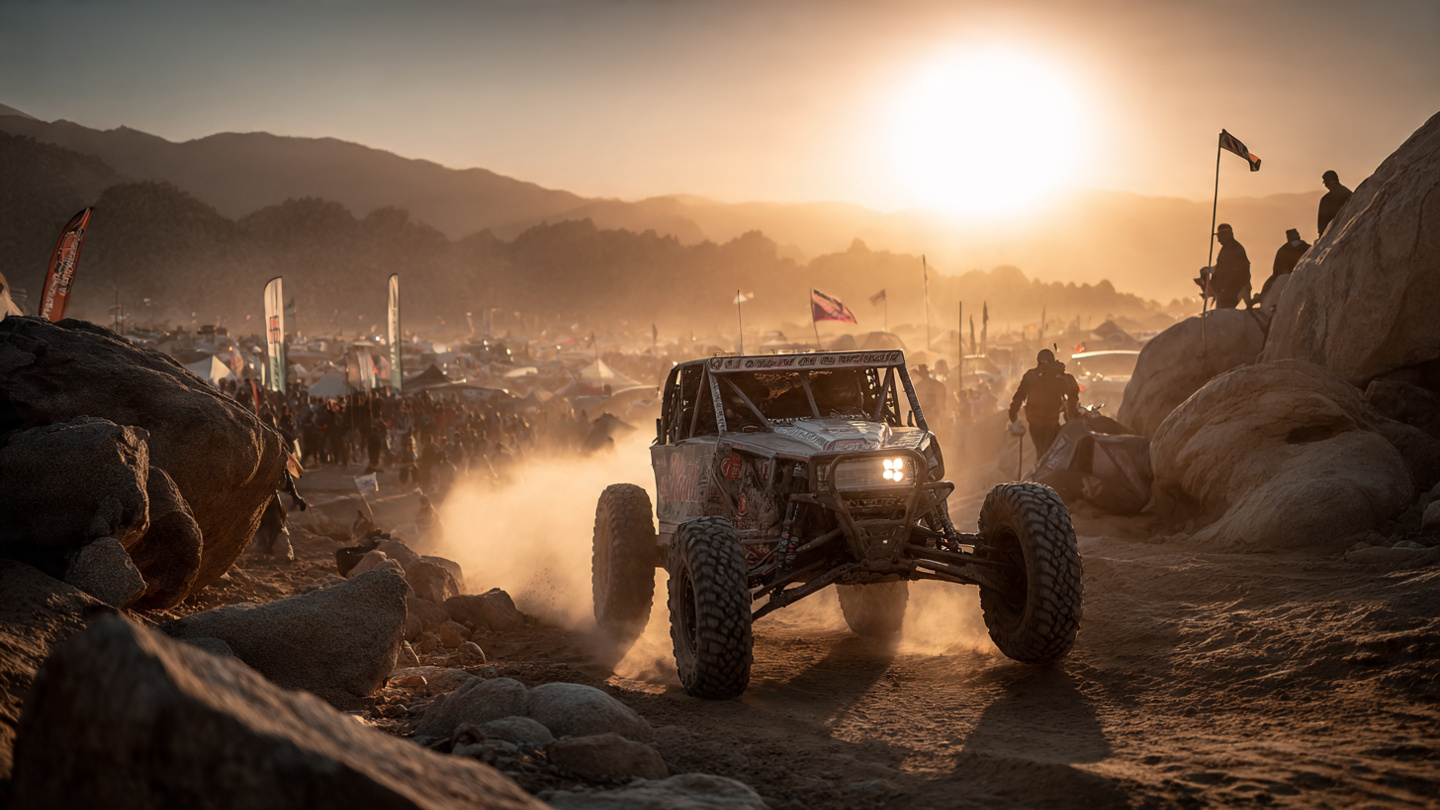
To understand why this race stands apart, you have to understand the terrain. Johnson Valley is famous for its open desert and its unforgiving rock trails. The environment is beautiful in a hard, hostile way. There are no forgiving curbs, no tidy runoff areas, and no gentle reminders when you make a mistake. The punishment is immediate.
The desert sections reward horsepower, suspension travel, and courage. Drivers blast through whoops, dry lake beds, and rough fire roads, often at speeds that would seem reckless anywhere else. But speed alone creates false confidence. Once racers enter the rock canyons, the entire race changes. Momentum becomes dangerous. Precision matters. Tire placement matters. Throttle control matters even more.
This is where rock crawling racing turns into a mental and mechanical chess match. Axles twist. Steering systems suffer. Tires get sliced. Cooling systems strain. Even the best drivers can lose minutes trying to recover from one bad line choice.
Why the course is so brutal
- Long distances amplify fatigue and increase the chance of mistakes
- Sharp rocks punish tires, suspension links, and driveline components
- Fast desert sections tempt drivers to overpush before technical zones
- Bottlenecks in canyon obstacles can create pressure and lost time
- Weather and dust change visibility and traction throughout the event
That unpredictability is a huge part of the appeal. Fans do not just watch a race; they watch a battle of adaptation. The winner is rarely the person who looked strongest at the first checkpoint. More often, it is the one who managed chaos best from start to finish.
The Machines: Engineering for Controlled Violence
Few motorsport events showcase machine personality like this one. The top-tier rigs competing at King of the Hammers are purpose-built monsters that blend desert racing DNA with hardcore rock-crawling hardware. They are engineered to take huge hits, claw over ledges, and still remain stable at astonishing speeds.
Ultra4 vehicles often feature massive suspension travel, lightweight tube chassis construction, locking differentials, huge tires, and drivetrains designed to handle sudden torque loads. These are not simply modified trucks. They are highly specialized weapons created for one of the most specific challenges in motorsports.
Yet the technology story is only half of the fascination. The other half is how these machines reflect the mindset of the sport. In off-road racing, beauty is functional. Scratches, dents, and improvised repairs are not flaws; they are evidence of survival.
One of the most compelling parts of the event is walking through the pits or following race coverage and seeing teams solve problems in real time. A bent steering component, a shredded tire, an overheating issue, or a broken suspension link can end a day in seconds. The best crews work like emergency surgeons, and the strongest drivers know how to protect a wounded car without surrendering their position.
What separates winning builds from the rest
- Durability under repeated impacts and twisting loads
- Versatility across high-speed desert and slow technical rock sections
- Cooling efficiency in punishing desert temperatures and low-speed crawls
- Serviceability when repairs must happen quickly under pressure
- Driver confidence inspired by stable handling and predictable power delivery
The People: A Culture Bigger Than the Race
Ask anyone who has been to the event, and they will tell you the same thing: the race is only part of the story. The real phenomenon is the atmosphere. King of the Hammers has grown into a desert city powered by motorsports obsession, DIY culture, camping energy, and an anything-goes attitude that feels increasingly rare.
There are families in RVs, hardcore wheelers in toy haulers, vendors showing off the latest parts, influencers filming from ridgelines, and longtime desert veterans who treat the whole week like a reunion. The experience is loud, dusty, chaotic, and strangely communal. Even if you arrive as a casual fan, it does not take long to feel the gravitational pull.
This is one reason the event has become such a content magnet online. It offers more than lap times and podium interviews. It offers lifestyle, subculture, personality, and spectacle. In today’s sports media landscape, that matters.
From a fan perspective, this immersive environment is part of what gives the event such staying power. You are not just watching a competition from a safe distance. You are embedded in a place where the machines, the terrain, and the crowd all seem to feed off one another.
Why King of the Hammers Matters in Modern Motorsports
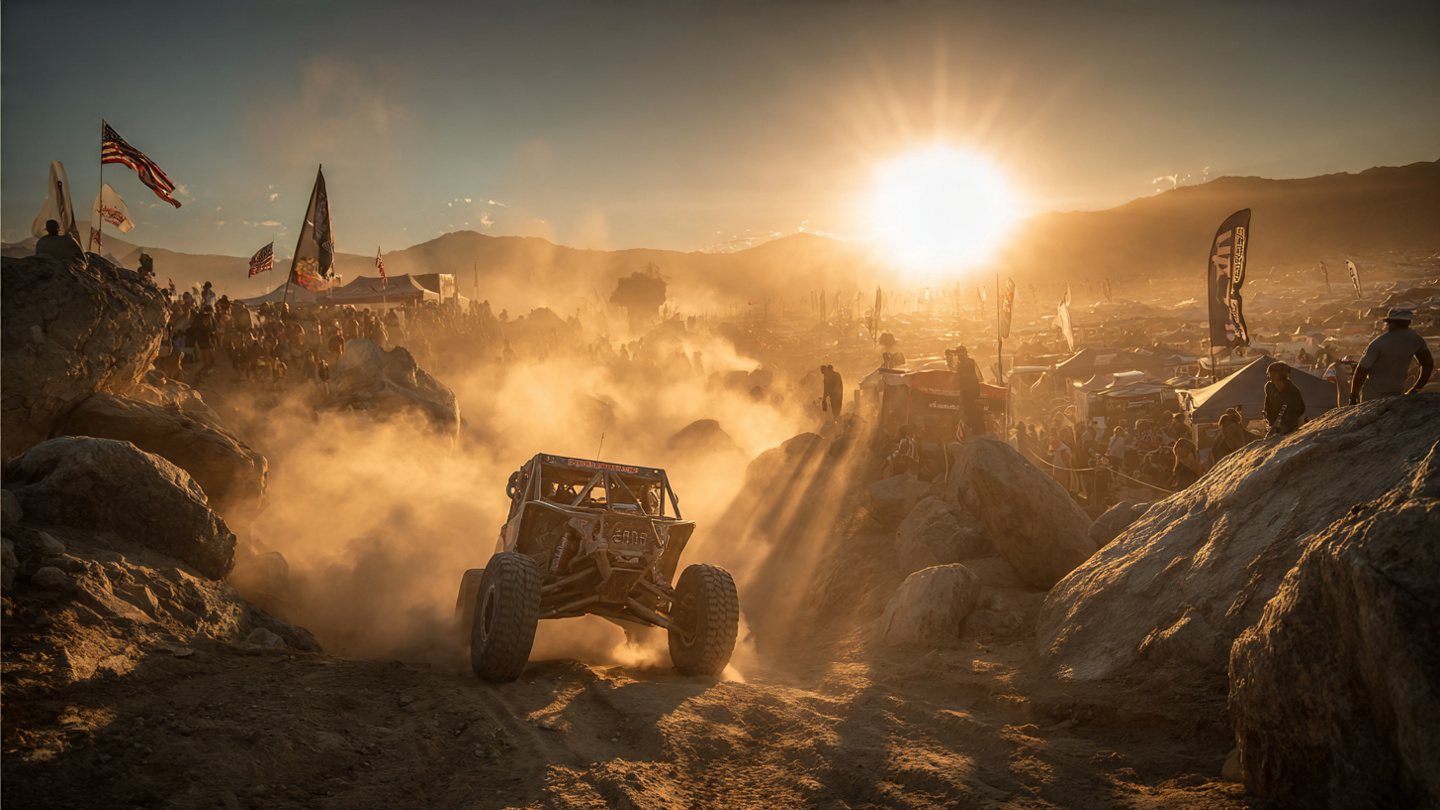
It would be easy to dismiss the event as an extreme niche, but that would miss the bigger picture. King of the Hammers matters because it represents something essential in sports: authentic difficulty. At a time when many events are increasingly controlled, optimized, and commercialized, this race still feels dangerous in the old-fashioned sense. Not reckless for the sake of drama, but fundamentally honest about the challenge.
That honesty resonates with audiences. Fans can sense when a sport is real, when the stakes are tangible, and when success requires more than marketing polish. The drivers here do not just need talent. They need resilience, mechanical awareness, and the willingness to suffer through setbacks that would crush most competitors.
It also matters because it serves as a bridge between enthusiast culture and professional competition. Many sports create a huge emotional gap between participants and fans. Here, that distance feels smaller. People can imagine building a rig, testing on trails, learning recovery techniques, and becoming part of the world. That accessibility fuels loyalty.
The event’s broader impact on motorsports culture
- It elevates desert racing and rock crawling into a mainstream conversation
- It drives innovation in suspension, tires, steering, and driveline components
- It gives privateer teams meaningful visibility alongside bigger operations
- It creates highly shareable moments that grow the sport through digital media
- It reinforces the appeal of endurance, toughness, and mechanical ingenuity
The Experience for First-Time Fans
If you are new to off-road motorsports, this is one of the most exciting entry points you can find. Even without deep technical knowledge, the stakes are easy to understand. The terrain looks impossible. The vehicles look outrageous. The consequences of mistakes are obvious. That makes the sport immediately compelling.
For first-time spectators, the best approach is to embrace the variety. Watch the fast open sections to appreciate the bravery it takes to attack the desert. Then spend time near the rock obstacles, where you can see the precision and problem-solving up close. These two sides of the event reveal why the race is so respected.
Practical experience also helps. Bring layers, water, eye protection, and patience. The desert does not cater to comfort. But that hardship is part of the reward. Great sports environments often ask something of the audience, and this one asks you to meet it on its own terms.
If I were advising a newcomer, I would say this: do not treat the event like a polished stadium product. Treat it like an expedition. The more you lean into the environment, the more memorable it becomes.
The Future of King of the Hammers
The future looks strong because the event has something many sports spend years trying to manufacture: identity. It knows exactly what it is. It is not trying to become a sanitized version of itself, and that confidence gives it power.
As coverage expands and more fans discover the series through streaming, social media clips, and off-road communities, the challenge will be growth without dilution. That is always the test for cult events that become mainstream attractions. Protect the authenticity, and the audience will keep coming. Lose it, and the magic fades.
There is every reason to believe King of the Hammers can continue to thrive. The appetite for extreme, visually dramatic, personality-driven sports is growing. So is interest in motorsports that feel physically demanding and mechanically relatable. Few events deliver both as convincingly as this one.
Conclusion: The Desert Still Decides
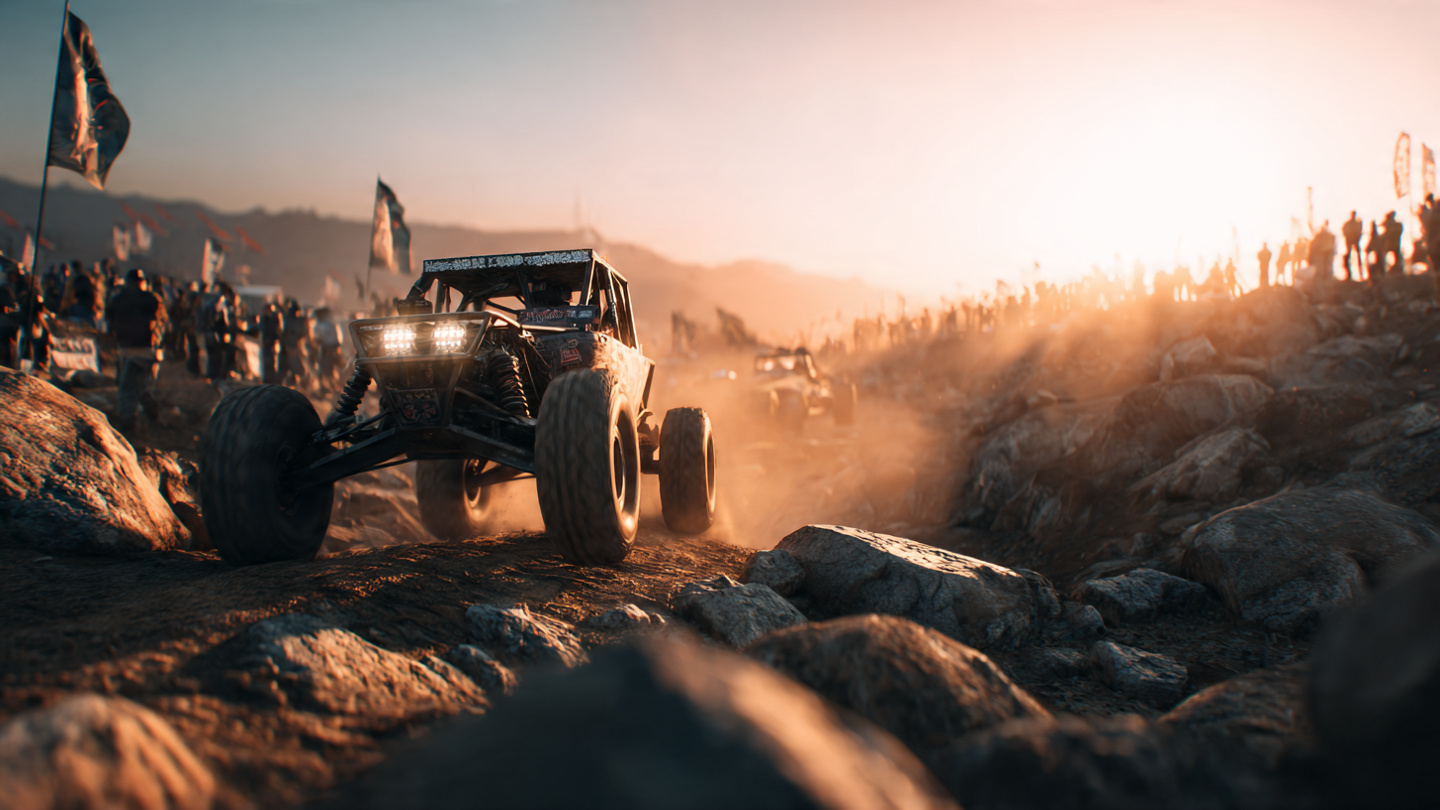
In the end, King of the Hammers is more than an off-road race. It is a stress test for machines, a character test for drivers, and a cultural touchstone for anyone who loves motorsport in its rawest form. It blends desert racing, rock crawling, endurance, engineering, and crowd energy into one of the most distinctive events in the world.
Its reputation as one of the toughest races on the planet is not marketing hype. It is earned every year in dust, noise, breakdowns, recoveries, and moments of outrageous brilliance. That is why people keep showing up. The desert strips away excuses. It rewards preparation, punishes arrogance, and occasionally crowns the bold.
If you want a motorsport experience that feels visceral, unpredictable, and genuinely alive, put King of the Hammers on your list. Follow the teams, study the builds, watch the race footage, and if you get the chance, stand in that California dust and feel the ground shake for yourself. Once you do, ordinary racing may never look the same again.
To explore more stories from the world of extreme motorsports, keep following the races, the teams, and the technology pushing the limits of what off-road machines can do. The next great desert battle is always just over the horizon.


