Lunch used to be the most neglected part of my day. Breakfast felt easy enough to grab on the go, and dinner usually got the attention it deserved, but lunch often became an afterthought somewhere between deadlines, errands, and sheer indecision. Then I started making noodle jars, and the entire rhythm of my workweek changed.
At first, I understood the appeal immediately: they looked colorful, organized, and oddly satisfying. But what surprised me most was how practical they were in real life. A noodle jar is not just a pretty container filled with ramen and vegetables. It is a simple meal prep system that solves several lunch problems at once: lack of time, repetitive flavors, wasted ingredients, and the temptation to skip eating altogether.
Once I got the formula down, lunch stopped feeling like a chore. It became quicker, more affordable, and much more consistent. If you have ever stared into the fridge at noon and settled for random snacks, expensive takeout, or nothing at all, this approach is worth trying.
The beauty of noodle jars is that they combine convenience with variety. You can build them around pantry staples, adapt them to your taste, and create lunches that feel fresh instead of forced. And because the ingredients are layered strategically, the final result tastes far better than the phrase “make-ahead lunch” usually suggests.
What Are Noodle Jars and Why Are They So Popular?
Noodle jars are portable layered meals built inside a jar or tall container, typically with sauce or broth concentrate at the bottom, vegetables and proteins in the middle, and noodles at the top. When it is time to eat, you add hot water or heat the mixture depending on the recipe, stir everything together, and you have a fast, flavorful lunch in minutes.
The reason they spread so quickly is simple: they look appealing, but more importantly, they work. They fit the way many people actually live. You can prep several at once, store them in the fridge, and enjoy a meal that feels intentional without requiring daily cooking.
They are also highly customizable. Whether you prefer spicy, savory, tangy, creamy, or broth-based lunches, there is room to build a jar around your cravings. That flexibility is a major reason they stand out in the crowded world of easy lunch ideas.
- Fast: most jars take just a few minutes to assemble once you know the formula.
- Affordable: they rely on inexpensive staples like noodles, shredded vegetables, eggs, tofu, and sauces.
- Portable: ideal for office lunches, campus meals, and work-from-home routines.
- Customizable: easy to make vegetarian, high-protein, spicy, or lower-cost.
- Reduced waste: a smart way to use leftover vegetables, herbs, and proteins.
The Real Reason Noodle Jars Change How You Approach Lunch
What makes noodle jars different from many other lunch trends is that they do not just solve one problem. They improve the entire lunch experience from planning to prep to satisfaction.
They remove decision fatigue
One of the hardest parts of lunch is not cooking. It is deciding what to eat when you are already busy. With noodle jars, that decision gets made in advance. You open the fridge, grab one, and move on with your day.
They make portioning easier
Instead of assembling a meal from random components, everything is already balanced in one container. You can visually control how much noodle, protein, and produce you want, which makes lunch feel more complete and less chaotic.
They feel more exciting than typical meal prep
Traditional meal prep can become monotonous quickly. Rows of identical containers often start with good intentions and end with boredom by Wednesday. Noodle jars feel different because small changes in sauce, texture, and toppings create a completely new meal.
They encourage you not to skip lunch
This might be the biggest benefit of all. When lunch is quick, flavorful, and ready to go, it is much easier to actually pause and eat. That matters more than people often realize. A proper midday meal can improve focus, mood, and energy, especially on long or demanding days.
The Basic Noodle Jar Formula That Actually Works
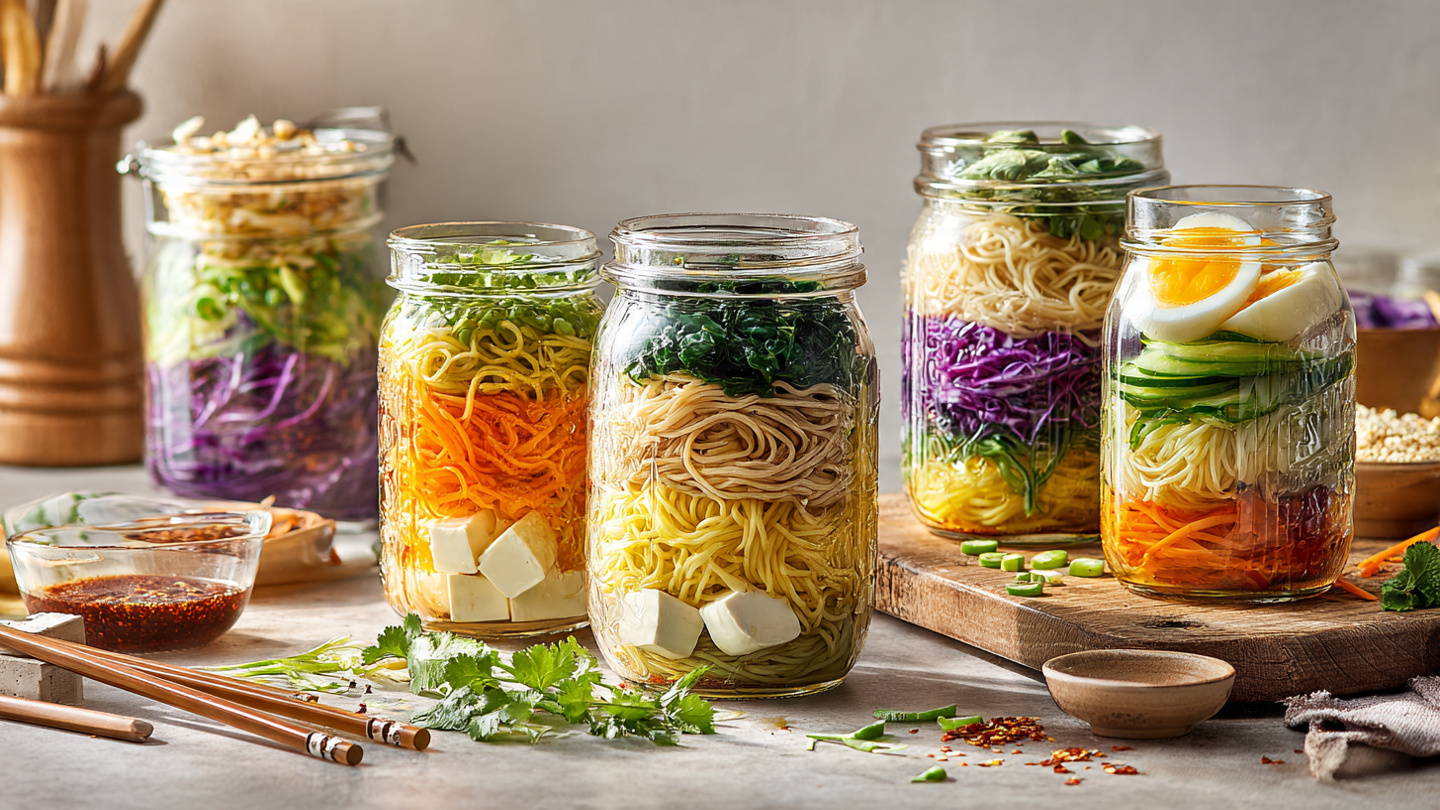
Once I realized noodle jars are all about structure, everything got easier. You do not need a strict recipe every time. You need a reliable framework.
Here is the formula I keep coming back to:
- Bottom layer: sauce, seasoning paste, or concentrated broth base.
- Middle layer: sturdy vegetables and proteins that can handle moisture.
- Upper layer: noodles or grains that stay away from the wet ingredients until serving.
- Top finish: delicate toppings such as herbs, scallions, seeds, or crunchy add-ins added just before eating.
This layering matters. Keeping moisture-heavy ingredients away from the noodles helps prevent sogginess. The jar stays fresh longer, and the final texture is far more appealing.
Best noodles to use
Not every noodle works equally well. Instant noodles are popular because they soften quickly, but rice noodles, thin udon, soba, vermicelli, and even cooked spaghetti in a pinch can work depending on how you plan to reheat or hydrate them.
For the best results, choose noodles based on your eating method:
- Add hot water at lunch: instant ramen, rice vermicelli, thin rice noodles.
- Microwave or reheat: cooked udon, soba, egg noodles, lo mein-style noodles.
- Cold noodle jar variations: pre-cooked noodles with sesame dressing, crunchy vegetables, and chilled protein.
Best proteins to include
Protein makes a noodle jar feel like a real meal rather than a snack. Cooked chicken, shredded rotisserie chicken, tofu, edamame, boiled eggs, shrimp, tempeh, and thinly sliced beef are all strong options.
I especially like tofu and edamame because they absorb flavor well and hold up nicely during storage. A soft-boiled or jammy egg added at the last minute can make the whole jar feel restaurant-worthy.
Best vegetables for texture and freshness
Choose vegetables with a mix of crunch, color, and durability. Shredded carrots, cabbage, bell peppers, snap peas, mushrooms, baby spinach, corn, and green onions all work beautifully. Heartier vegetables should sit lower in the jar, while delicate greens are better placed higher up or added fresh at serving time.
How to Build Flavor Without Complicating the Process
The difference between an average noodle jar and one you crave comes down to the sauce. Fortunately, you do not need a long ingredient list to create bold results.
A good sauce usually balances a few key elements: salt, acid, sweetness, heat, and richness. Once you understand that, it becomes easy to improvise.
Easy flavor combinations to try
- Soy-sesame: soy sauce, sesame oil, rice vinegar, garlic, and a little honey.
- Spicy peanut: peanut butter, soy sauce, chili crisp, lime juice, and warm water.
- Miso-ginger: miso paste, ginger, soy sauce, and a touch of maple syrup.
- Coconut curry: curry paste with a small amount of coconut milk or concentrated broth.
- Garlic-chili broth: bouillon paste, garlic, chili oil, and scallions.
These combinations make easy lunch meal prep feel much less repetitive. Even when the vegetables and noodles are similar from jar to jar, a new sauce changes the entire experience.
My favorite practical trick is to make two or three sauces at the beginning of the week and rotate them. That way, a batch of noodle jars still feels varied, and I am far less likely to get bored.
Why Noodle Jars Work So Well for Busy Schedules
One of the biggest reasons people abandon healthy lunch routines is that the process feels too demanding. If a weekday lunch takes too much time, too many ingredients, or too much cleanup, it simply will not last.
Noodle jar meal prep is different because the effort happens once, while the reward shows up repeatedly throughout the week.
- Assembly is quick: once ingredients are prepped, building each jar takes only a few minutes.
- Cleanup stays manageable: you reuse the same containers and make fewer midday dishes.
- Shopping becomes easier: a short list of repeat ingredients can create multiple lunches.
- It scales well: make two jars for a short week or five for a full workweek.
This is especially useful for hybrid workers, students, parents, and anyone trying to reduce food spending without sacrificing taste. Instead of scrambling every afternoon, you are working from a ready-made system.
Common Mistakes That Can Ruin a Noodle Jar
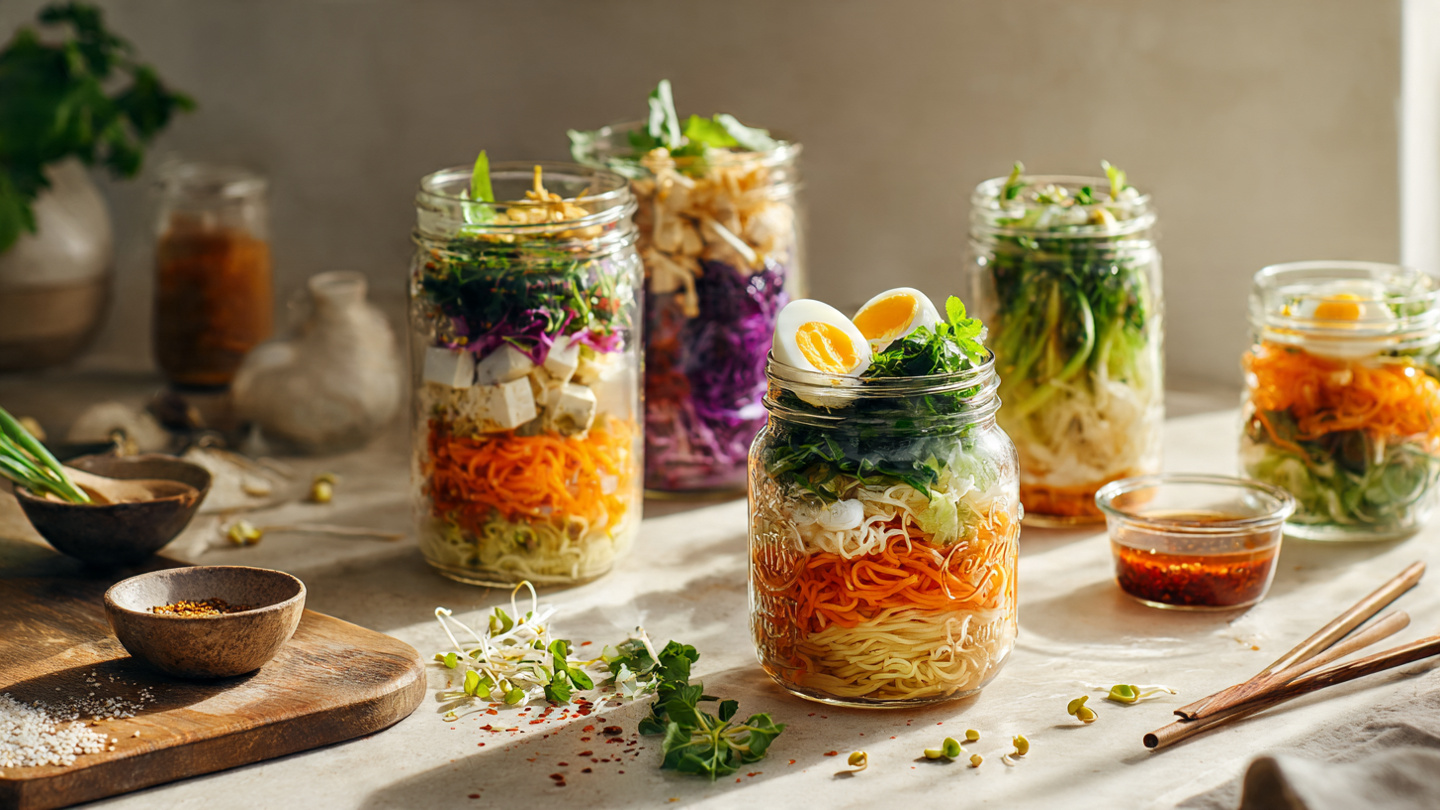
Like any smart food trend, noodle jars are easiest when you know what to avoid. A few small mistakes can lead to soggy noodles, dull flavor, or an unbalanced meal.
Using too much liquid too early
If the broth or sauce is too thin or too abundant at the bottom, ingredients can soften before you are ready to eat. Concentrated flavors work better. You can always add hot water later if needed.
Choosing delicate vegetables for the bottom
Leafy greens or herbs pressed into wet ingredients too soon tend to wilt. Reserve them for upper layers or add them fresh at serving time.
Skipping texture contrast
A good noodle jar is not only about flavor. It also needs texture. Add crunch through cabbage, carrots, seeds, or crispy toppings at the end so the meal feels more dynamic.
Making every jar identical
This is where enthusiasm can fade fast. Even slight variation helps. Switch sauces, swap proteins, or change the garnish. Variety keeps lunch interesting.
Creative Noodle Jar Ideas for Every Type of Eater
Another reason this trend has staying power is that it adapts so easily to different eating styles and preferences.
For high-protein lunches
Use edamame, grilled chicken, tofu, shrimp, or eggs, and keep the sauce savory and bold. A miso-based or spicy soy dressing works particularly well here.
For vegetable-forward lunches
Load the jar with shredded cabbage, mushrooms, carrots, peppers, spinach, and herbs. The noodles become part of the meal rather than the whole meal, which creates a fresher, lighter result.
For comfort-food cravings
Go for a richer broth, soft noodles, mushrooms, scallions, and a jammy egg. This version feels warm, soothing, and especially satisfying on colder days.
For budget-friendly meal prep
Build around instant noodles, frozen vegetables, boiled eggs, and a homemade soy-garlic sauce. It is remarkably inexpensive and still feels intentional.
For spicy food lovers
Chili crisp, sriracha, gochujang, sambal, or chili oil can instantly transform a basic jar into something bold and addictive. Pair with crunchy vegetables to keep the heat balanced.
My Personal Take After Making Them Consistently
What I did not expect from noodle jars was how much they would change my mindset around lunch. I initially thought they would simply save time. They did, but the bigger shift was psychological.
Lunch started feeling like something worth planning for instead of something I squeezed in between tasks. Because the jars were ready, I was more likely to step away from work, eat something filling, and avoid the late-afternoon crash that used to send me straight toward coffee or sugar.
I also noticed that I wasted fewer groceries. Half a bell pepper, leftover rotisserie chicken, a handful of spinach, one lonely carrot, the last spoonful of peanut butter in the jar, all of it suddenly had a purpose. That alone made the system feel sustainable.
Most importantly, I never felt locked into one strict recipe. The formula gave me structure, but the ingredients stayed flexible. That is what makes this more than a passing trend. It is a lunch strategy you can actually keep using.
How to Start Your Own Noodle Jar Routine
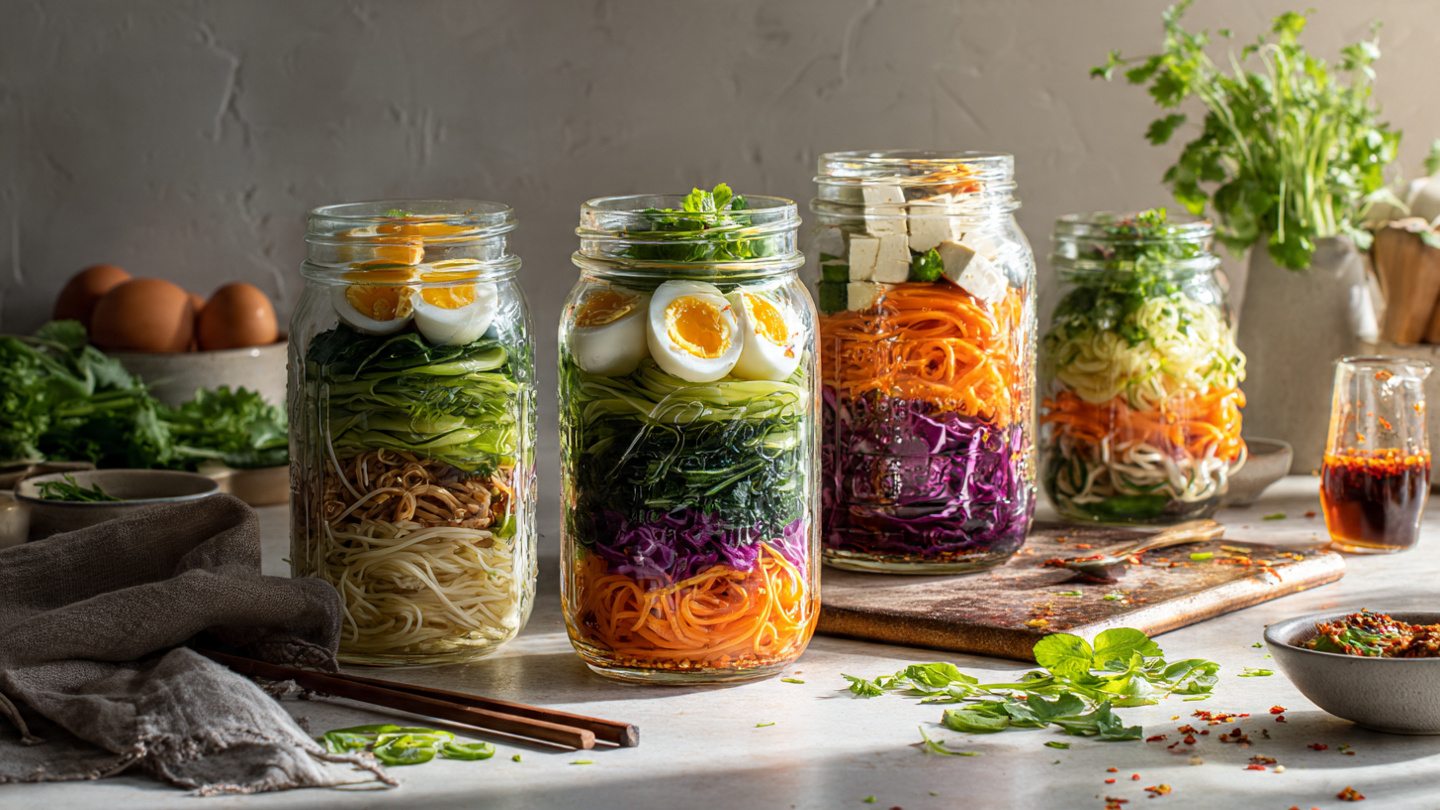
If you want to make this habit stick, start small. You do not need a five-day prep marathon or a dozen ingredients. Begin with two or three jars and one sauce you already know you enjoy.
- Pick one noodle: start with something easy and reliable, such as instant ramen or rice noodles.
- Choose one protein: tofu, chicken, boiled eggs, or edamame are simple and versatile.
- Add two to three vegetables: aim for color, crunch, and convenience.
- Use one sauce base: soy-sesame or spicy peanut are great beginner options.
- Test your method: decide whether you prefer adding hot water, microwaving, or eating it chilled.
Once you have a version you like, you can expand into new combinations without overthinking it. That is when noodle jars become genuinely useful rather than just visually appealing.
Conclusion: The Lunch Upgrade That Delivers
Noodle jars are more than a social media trend. They are a practical answer to one of the most common daily problems: how to make lunch fast, satisfying, affordable, and interesting enough to repeat. With the right layering, a strong sauce, and a few smart ingredient choices, they can turn a rushed midday break into one of the best parts of your routine.
If lunch has been the meal you skip, postpone, or outsource too often, this is an easy place to start fresh. Build one jar with ingredients you already have, test your favorite flavor combination, and see how much easier your week feels when a great lunch is already waiting.
Try the noodle jar formula for yourself this week and create a lunch routine that is faster, smarter, and far more enjoyable than the usual fallback options.


