There is a certain kind of cultural question that never really leaves you. It lingers in the back of your mind while you wash dishes, commute to work, or scroll late at night. You tell yourself it is trivial, and then suddenly you are three tabs deep into an old interview, a grainy red carpet clip, and a fan forum post from 2014. That is the power of pop culture mysteries: they make entertainment feel bigger than content. They turn it into an active puzzle, a shared obsession, and sometimes a genuine emotional experience.
What makes these mysteries so gripping is not just the missing answer. It is the possibility that every clue, every contradictory statement, every deleted scene, and every awkward pause might matter. In a media world overflowing with information, the things we still cannot fully explain feel even more magnetic. They create a rare kind of suspense, one built not by a writer's room but by real life, public memory, and collective curiosity.
I have always believed that the most unforgettable entertainment stories are not only the ones with neat endings. Often, the stories that stay with us are the unfinished ones. The half-explained feud. The film that changed in the editing room. The celebrity disappearance from public view that spawned years of speculation. These are the cultural loose threads people keep tugging, hoping the entire tapestry will finally reveal itself.
So why are fans still so captivated by unsolved celebrity mysteries, lost media, and famous entertainment conspiracies? And which questions continue to haunt the public imagination long after the headlines fade? Let us pull on the red string.
Why Pop Culture Mysteries Hit So Hard
At first glance, these puzzles may seem lighter than true crime or political scandal. But that is exactly why they are so sticky. Entertainment mysteries live in the place where public identity, storytelling, nostalgia, and emotion collide. We do not just watch these stories unfold; we attach memories to them. A mysterious film ending is tied to the year we first saw it. A celebrity rumor is linked to a whole era of tabloids, music, fashion, and fandom.
That emotional context turns even small unanswered questions into something larger. A missing explanation becomes a personal itch. Fans do not simply want information; they want closure.
- Nostalgia intensifies curiosity: Mysteries from formative cultural moments often feel more important because they are linked to our own past.
- Fandom creates investigation: Dedicated fan communities gather clues, compare interviews, and preserve details mainstream coverage misses.
- Ambiguity fuels engagement: When a story remains unresolved, audiences keep returning to it, reinterpreting the same evidence in new ways.
- Celebrity culture blurs truth and performance: Public figures are both real people and curated brands, making every mystery harder to decode.
In other words, a good pop culture mystery is never just about the answer. It is about what the search reveals about fame, storytelling, and the audience itself.
The Most Haunting Types of Pop Culture Mysteries

1. The Lost Media That Feels Almost Within Reach
Few things trigger obsession quite like lost media. Maybe it is an unaired pilot, an original cut of a film, a shelved album, or a performance that only survives through fragments and rumor. The appeal is obvious: these are not abstract theories. They are things that supposedly existed, which means they might still exist somewhere.
This category of mystery is especially powerful because it combines scarcity with imagination. Fans fill in the blanks with leaked descriptions, secondhand testimony, and archival scraps. Sometimes the missing material becomes more legendary than it could ever be if it were finally released.
Think about the fascination around alternate edits of famous movies, songs that were rumored to be too personal to publish, or television episodes that disappeared after a single airing. In each case, the mystery gains weight because the public senses there is a hidden version of culture just out of reach.
There is also something undeniably romantic about media archaeology. Fans become detectives, historians, and preservationists all at once. In an age where everything seems instantly searchable, the idea that something culturally significant can still vanish feels almost eerie.
2. The Celebrity Stories That Never Quite Add Up
Some of the most enduring unsolved celebrity mysteries are not shocking because they involve crime or scandal. They linger because the public record feels incomplete. A sudden friendship breakdown. A bizarre interview moment. A disappearance from the spotlight without a satisfying explanation. A public narrative that changes depending on who is telling it.
These mysteries become haunting because celebrities function as cultural mirrors. People project meaning onto them. When their stories contain gaps, fans instinctively try to close them. Sometimes that effort comes from empathy. Sometimes it comes from fascination. Often, it is both.
For example, when a star abruptly cancels a major project or seems to distance themselves from an era that made them famous, audiences want context. Was it burnout? A conflict behind the scenes? A deeply personal reason? If no one offers a clear answer, speculation rushes in to fill the silence.
The problem, of course, is that public curiosity can become entitlement. That tension is part of what makes these stories so charged. We may feel invested, but not every mystery is ours to solve. Some unanswered questions remain private for a reason.
3. The On-Set Drama Hidden Behind Iconic Art
Another irresistible category involves beloved films, albums, or TV series that seem shadowed by stories from behind the curtain. Perhaps cast members allegedly feuded. Perhaps a production was heavily rewritten under pressure. Perhaps key footage was cut and never explained. Audiences love these mysteries because they challenge the polished final product.
We tend to consume entertainment as if it arrives fully formed, but every project is the result of human conflict, compromise, ego, money, and timing. When we discover that an iconic work may have had a wildly different original shape, it changes how we view the finished version.
This is where fan theories thrive. A strange scene may no longer feel accidental. A missing subplot starts to look intentional. An actor's unusual line delivery becomes evidence of backstage turmoil. Whether those interpretations are true is almost beside the point. The mystery adds texture to the work and keeps it alive in discussion.
Why Fans Build Entire Theories Around Tiny Details
One of the most fascinating things about famous entertainment conspiracies is how little evidence is often needed to spark years of debate. A single look in an interview. A timeline inconsistency. A deleted social media post. A vague quote about "creative differences." For many fans, these fragments are not random. They are clues.
This behavior is not irrational; it is narrative instinct. Humans are wired to search for coherence. When a public story feels incomplete, we start building bridges between the facts we have. In fandom spaces, that process becomes collaborative. One person remembers an old magazine feature. Another finds archival footage. Someone else notices a contradiction in the official timeline. Suddenly a theory develops momentum.
Sometimes fans are astonishingly perceptive. They catch patterns that publicists and journalists miss. They preserve context that might otherwise disappear. But fan investigation also comes with risks. Once a theory becomes emotionally satisfying, it can overpower the truth. That is why the best discussions around pop culture mysteries balance curiosity with restraint.
- Strong theories usually emerge from patterns: Repeated contradictions attract more attention than isolated odd moments.
- Visual culture matters: Old clips, paparazzi photos, award show footage, and backstage moments are endlessly reexamined.
- Digital archives changed everything: Fans can now compare decades of interviews, appearances, and reporting in ways earlier audiences could not.
- Emotion drives interpretation: People are more likely to believe theories that fit the version of a celebrity or story they already hold.
In my experience, the most compelling fan theories are not necessarily the wildest ones. They are the ones that reveal a deeper truth about why people care in the first place. Often the theory is really a way of expressing unresolved feelings about a star, a franchise, or a cultural moment that meant something important.
The Role of the Internet in Keeping Mysteries Alive
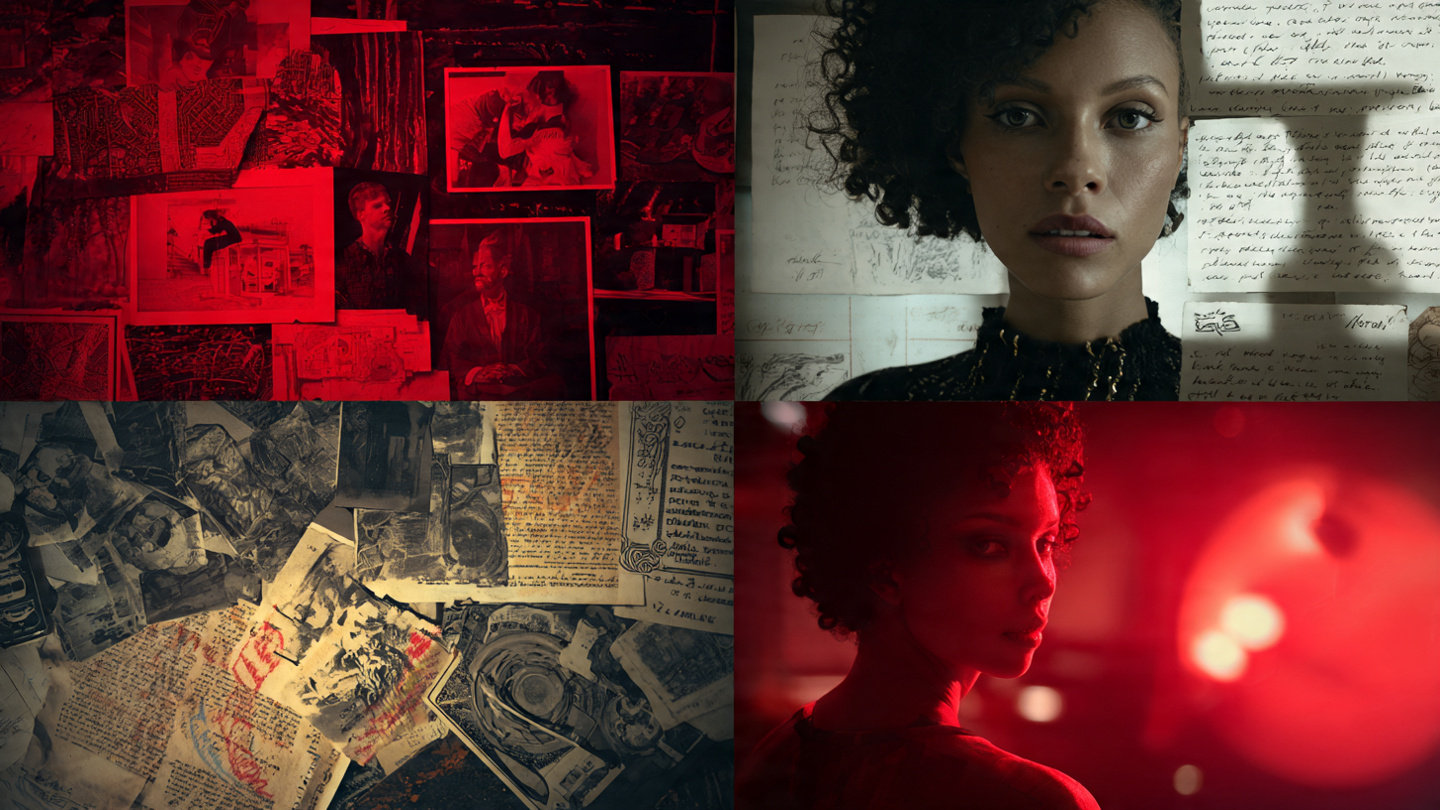
If a mystery surfaced decades ago, it once depended on magazine coverage, television gossip, and word of mouth to survive. Today, the internet gives every unresolved story a second, third, and fourth life. Clips resurface. Quotes are recontextualized. Old rumors are compared against newly available evidence. Entire communities form around a single unanswered question.
This has transformed the life cycle of cultural intrigue. A mystery no longer fades simply because time passes. In fact, time can make it stronger. Distance adds mythology. Younger audiences discover old stories without the exhaustion that original followers felt. They bring fresh attention, new interpretations, and often a more archival mindset.
That renewed interest can be exciting, but it can also distort reality. The internet rewards certainty and drama, not nuance. A complicated behind-the-scenes conflict may be reduced to a villain narrative. A private struggle can become a public guessing game. This is why media literacy matters so much in conversations about celebrity mysteries and entertainment lore.
Not every unanswered question points to a conspiracy. Sometimes memory is inconsistent. Sometimes stories change because people age, heal, or reassess what they want to share. Sometimes the simplest explanation really is the correct one. The challenge is knowing when to investigate and when to accept ambiguity.
The Most Common Questions Fans Cannot Let Go Of
Although every mystery has its own personality, the most enduring ones often circle the same core themes. These are the questions that keep appearing across fandoms, generations, and formats.
What really happened behind the scenes?
This is perhaps the ultimate pop culture question. Fans sense that the official story is incomplete, especially when an abrupt ending, recasting decision, cancellation, or tonal shift affects a beloved project. Behind-the-scenes mysteries matter because they invite us to see art as a human process rather than a polished product.
Was there a hidden version of the story?
Deleted scenes, alternate cuts, unreleased music, and abandoned scripts suggest a parallel version of culture that fans never got to experience. That possibility is almost irresistible. It lets people imagine that the story they loved or hated could have been something entirely different.
Why did someone disappear from public life?
When celebrities retreat, fans want to understand why. Sometimes the answer is refreshingly straightforward: privacy, health, family, exhaustion, or a desire for ordinary life. But when the retreat follows controversy or contradiction, speculation intensifies. Silence creates a vacuum, and the internet rarely leaves a vacuum unfilled.
Were audiences misled on purpose?
Publicists, studios, managers, and media outlets all shape narratives. Fans know that, which is why they often revisit old stories with skepticism. They ask whether a breakup was framed strategically, whether a feud was exaggerated for publicity, or whether a scandal obscured a more complex truth. These suspicions are not always justified, but they reflect a more media-savvy audience than ever before.
How to Enjoy Pop Culture Mysteries Without Losing Perspective

There is nothing wrong with being fascinated by unresolved stories. In many ways, that curiosity is part of what makes entertainment culture fun. The key is learning how to engage responsibly.
- Separate evidence from assumption: A compelling theory is not the same as a confirmed fact.
- Respect personal boundaries: Not every celebrity owes the public full access to their private life.
- Value original context: Old interviews, articles, and clips should be read in the time and media environment in which they appeared.
- Stay open to ambiguity: Some mysteries remain unsolved because no single clean answer exists.
Personally, I think that last point is the hardest and most important. We are conditioned to expect neat resolutions. But many of the most memorable pop culture mysteries endure precisely because they reflect real life, where motives are mixed, memories are flawed, and closure is never guaranteed.
Why These Mysteries Keep Returning to the Cultural Conversation
Every few months, a familiar mystery resurfaces. A celebrity makes an offhand comment. A director hints at lost footage. A cast reunion reopens old tensions. A documentary introduces archival material that changes how fans interpret a long-debated story. Suddenly, the internet is investigating all over again.
This constant return is not accidental. It happens because unresolved entertainment stories offer something rare: participation. Audiences are not merely consuming a finished narrative. They are interpreting, debating, and preserving it. In that sense, pop culture mysteries are a form of living folklore.
They also reveal what each era values. One generation may focus on scandal. Another may revisit the same mystery through the lens of labor, exploitation, mental health, gender politics, or media manipulation. The mystery stays the same, but the meaning evolves. That is why even decades-old entertainment questions can suddenly feel urgent again.
Conclusion: The Red String Never Really Comes Down
The most haunting mysteries in entertainment stay with us because they resist being flattened into trivia. They are not just unanswered questions; they are emotional pressure points in culture. They remind us how deeply stories shape memory, identity, and desire. They expose the messy space between public image and private truth. And they prove that sometimes the audience's fascination becomes part of the story itself.
Whether the mystery involves lost media, celebrity silence, backstage drama, or a theory too compelling to dismiss, the underlying appeal is the same: we want to know what really happened. More than that, we want to feel that the culture we loved still has secrets left to uncover.
If there is a single lesson in all of this, it is that unanswered questions are not always failures of storytelling. Sometimes they are the reason a story survives. They invite us back in. They keep conversations alive. They turn passive viewers into active participants.
So the next time an old rumor, vanished clip, or unexplained celebrity moment starts tugging at your attention, do not be surprised if it takes hold. That is how these things work. One thread becomes ten. One clue leads to another. And before long, the whole board is covered in red string.
Which pop culture mystery do you still think about the most? Start with the one you cannot let go of, compare notes with fellow fans, and see whether the clues point to closure or simply a better question.


